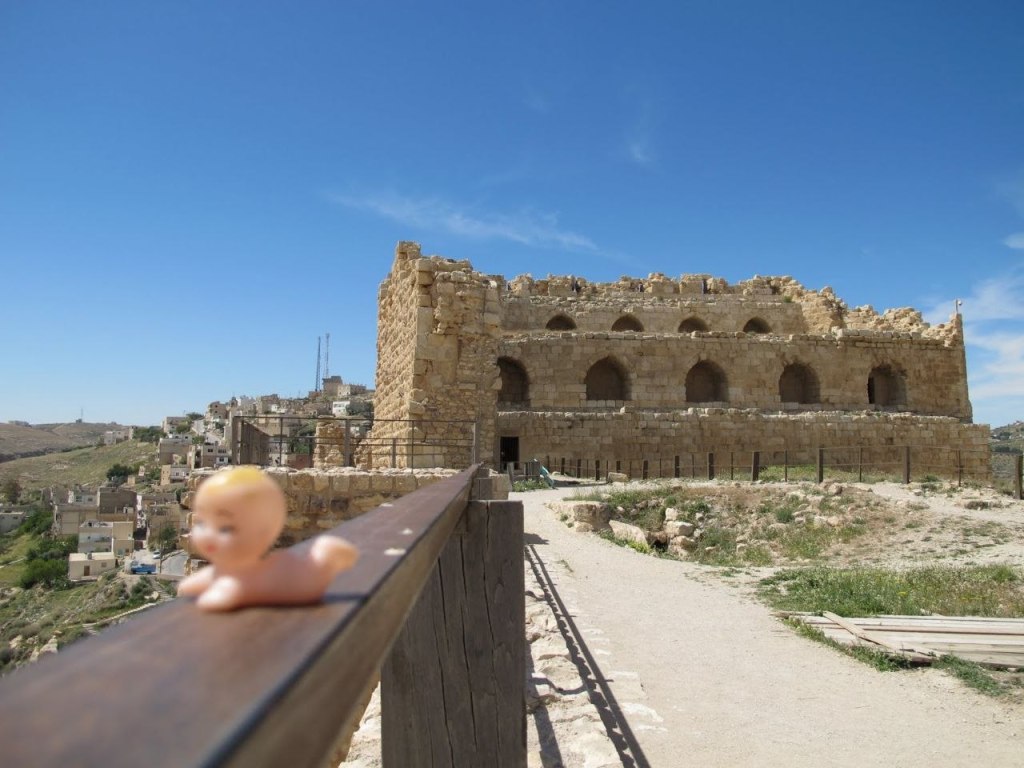
The route from Amman to Al-Karak traces a historic corridor linking Jordan’s capital with the hilltop stronghold of Kerak Castle. Leaving Amman and heading southeast, the landscape quickly gives way to wide, arid plains dotted with early Islamic desert architecture, before the road curves back west toward fertile highlands, Christian pilgrimage towns, and the dramatic escarpments overlooking Wadi Karak and the Dead Sea. Travelers typically combine remote Umayyad sites in the eastern desert with cultural and historic stops along the King’s Highway on the way south.
The journey connects some of the region’s most important early Islamic and Byzantine-era monuments, culminating at one of the great Crusader fortresses of the Levant. It is a route defined by changing topography—from low, shimmering desert to elevated plateaus—and by overlapping layers of history, where caravan routes, royal hunting lodges, mosaicked churches, and fortified strongholds all lie within a few hours’ drive of one another.
Qasr Kharana: Umayyad Desert Fortress
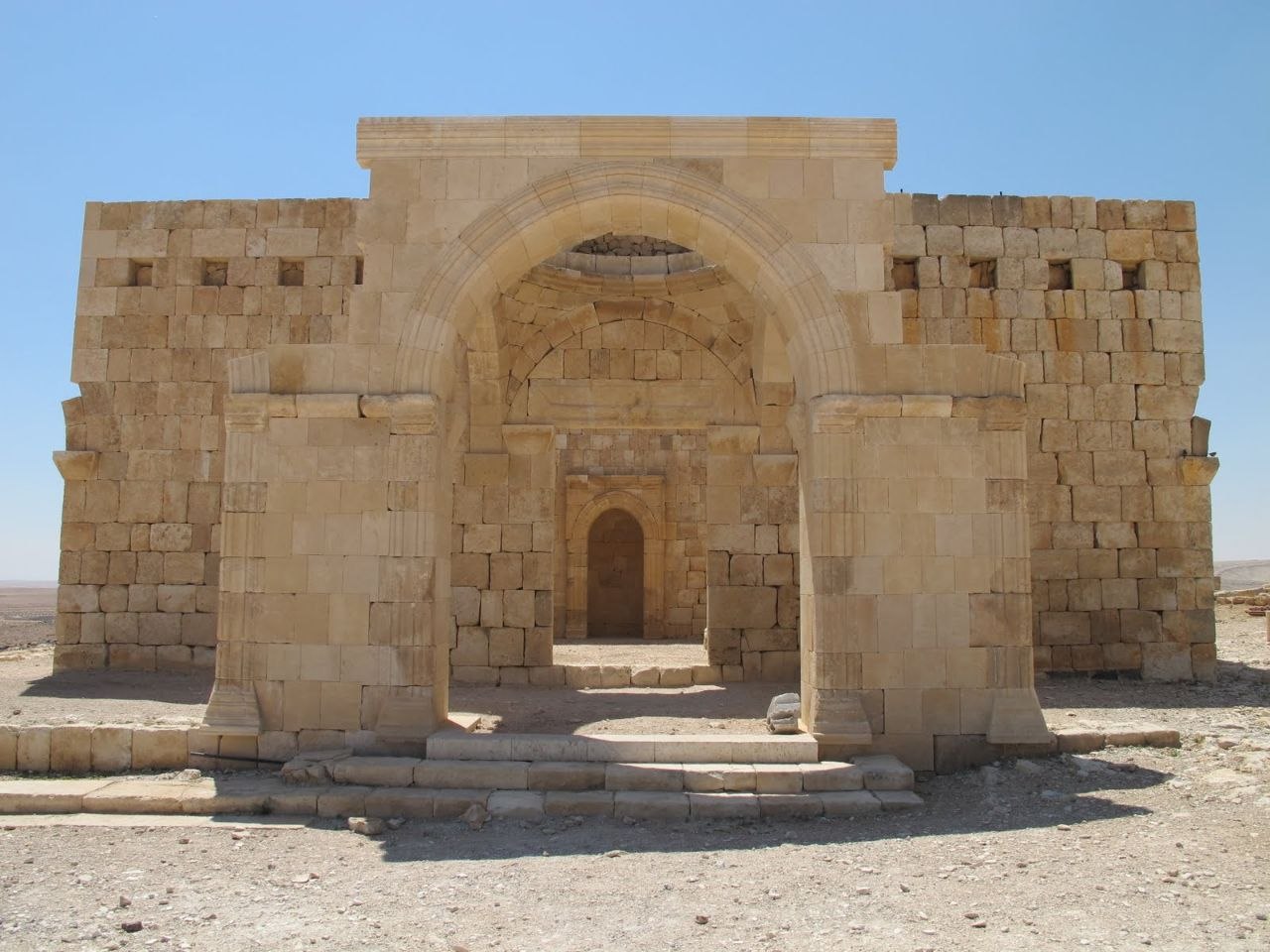
Qasr Kharana stands alone on a flat, stony plateau southeast of Amman, its compact square form rising starkly from the surrounding desert. Dating to around 710 AD, this Umayyad structure is one of the best-preserved so-called “desert castles” in Jordan. From a distance it resembles a defensive fortress, with high exterior walls, corner towers, and few openings at ground level, yet its actual purpose remains debated.
Inside, a central courtyard is ringed by two stories of rooms and passageways, with narrow slit windows and small chambers that hint at multiple possible uses. Scholars have suggested Qasr Kharana may have functioned as a caravanserai on a desert trade route, a private meeting place for the Umayyad elite, or a diplomatic lodge used to host tribal leaders. Whatever its role, the building illustrates how early Islamic patrons adapted elements of Roman and Sasanian architectural traditions to the needs of governance and travel in the desert environment.
Qasr Amra: Frescoes in the Eastern Desert
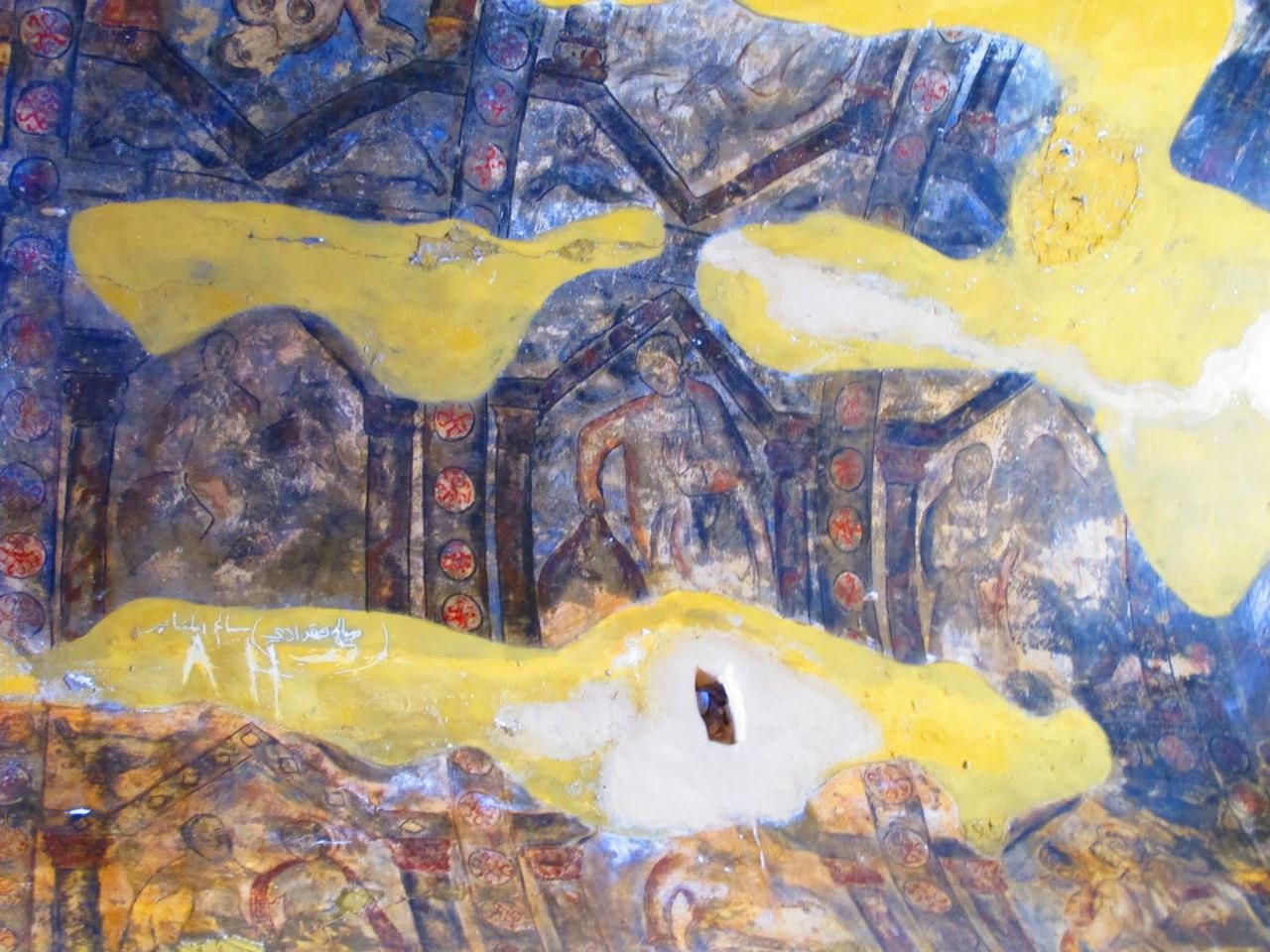
A short drive west from Qasr Kharana, Qasr Amra occupies another stretch of the eastern desert, but its character is entirely different. Recognized as a UNESCO World Heritage Site, this small Umayyad complex is best known for the extraordinary frescoes that adorn its interior walls and domed ceilings. Built as a royal hunting lodge and bathhouse in the early 8th century, Qasr Amra offers one of the finest surviving ensembles of early Islamic figurative art.
Inside, vivid paintings depict a wide range of scenes: hunting parties with animals and hunters in motion, zodiac symbols arranged on the dome above the bath, and bathing figures that emphasize the building’s role as a pleasure retreat. One wall is dominated by the famed “Six Kings” composition, showing rulers from contemporary and neighboring realms. The combination of secular subject matter, Greco-Roman stylistic influences, and Arabic inscriptions provides a rare visual record of Umayyad courtly life and the cosmopolitan milieu of early Islamic Jordan.
Madaba: City of Mosaics
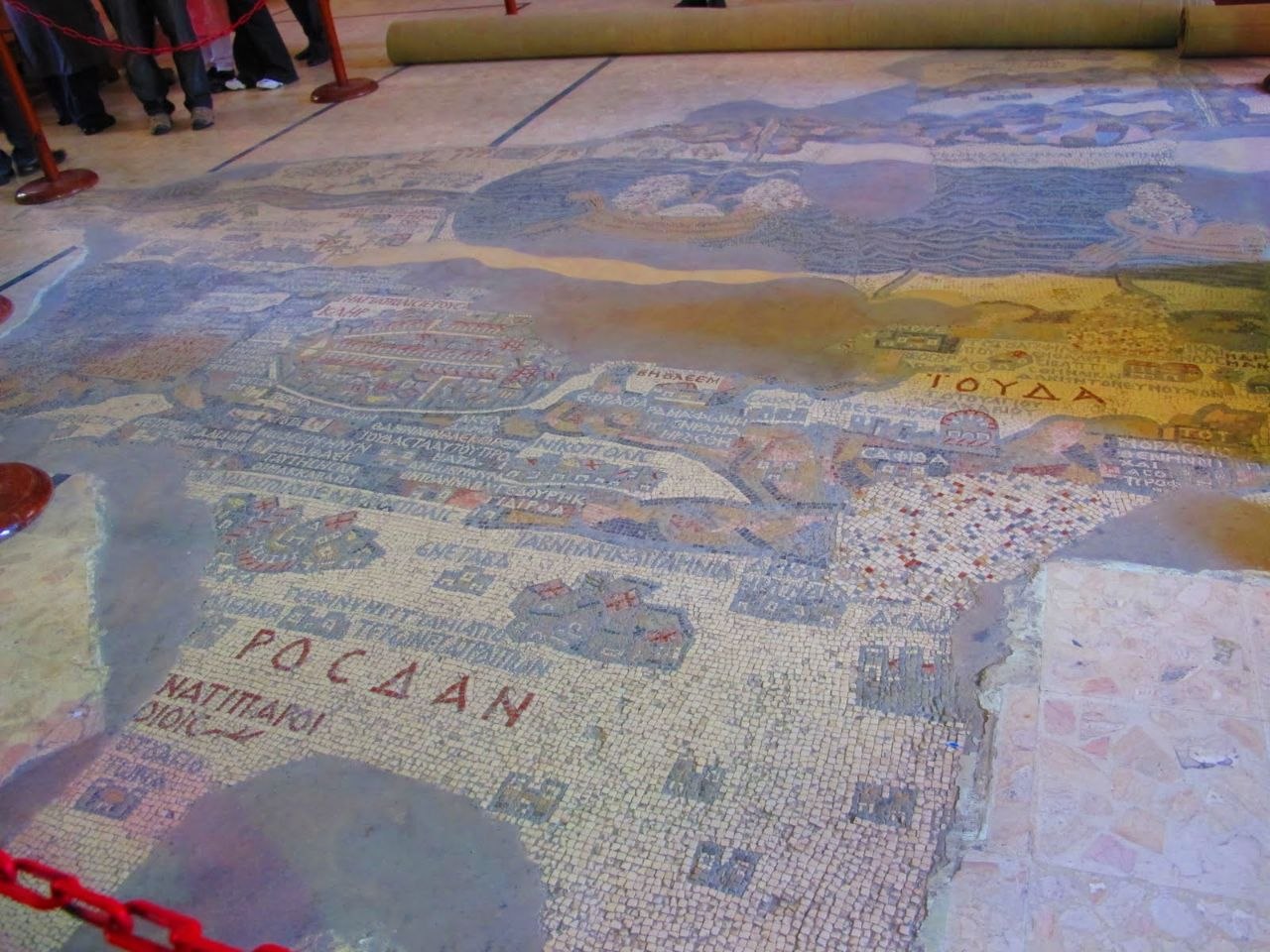
Returning toward Amman and then heading south along the plateau, the road reaches Madaba, a town renowned for its rich tradition of mosaic art. Often called the “City of Mosaics,” Madaba preserves an exceptional concentration of Byzantine and early Islamic mosaic floors in churches, chapels, and historic buildings. The most famous is the 6th-century Madaba Mosaic Map set into the floor of St. George’s Church.
This intricate map, created from hundreds of thousands of colored tesserae, is the oldest surviving cartographic depiction of the Holy Land. It portrays Jerusalem, the Jordan River, the Dead Sea, and surrounding regions with remarkable detail, including city walls, roads, and prominent religious sites. Beyond its religious significance, the map offers valuable evidence for historians and archaeologists studying settlement patterns, pilgrimage routes, and the historical geography of the Levant. Around Madaba, additional mosaic sites such as the Archaeological Park and nearby Mount Nebo further underscore the area’s importance as a center of Christian art and pilgrimage.
Kerak Castle: Stronghold Above Al-Karak
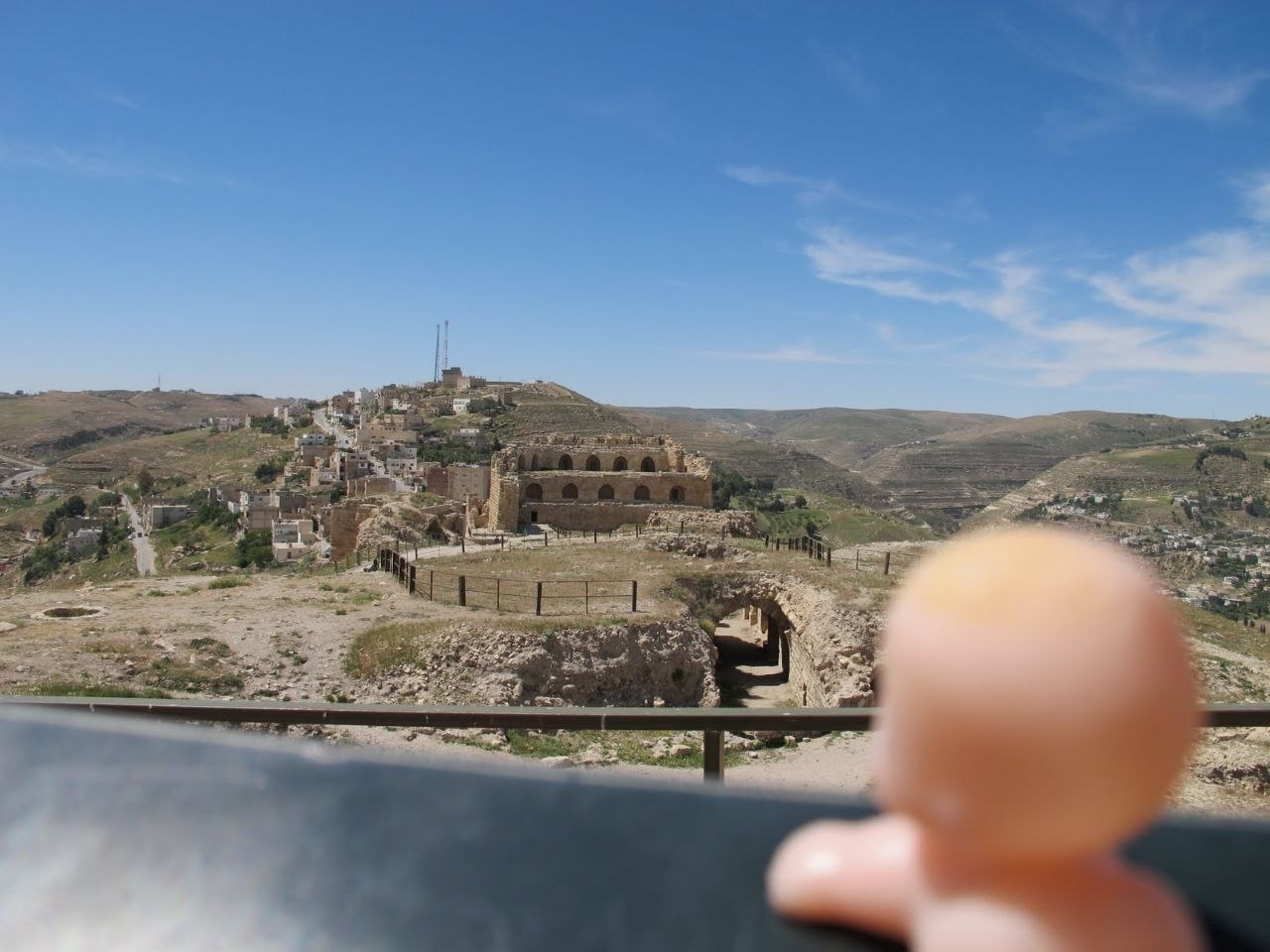
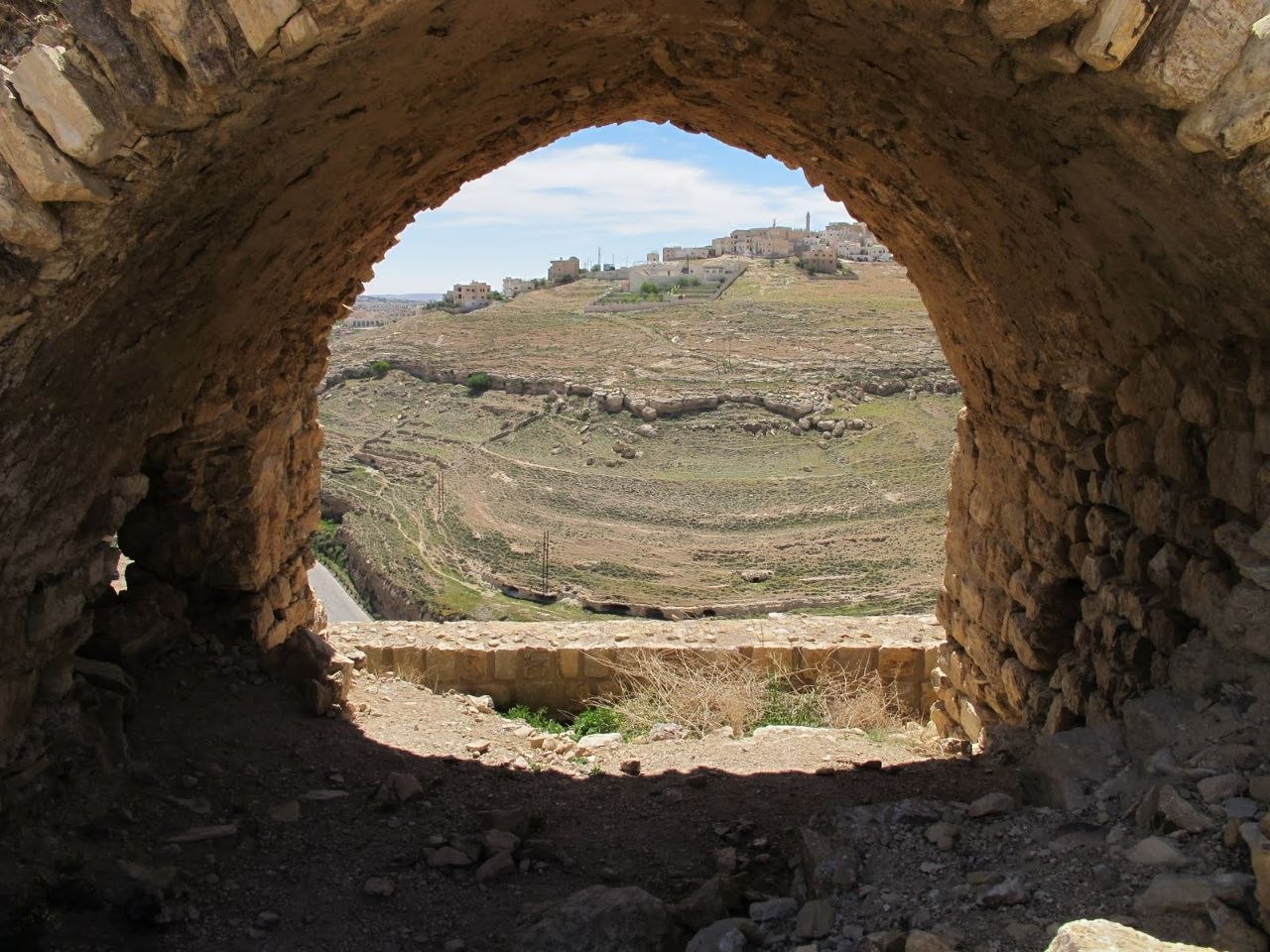
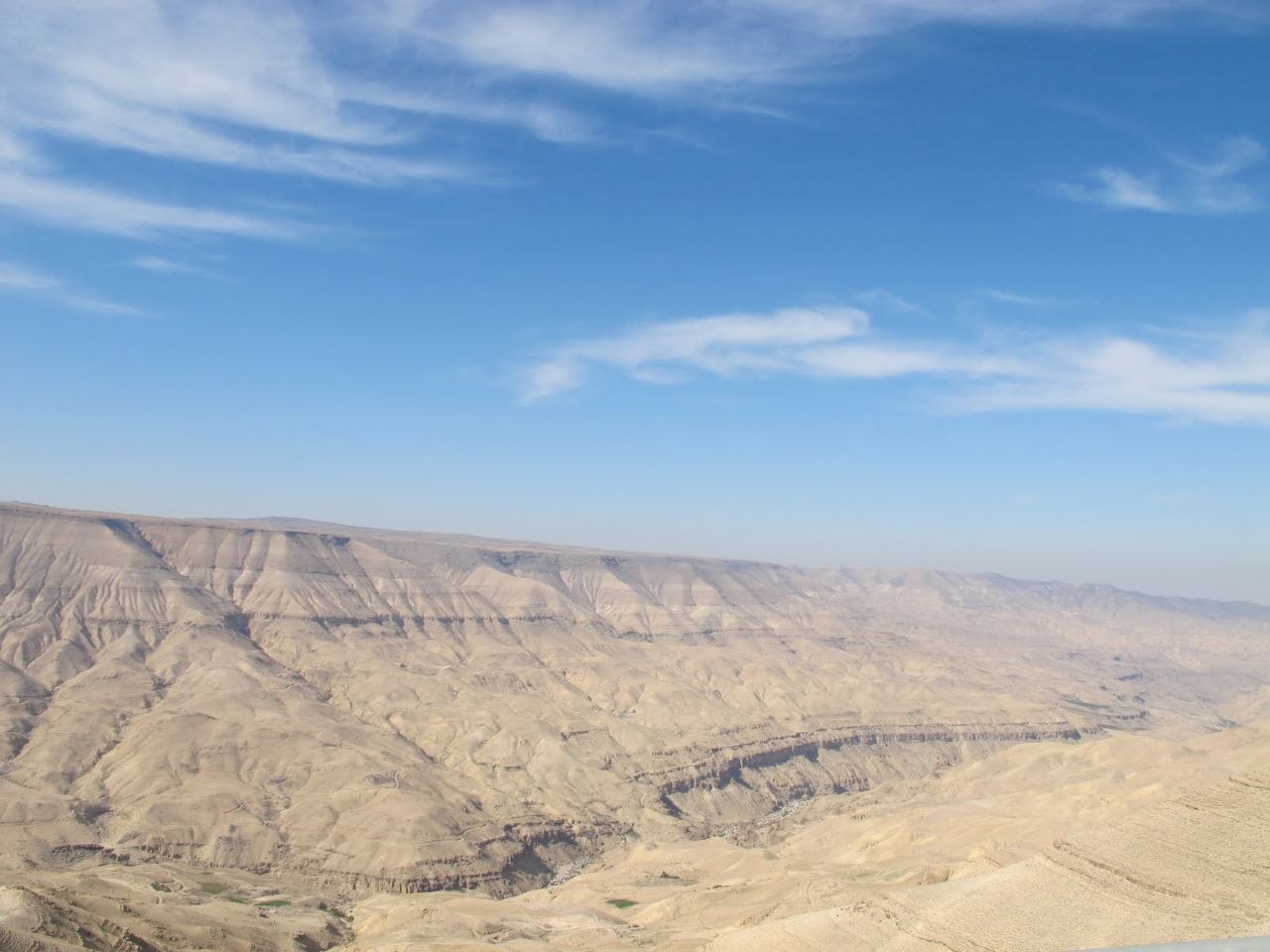
Continuing south from Madaba, the route follows sections of the historic King’s Highway, crossing deep wadis and high ridges before reaching the town of Al-Karak. Dominating the skyline is Kerak Castle, a massive 12th-century fortress built by the Crusader Kingdom of Jerusalem. Strategically positioned on a rocky spur, the castle controlled movement along the highway and commanded long-distance views over Wadi Karak and toward the Dead Sea.
The complex combines thick outer walls, corner towers, and multiple defensive lines with extensive subterranean spaces. Inside, visitors encounter vaulted galleries, storerooms, stables, and passageways cut into the rock, reflecting the need to shelter soldiers, supplies, and animals during sieges. In 1188, the Ayyubid leader Saladin captured Kerak after a prolonged campaign, marking a turning point in the balance of power in the region. Today, the ruined yet imposing structure offers insight into Crusader military architecture and the contested history of the King’s Highway.
Visiting Tips
Most visitors travel this route by car or organized tour, combining the eastern desert sites with Madaba and Kerak Castle in a long day or over two days. Distances between stops are moderate, but driving times can be extended by winding mountain roads and photo stops at viewpoints over Wadi Mujib and Wadi Karak. Allow extra time for exploring interiors at Qasr Amra and Qasr Kharana, and for walking through the underground galleries and ramparts of Kerak Castle.
Conditions in the eastern desert can be hot, dry, and exposed, especially in summer, so sun protection and sufficient water are essential. Opening hours and ticketing arrangements may differ between sites, with some locations requiring a small entrance fee or being included in broader heritage passes. Modest dress is advisable when visiting churches in Madaba, such as St. George’s, and a light jacket can be useful at higher elevations or in the shaded interior spaces of the castle. Planning the route in advance and checking current road and site information helps make the journey between Amman and Al-Karak both efficient and rewarding.
 Jumping Timezones
Leave a comment