Phnom Penh is the capital and largest city of Cambodia, situated at the junction of the Mekong and Tonlé Sap rivers. Once known as the “Pearl of Asia” for its French colonial boulevards and riverside setting, the city today combines historic temples and royal architecture with dense markets, modern development, and heavy traffic. Many of its most-visited sites cluster along the riverfront, where broad promenades, pagodas, and government buildings line the waterfront.
Beyond its religious and royal monuments, Phnom Penh is closely associated with Cambodia’s recent history. Institutions such as the Tuol Sleng Genocide Museum document the Khmer Rouge period, while museums and monuments elsewhere in the city highlight older Khmer art and architecture. Visitors typically move between hilltop shrines, palace compounds, and solemn memorials, encountering both ornate Buddhist symbolism and reminders of the country’s trauma within a relatively compact urban area.
Wat Phnom and the Hilltop Sanctuary
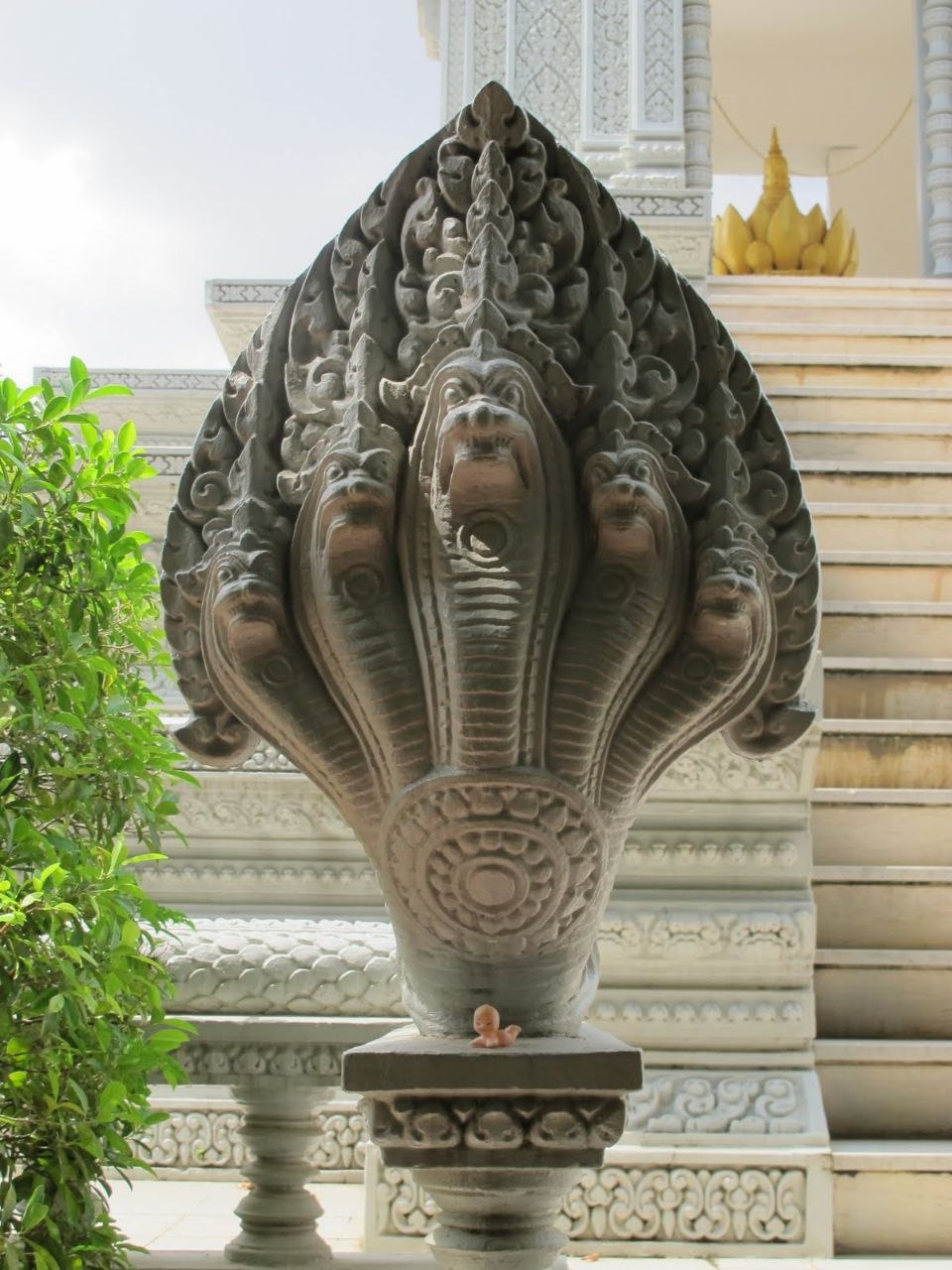
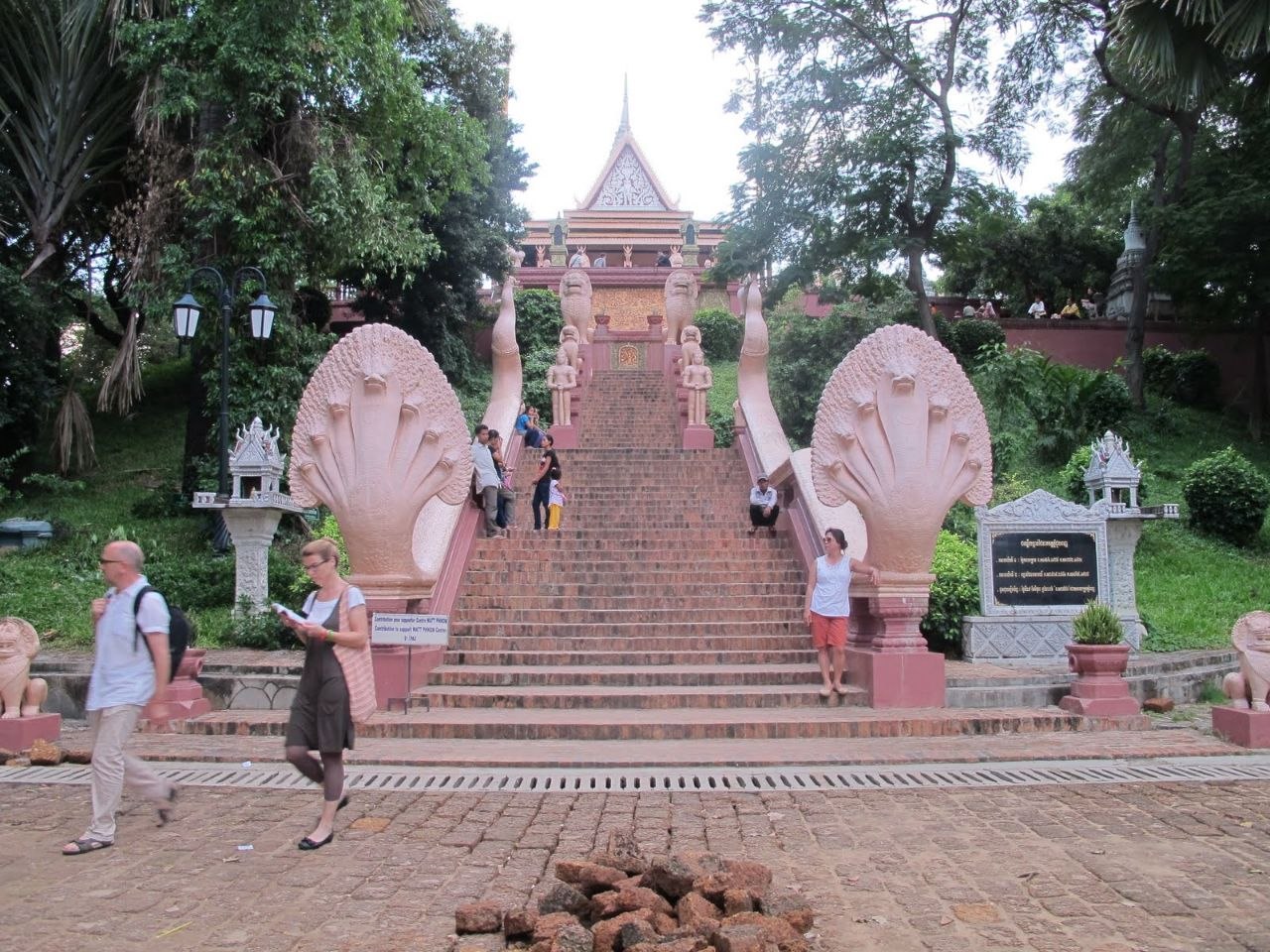
Wat Phnom stands on an artificial hill rising above the surrounding streets and is traditionally regarded as the birthplace of Phnom Penh. A broad staircase leads up the slope, flanked by stone naga balustrades and guardian lions that frame the approach. At the summit, the main sanctuary and surrounding shrines cluster around shaded courtyards, prayer halls, and smaller stupas dedicated to historical figures.
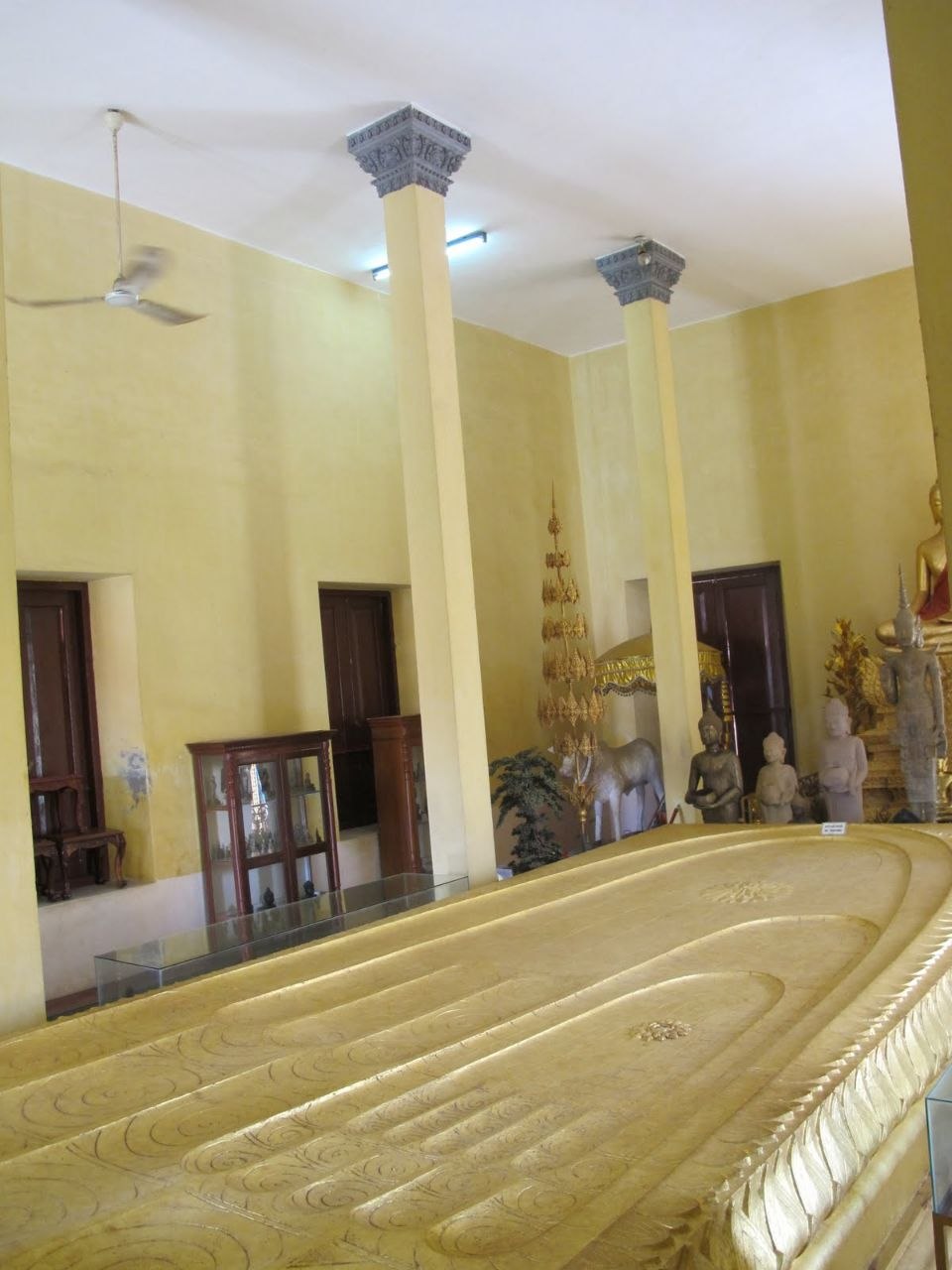
Within the temple complex, images of the Buddha appear in a variety of poses, including reclining representations associated with the Buddha’s final passing into nirvana. Incense coils, lotus offerings, and murals depicting scenes from Buddhist cosmology contribute to a dense visual environment, while the hill itself provides elevated views over nearby boulevards, traffic circles, and the canopy of trees that encircle the site.
Riverfront Promenade and Royal Palace Complex
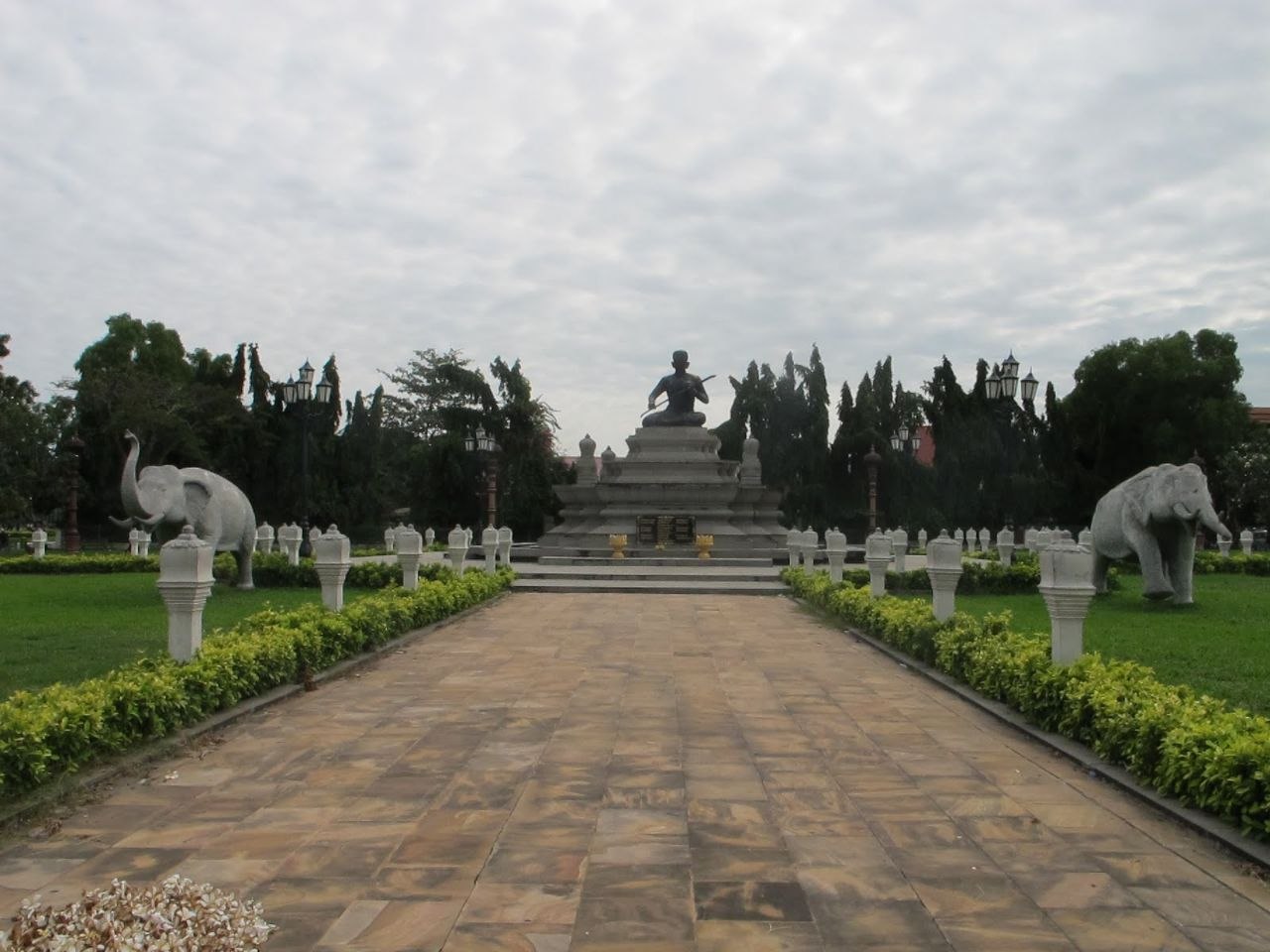
From Wat Phnom, the city’s central axis runs downhill toward the Tonlé Sap riverfront, where a long promenade follows the water’s edge. This area serves as a public gathering space, especially around sunset, with views across the river, open plazas, and several prominent royal monuments and statues. Sculpted nagas and mythological creatures appear along the embankment and at key intersections, reflecting the role of serpent deities in Khmer iconography and the city’s connection to the waterways.
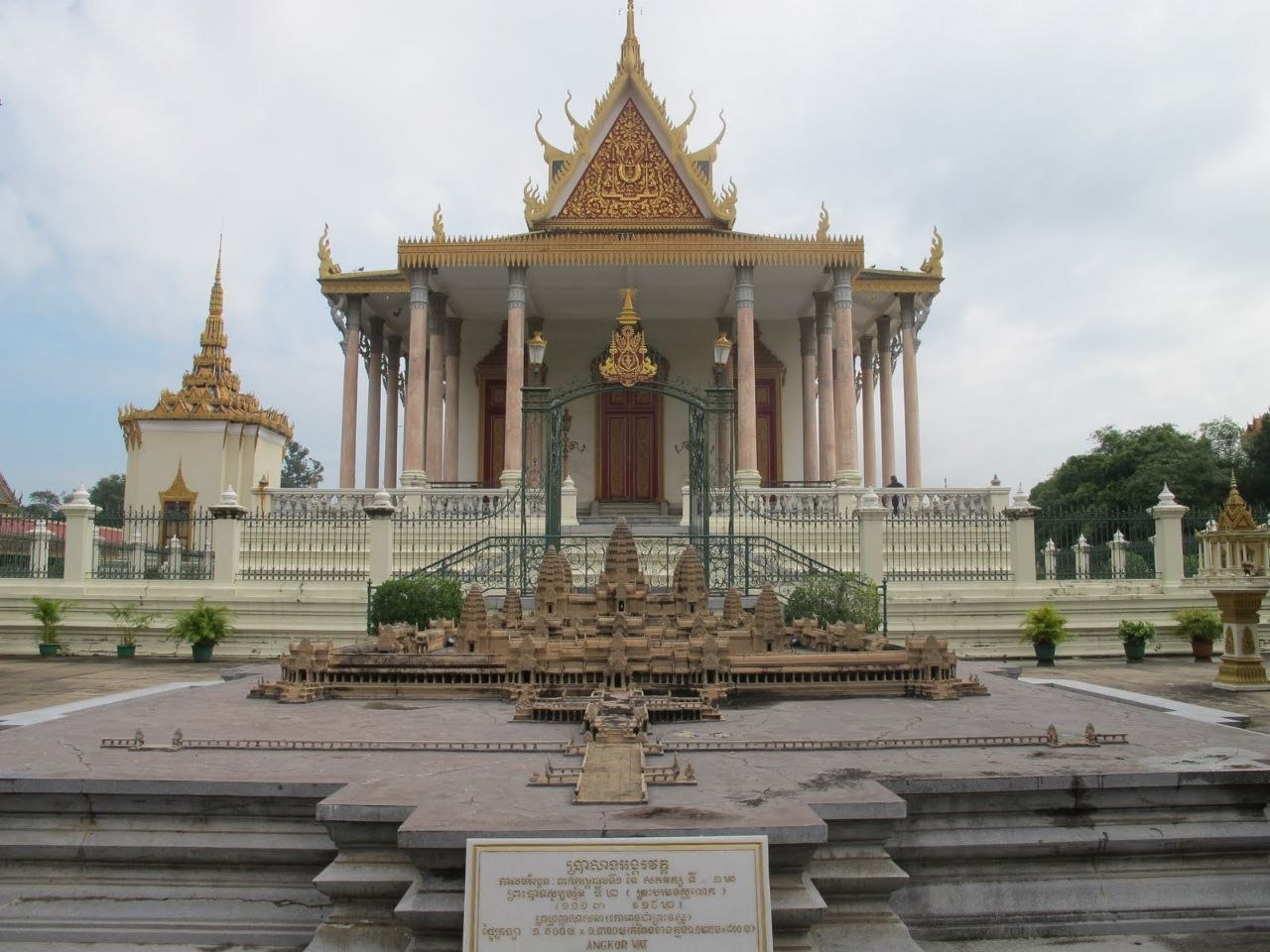
South along the riverfront, the Royal Palace complex marks the ceremonial heart of Phnom Penh. Golden roofs, pointed spires, and manicured gardens enclose the official residence of the King of Cambodia and various audience halls used for state functions. Adjacent to the palace, the Silver Pagoda houses important national treasures, including revered Buddha images and the celebrated floor paved with thousands of silver tiles. In the courtyard stands a detailed scale model of Angkor Wat, allowing visitors in the capital to see the layout of Cambodia’s most famous temple complex in miniature form, complete with central towers and surrounding galleries.
National Museum of Cambodia
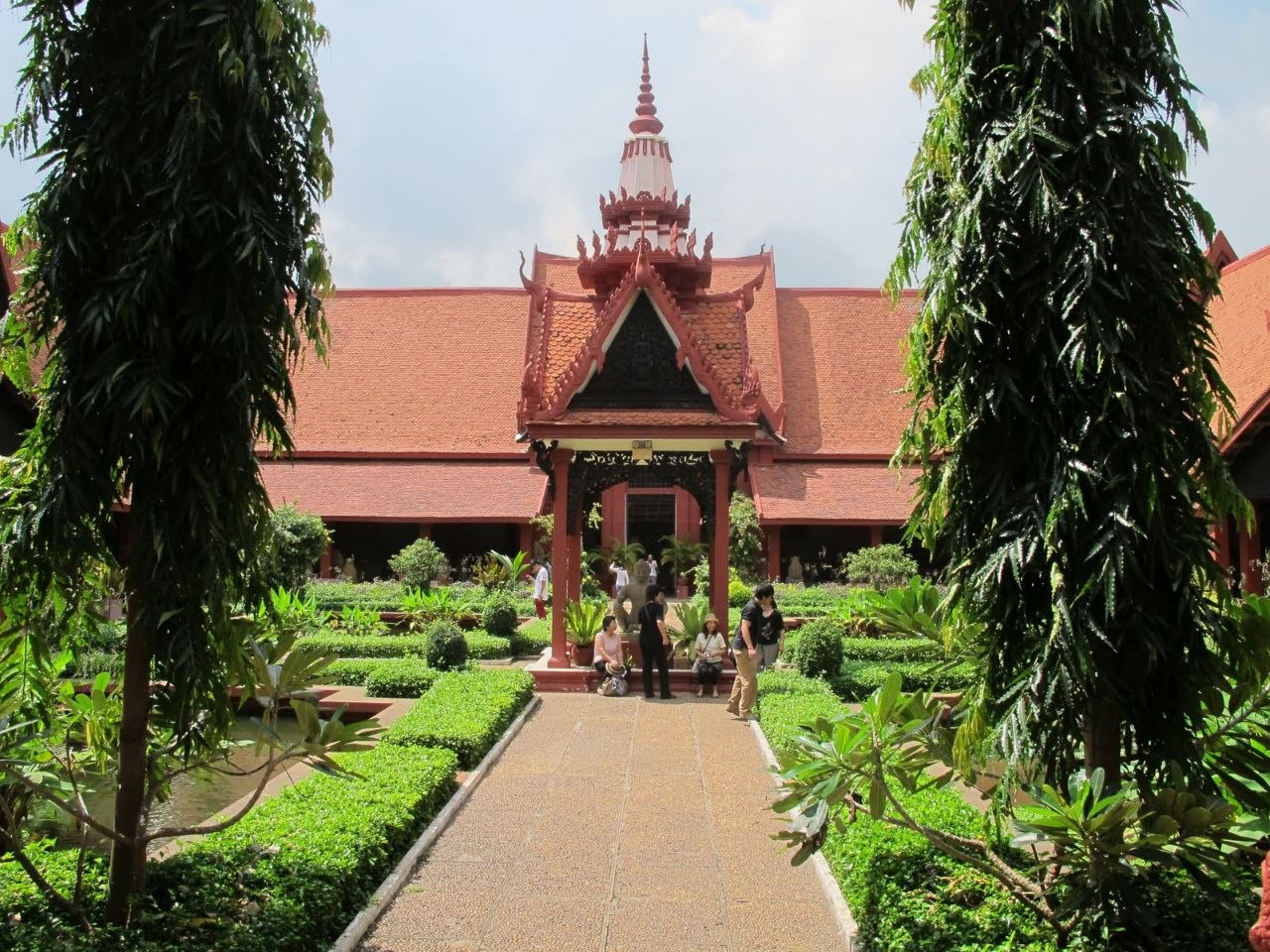
Just northwest of the Royal Palace, the National Museum of Cambodia occupies a red sandstone-colored building with an interior courtyard planted with frangipani trees and lotus ponds. The museum’s galleries present one of the world’s most important collections of Khmer sculpture and artifacts, spanning pre-Angkorian, Angkorian, and post-Angkorian periods. Stone lintels, guardian figures, and devotional statues trace the evolution of religious and royal art from early Hindu-influenced works to later Buddhist imagery.
The central courtyard offers a quiet contrast to the surrounding streets, with covered walkways framing views of ornamental pools and carved figures. Many visitors use this space to pause between galleries, taking in architectural details such as tiered roofs, naga finials, and richly decorated pediments that echo motifs seen at temple sites across the country. Exhibits inside provide historical context for the monuments visited elsewhere in Phnom Penh and the wider region.
Tuol Sleng Genocide Museum (S-21)
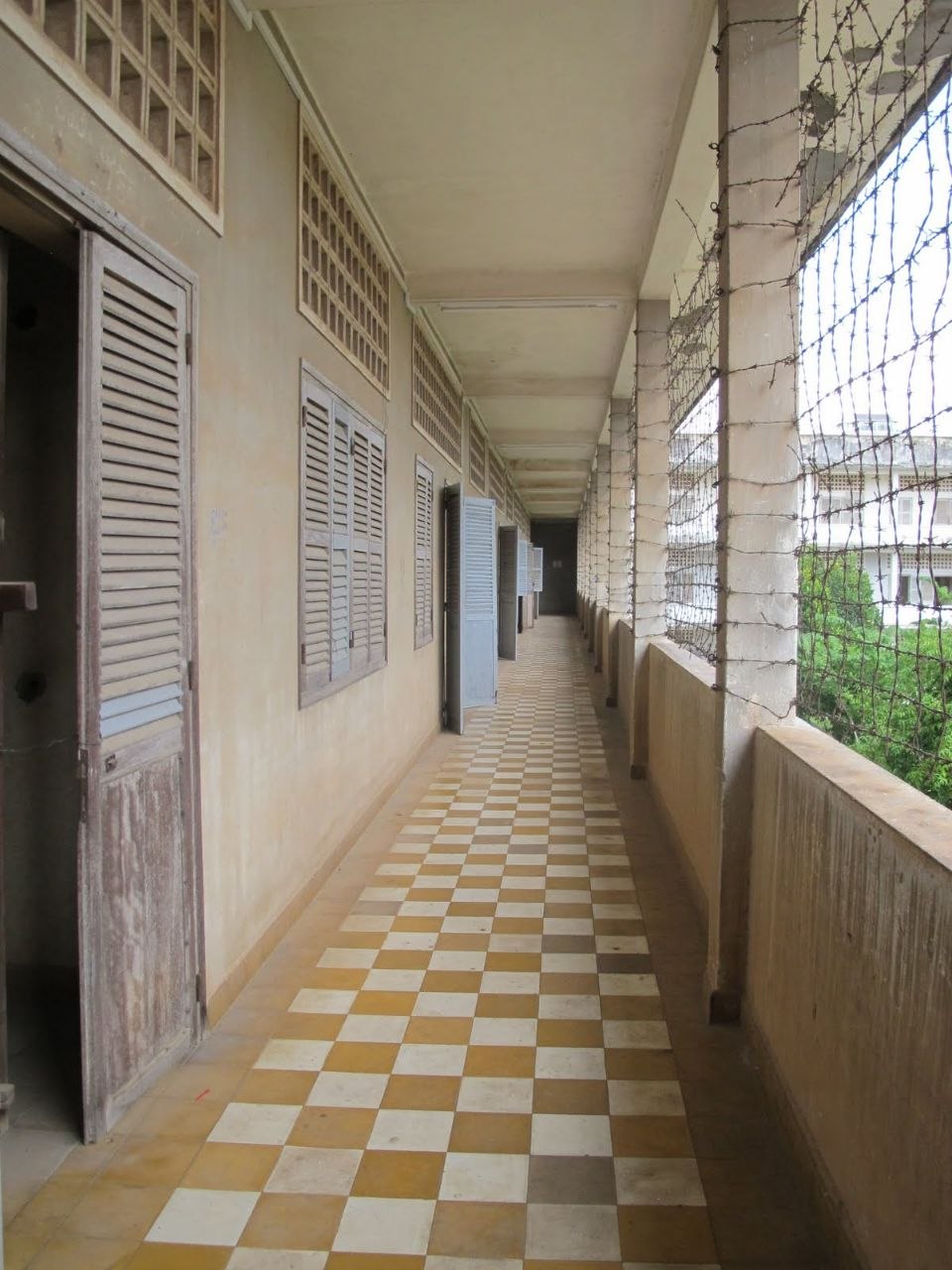
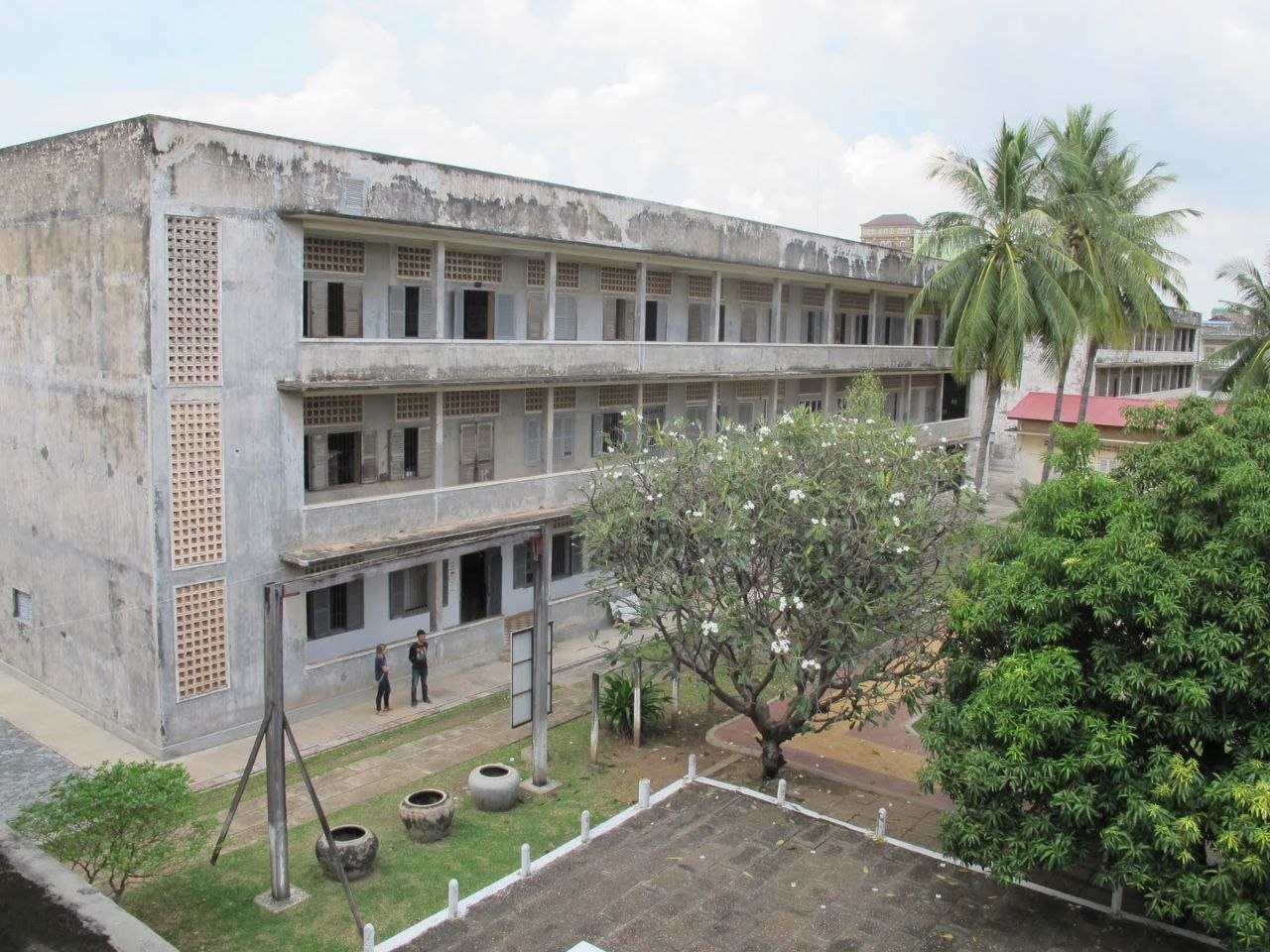
South of the city center, the Tuol Sleng Genocide Museum occupies the grounds of a former secondary school that was converted into Security Prison 21 (S-21) by the Khmer Rouge in the late 1970s. The campus layout of classroom blocks surrounding open courtyards remains clearly visible, but the interiors have been preserved and adapted to document the prison’s function as a key interrogation and detention site during the regime. Simple rooms, metal bed frames, and sparse furnishings convey the stark conditions under which prisoners were held.
Exterior walkways are enclosed in sections by barbed wire and makeshift barriers, a measure originally intended to prevent detainees from jumping from the upper floors. Today, visitors follow marked routes through these corridors and classrooms, passing rows of photographs, documents, and personal testimonies that record the identities of thousands of victims. The museum forms a central component of memory and education efforts related to the Cambodian genocide, and many visitors consider it one of the most sobering sites in the capital.
Food, Cafés, and Riverside Evenings
Phnom Penh offers a range of food and drink options concentrated along the riverfront and in the streets radiating from major landmarks. Traditional Cambodian dishes such as fish amok, prahok-based curries, and noodle soups appear alongside regional Asian cuisines and international menus. Informal eateries, market stalls, and simple rice shops operate throughout the day, while rooftop venues and cafes make use of views toward the rivers and royal monuments.
In the evenings, the river promenade and nearby parks become focal points for street snacks, iced coffee, and fresh fruit shakes. Small carts and open-fronted shops serve skewers, fried noodles, and sweet desserts to a mix of local residents and visitors. Away from the river, quieter side streets around Wat Phnom and the National Museum host cafés and bakeries housed in older shophouses, providing additional options between museum visits and temple stops.
Visiting Tips
Many of Phnom Penh’s major sights cluster within a relatively small central area, making it practical to combine locations such as Wat Phnom, the riverfront, the Royal Palace, and the National Museum on foot or with short tuk-tuk rides. The Tuol Sleng Genocide Museum and other contemporary history sites lie farther from the river and are typically reached by taxi or tuk-tuk. Allow ample time at Tuol Sleng to read exhibits and, if desired, to visit related memorials such as the Choeung Ek killing fields, which require separate transport beyond the city center.
Modest dress is expected at temples and within the Royal Palace and Silver Pagoda compounds, with covered shoulders and knees recommended. Footwear is usually removed before entering certain shrines and interior spaces, so easily removable shoes are practical. Daytime temperatures can be high and humidity intense, so carrying water, sun protection, and light clothing helps with comfort when walking between sites. At more reflective locations such as Tuol Sleng, visitors are encouraged to move quietly, refrain from loud conversations, and follow posted photography guidelines.
 Jumping Timezones
Leave a comment