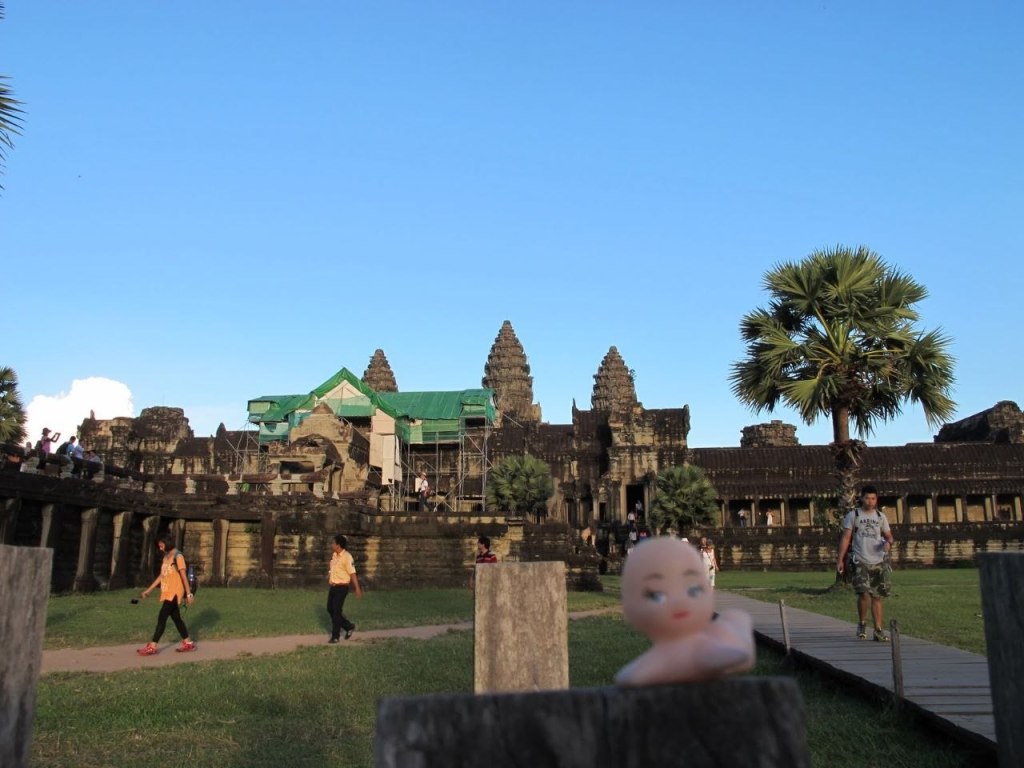
Angkor is a vast archaeological complex in northwestern Cambodia, located just north of Siem Reap. Once the heart of the Khmer Empire, it spans hundreds of square kilometres of forested land, rice fields, and reservoirs dotted with stone temples, laterite walls, and monumental gateways. The site is best known for its intricately carved towers, expansive moats, and the way many structures appear to emerge from the surrounding jungle.
Built between the 9th and 15th centuries, Angkor includes famous landmarks such as Angkor Wat, Angkor Thom with the Bayon, Ta Prohm, and numerous outer temples. The complex is a UNESCO World Heritage Site and an important centre of Cambodian cultural identity, drawing visitors for its combination of architectural sophistication, symbolic religious layouts, and atmospheric, tree-covered ruins.
Angkor Wat: The Central Temple-Mountain
Angkor Wat is the largest and best-preserved temple in the complex, located on the southern side of the main archaeological park. Enclosed by a wide moat and long laterite walls, the temple is approached via a raised sandstone causeway that leads to its iconic five towers, which symbolize the peaks of Mount Meru in Hindu cosmology. The outer galleries are lined with extensive bas-reliefs depicting epic scenes from the Ramayana and Mahabharata, historical processions, and celestial dancers.
The layout of Angkor Wat is oriented to the west, an unusual feature among Angkorian temples, and its central sanctuary rises in stacked tiers to a temple-mountain form. Visitors typically explore the complex by circling the outer galleries, then moving inward through courtyards and steep stairways to the upper levels for elevated views of the surrounding moat, forests, and rice fields.
Angkor Thom and the Bayon: Faces of the Ancient City
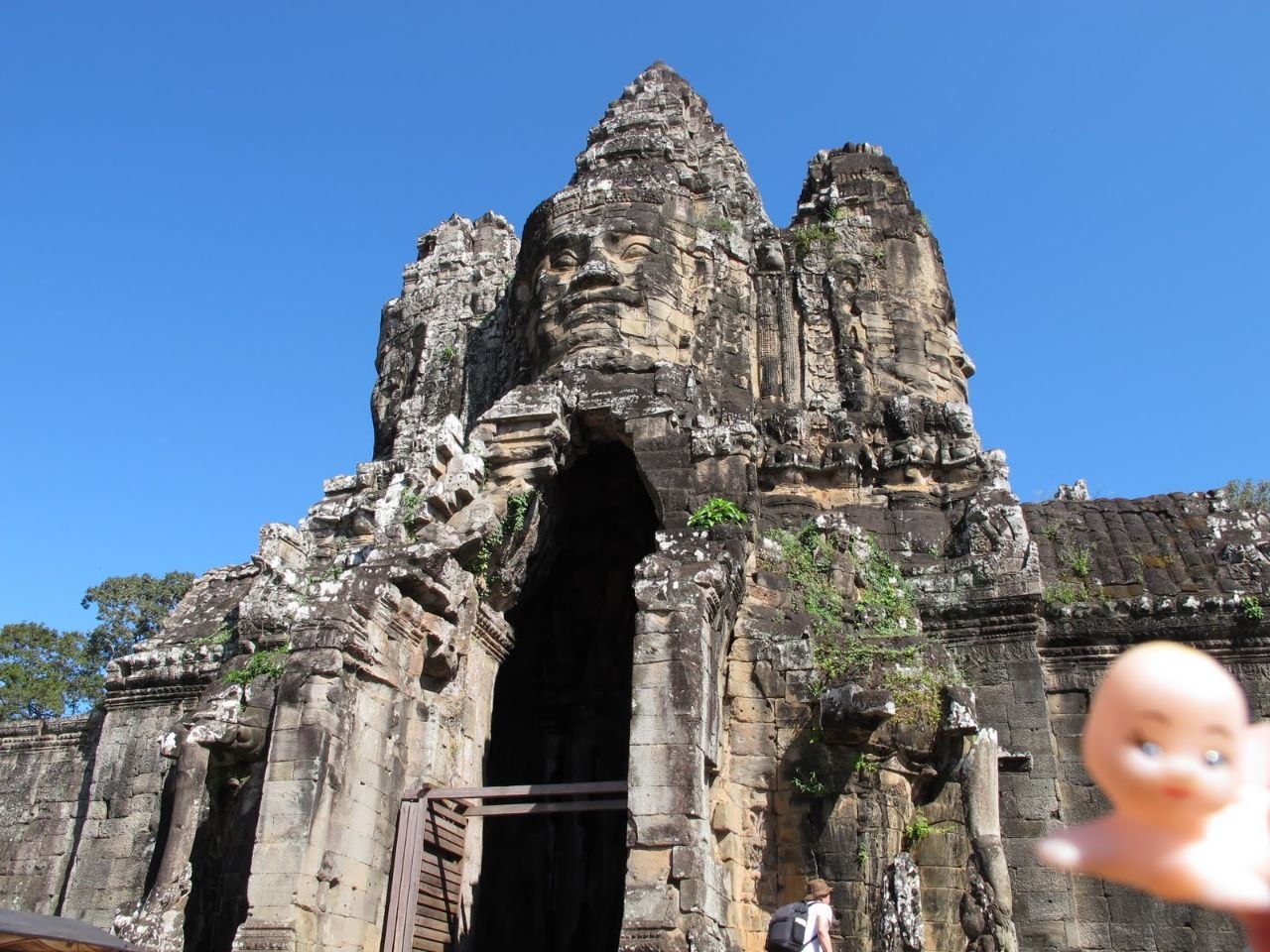
North of Angkor Wat lies Angkor Thom, the last great capital of the Khmer Empire. This walled city is entered through monumental gates on each cardinal axis, each crowned with towers carved with serene faces. The South Gate is one of the most visited, reached via a causeway lined with stone figures holding the body of a multi-headed naga, creating a dramatic approach into the city.
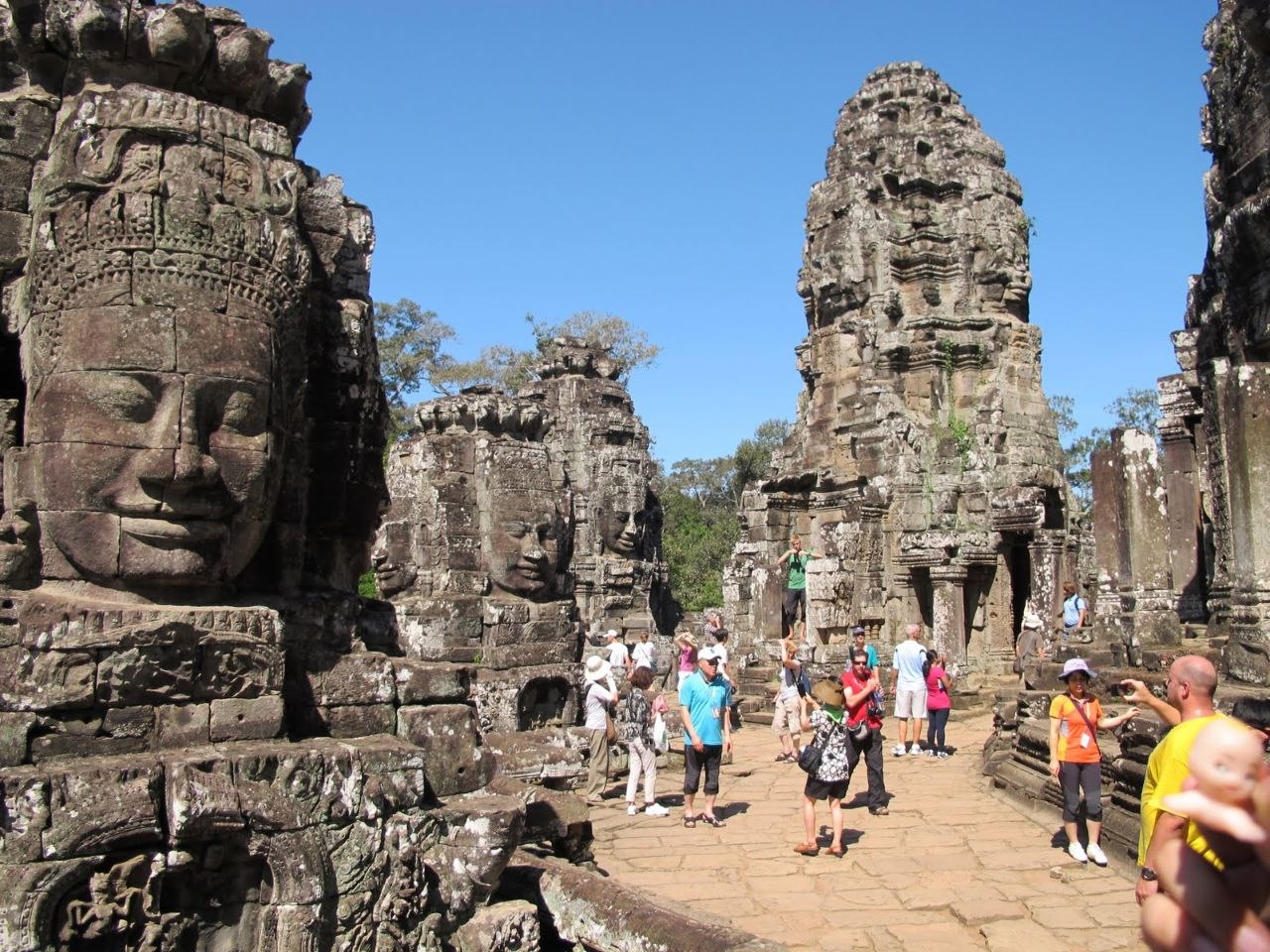
At the heart of Angkor Thom stands the Bayon, a richly decorated temple known for its multitude of stone towers carved with smiling, enigmatic faces. These faces gaze out over terraces and courtyards, giving the temple an immersive, almost sculptural atmosphere. The Bayon also contains detailed bas-reliefs of everyday Khmer life, naval battles, and market scenes, providing historical insight into the society that built Angkor.
Ta Prohm: Roots and Ruins in the Jungle
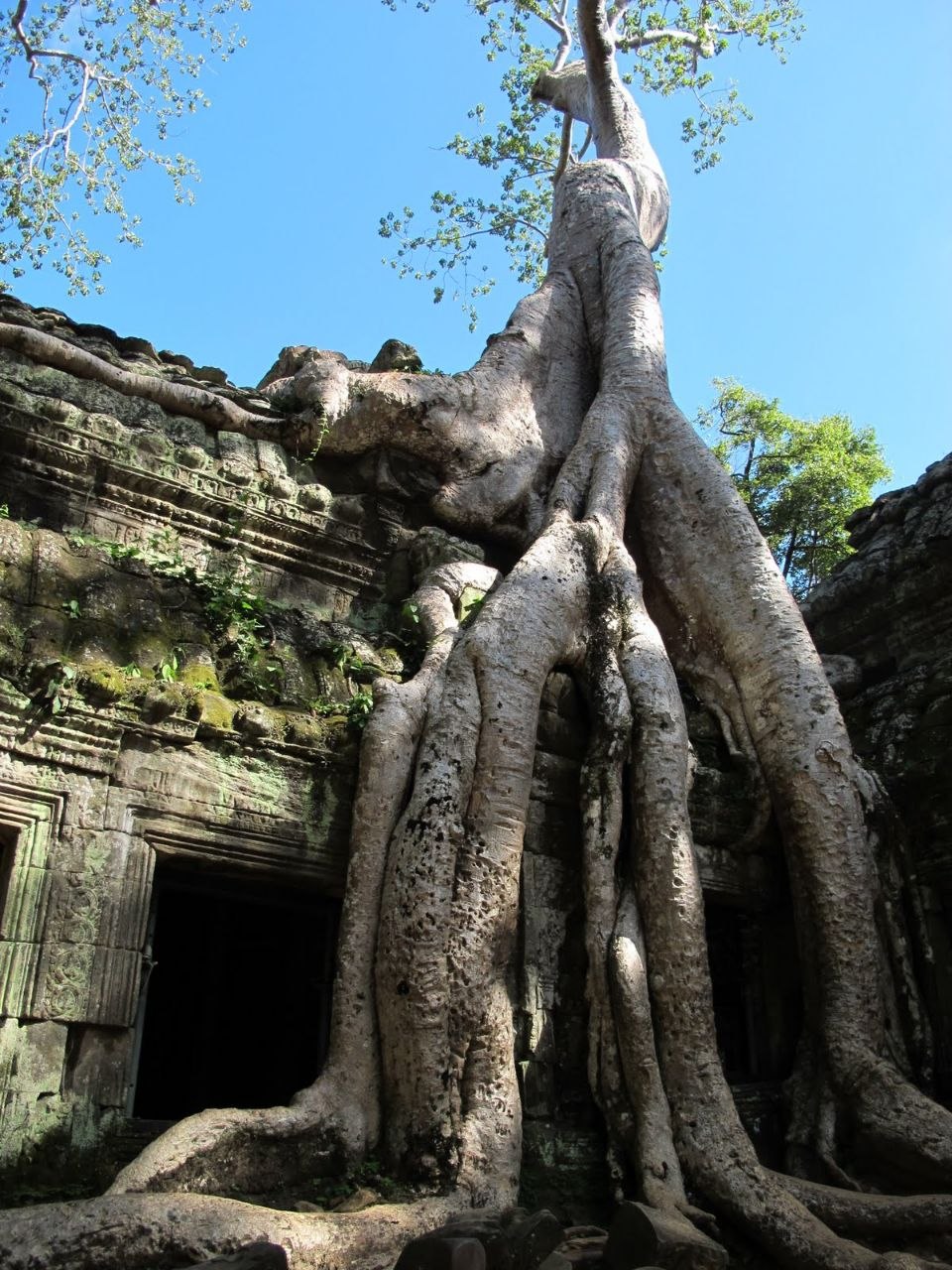
East of Angkor Thom, Ta Prohm illustrates the dramatic interaction between built structures and the surrounding forest. The temple is partially consumed by massive spung trees whose roots flow over walls, galleries, and doorways. Sections of the complex remain deliberately unrestored, preserving the evocative image of stone architecture intertwined with living trunks and buttress roots.
Ta Prohm consists of a series of courtyards, libraries, and corridors arranged around central sanctuaries, with extensive carvings of devatas, floral motifs, and inscriptions. Narrow passageways, collapsed galleries, and shaded courtyards create varying light and sound conditions, making it one of the most atmospheric sites within Angkor, especially in the early morning or late afternoon.
Banteay Srei: Pink Sandstone Precision
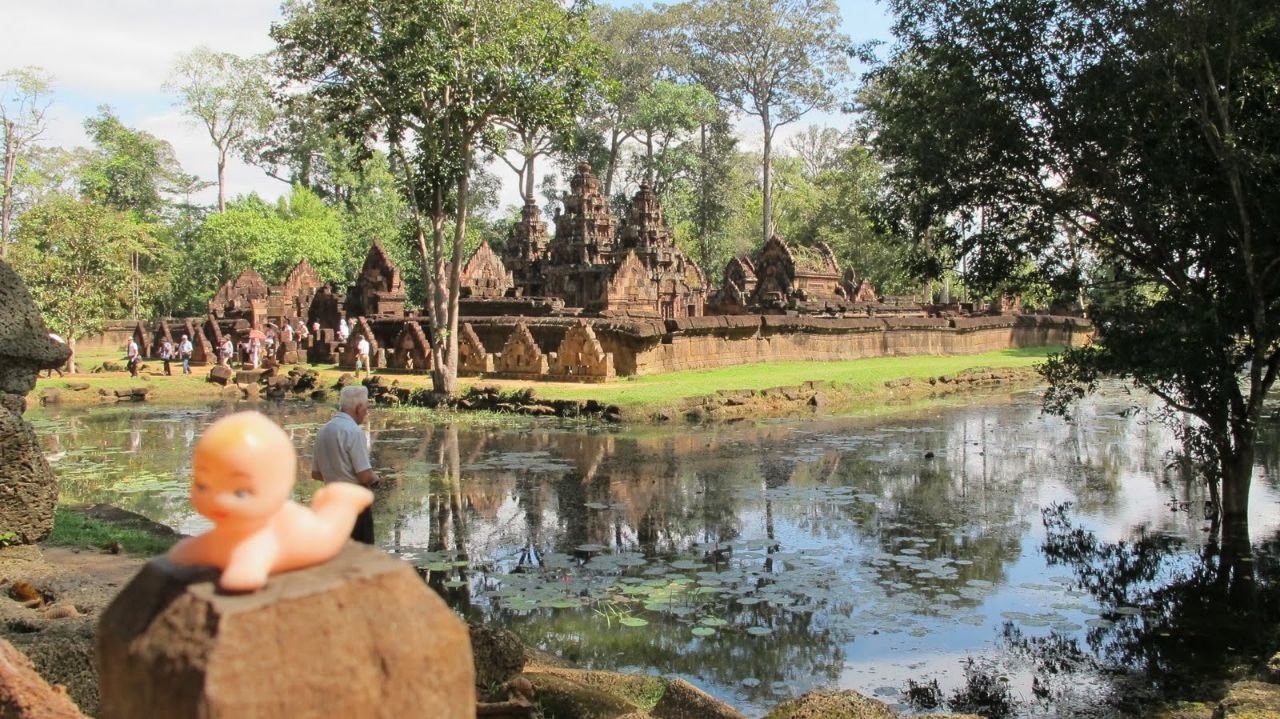
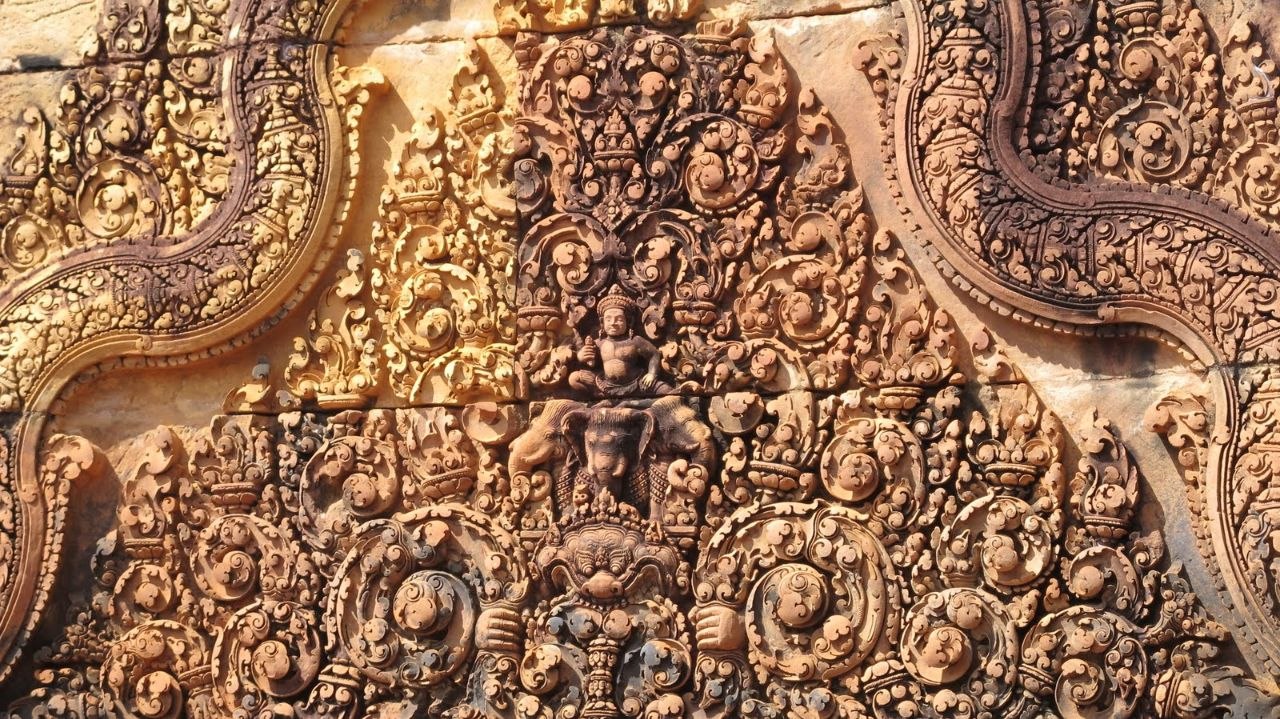
Further northeast of the main Angkor cluster, Banteay Srei is a smaller but exceptionally detailed temple constructed from pink sandstone. The compact scale of the complex allows visitors to examine finely carved pediments, lintels, and doorframes at close range. Scenes from Hindu mythology, floral designs, and delicate patterns cover nearly every surface, demonstrating the high level of craftsmanship achieved during the 10th century.
Banteay Srei is surrounded by a moat that reflects its warm-toned stone towers and gopuras. The contrast between the pink sandstone, green vegetation, and still water makes this temple particularly photogenic, especially in soft morning or late-afternoon light when the carvings appear to glow. Its distance from the central temples means it is often visited as part of a longer outer-circuit route.
Neak Pean: An Island Sanctuary
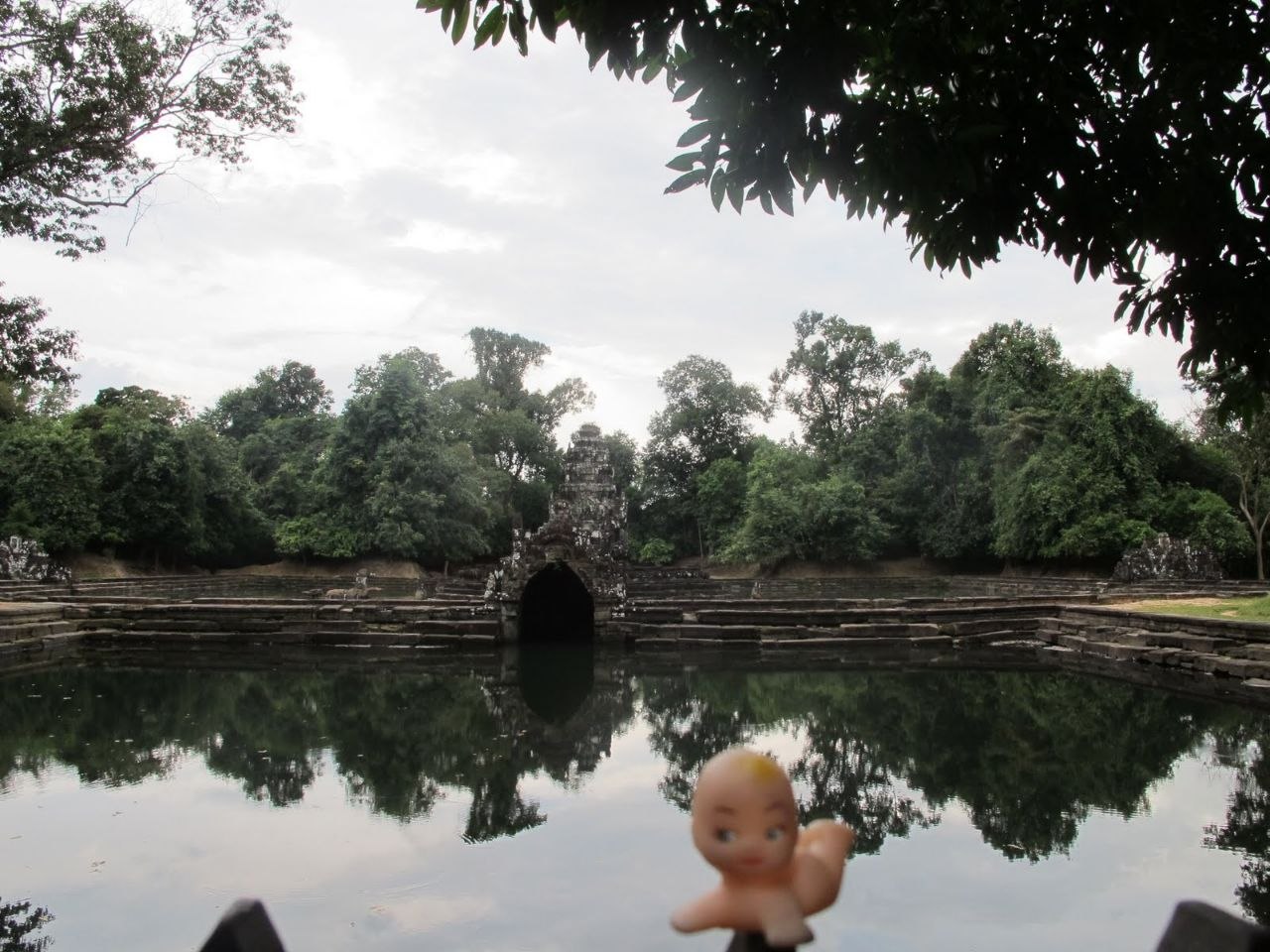
Neak Pean lies on an artificial island within the large reservoir of Jayatataka, north of the main Angkor Thom complex. Accessed via a long causeway crossing shallow waters and seasonal wetlands, the site centres on a small circular temple surrounded by pools. The name "Neak Pean" refers to the coiled naga serpents depicted around the central base.
The temple was originally associated with ritual healing and symbolic purification, with water flowing through sculpted conduits into the surrounding basins. Today, visitors encounter a tranquil setting where the central shrine and naga balustrades are reflected in still water, evoking the ancient hydraulic engineering that once characterized the Angkor region.
Bakong and the Roluos Group: Early Temple Foundations
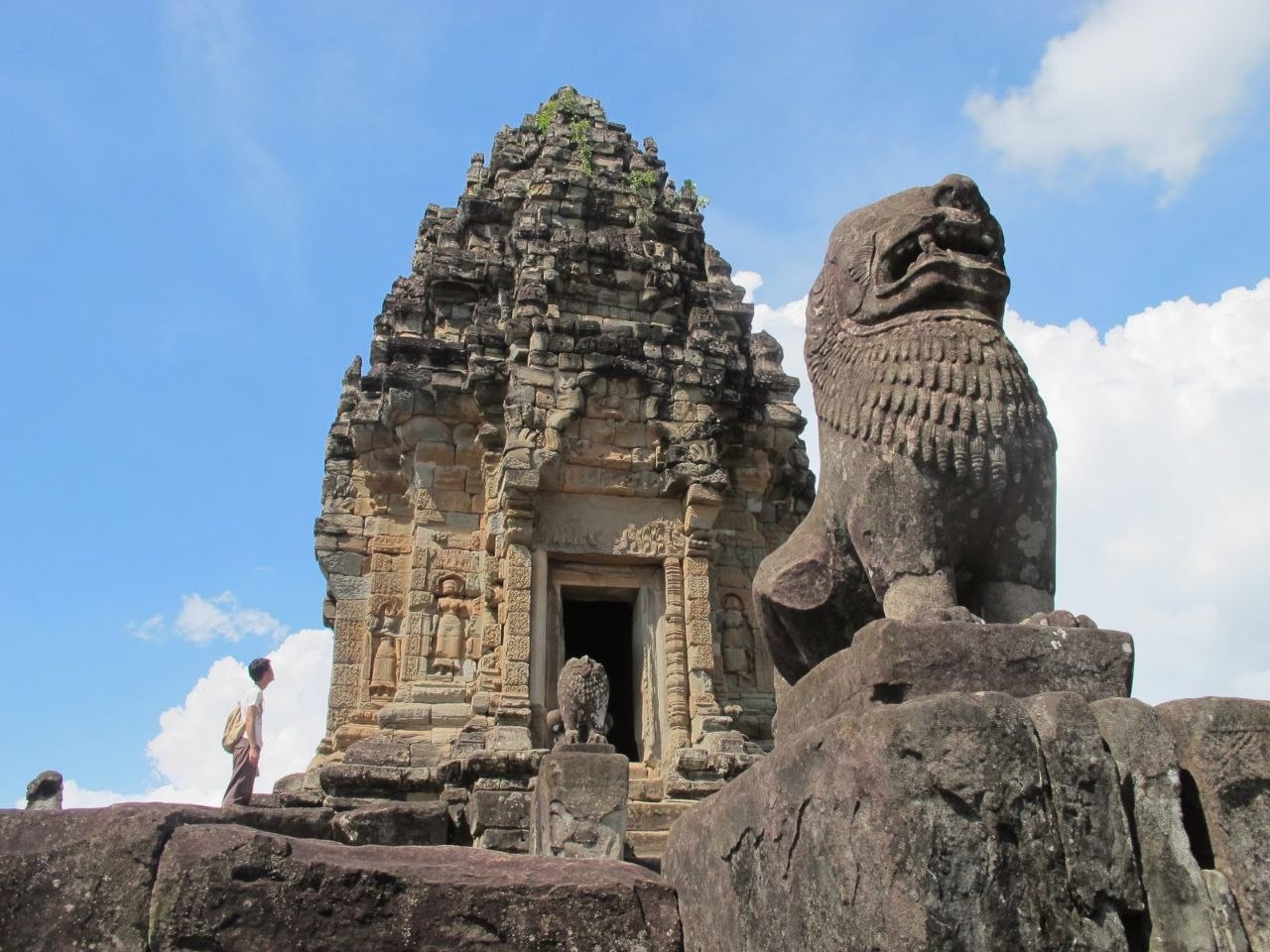
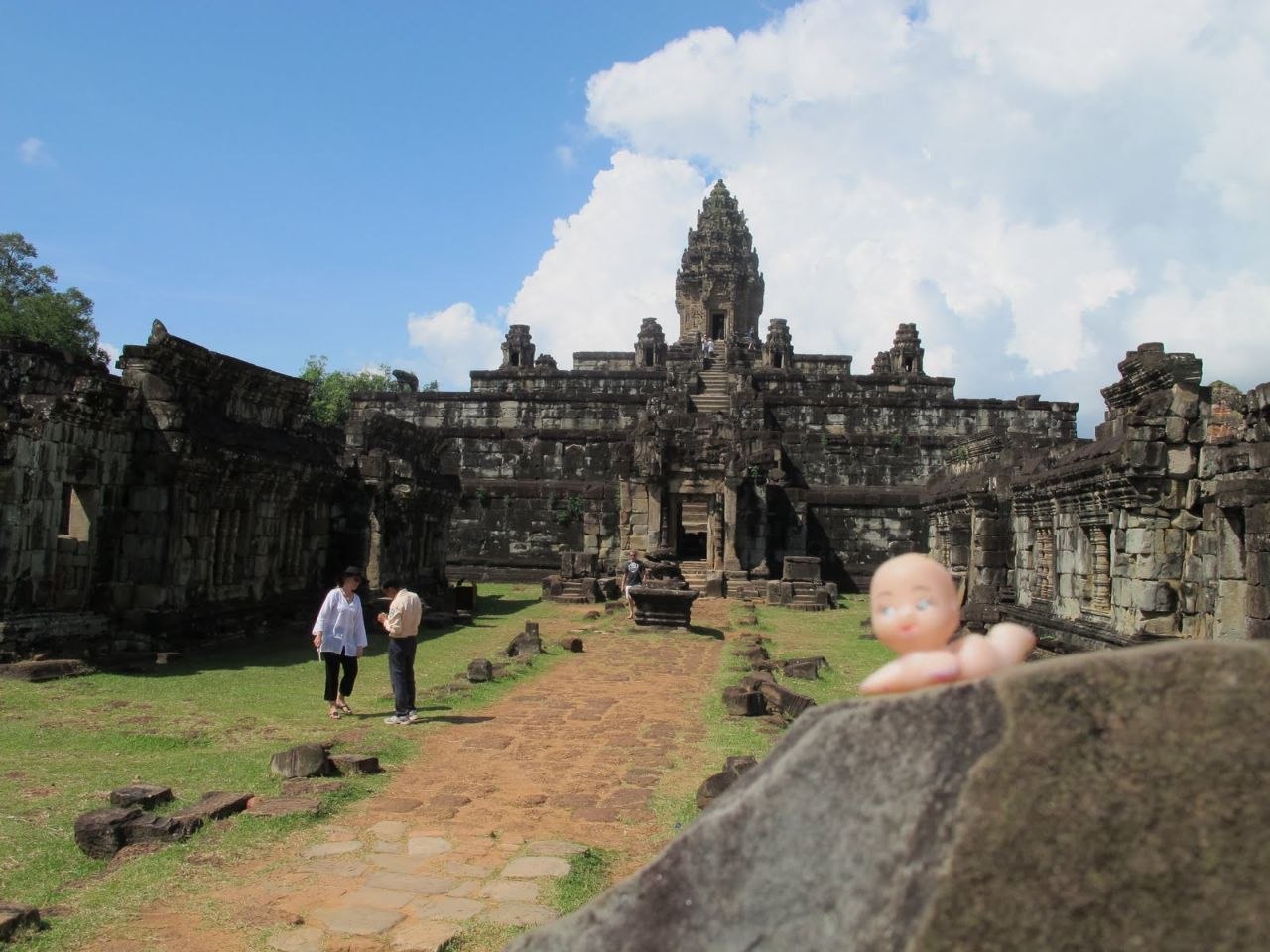
To the southeast of modern Siem Reap lie the temples of the Roluos Group, representing some of the earliest permanent stone constructions of the Khmer Empire. Bakong is the most prominent of these, a stepped temple-mountain rising on a multi-tiered platform. Lion guardians, elephant statues, and corner shrines mark the terraces, while the central tower offers views across the surrounding landscape.
Nearby temples such as Preah Ko and Lolei, though smaller, illustrate the evolution of Angkorian architecture from brick and stucco structures toward the later sandstone monuments. Visiting the Roluos Group provides context for the architectural and religious developments that culminated in the grand scale of Angkor Wat and Angkor Thom.
Food and Refreshments Around Angkor
Facilities around the Angkor complex have expanded significantly, and visitors now find a range of food and drink options near the main temples and at designated rest areas. Simple stalls and local restaurants serve Cambodian dishes such as rice, noodle soups, and grilled meats, while larger venues around Angkor Wat, Srah Srang, and the main park entrances offer drinks, fresh coconuts, and basic snacks.
Most food outlets are concentrated along established circuits and near parking areas, making it convenient to pause between temple visits. However, distances between sites can still be considerable, so many visitors carry water and light snacks, using the restaurant zones for longer breaks during the midday heat.
Visiting Tips
The scale of Angkor makes advance planning important. Many visitors organize their days around a "small circuit" and a "grand circuit" route, combining sunrise or sunset at Angkor Wat with visits to Angkor Thom, Ta Prohm, and selected outer temples. Transport is typically arranged by tuk-tuk, car, or bicycle, with official passes required and checked at entry points.
Comfortable, modest clothing is recommended, covering shoulders and knees in line with local expectations at religious sites. Temperatures and humidity can be high year-round, so sun protection, water, and breaks in shaded areas are essential. Early morning and late afternoon offer cooler conditions and softer light for photography, while the middle of the day can be used for rest, meals, or exploring indoor exhibits in Siem Reap that provide additional background on Angkor’s history and conservation.
 Jumping Timezones
Leave a comment