Bangkok, the capital of Thailand, is a dense riverside metropolis where historic royal compounds sit alongside modern high-rises. Centered around a bend in the Chao Phraya River, the old town district of Rattanakosin preserves many of the city’s most important Buddhist temples and palaces. Here, richly decorated halls, towering prang spires, and gilded chedis reflect the city’s role as both a political and spiritual center.
The city’s major temple complexes are active places of worship as well as architectural landmarks. Visitors move between glittering ordination halls, quiet cloisters, and busy riverside piers, observing everyday religious practice amid intricate craftsmanship in glass, porcelain, lacquer, and gold leaf.
Wat Phra Kaew & The Grand Palace
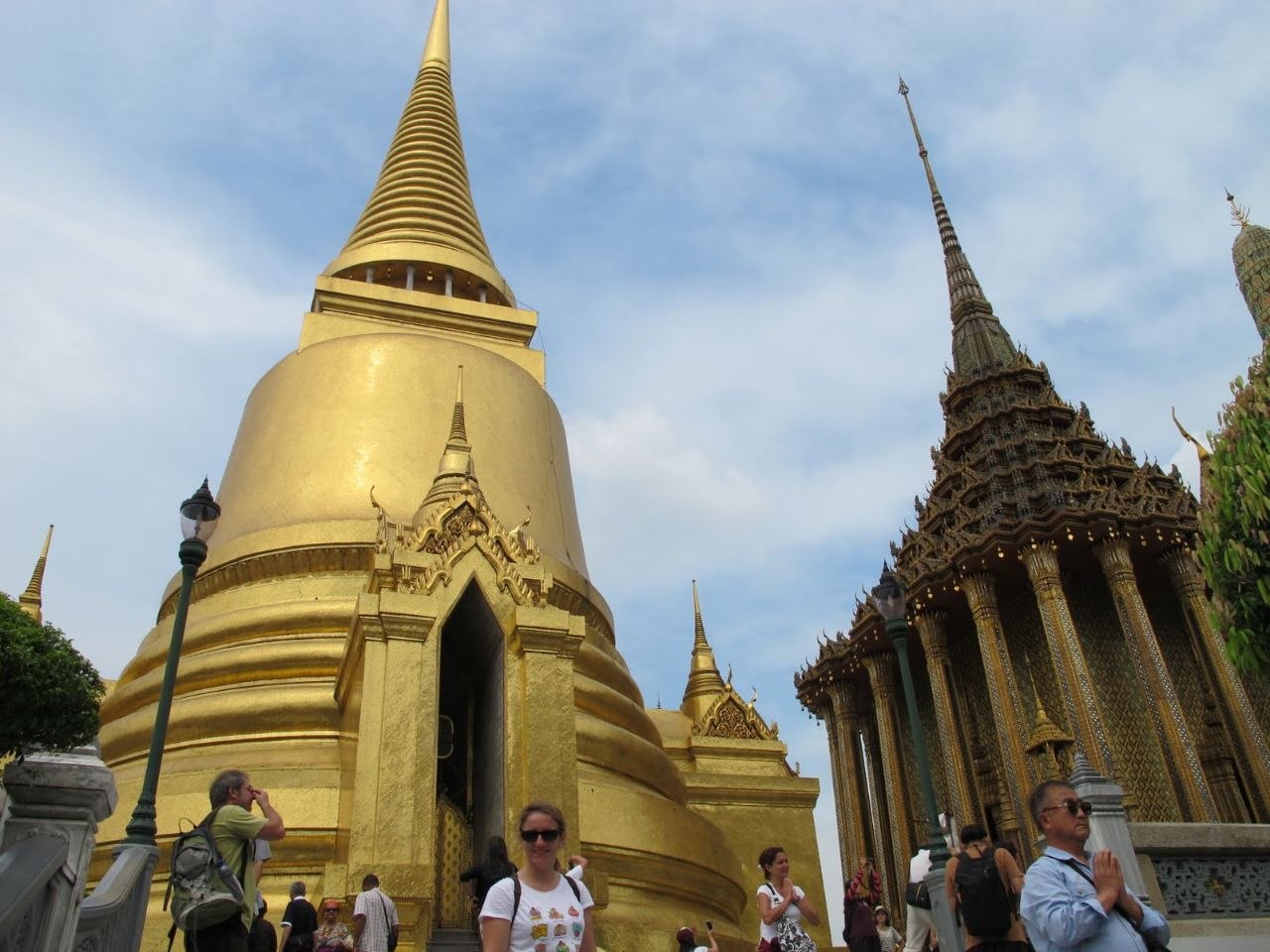
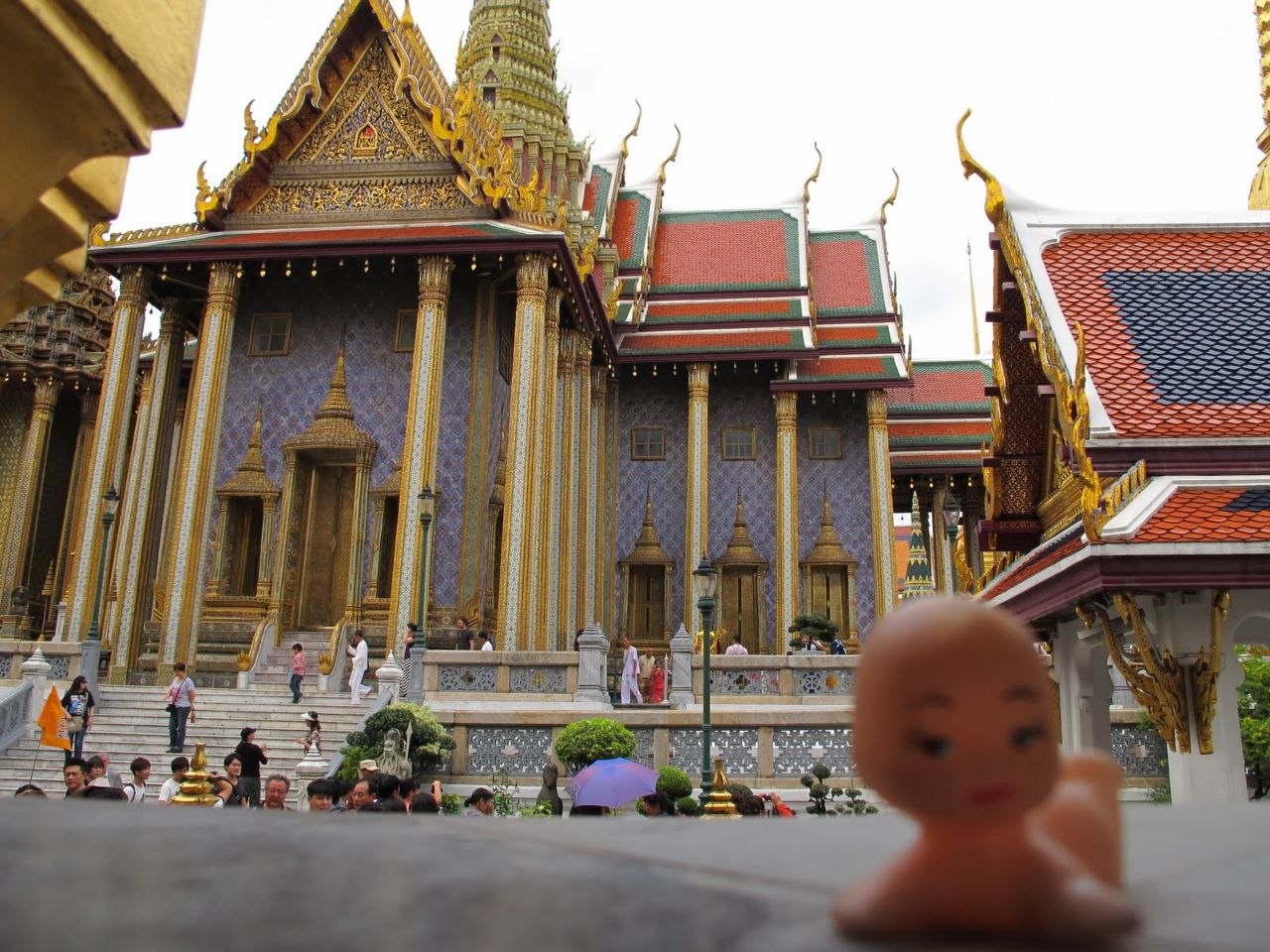
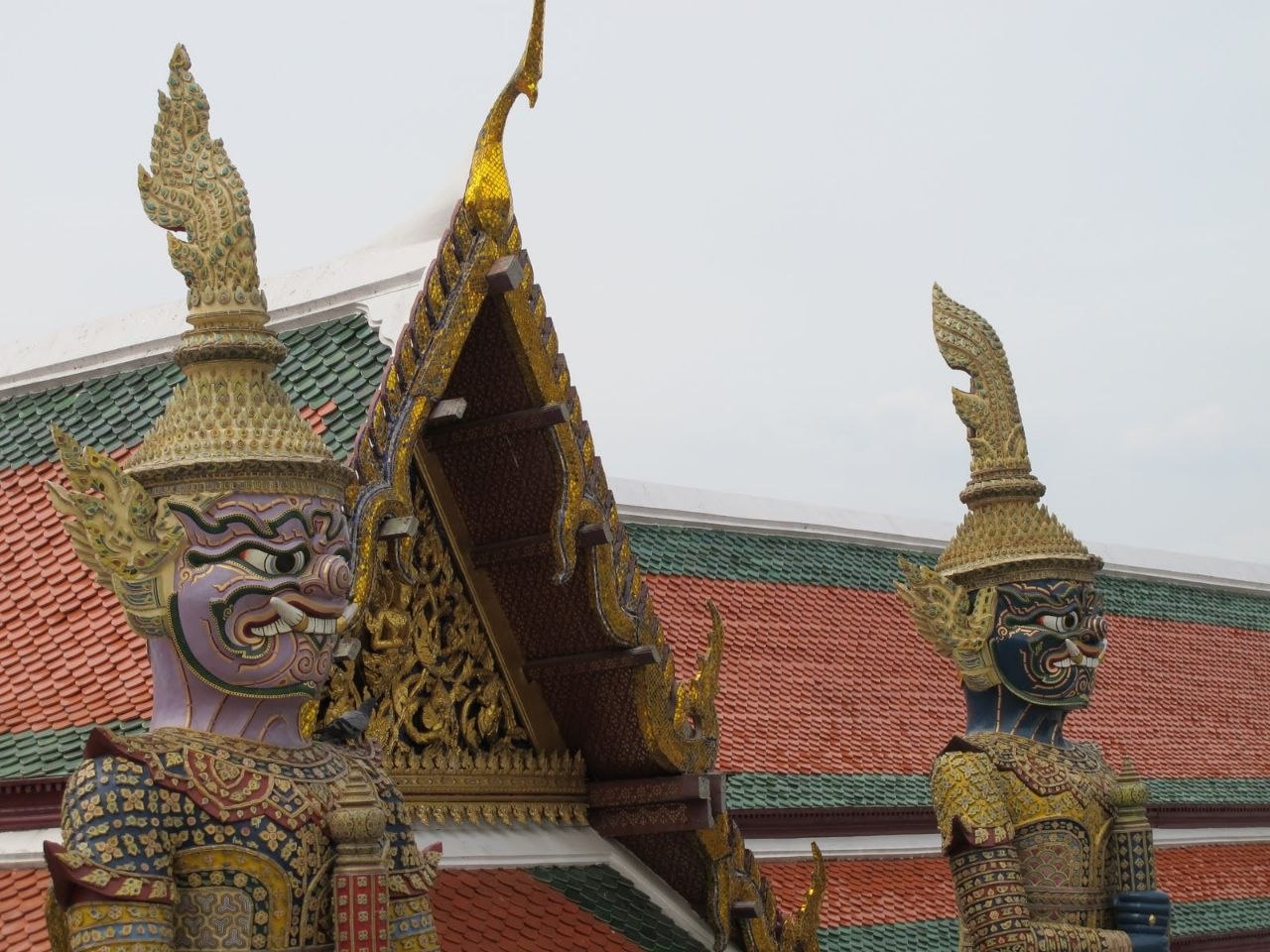
Wat Phra Kaew and the adjoining Grand Palace form the ceremonial heart of Bangkok on Rattanakosin Island. Within the palace walls, golden chedis rise above the tiled roofs, their faceted surfaces catching the light and emphasizing the vertical lines of the complex. The architecture combines traditional Thai rooflines with ornate details, including mirrored mosaics, carved pediments, and painted scenes from the Ramakien epic.
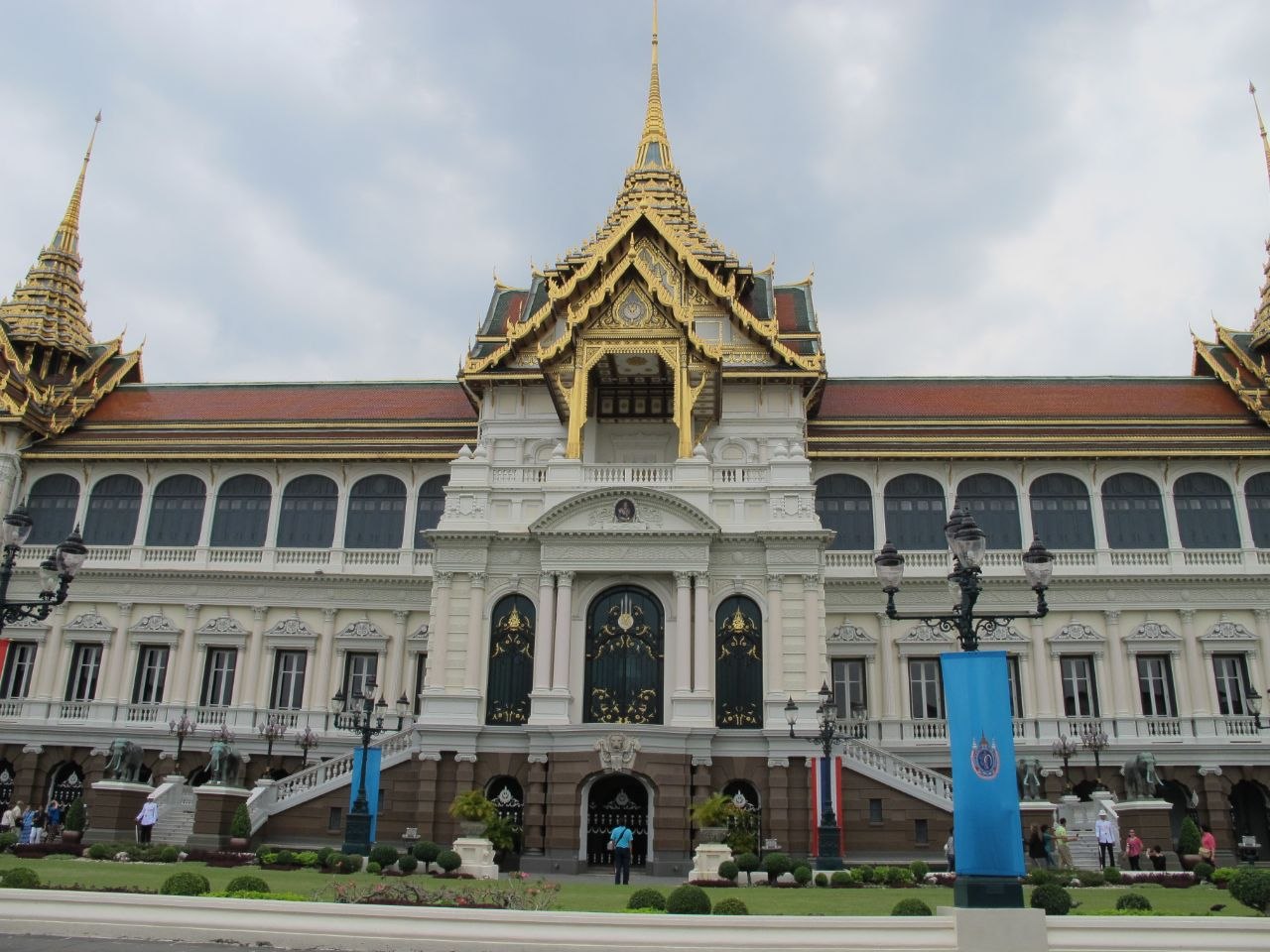
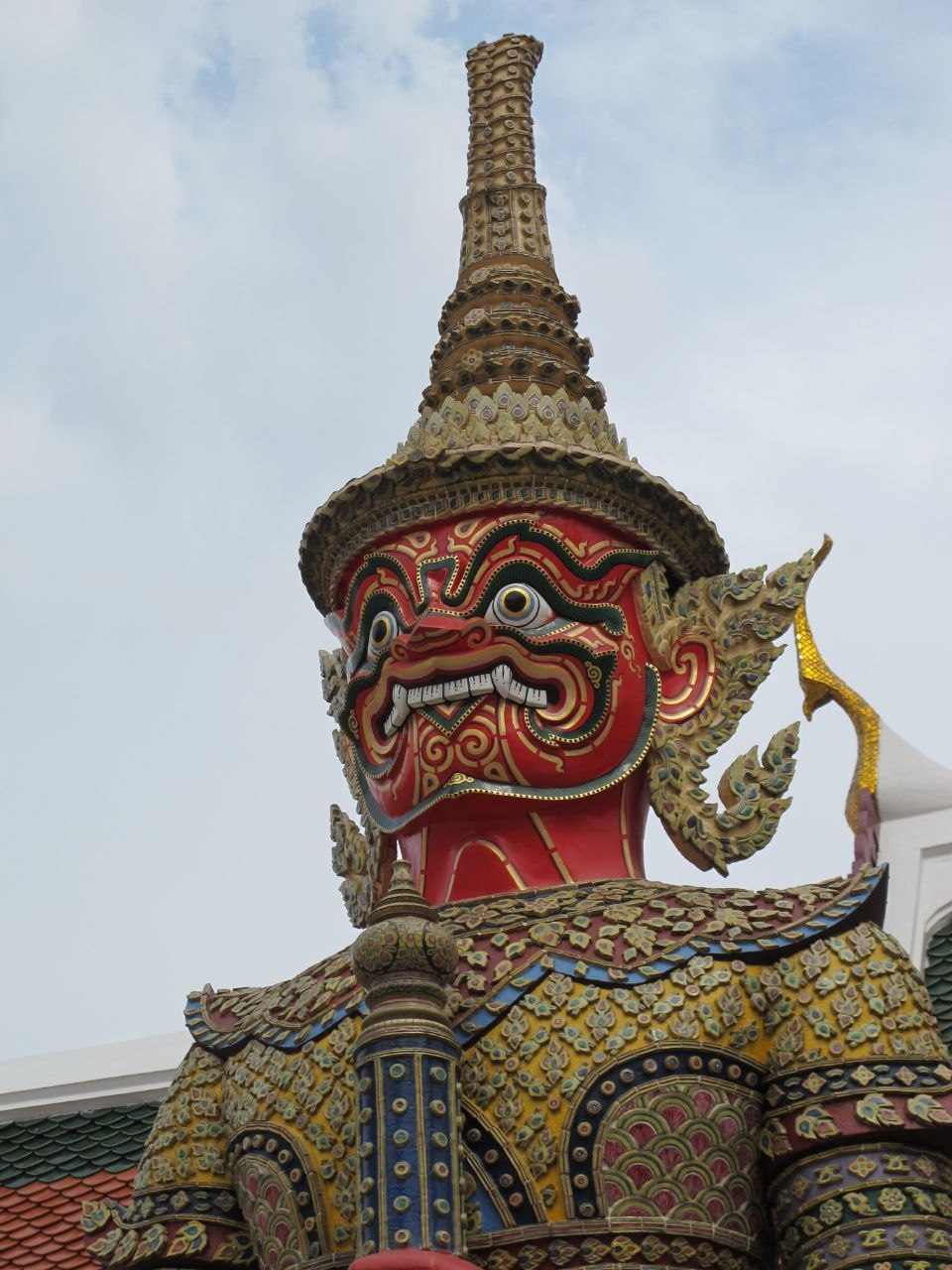
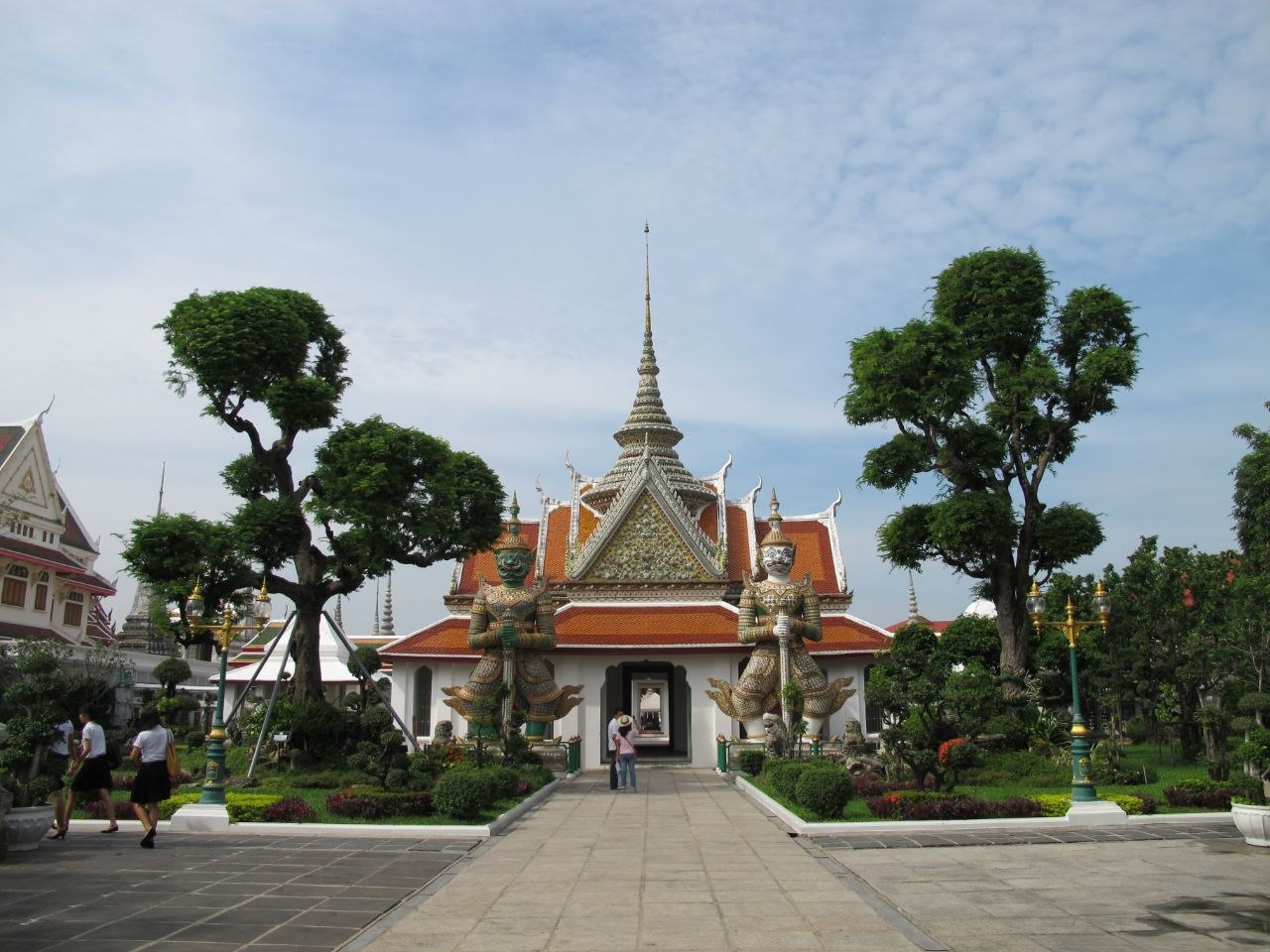
At the entrance gates, brightly colored yaksha guardian demons stand watch, flanking passageways into the temple grounds. These towering figures, often painted in deep reds, greens, and gold, are covered in intricate patterns that echo the fine detail found on surrounding pillars and walls. Nearby, the Chakri Maha Prasat throne hall introduces European-inspired forms into the palace ensemble, with a multi-tiered Thai roof rising above a more Western-influenced lower façade.
Throughout the compound, small shrines, galleries, and statues contribute to a sense of density and visual richness. Even seemingly modest elements, such as balustrades, window frames, and decorative tiles, are carefully finished, inviting close inspection as visitors move between courtyards.
Wat Pho
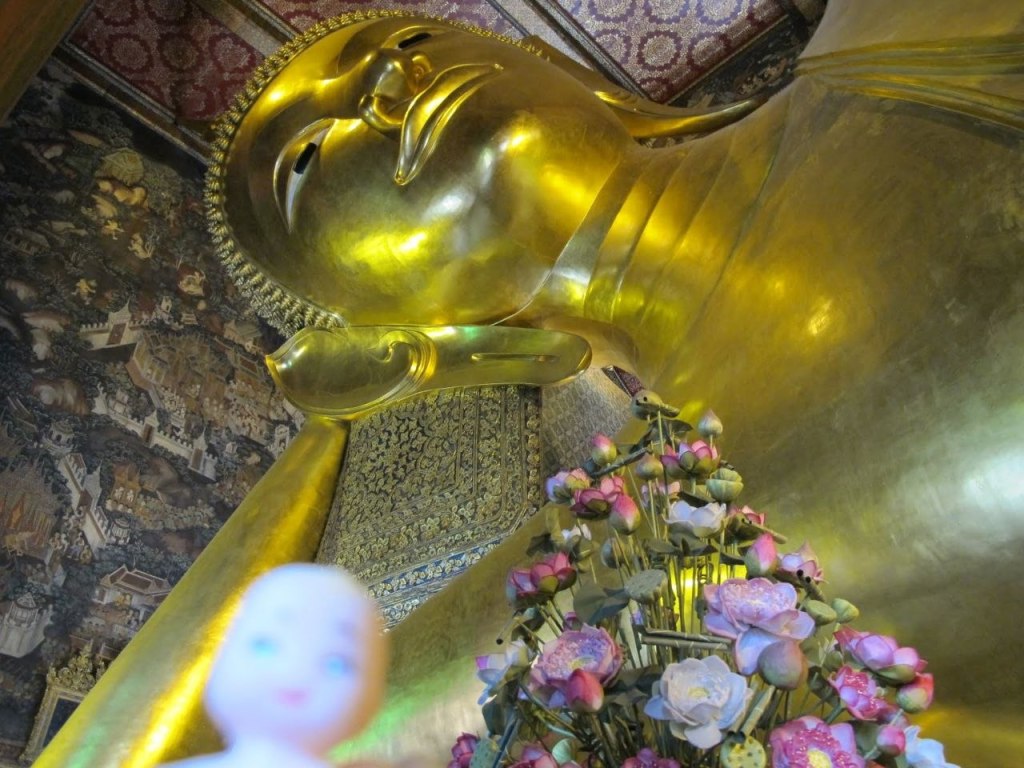
South of the Grand Palace, Wat Pho is one of Bangkok’s oldest temple complexes and is especially known for its massive Reclining Buddha image. Housed in a long viharn, the gilded statue stretches almost the full length of the hall, with the figure’s serene expression and detailed mother-of-pearl inlay on the soles of the feet drawing particular attention. The scale of the image contrasts with the narrow aisles that run along its sides, emphasizing its size as visitors walk from head to toes.
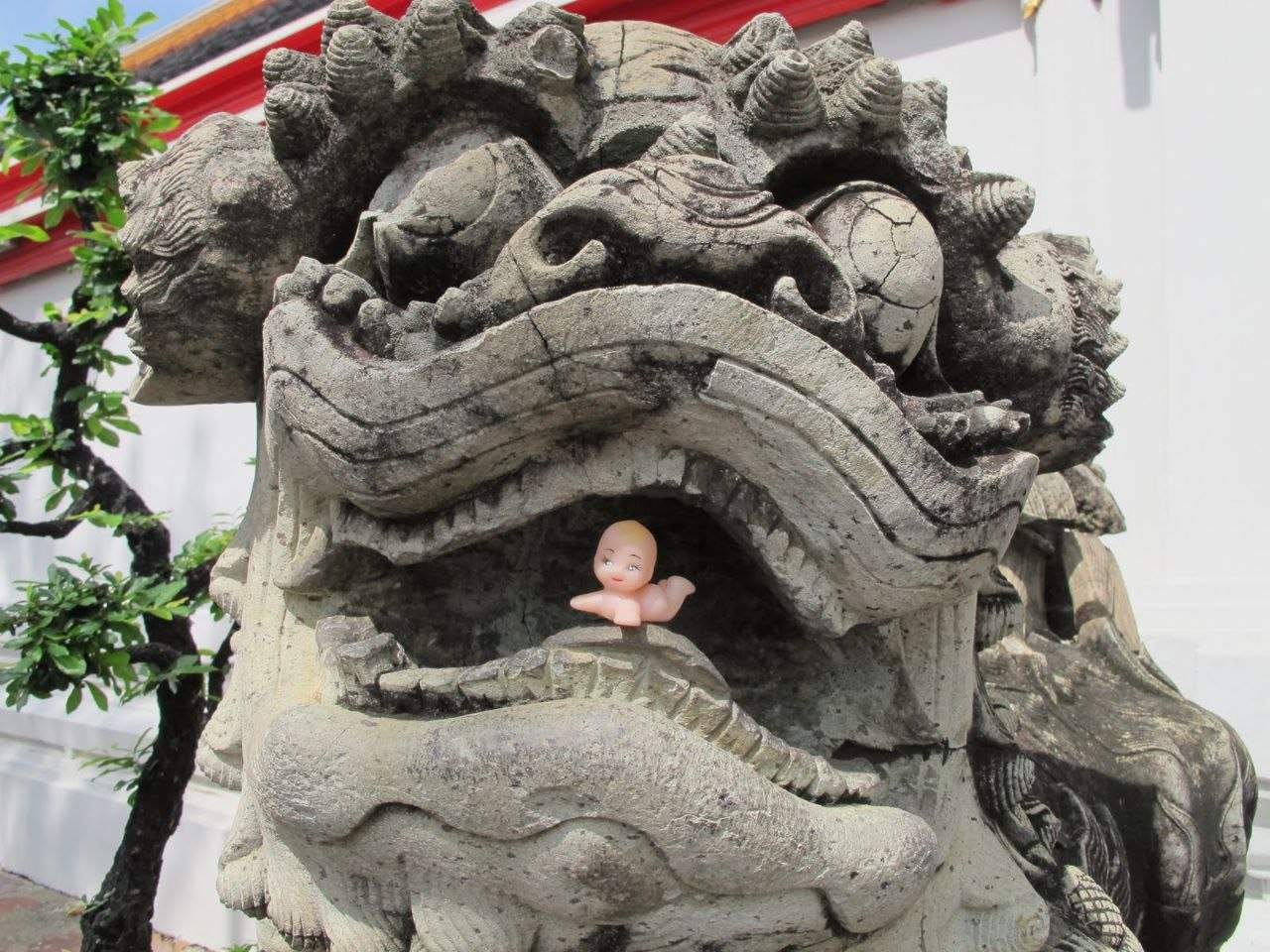
Outside the main halls, stone guardians appear at gateways, including stylized lion figures positioned at temple entrances. These sculptures, with their textured manes and open jaws, are both decorative and symbolic, marking transitions between secular and sacred space. Around them, courtyards are punctuated by clusters of prang towers and small chedis, many tiled in colorful ceramics that catch the light differently throughout the day.
Wat Pho is also associated with traditional Thai massage and education, and informational plaques and diagrams can be found around the complex. Combined with its extensive grounds, shaded walkways, and quiet corners, the temple provides a contrast to the busier streets outside its walls.
Wat Arun
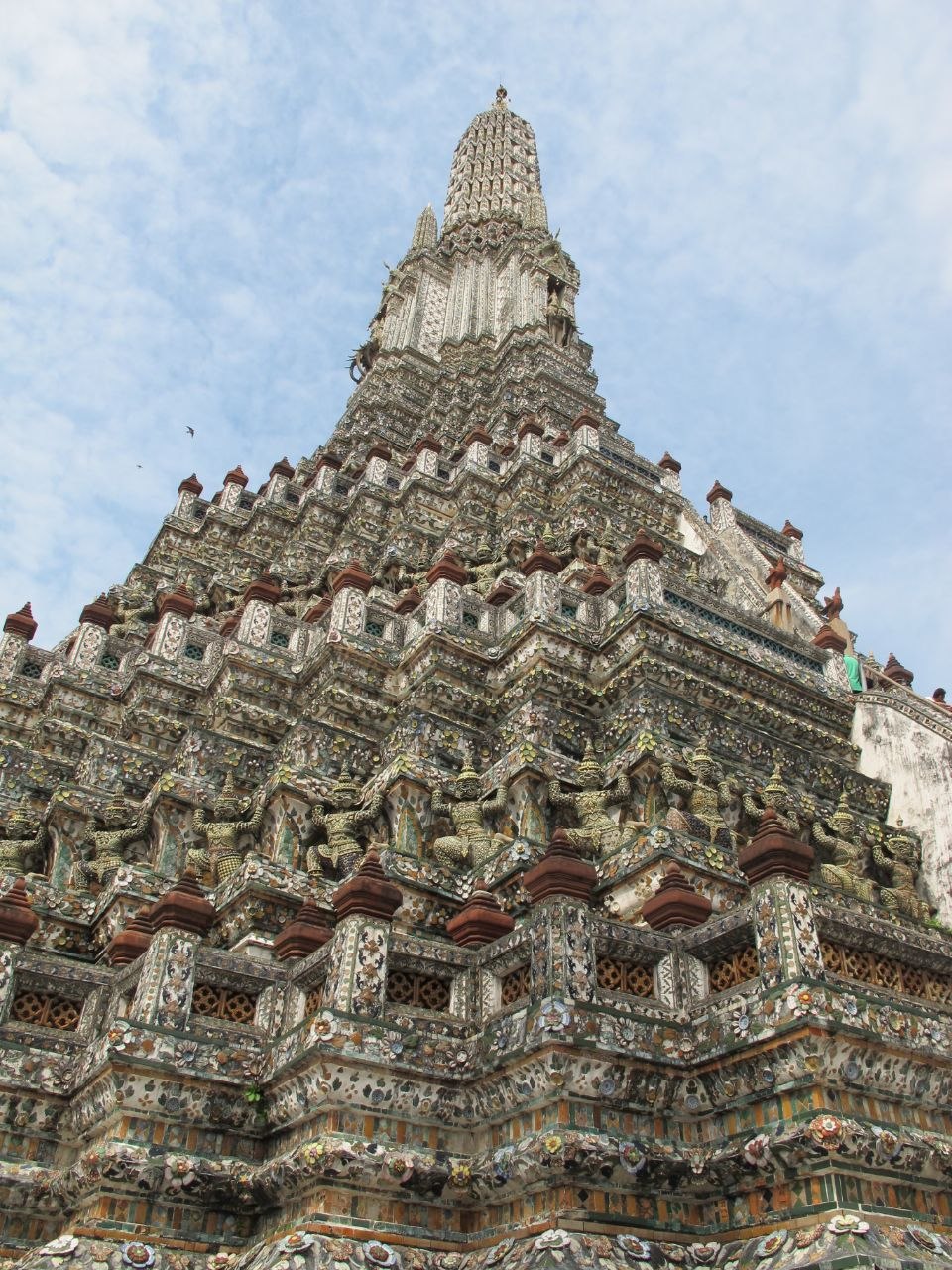
Across the Chao Phraya River from Wat Pho stands Wat Arun, identifiable from a distance by its central prang and surrounding satellite towers. These spires are covered in porcelain and ceramic fragments arranged in floral and geometric patterns, giving the surfaces a textured, mosaic-like appearance. From up close, the towers reveal layers of detail, with guardian figures, floral motifs, and sculpted niches breaking up the vertical lines.
The temple complex extends down to the riverbank, where steep staircases and terraces offer changing views of the river traffic and of the opposite shore. The courtyard entrance is framed by decorated gateways and guardian statues, leading into an inner precinct with an ordination hall, smaller shrines, and manicured gardens. The overall layout highlights the relationship between the temple and the river, which has long served as a key route into the city.
Food & Local Flavors
The neighborhoods around Bangkok’s riverside temples offer a cross-section of the city’s food culture, from simple street stalls to small riverside eateries. Dishes commonly found in this area include rice and noodle plates prepared to order, grilled meats, and curries served with fresh herbs and vegetables. Fruit vendors and drink stands provide seasonal produce and cold refreshments, especially welcome in the city’s tropical heat.
Near the temple entrances and ferry piers, visitors often encounter compact markets selling snacks, sweets, and prepared meals packaged for takeaway. Many venues cater to both local worshippers and visitors, so it is common to see offerings, incense, and flowers for sale alongside food items.
Visiting Tips
Bangkok’s major temples and palace complex follow dress codes that require covered shoulders and knees, and some areas may have additional restrictions. Light, breathable clothing that meets these standards, along with footwear that is easy to remove, helps with repeated transitions between outdoor courtyards and indoor halls. Mid-morning and late afternoon visits can provide slightly lower temperatures and softer light on reflective surfaces such as gilded chedis and porcelain prangs.
The Chao Phraya River is a practical way to move between Wat Phra Kaew, Wat Pho, and Wat Arun, using public boat services or cross-river ferries. Allow time for security screening and ticket queues at the Grand Palace, which can be busier than nearby temples. Within the complexes, walking surfaces include stone, tile, and steep stairways, so comfortable footwear and attention to posted signs and restricted areas are important for a safe and respectful visit.
 Jumping Timezones
Leave a comment