Kutná Hora is a historic town in Central Bohemia, Czech Republic, known for its medieval silver mining heritage and remarkably preserved Gothic architecture. Once one of the richest towns in the Kingdom of Bohemia, it played a key role in regional finances and politics, a legacy still visible in its monumental churches, civic buildings, and mining tunnels beneath the streets. Today, its compact size and well-marked routes make it a popular day trip from Prague, with most major sights linked by a straightforward walking route from the train station through Sedlec to the old town.
The town’s core is listed as a UNESCO World Heritage Site, encompassing the former royal mint, soaring cathedrals, baroque college buildings, and vineyard terraces overlooking the Vrchlice valley. Visitors typically follow a route that begins at Sedlec on the edge of town, continues through the historic centre around the Italian Court, and ends at St. Barbara’s Cathedral and the former silver mines that funded Kutná Hora’s prosperity.
Sedlec Ossuary and Church of the Assumption
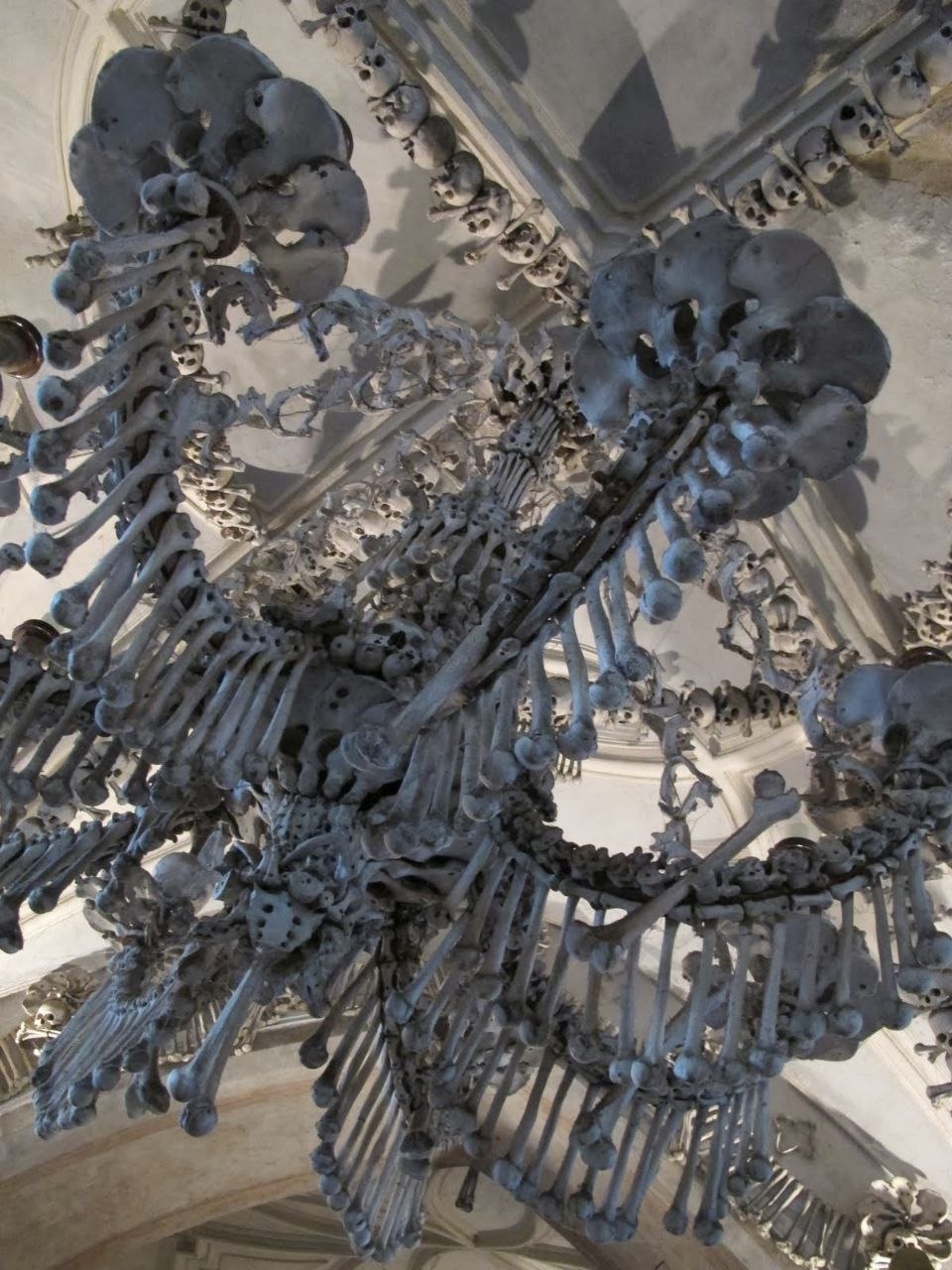
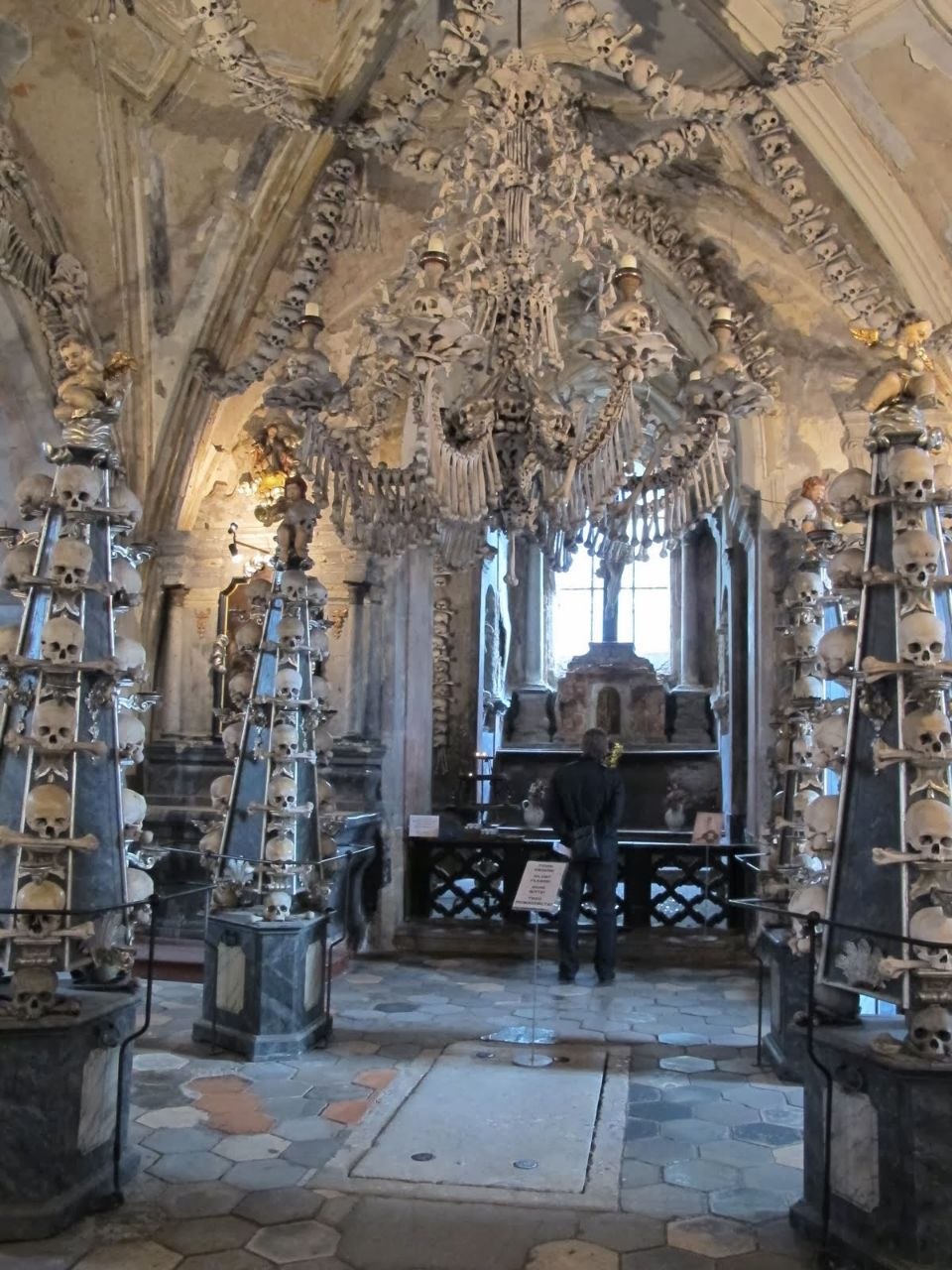
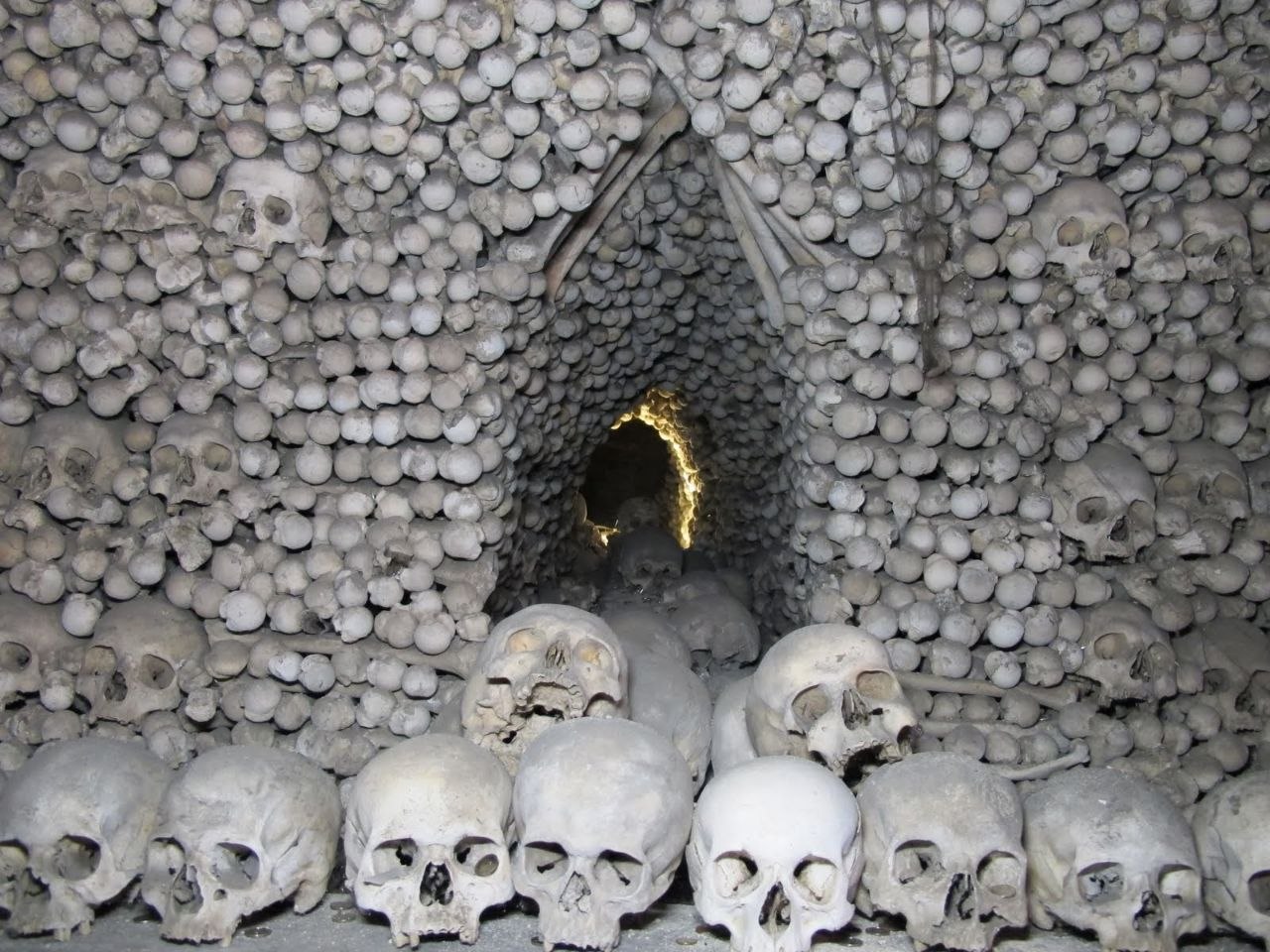
Sedlec lies to the north-east of Kutná Hora’s centre and forms the first major stop for visitors arriving from Prague. The area is best known for the Sedlec Ossuary, a small Roman Catholic chapel beneath the Cemetery Church of All Saints. Inside, the remains of tens of thousands of people who died during the Black Death and Hussite Wars have been arranged into chandeliers, coats of arms, and decorative friezes, creating one of Europe’s most distinctive examples of macabre devotional art. The central chandelier incorporates almost every bone in the human body, while pyramids of skulls occupy the corners of the chapel.
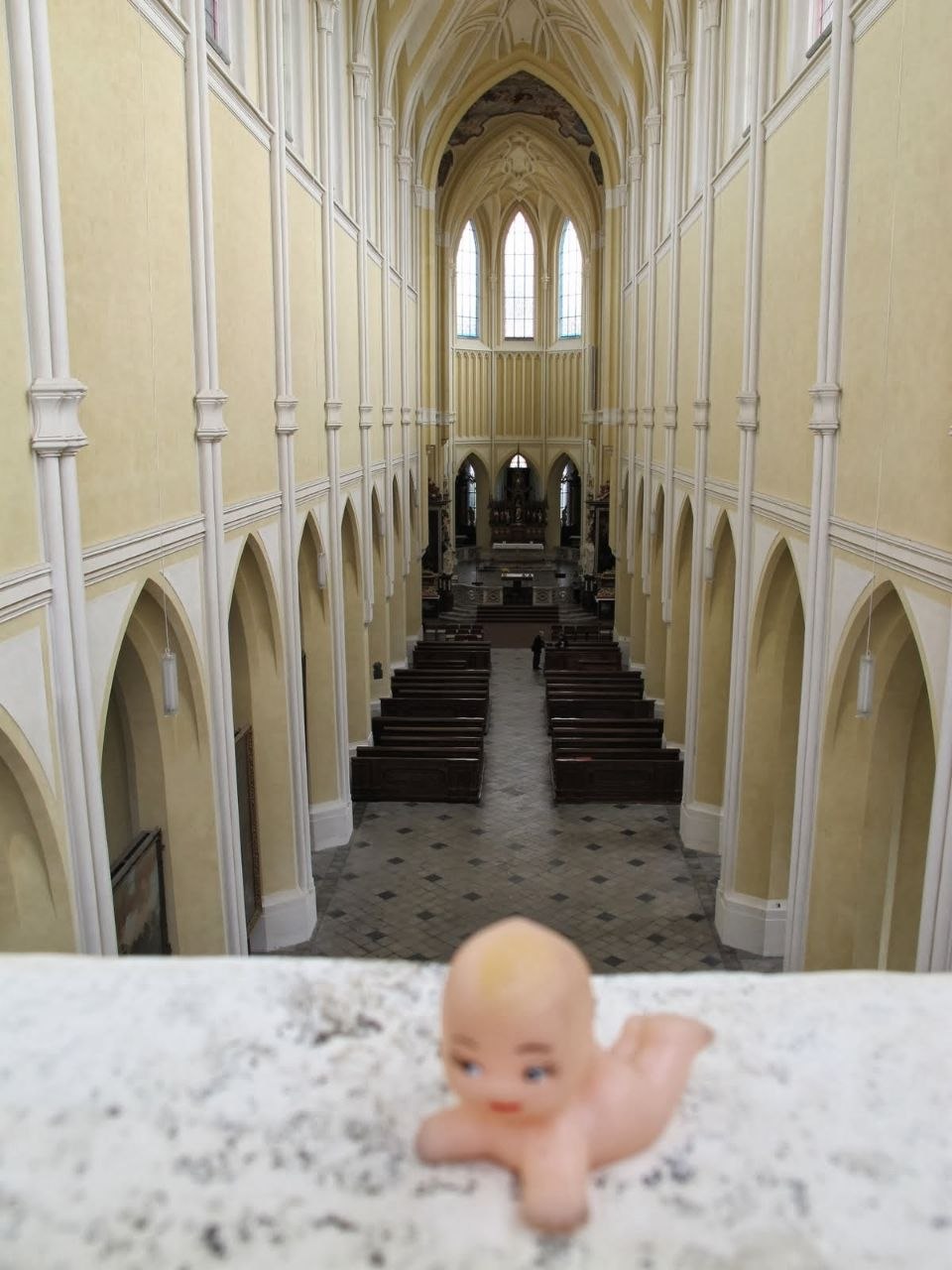
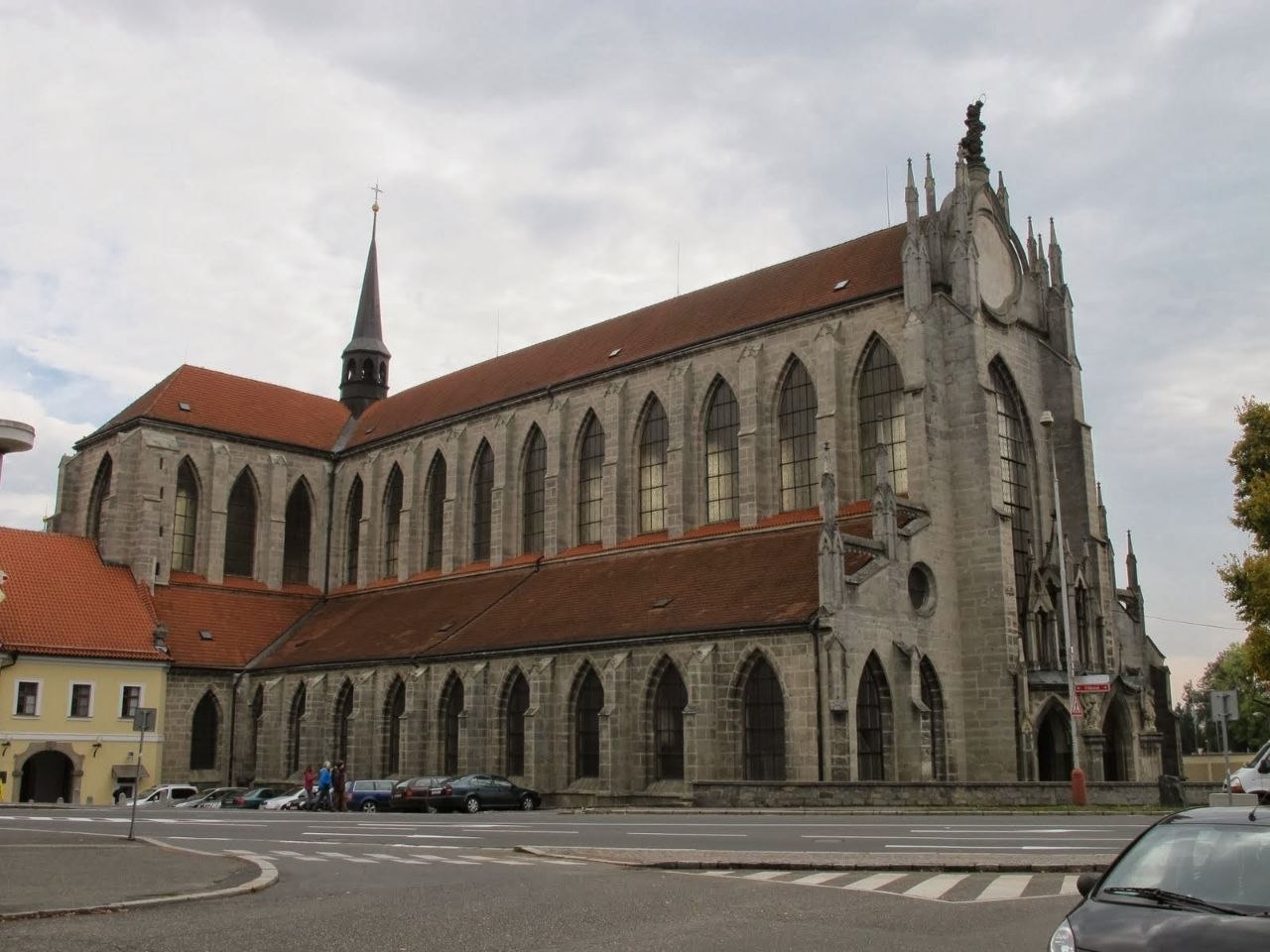
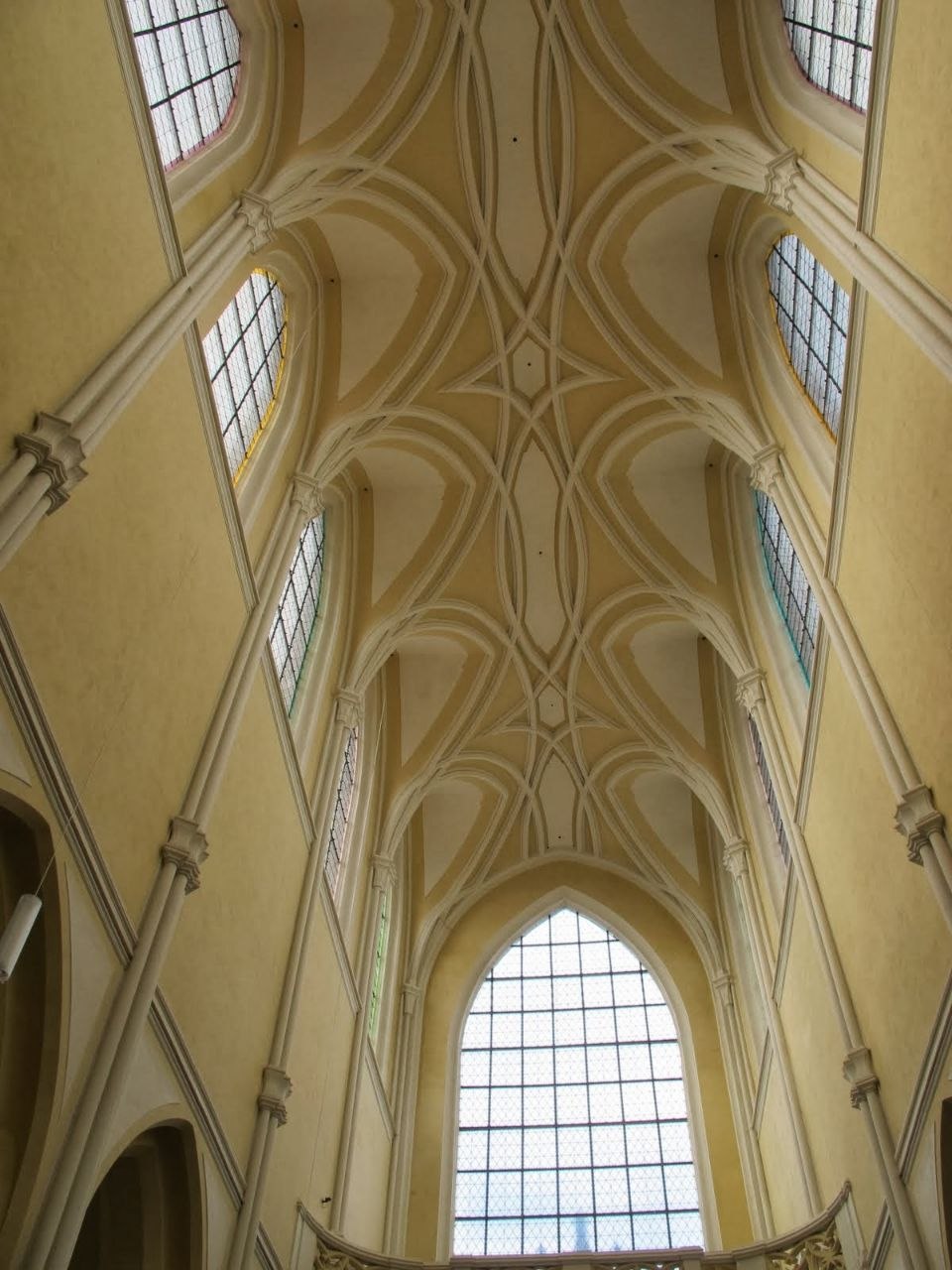
Close by stands the Cathedral of the Assumption of Our Lady and Saint John the Baptist, a UNESCO-listed church combining early Gothic and Baroque Gothic features. Its tall, austere exterior contrasts with a bright interior marked by high vaults and long, clean lines that draw the eye toward the altar. Visitors often pair the ossuary and the cathedral on a single ticket, allowing time to compare the solemn, skeletal decoration of the bone church with the more traditional stained glass and painted surfaces of the Assumption interior.
Jesuit College, Gallery Views, and the Historic Town Centre
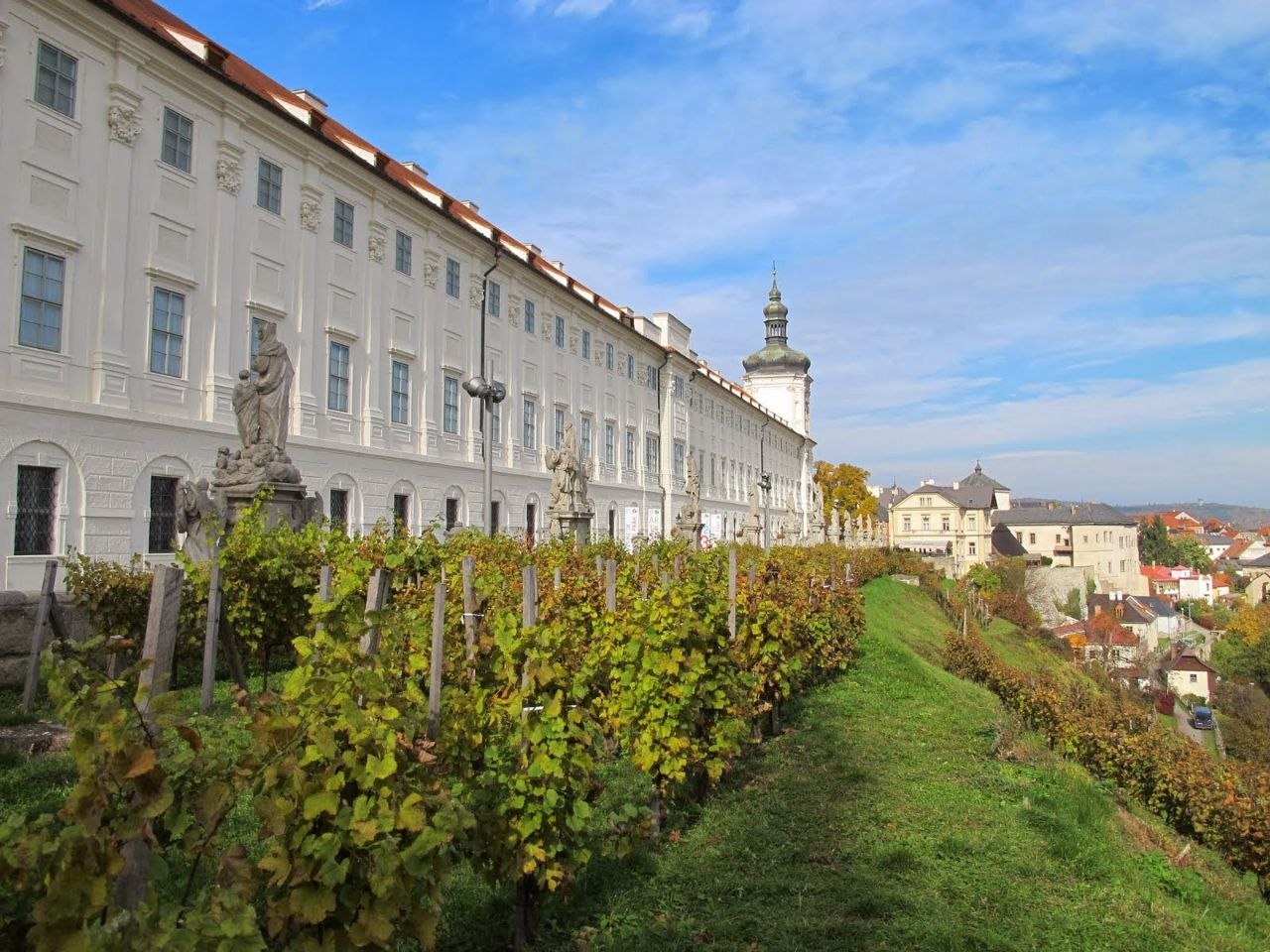
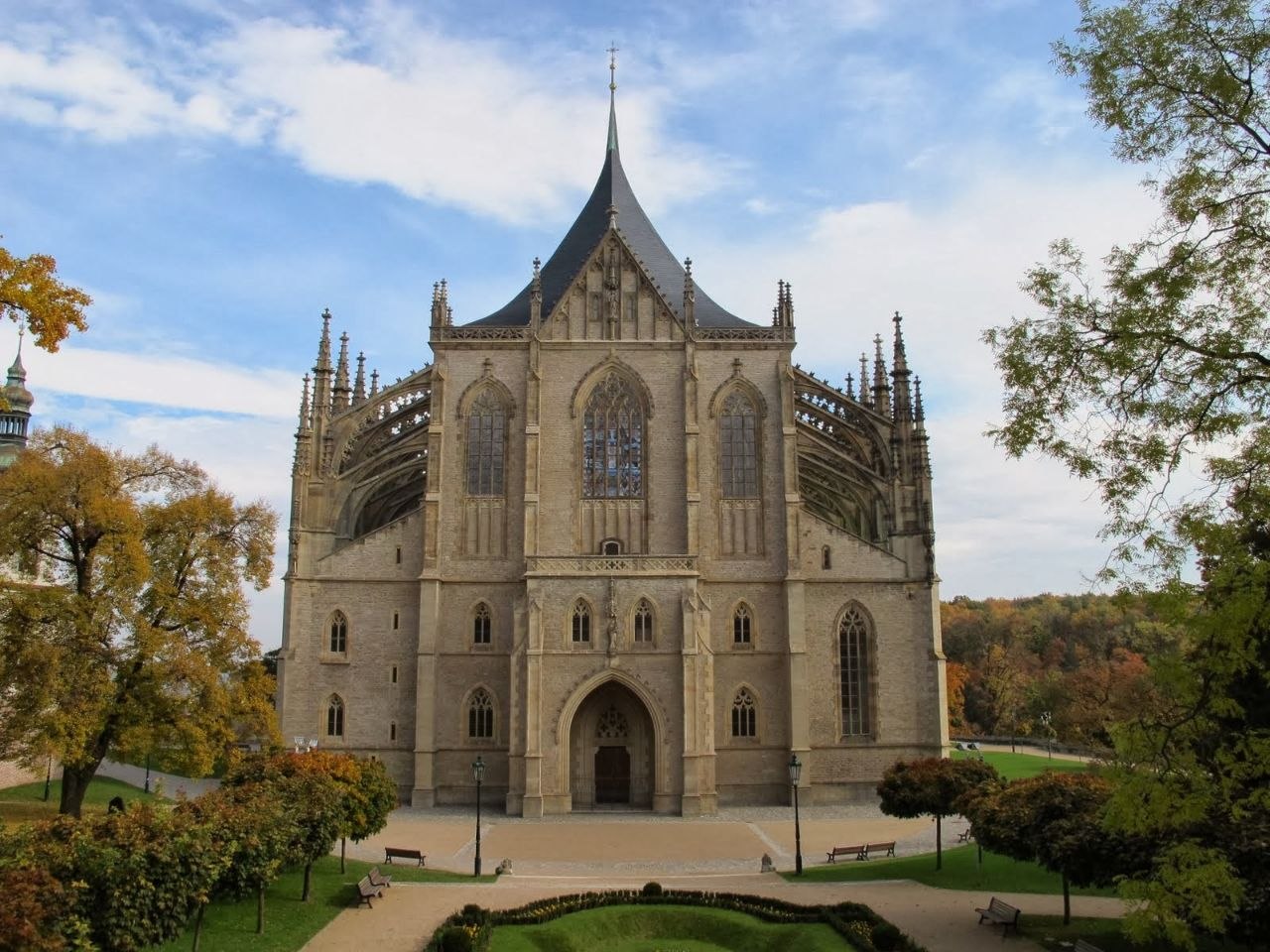
From Sedlec, the route continues downhill and then up toward Kutná Hora’s historic core, where the former Jesuit College marks the edge of the old town. This long, baroque building, fronted by a line of sculpted saints, runs along a terrace overlooking vineyards and the Vrchlice valley. The college now houses an art gallery, and its exterior walkway offers one of the best panoramic views of St. Barbara’s Cathedral and the town’s layered rooftops, especially striking in autumn when surrounding vines turn gold.
Just beyond the college, narrow streets lead into the heart of the old town, where Gothic, Renaissance, and baroque facades cluster around small squares. The Italian Court (Vlašský dvůr), once the royal mint and seat of the king’s central administration for silver coinage, is one of the most important civic buildings. Guided tours typically include the former royal chapel, historical minting rooms, and displays explaining how Kutná Hora’s mines underpinned the Bohemian economy. The surrounding streets contain a mix of townhouses, smaller churches, and quiet courtyards that reflect the town’s prosperity during its medieval peak.
St. Barbara’s Cathedral
St. Barbara’s Cathedral, dedicated to the patron saint of miners, dominates the western side of Kutná Hora’s historic centre. This Gothic church is immediately recognisable for its intricate flying buttresses, steep roofs, and sculptural exterior, which rises above the vineyards and college terrace. Construction began in the late 14th century and continued in stages over several centuries, resulting in a blend of High Gothic and later stylistic elements without losing the cathedral’s overall vertical emphasis.
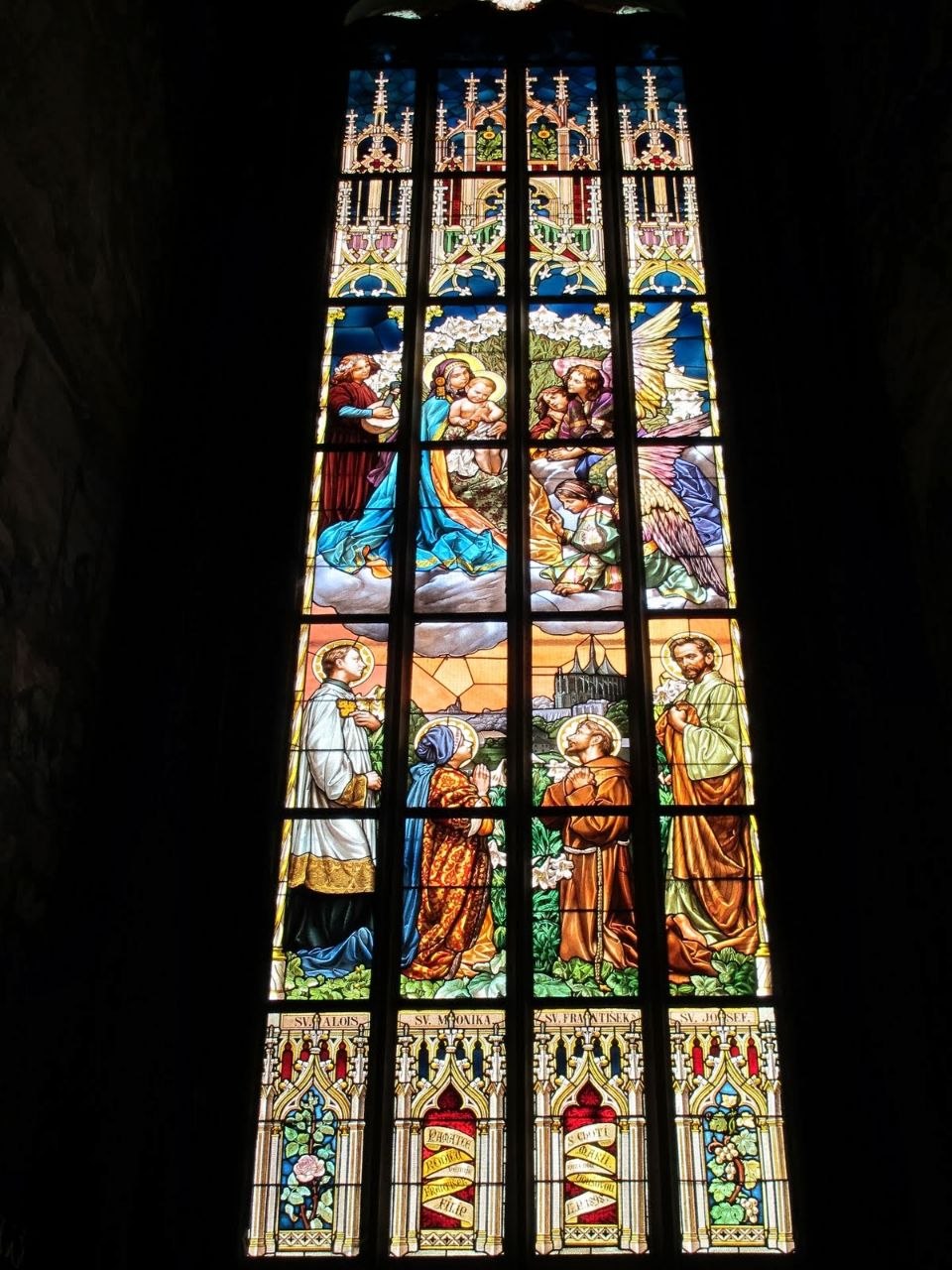
Inside, tall columns and ribbed vaults frame long views down the nave toward the main altar. Stained glass windows filter coloured light across the interior, highlighting frescoes and decorative details that reference both religious themes and the town’s mining heritage. Elevated galleries and balconies provide vantage points over the nave, illustrating how the church served as both a place of worship and a symbol of Kutná Hora’s wealth and status.
Silver Mine Tunnels and Mining Heritage
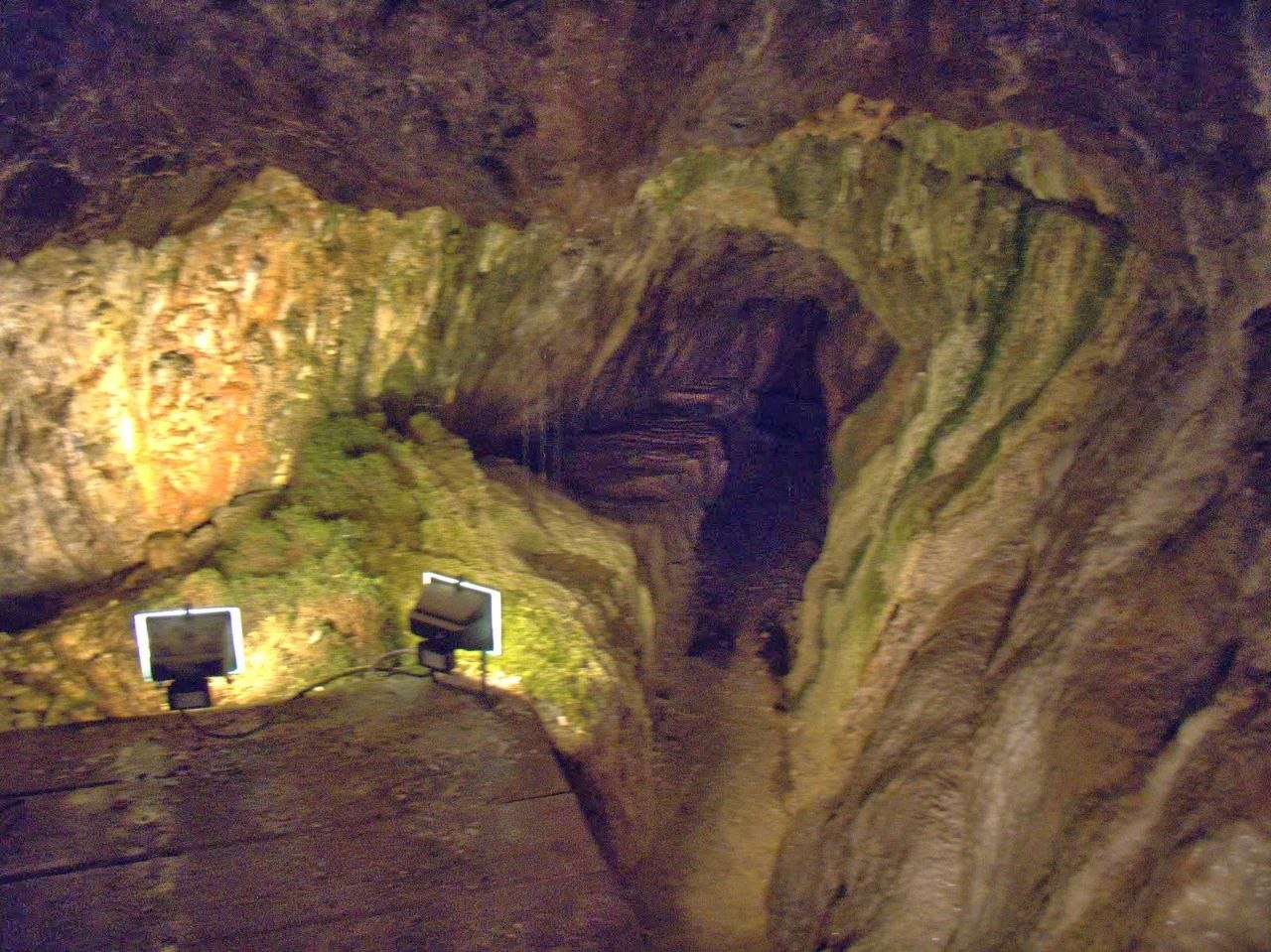
Below the surface of Kutná Hora lies an extensive network of tunnels that once supplied the silver ore driving the town’s prosperity. Several former mine corridors have been opened to visitors as part of guided tours, often starting near the Hrádek (Little Castle) museum complex close to St. Barbara’s Cathedral. Exhibitions above ground explain medieval mining techniques, protective clothing, and the economic impact of silver extraction on the region.
Underground, the passages narrow to shoulder width in places, illuminated only by discrete lighting that reveals mineral deposits and the rough texture of hand-hewn rock. Visitors are usually required to wear helmets and protective clothing, and some sections demand walking in single file. These tours provide a direct sense of the conditions miners faced and emphasise the physical link between the town’s ornate churches above and the labour-intensive extraction work below.
Food and Drink in Kutná Hora
Dining options in Kutná Hora are concentrated in and around the historic centre, with restaurants and cafés occupying restored townhouses and side streets near the Italian Court and St. Barbara’s Cathedral. Menus often combine Czech classics such as roast meats, dumplings, and hearty soups with lighter dishes suited to day-trip visitors. Many venues offer seasonal specials, with autumn bringing dishes that pair well with local wines from surrounding vineyards.
Cafés and wine bars take advantage of the town’s elevated viewpoints, providing terraces or window seats that overlook church spires and tiled roofs. These spots serve as convenient breaks between sightseeing stops, especially along the route between the Jesuit College and St. Barbara’s. In busier months, it is common to find outdoor seating on cobbled streets and small squares, adding to the town’s atmosphere without overshadowing its historical landmarks.
Visiting Tips
Kutná Hora is commonly visited as a day trip from Prague, with train and bus connections leading first to the Sedlec area and then onward to the historic centre. A practical route begins at the Sedlec Ossuary and Church of the Assumption, continues through the old town and Italian Court, and finishes at St. Barbara’s Cathedral and the silver mine exhibitions. This sequence follows the natural geography of the town and minimises backtracking, while still allowing time for breaks in the centre.
Many major sights operate on time-ticketed or guided-entry systems, particularly the ossuary and mine tunnels, so checking current opening hours and tour schedules in advance helps avoid long waits. Comfortable footwear is advisable, as routes involve cobblestones, slopes, and steps both above and below ground. Lighting conditions vary significantly between bright church interiors, dim ossuary spaces, and dark mine corridors, so visitors interested in photography may wish to plan for changing light and respect any restrictions on flash or tripod use.
 Jumping Timezones
Leave a comment