
The Hague (Den Haag, formally ‘s-Gravenhage) occupies a singular position in the Netherlands: it is neither the capital city — that is Amsterdam — nor the largest, yet it functions as the seat of government, home to the Dutch parliament, the Cabinet, the Supreme Court, and the royal residence, as well as the headquarters of the International Court of Justice and more than 150 international organizations and embassies. The city of approximately 550,000 people sits in the western province of South Holland, roughly midway between Amsterdam and Rotterdam, and just a few kilometres inland from the North Sea coast. Its origins lie in a 13th-century hunting lodge built by Count William II of Holland, around which a settlement grew that never received a formal city charter — an anomaly that persists in its name, which translates literally as “the Count’s hedge” or “the Count’s wood.” Despite this, The Hague evolved over centuries into one of the most important administrative and diplomatic cities in Europe, and today it is commonly referred to as the “legal capital of the world.”
The Binnenhof
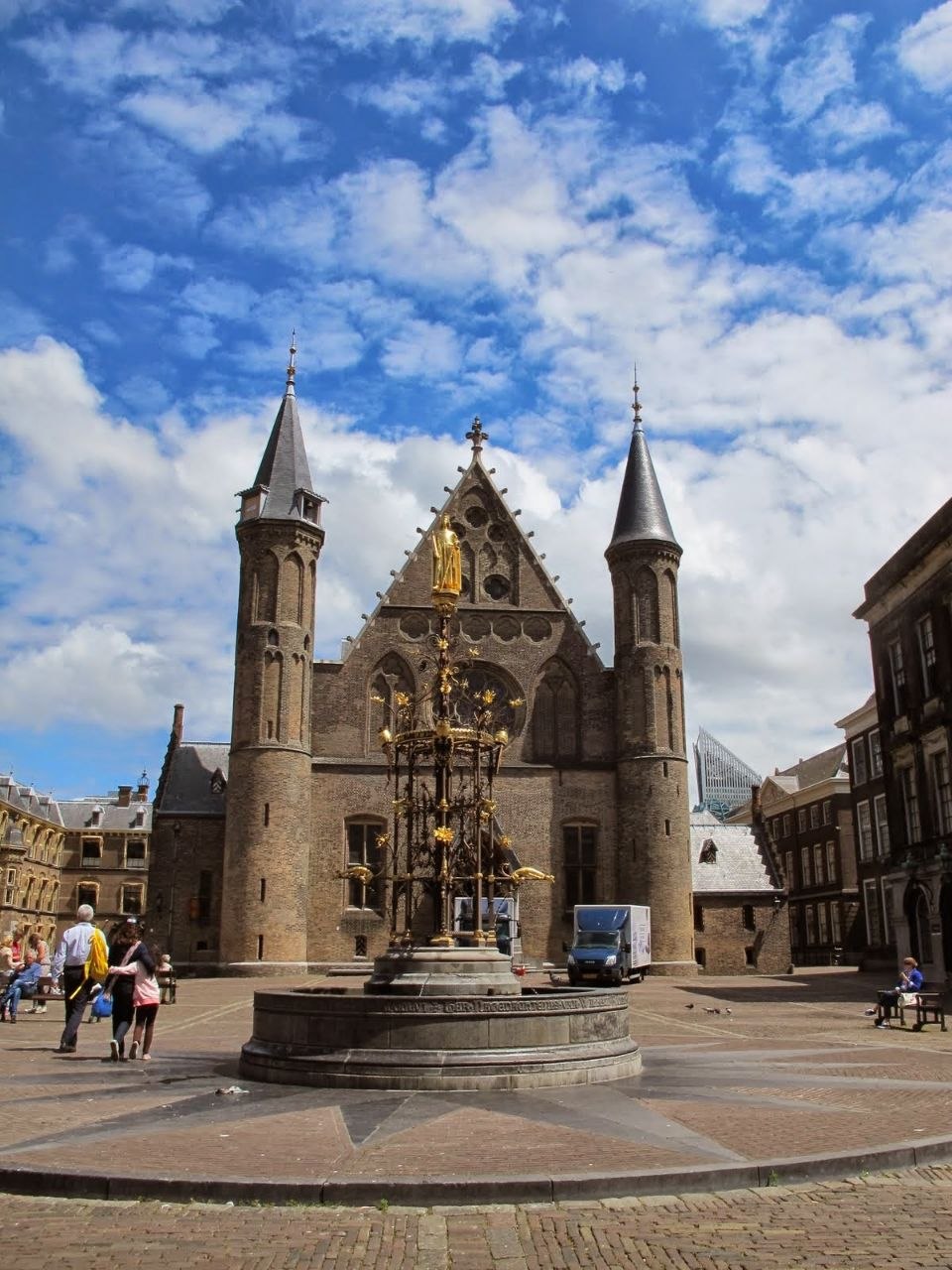
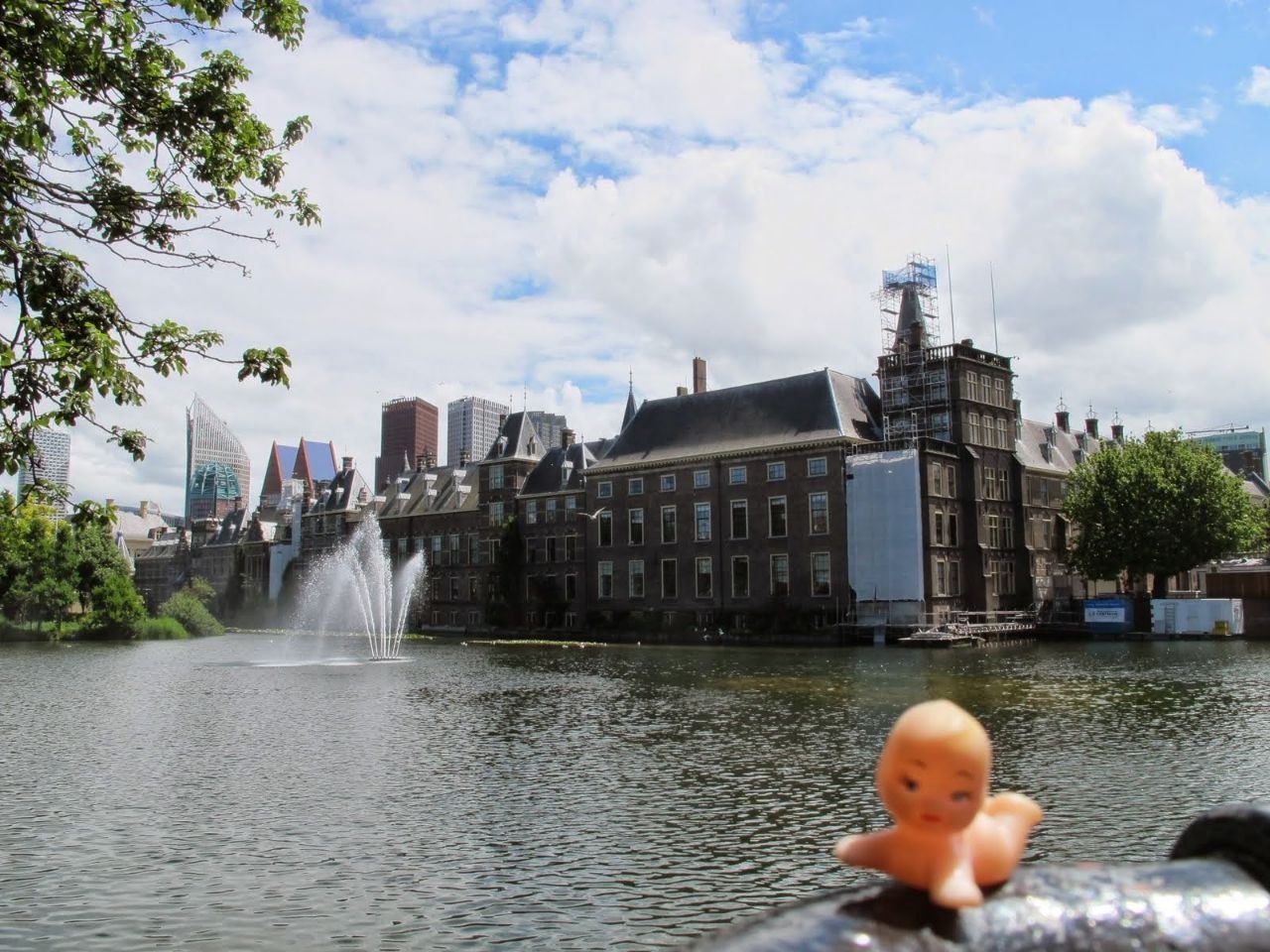
The Binnenhof is the historic heart of Dutch political life — a medieval courtyard complex in the centre of The Hague that has served as the seat of government for nearly four centuries. The complex grew around the 13th-century castle of Count William II, and its oldest surviving structure is the Ridderzaal (Hall of Knights), a slender Gothic hall built around 1280 that still serves as the ceremonial space for the annual opening of parliament on Prinsjesdag (Budget Day), when the reigning monarch delivers the Speech from the Throne. Surrounding the Ridderzaal are the chambers of the bicameral States-General — the Senate (Eerste Kamer) and the House of Representatives (Tweede Kamer) — as well as the offices of the Prime Minister. The Dutch parliament has met at the Binnenhof since 1584. The complex fronts onto the Hofvijver, a rectangular court pond that reflects the Binnenhof’s towers and facades in one of The Hague’s most photographed vistas, with the modern city skyline rising incongruously behind the medieval silhouette.
The Binnenhof has been undergoing an extensive restoration since 2019, with the parliamentary chambers temporarily relocated while the medieval structures are stabilized and modernized. The renovation is not expected to be completed before 2030. The courtyard itself and the Ridderzaal remain landmark features of the city.
The Peace Palace
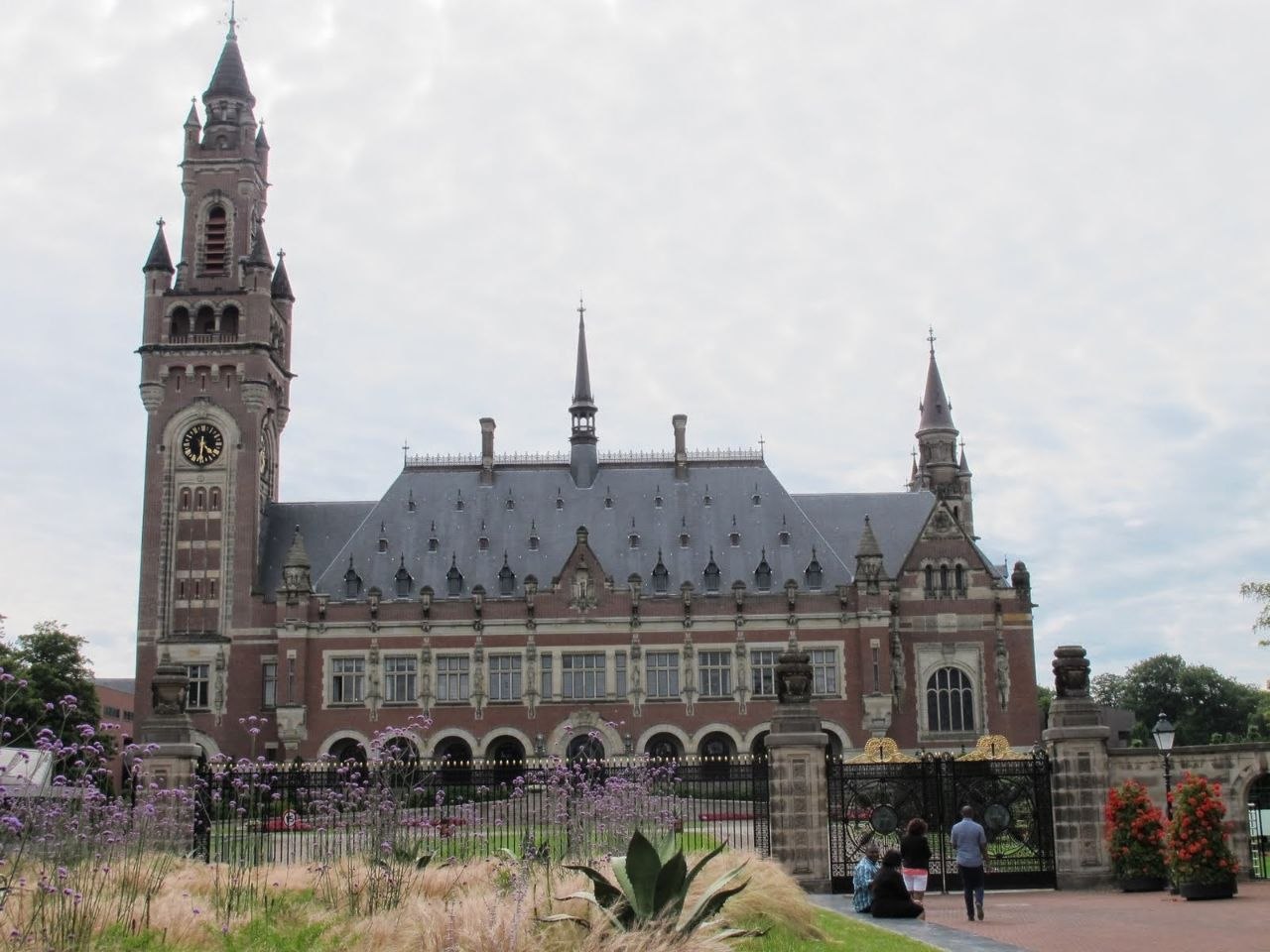
The Peace Palace (Vredespaleis) is among the most symbolically significant buildings in the world, purpose-built to house international legal institutions dedicated to the peaceful resolution of disputes between states. The initiative for its construction emerged from the First Hague Peace Conference of 1899, convened by Tsar Nicholas II of Russia, which resulted in the creation of the Permanent Court of Arbitration — the world’s first intergovernmental organization for the settlement of international disputes — and established The Hague as the centre of international law. The American philanthropist Andrew Carnegie donated $1.5 million to fund the construction of a permanent home for these institutions, and the Palace was built between 1907 and 1913 to designs by the French architect Louis Cordonnier in a grand Neo-Renaissance and Neo-Gothic style. It was opened on 28 August 1913.
Today the Peace Palace houses four institutions: the International Court of Justice (ICJ), the principal judicial organ of the United Nations and the highest court for disputes between sovereign states; the Permanent Court of Arbitration; the Hague Academy of International Law; and the Peace Palace Library, one of the most comprehensive libraries of international law in the world. The building and its gardens were furnished with gifts from nations around the world — including Japanese vases, a Swiss chandelier, Italian marble, and stained glass from Germany — making it as much a monument to international cooperation as a functioning legal institution. Tours of the Palace are available when the Court is not in session.
Scheveningen
Scheveningen is the seaside district of The Hague, located approximately five kilometres west of the city centre on the North Sea coast. It is one of the oldest and most established beach resorts in the Netherlands, with origins as a fishing village documented as far back as 1280. The modern resort began to take shape in 1818 when the first bathing establishment opened on the beach, drawing visitors from The Hague and beyond who sought the fashionable sea-bathing cures of the era. The construction of the grand Kurhaus hotel in 1884–1885 — a monumental Neo-Renaissance spa and concert hall that still dominates the seafront — established Scheveningen as a destination for wealthy European visitors. The famous pier, first constructed in 1901, was destroyed during World War II when German forces demolished it to prevent Allied landings; the current pier dates from 1961.
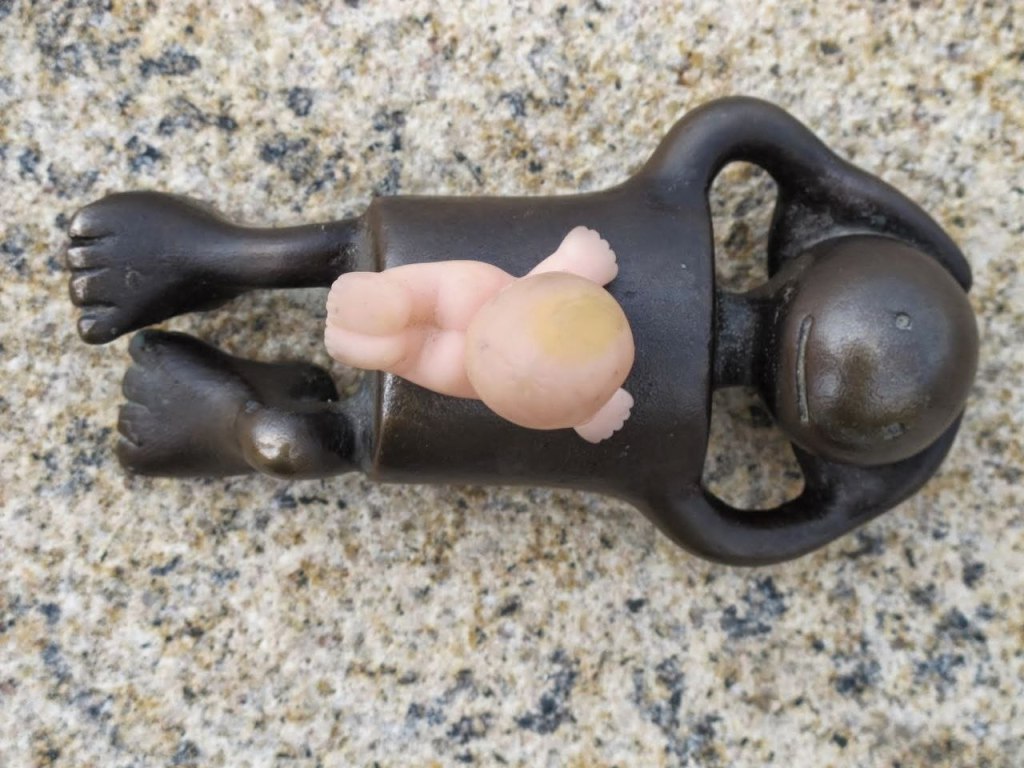
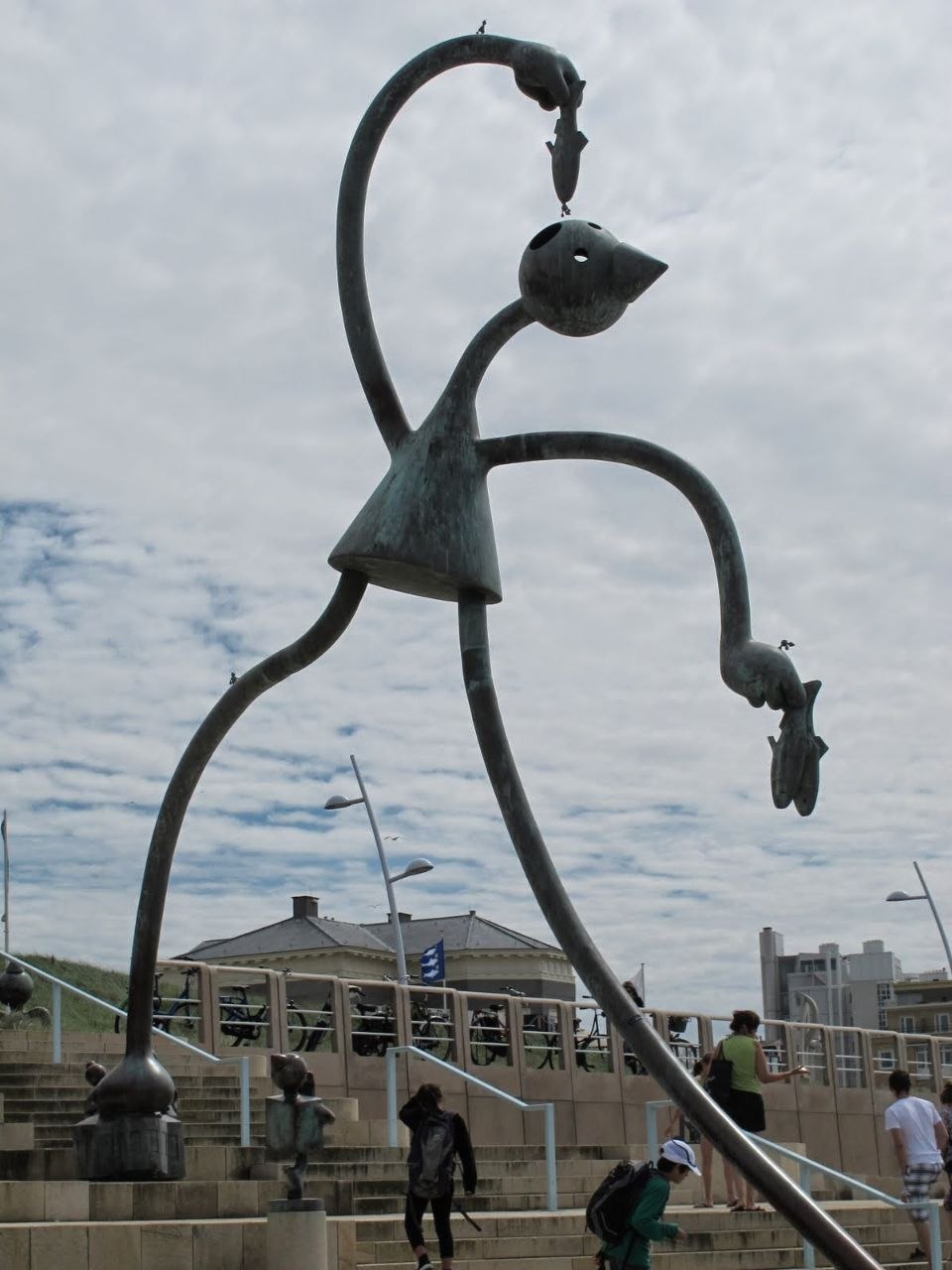
Today Scheveningen operates as both a working fishing harbour — the largest in the Netherlands — and a busy seaside resort, with a broad sandy beach, a promenade lined with restaurants, bars and shops, and a compact boulevard of amusements. The harbour area (Scheveningen Haven) retains a distinct character from the beach strip, with fish restaurants, fresh herring stalls, and the daily activity of the trawler fleet. The area has a strong tradition of public sculpture along its seafront, including whimsical bronze figures that have become landmarks in their own right.
Visiting Tips
The Hague is directly connected to Amsterdam by frequent intercity trains (approximately 50 minutes) and to Rotterdam by a journey of around 25 minutes. Within the city, tram lines are the primary mode of public transport and connect the central station, the Binnenhof area, and Scheveningen efficiently. The Binnenhof courtyard is freely accessible, though the parliamentary chambers require advance booking for tours. The Peace Palace offers guided tours on selected days when the International Court of Justice is not in session — booking in advance through the Peace Palace visitor centre is strongly recommended. Scheveningen is reachable from the city centre by tram in around 20 minutes; the beach is at its best in the summer months, though the North Sea weather is reliably unpredictable. The Mauritshuis museum — located immediately adjacent to the Binnenhof — houses an exceptional collection of Dutch Golden Age paintings including Vermeer’s Girl with a Pearl Earring and is not to be overlooked.
 Jumping Timezones
Leave a comment