Amsterdam is the capital and most populous city of the Netherlands, built on a network of 165 canals, more than 1,500 bridges, and approximately 90 islands formed by the intersection of the Amstel River with the IJ bay on the southern shore of what was once the Zuiderzee. The city takes its name from the Amstel Dam — a dam constructed across the Amstel River in the late 13th century around which a small fishing settlement grew. By the 17th century Amsterdam had become one of the most powerful cities in the world: the headquarters of the Dutch East India Company (VOC), the leading trading empire of its age, and the centre of European finance, art, and intellectual life during the period known as the Dutch Golden Age. Today it is a compact, dense, and remarkably walkable city of around 900,000 people, internationally recognized for its canal ring, its world-class museums, its cycling infrastructure, and its tradition of tolerance and social liberalism.
The Canal Ring
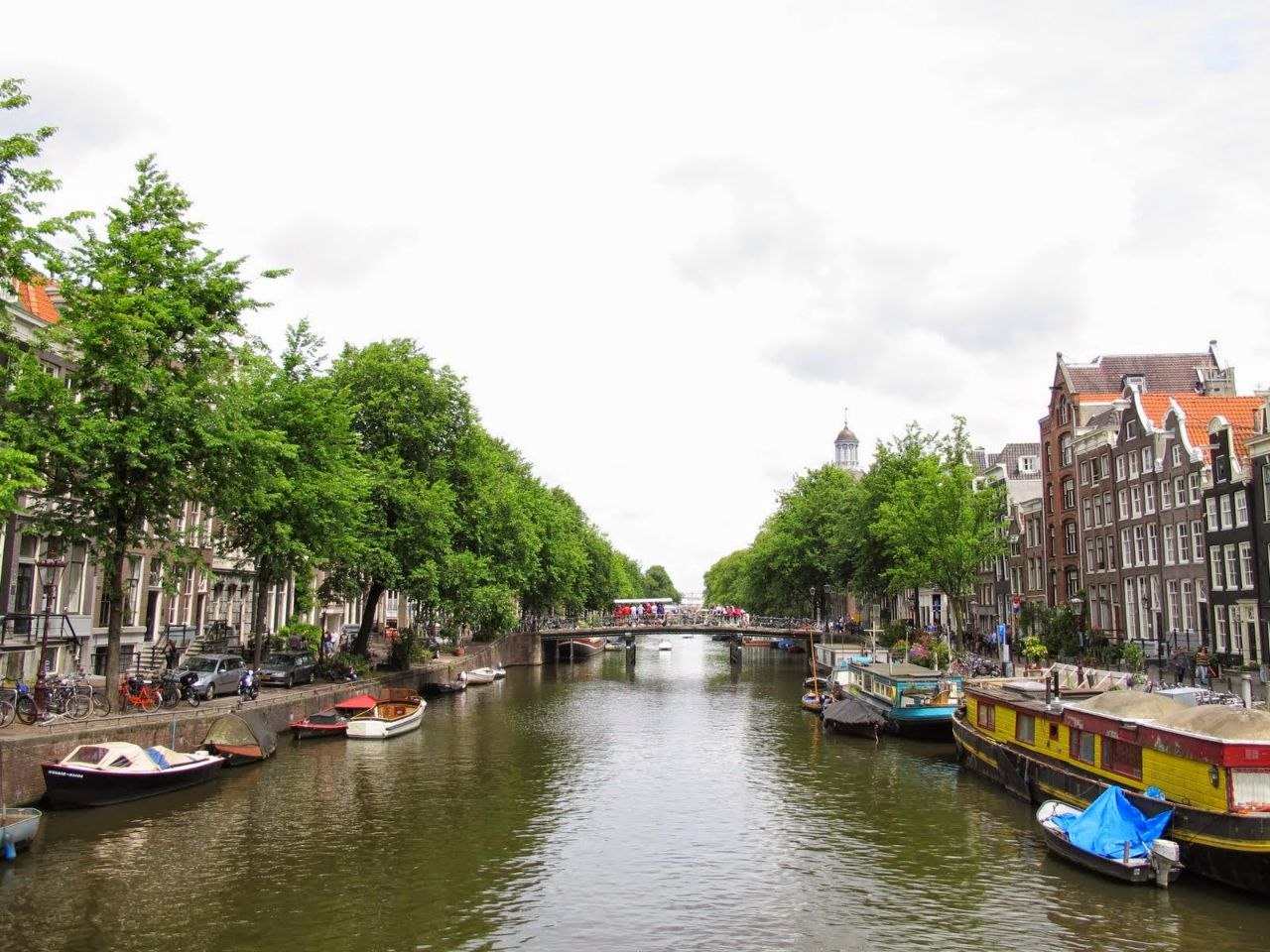
The Grachtengordel — Amsterdam’s 17th-century canal ring — is the defining feature of the city’s urban landscape and one of the great feats of pre-industrial city planning. Constructed in a series of phases beginning around 1613, the canal ring was laid out in a deliberate semicircular pattern around the medieval city core, with four primary canals — the Singel, Herengracht, Keizersgracht, and Prinsengracht — running in concentric arcs and connected by a series of cross-canals. The project was driven by the Amsterdam city government to accommodate explosive population growth during the Golden Age, and the lots along the main canals were sold to wealthy merchants and traders who built the characteristic narrow, tall, gabled townhouses that still line the waterways today. The canal ring was inscribed as a UNESCO World Heritage Site in 2010, recognized as an exceptional example of planned urban expansion that served as a model for cities across Europe and beyond.
The Herengracht (Lords’ Canal) is the grandest of the four, lined with some of the most opulent merchant houses in the city. A particularly celebrated stretch between Leidsestraat and Vijzelstraat — known as the Golden Bend (Gouden Bocht) — was home to Amsterdam’s wealthiest citizens in the 17th and 18th centuries and still presents one of the most architecturally remarkable streetscapes in the Netherlands. The canals are navigable and remain active waterways used by houseboats, passenger ferries, tour boats, and private craft. Approximately 2,500 houseboats are moored permanently throughout the canal network, home to a significant segment of Amsterdam’s population.
The Rijksmuseum
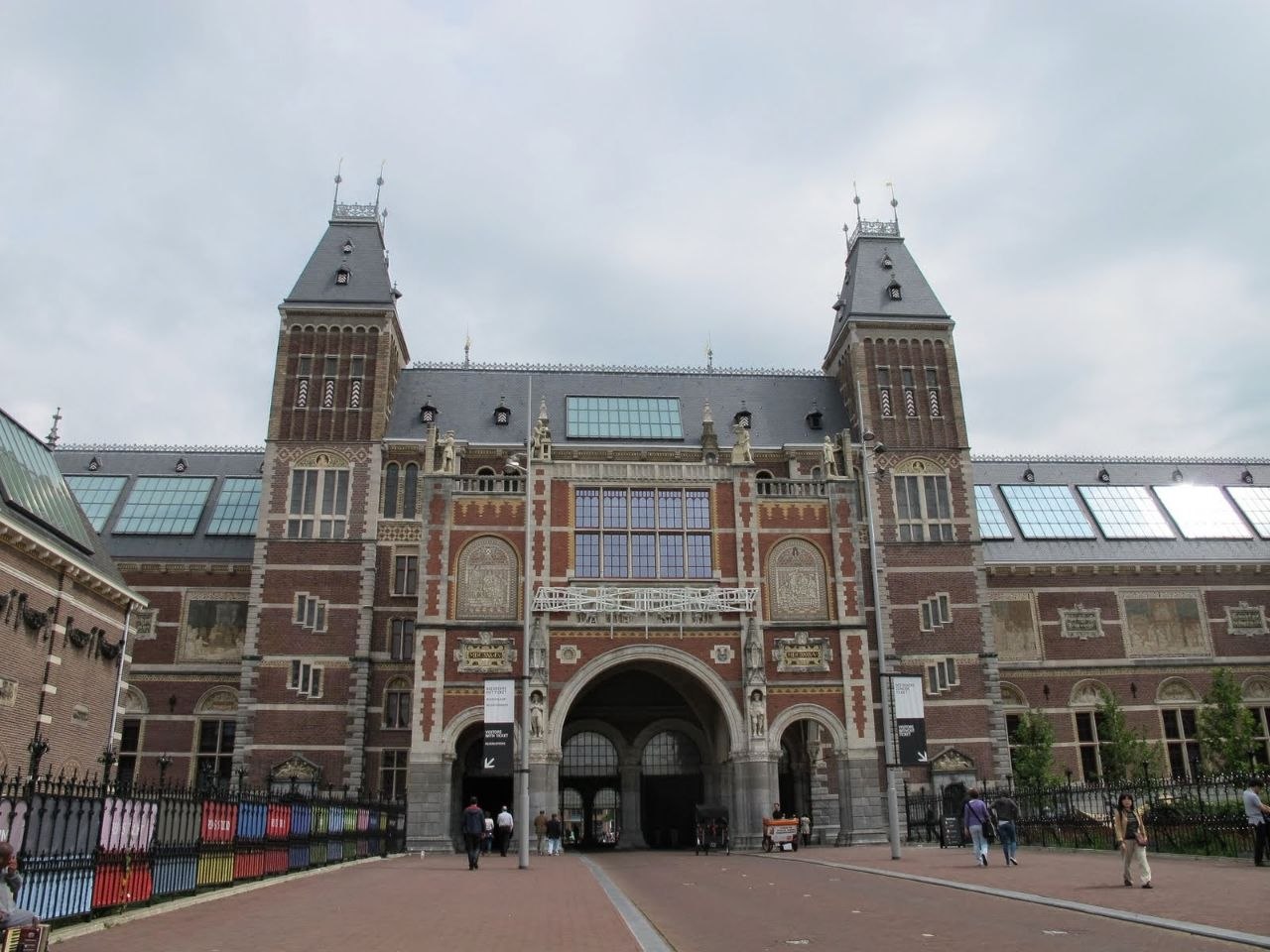
The Rijksmuseum is the national museum of the Netherlands and one of the greatest art and history museums in the world. It was founded in The Hague in 1800 as a repository for the national art collection, relocated to Amsterdam in 1808 at the order of King Louis Napoleon, and moved to its current purpose-built home on the Museumplein in 1885. The building was designed by the architect Pierre Cuypers in an elaborate Neo-Gothic and Dutch Renaissance style, its facade richly decorated with terracotta reliefs, turrets, and arched galleries. After a decade-long renovation it was reopened in its current form in 2013, with a dramatically reimagined interior.
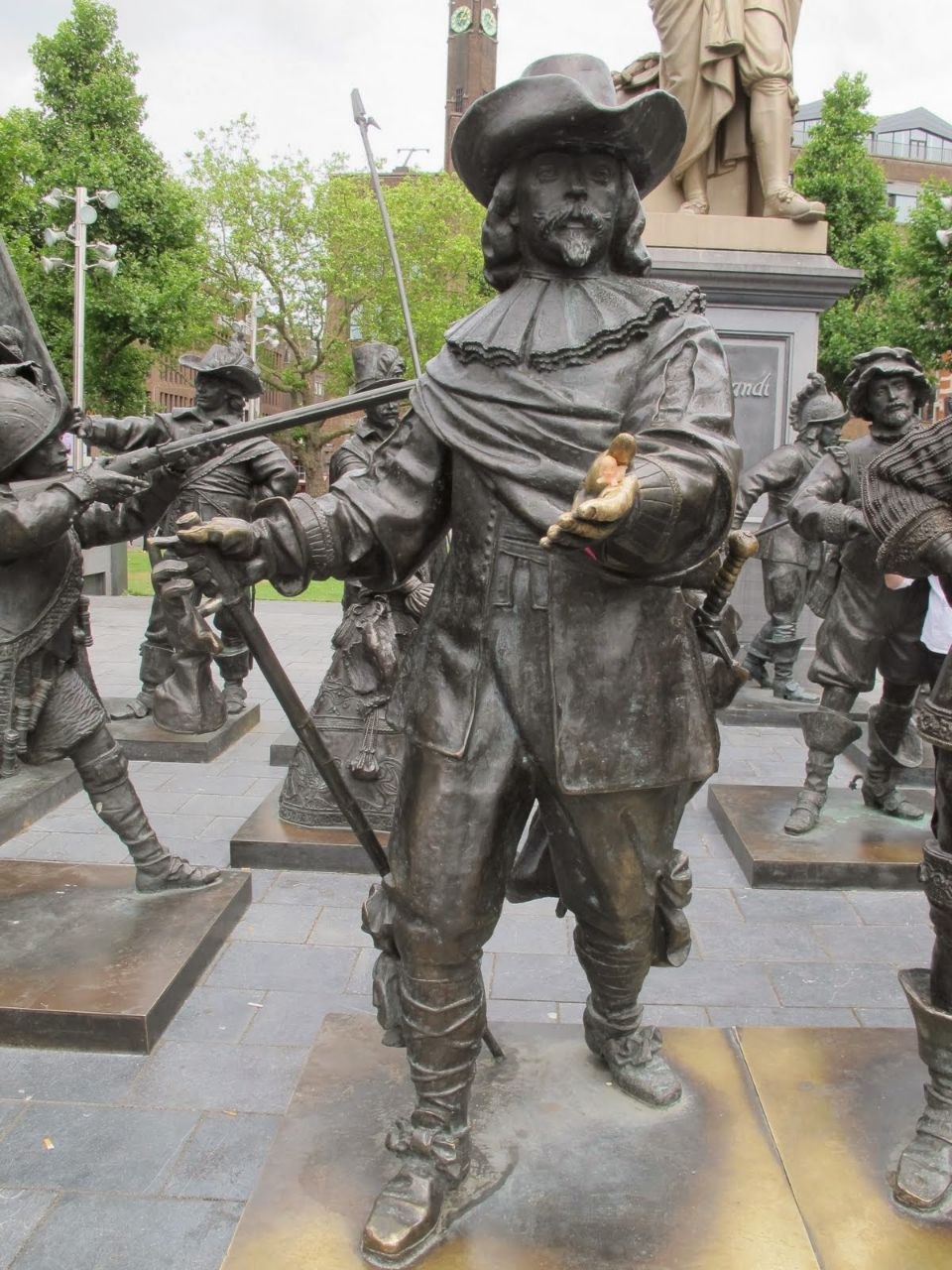
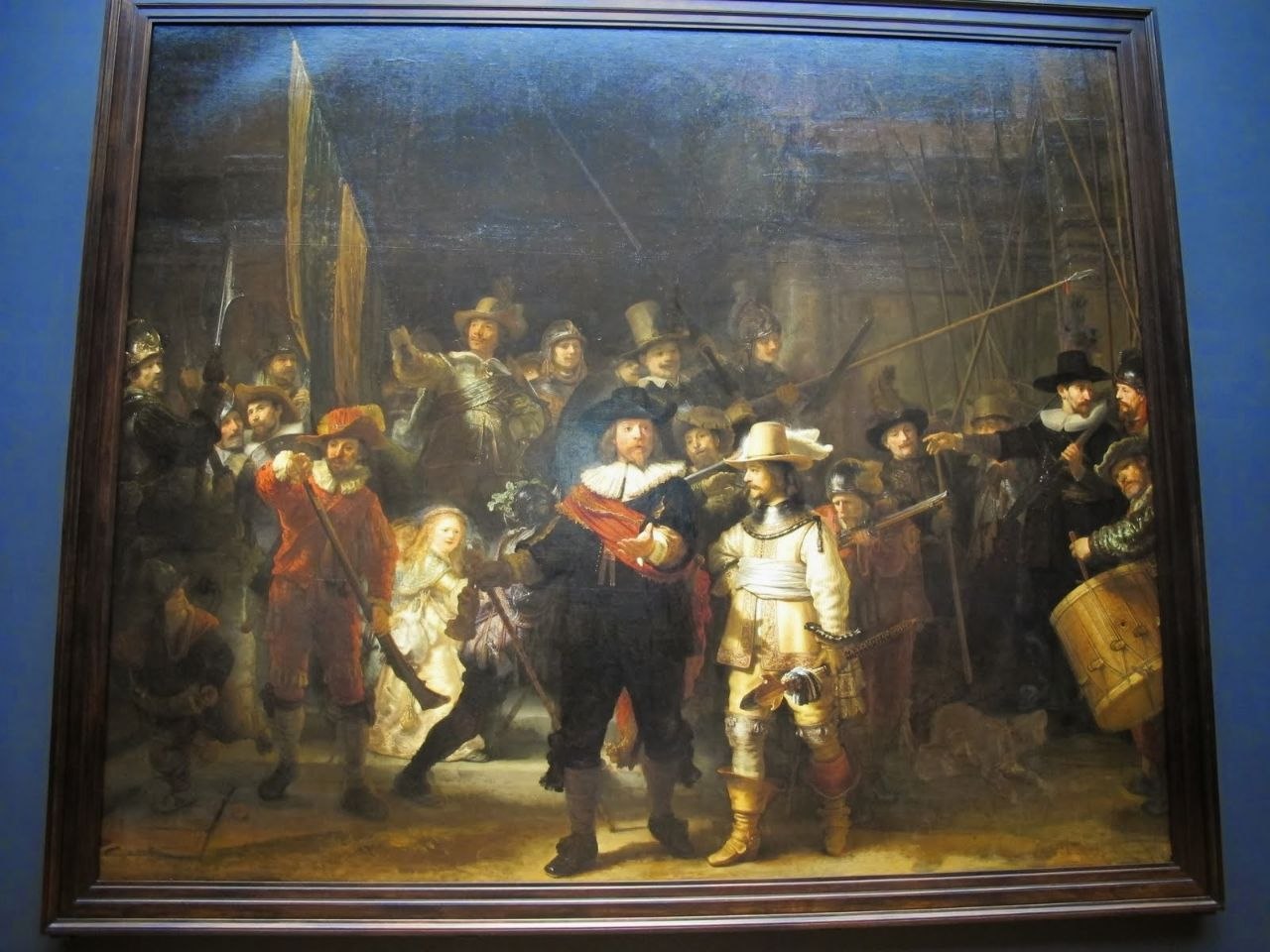
The collection spans eight centuries of Dutch and Flemish art and history, comprising approximately one million objects of which around 8,000 are on display. The museum’s undisputed centrepiece is Rembrandt van Rijn’s De Nachtwacht (The Night Watch), painted in 1642 — a monumental group portrait of a militia company measuring 3.79 by 4.53 meters, celebrated for its dramatic use of light and shadow, its dynamic composition, and the remarkable individuality of its figures. It is widely considered the most important painting in the Dutch national collection. Other major works include Vermeer’s The Milkmaid and Woman Reading a Letter, Frans Hals’ portraits of the Haarlem civic guard, and a vast collection of Delftware, dollhouses, ships’ models, and Golden Age silverwork. On Rembrandtplein — the lively square a short walk from the museum — a group of life-sized bronze sculptures recreates the figures from The Night Watch in three dimensions, set among the outdoor terraces of the square’s cafes and bars.
Cycling in Amsterdam
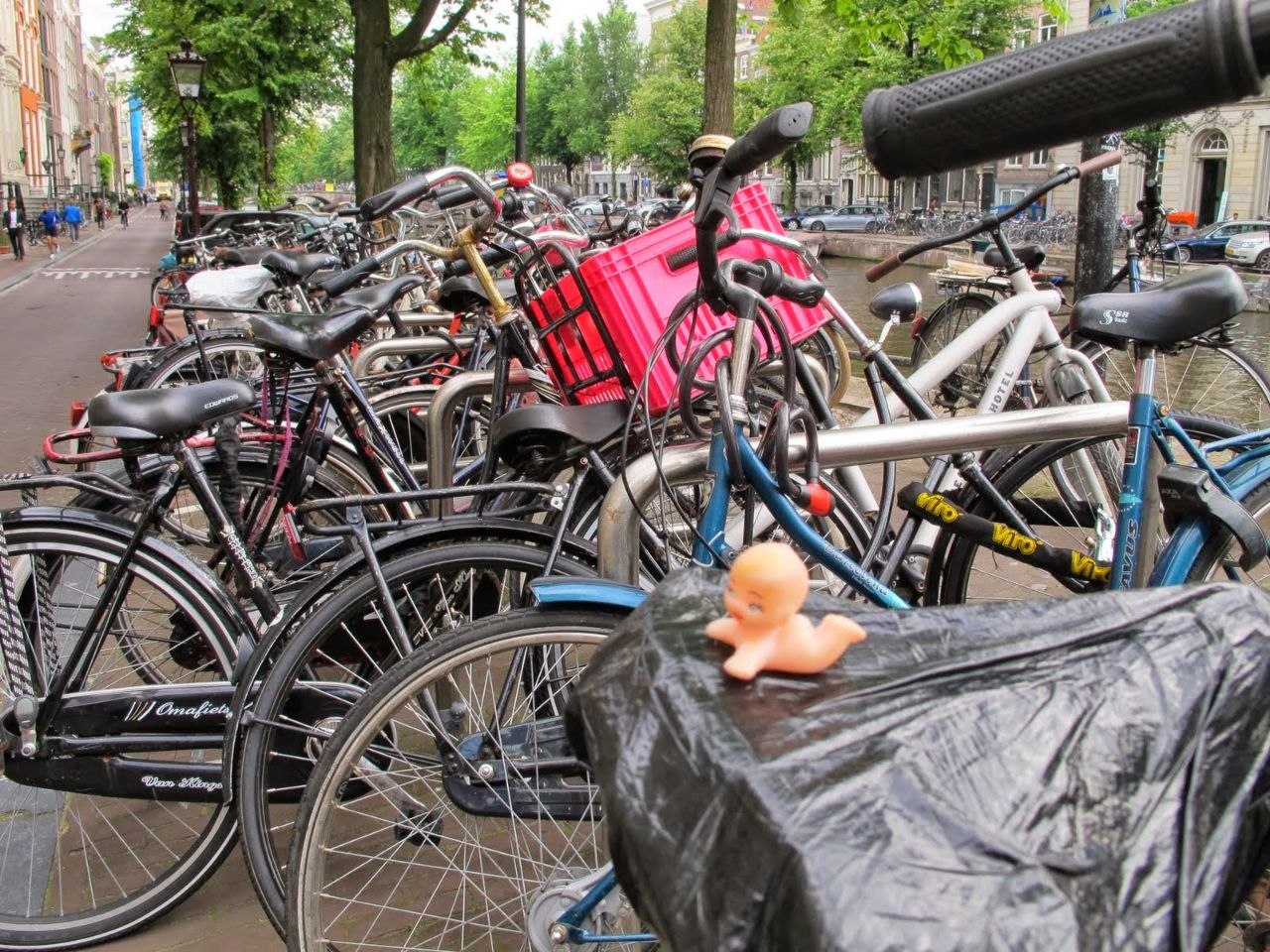
Amsterdam is one of the most bicycle-oriented cities in the world, and cycling is not merely a mode of transport but a fundamental part of daily life and civic identity. The city has an estimated 550,000 bicycles — more bikes than cars, and more bikes than people in several of its central neighbourhoods. Approximately 38% of all journeys within the city are made by bicycle, a figure that rises even higher among residents of the inner city. Around 800 kilometres of dedicated cycle paths thread through the urban fabric, and the city’s infrastructure — including bicycle-priority traffic signals, extensive bike parking facilities, and the underwater bike garage at Amsterdam Centraal station with capacity for 7,000 bicycles — is engineered around the needs of cyclists rather than cars.
The standard Amsterdam bicycle is a heavy, upright, single-speed or three-speed city bike, often decades old and deliberately unglamorous — an intentional disincentive to theft in a city where bicycle theft is endemic. Cargo bikes (bakfiets), used for transporting children, groceries, and goods, are ubiquitous. Cycling in Amsterdam operates according to an understood set of norms: cyclists have right of way over pedestrians on cycle paths, tram tracks are a known hazard, and the pace in the city centre is unhurried but continuous. For visitors unaccustomed to the density of cycling traffic, the cycle paths — which are often mistaken for pavements — require particular attention.
Dutch Food
Dutch cuisine is less internationally celebrated than that of its neighbours but has a number of distinctive and worthwhile specialities. Stroopwafels — thin caramel-filled waffle cookies, best eaten warm from a market stall — are among the most beloved Dutch snacks and are produced in enormous quantities at the Albert Cuyp Market in the De Pijp neighbourhood. Haring (herring) is the most iconic Dutch street food: raw, lightly cured herring served with raw onion and pickles, typically eaten by holding the fish by the tail and lowering it into the mouth — a practice that surprises many visitors but has been a feature of Amsterdam street life for centuries. Bitterballen — small, crispy-fried beef ragout balls served with mustard — are the standard accompaniment to a glass of Dutch beer in a brown café (bruine kroeg). The broodjeswinkel (sandwich shop) is an Amsterdam institution, serving rolls filled with combinations of aged Gouda, smoked beef, or herring.
Visiting Tips
Amsterdam Centraal station is served by Thalys and Eurostar trains from Paris (approximately 3.5 hours) and Brussels (approximately 2 hours), as well as frequent intercity services from throughout the Netherlands. Amsterdam Airport Schiphol, one of Europe’s busiest airports, is connected to the city centre by a direct rail link taking around 15 minutes. The Museumplein area — home to the Rijksmuseum, Van Gogh Museum, and Stedelijk Museum — is best visited on weekdays to avoid peak crowds; the Rijksmuseum in particular books up well in advance and timed-entry tickets are strongly recommended. Canal boat tours offer an excellent perspective on the Grachtengordel and depart from multiple points near Centraal station and Leidseplein. Visitors should exercise extreme caution on cycle paths, which are strictly separated from pedestrian pavements and are heavily used at all hours. The Albert Cuyp Market, open on weekdays and Saturdays, is the largest outdoor market in the Netherlands and an excellent introduction to Dutch street food.
 Jumping Timezones
Leave a comment