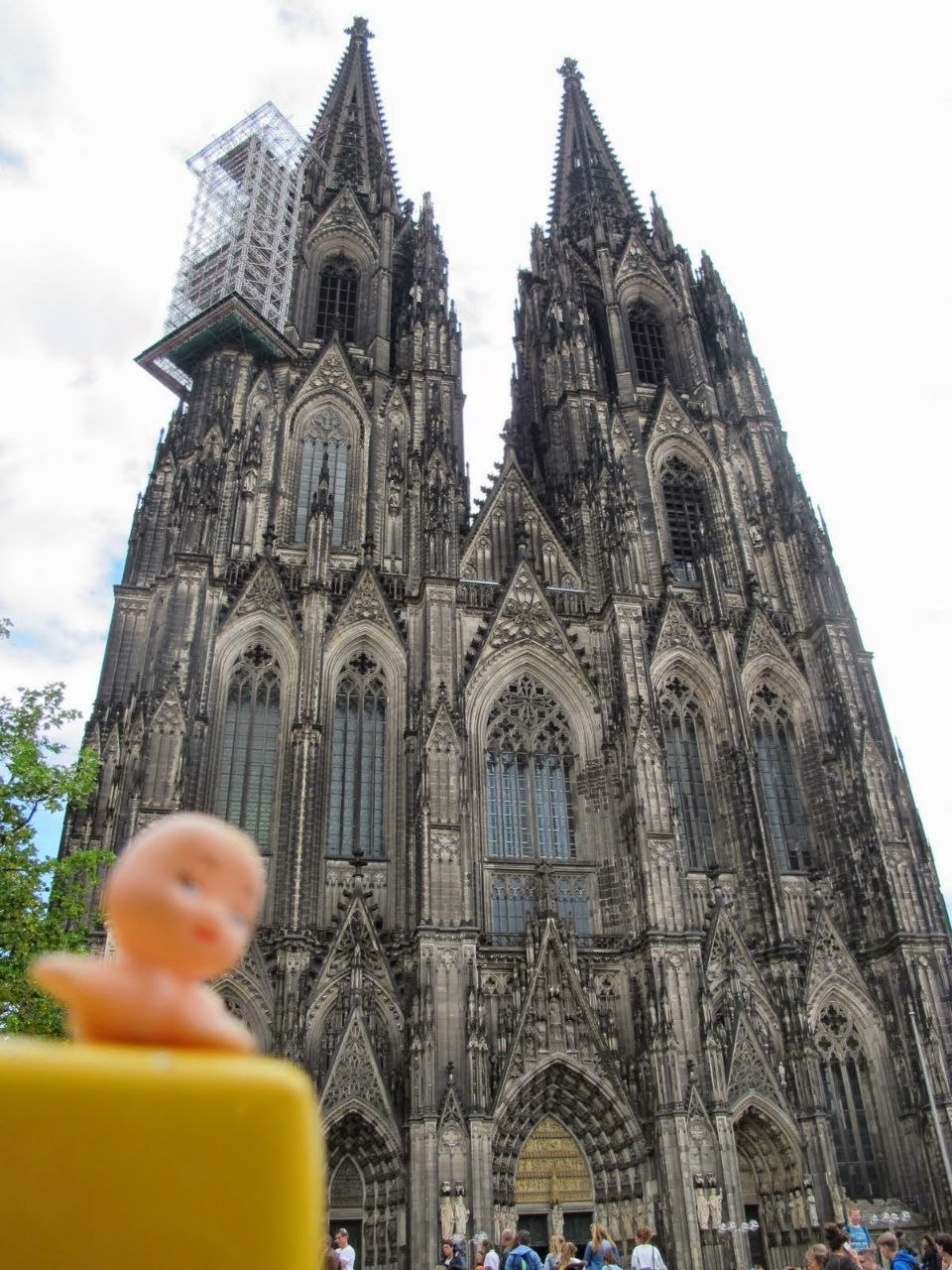
Cologne (Köln) is the largest city in the German state of North Rhine-Westphalia and the fourth-largest city in Germany, situated on the Rhine River roughly midway between the Dutch border to the north and Frankfurt to the southeast. Its origins stretch back over two thousand years: the site was settled as a Roman city around AD 50 under the name Colonia Claudia Ara Agrippinensium — founded at the instigation of Agrippina the Younger, wife of Emperor Claudius and a native of the settlement — and served as the capital of the Roman province of Germania Inferior. Roman walls, sewers, and mosaics still lie beneath the modern city, and the layout of the ancient Colonia is traceable in the street grid of the Altstadt today. Through the medieval period Cologne grew into one of the most important cities of the Holy Roman Empire, a major centre of trade on the Rhine and an archbishopric of considerable political power. Its silhouette has been defined for centuries by the twin spires of its great cathedral, and the city remains one of the most visited in Germany.
Cologne Cathedral
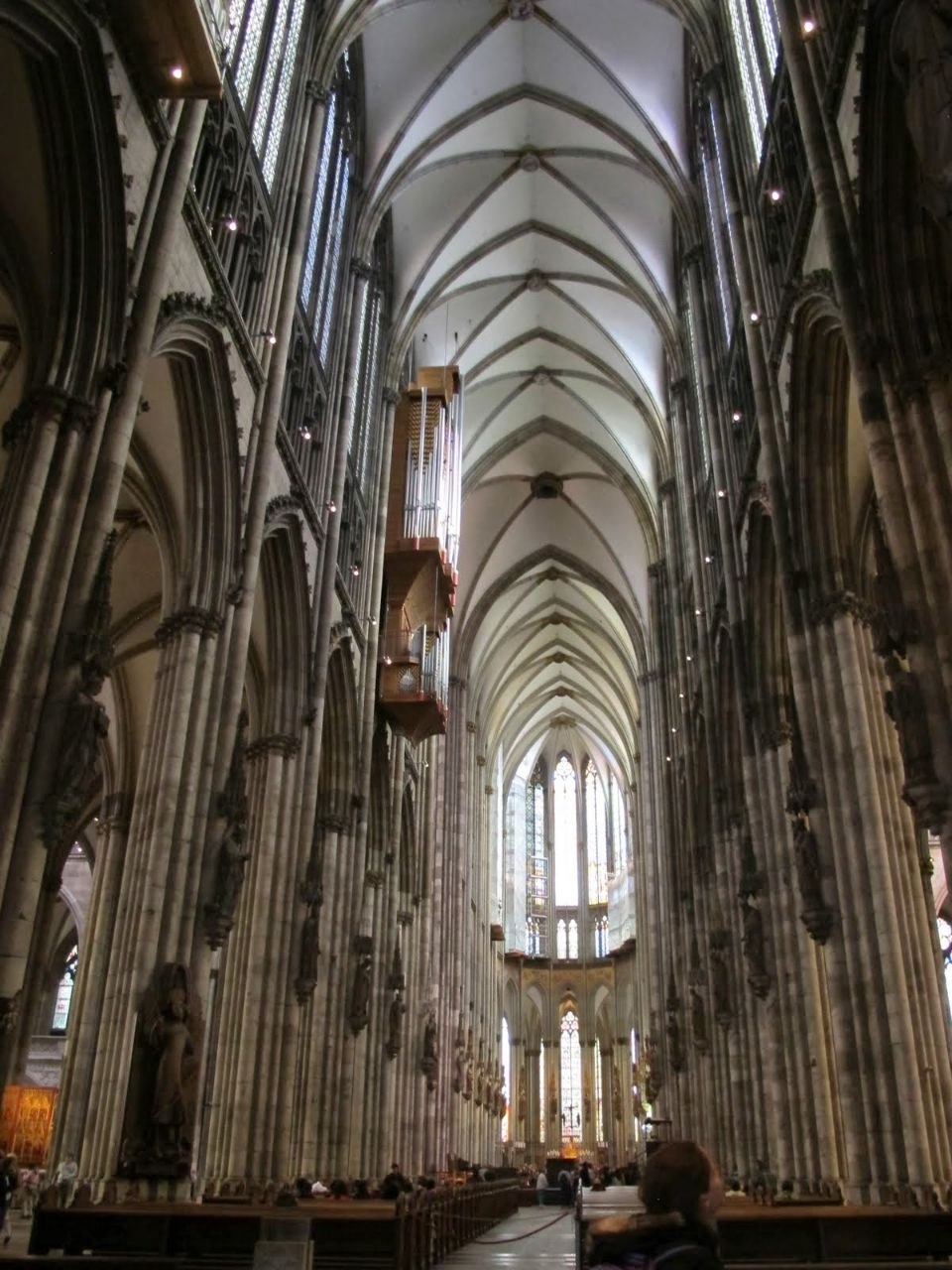
Cologne Cathedral (Kölner Dom) is the city’s defining monument and one of the supreme achievements of Gothic architecture in the world. Construction began in 1248 on the site of an earlier Carolingian cathedral, driven by the ambition to create a church worthy of housing the Shrine of the Three Kings — the gilded reliquary believed to contain the remains of the Biblical Magi, acquired by the Archbishop of Cologne from Milan in 1164. Work on the cathedral proceeded over several centuries before stalling almost entirely in the 1400s, leaving the building incomplete for over four hundred years with a massive crane perched on one of its unfinished towers, a landmark in its own right. Construction resumed in the 19th century, spurred by a surge of Romantic nationalism and the rediscovery of the original medieval plans, and the cathedral was finally completed in 1880 — at that moment the tallest structure in the world. It was designated a UNESCO World Heritage Site in 1996.
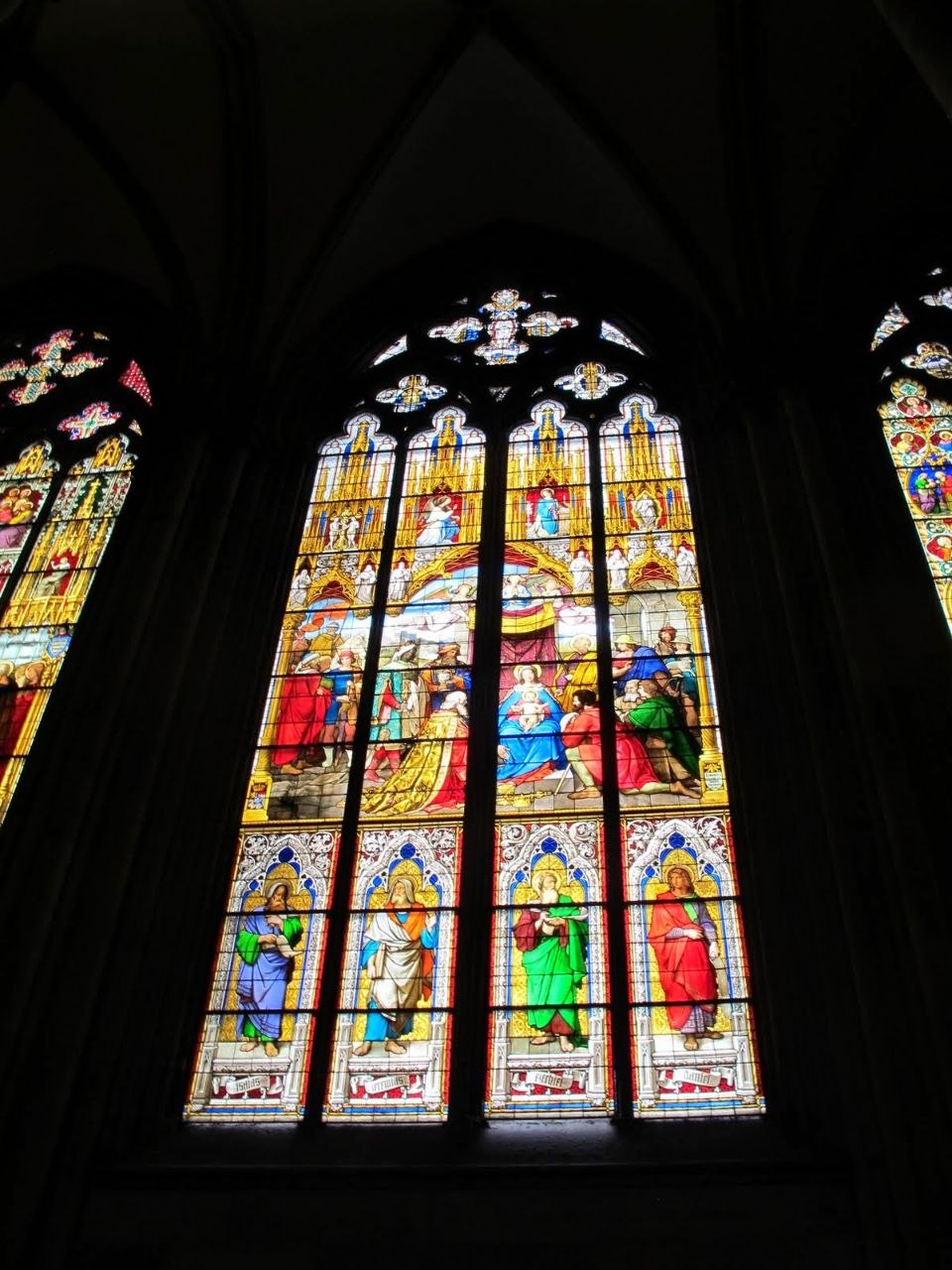
The statistics of the building are staggering. The twin spires rise 157 meters above the city. The interior nave reaches a height of 43.35 meters, supported by soaring clustered piers, and the total glazed window surface of the cathedral exceeds 10,000 square meters. Among the most celebrated windows is the Gerhard Richter window in the south transept, installed in 2007, composed of 11,500 hand-blown glass squares in 72 colors arranged in a pixelated, kaleidoscopic pattern — a 20th-century counterpart to the medieval Bavaria Window (Bayernfenster) in the north transept, donated by King Ludwig I of Bavaria in 1848 and depicting scenes from the life of Christ in luminous medieval style. The Shrine of the Three Kings, housed in the ambulatory behind the high altar, remains the largest reliquary in the Western world — a gilded and gem-encrusted casket crafted primarily by the goldsmith Nicholas of Verdun beginning around 1190.
The Altstadt & the Rhine
Cologne’s Altstadt (Old Town) spreads out from the base of the cathedral toward the Rhine riverfront, encompassing a network of pedestrianized lanes, Romanesque churches, and restored medieval buildings. The city was subjected to extensive Allied bombing during World War II — over 90% of the inner city was destroyed — but was substantially rebuilt in the postwar decades, with many historic structures painstakingly reconstructed. The Altstadt today is anchored by the Hohe Straße, one of Germany’s oldest shopping streets, and the Heumarkt square, the site of markets and festivals throughout the year.
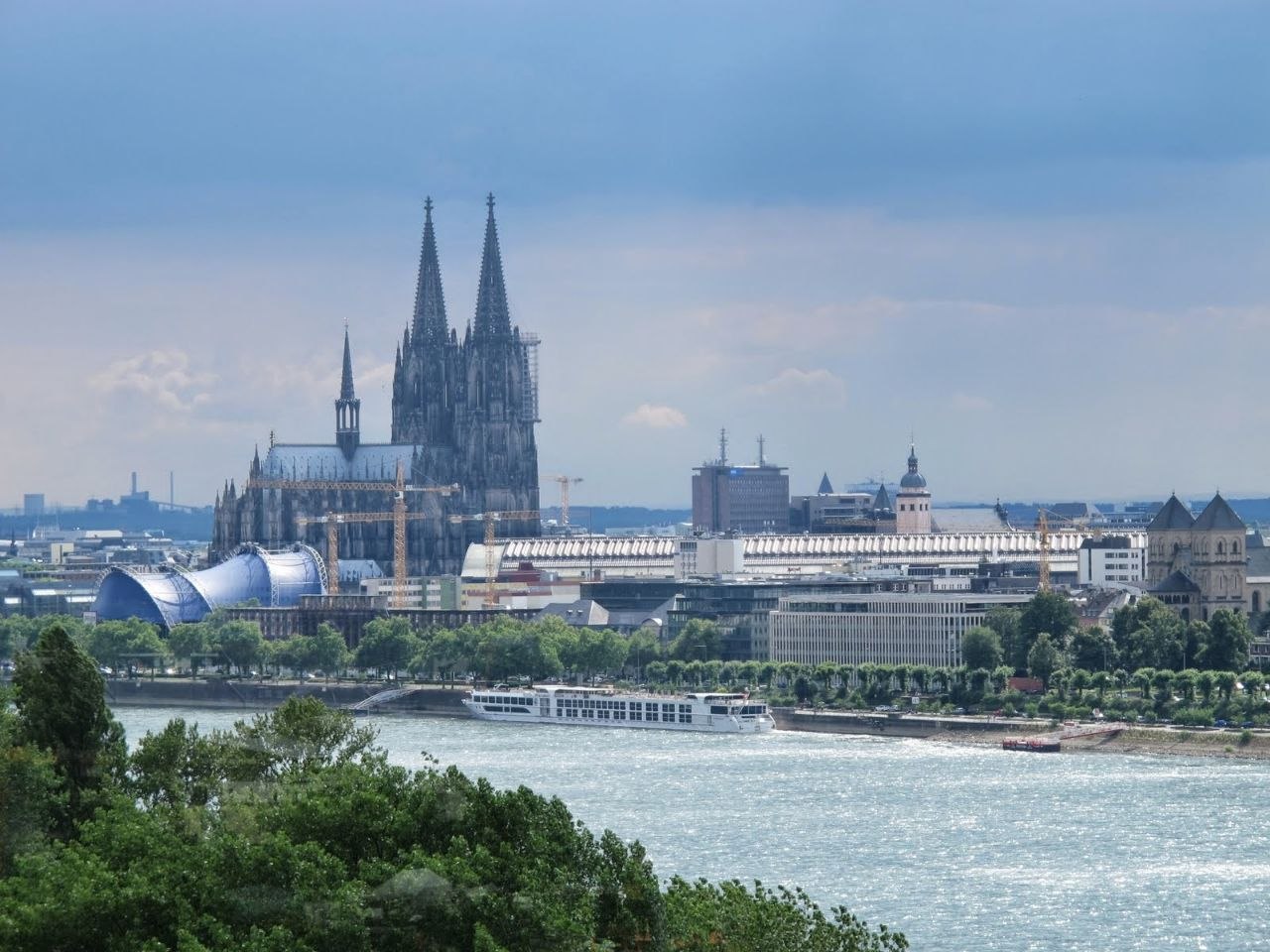
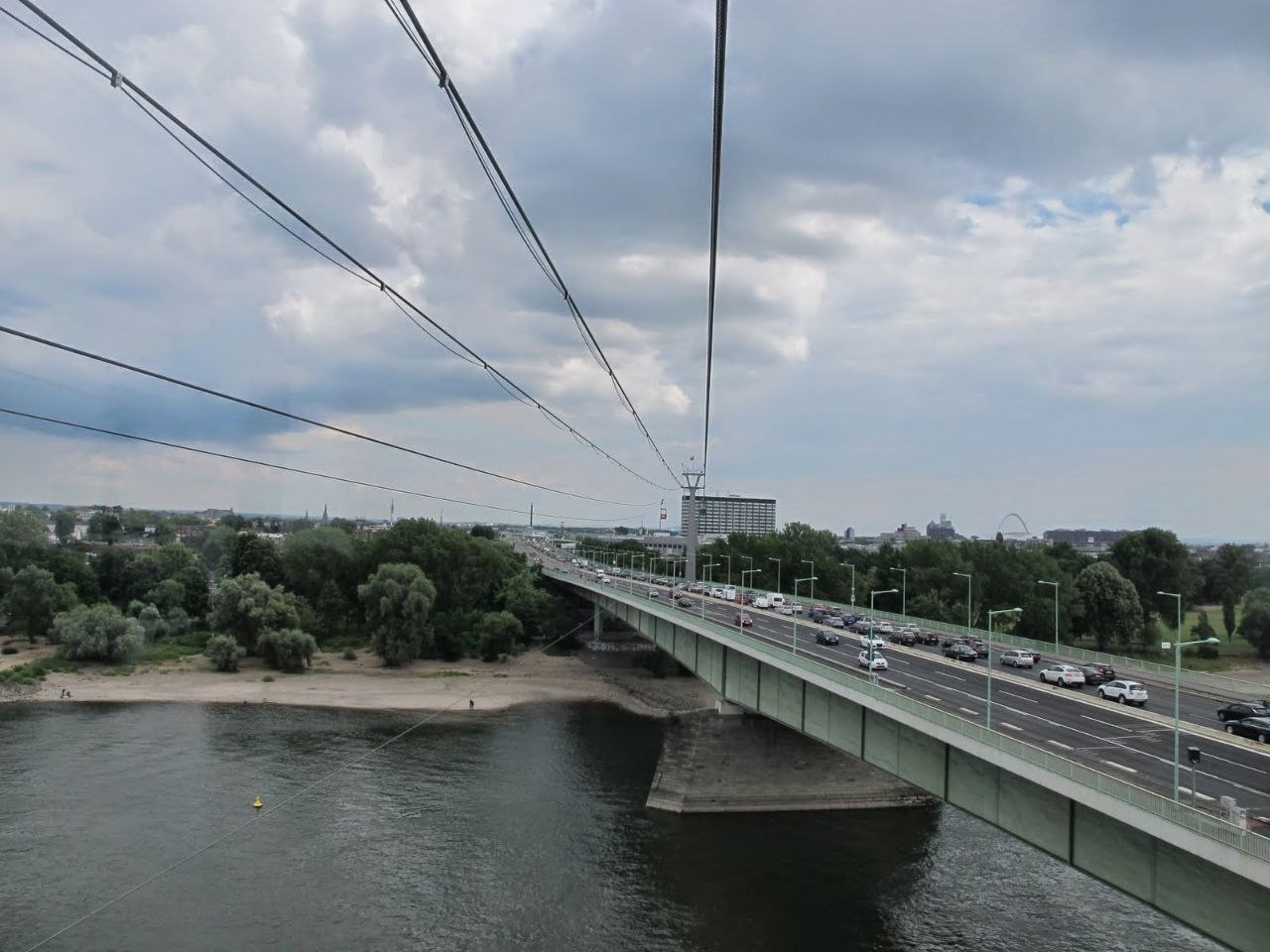
The Rhine riverfront (Rheinufer) stretches along the eastern edge of the Altstadt, lined with the characteristic coloured facades of the Fischmarkt quarter and broad promenades popular with cyclists and pedestrians. The view from the opposite bank — looking back across the Rhine toward the cathedral — is among the most iconic urban panoramas in Germany. Cologne’s Rhine bridges, including the Hohenzollernbrücke immediately south of the cathedral (famous for the thousands of padlocks affixed to its railings by couples), and the cable-stayed Severinsbrücke to the south, connect the Altstadt to the right bank districts of Deutz and Poll.
Kölsch & Brauhaus Culture
Cologne has its own beer — Kölsch — and the culture around it is as distinctly local as the cathedral itself. Kölsch is a pale, top-fermented lager-style ale brewed exclusively within the Cologne city region under a protected geographical indication; by the terms of the Kölsch Konvention of 1985, the name may only be applied to beers brewed by one of the city’s traditional breweries. It is served in a narrow cylindrical glass called a Stange, holding just 200 millilitres, which ensures the beer is always fresh and cold. Waiters — known as Köbes — circulate with circular trays (Kranz) and replace empty glasses automatically without being asked; to stop refills, a customer places a coaster on top of their glass. The tradition is both a service model and a point of civic pride.
The best place to experience Kölsch is in one of the city’s traditional Brauhäuser — wood-panelled beer halls that typically brew their own house Kölsch on the premises and serve hearty Rhineland food alongside. Classic dishes include Himmel un Ääd (black pudding with mashed potato and apple sauce), Halver Hahn (a rye roll with aged Gouda — literally “half a chicken,” despite containing no chicken whatsoever), and Sauerbraten (slow-braised marinated beef). The Brauhäuser of the Altstadt — including Früh am Dom, Gaffel am Dom, and Päffgen in the Friesenstraße — are all within easy walking distance of the cathedral.
Visiting Tips
Cologne is well connected by high-speed rail, with frequent ICE services from Frankfurt (approximately 1 hour), Amsterdam (2.5 hours), and Brussels (1.75 hours), as well as Thalys services to Paris. Cologne Bonn Airport (CGN) is served by a direct S-Bahn link taking around 15 minutes to the central station (Köln Hauptbahnhof), which sits immediately adjacent to the cathedral. The cathedral itself is free to enter; the treasury and tower climb (533 steps) are ticketed separately. The tower offers the finest elevated view of the city and the Rhine. Visitors wishing to see the Shrine of the Three Kings should time their visit around services, as access to the high altar area may be restricted during Mass. The Altstadt is compact and best explored on foot. Cologne hosts one of Europe’s largest and most celebrated Karneval (carnival) celebrations in the days before Lent, drawing enormous crowds and transforming the city’s streets and pubs.
 Jumping Timezones
Leave a comment