Berlin is the capital and largest city of Germany, situated on the North German Plain at the confluence of the Spree and Havel rivers. With a population of nearly four million, it is the most populous city in the European Union. Founded in the 13th century as a trading settlement, Berlin rose to prominence as the capital of the Kingdom of Prussia and later of the unified German Empire proclaimed in 1871. The city was devastated during the Second World War and subsequently divided — physically and politically — between the Western Allied powers and the Soviet Union for more than four decades. The fall of the Berlin Wall in November 1989 and German reunification in October 1990 transformed Berlin once again into the national capital, and the three decades since have seen the city rebuilt and repositioned as one of Europe’s foremost centers of culture, politics, and contemporary art.
Brandenburg Gate
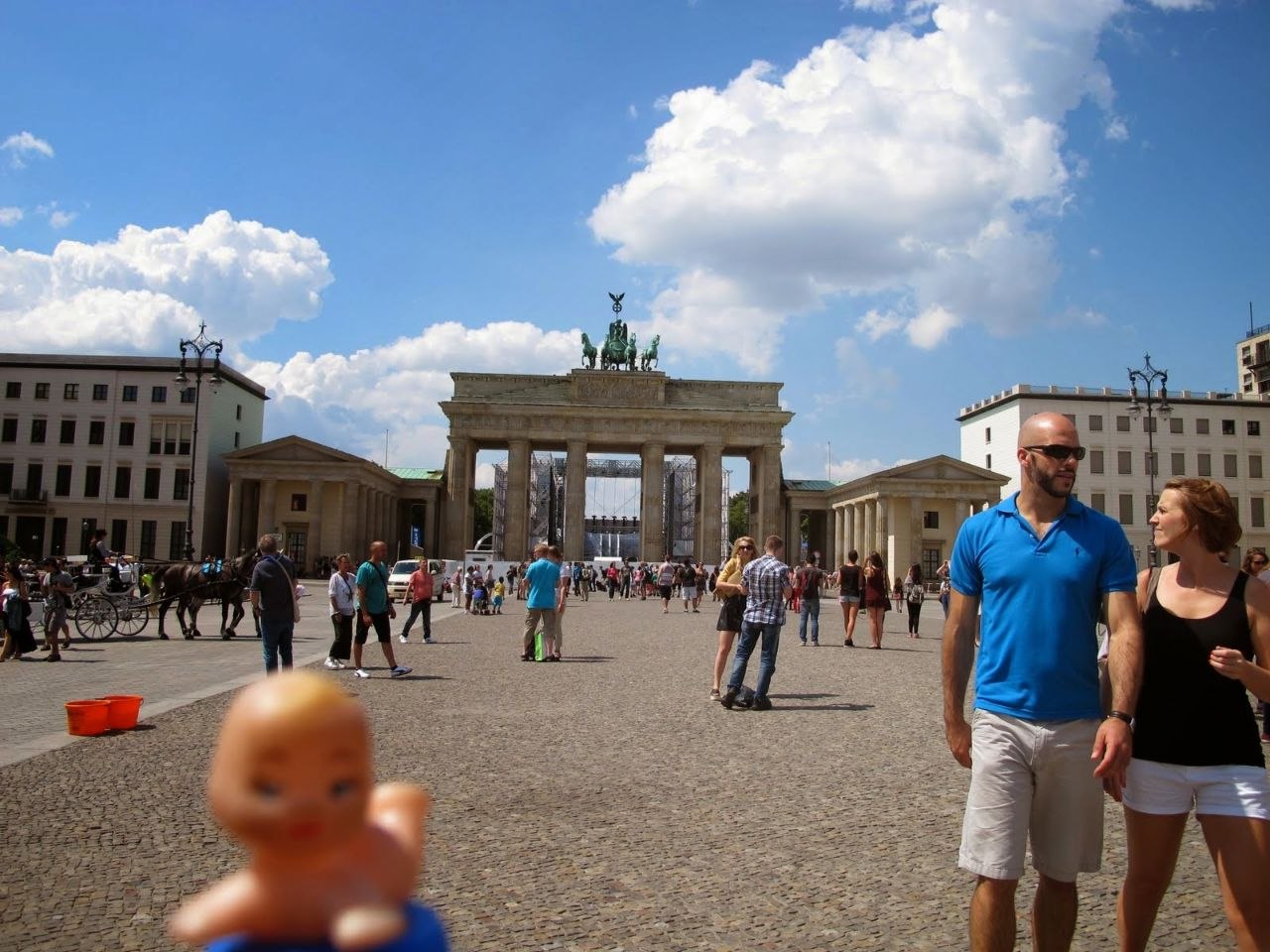
The Brandenburg Gate (Brandenburger Tor) is the most recognizable landmark in Berlin and one of the most historically charged monuments in Europe. Built between 1788 and 1791 by architect Carl Gotthard Langhans on the commission of Prussian king Frederick William II, it was designed in the Neoclassical style, modeled on the Propylaea of the Acropolis in Athens. The gate stands at the western end of Unter den Linden, the grand boulevard that runs through the heart of historic Berlin, and opens onto Pariser Platz — a square renamed in 1814 to celebrate the Allied entry into Paris following Napoleon’s defeat.
Crowning the gate is the Quadriga, a sculpture of the goddess of Victory driving a chariot pulled by four horses, created by Johann Gottfried Schadow in 1793. Napoleon famously removed the Quadriga to Paris in 1806 following his defeat of Prussia, but it was returned to Berlin in 1814 after his fall. During the Cold War, the gate stood stranded in the no-man’s-land between East and West Berlin, inaccessible from either side — a potent symbol of the city’s division. When the Wall fell in 1989, the Brandenburg Gate became the focal point of reunification celebrations, and it has since been restored as a symbol of German unity and freedom.
The Reichstag
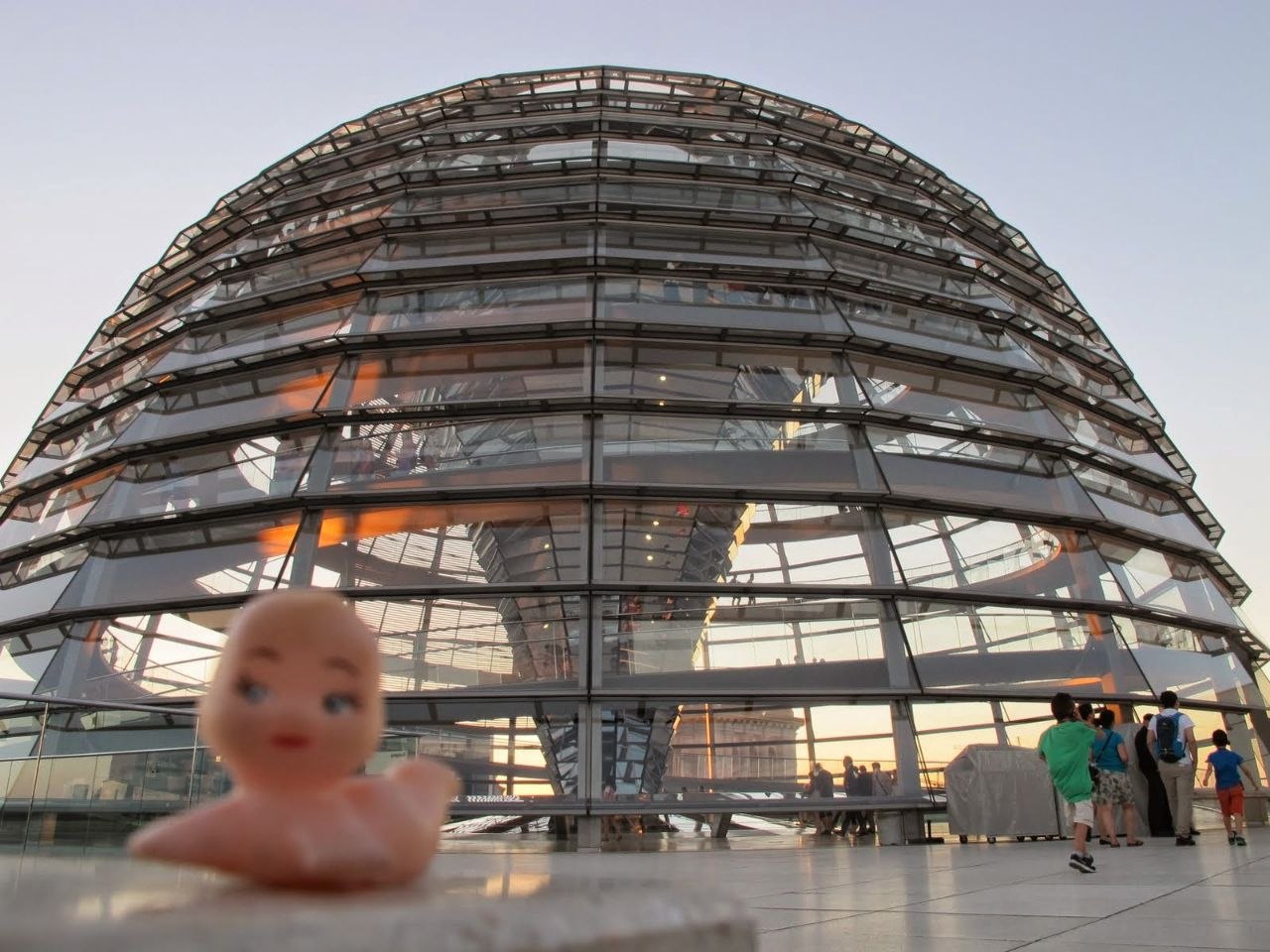
The Reichstag building has served as the seat of the German parliament — the Bundestag — since 1999 and stands as one of the most architecturally and historically significant buildings in Berlin. Constructed between 1884 and 1894 to designs by Paul Wallot in a Neo-Renaissance style, it was the home of the imperial German parliament until it was badly damaged by fire in 1933 — an event exploited by the Nazi regime to suspend civil liberties. The building was further ravaged during the Battle of Berlin in 1945 and spent decades as an unused ruin in the divided city.
Following reunification, the British architect Sir Norman Foster was commissioned to reconstruct and modernize the building for the returning parliament. The most dramatic element of his intervention was the addition of a new glass dome above the plenary chamber, completed in 1999. The dome is open to the public and accessible free of charge (advance registration required), featuring a spiralling walkway that ascends around a central mirrored cone — designed to reflect natural light down into the chamber below as a symbol of parliamentary transparency. The rooftop terrace offers sweeping views across the government quarter and central Berlin. The Reichstag’s exterior walls still bear the inscriptions and graffiti left by Soviet soldiers in 1945, preserved as a deliberate historical record.
Memorial to the Murdered Jews of Europe
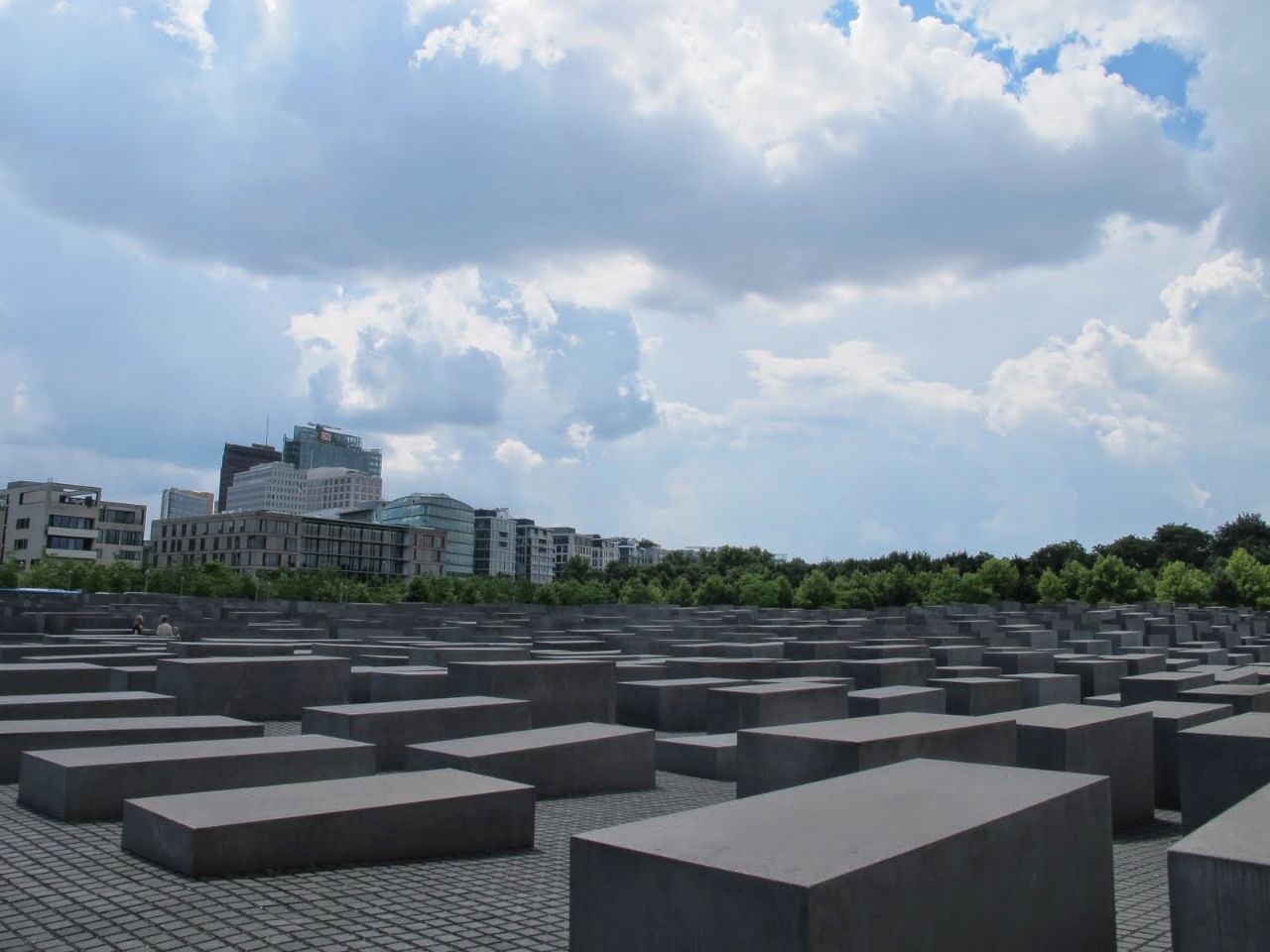
Located one block south of the Brandenburg Gate, the Memorial to the Murdered Jews of Europe (Denkmal für die ermordeten Juden Europas) is the Federal Republic of Germany’s central Holocaust memorial. Designed by American architect Peter Eisenman in collaboration with the engineering firm Buro Happold, it was inaugurated in May 2005 after more than a decade of political debate, competitions, and revisions. The memorial occupies an entire city block and consists of 2,711 concrete stelae — rectangular blocks of varying heights, ranging from ground level to over four meters — arranged in a grid on undulating ground.
Eisenman intentionally gave the design no fixed symbolic meaning; the varying heights of the stelae and the sloping terrain are intended to produce a disorienting, uneasy atmosphere as visitors move through the field. The experience shifts depending on the path taken — open and navigable at the edges, claustrophobic and labyrinthine toward the center. Beneath the memorial, an underground information center documents the persecution and murder of approximately six million Jewish people across Nazi-occupied Europe.
Museum Island & Berlin Cathedral
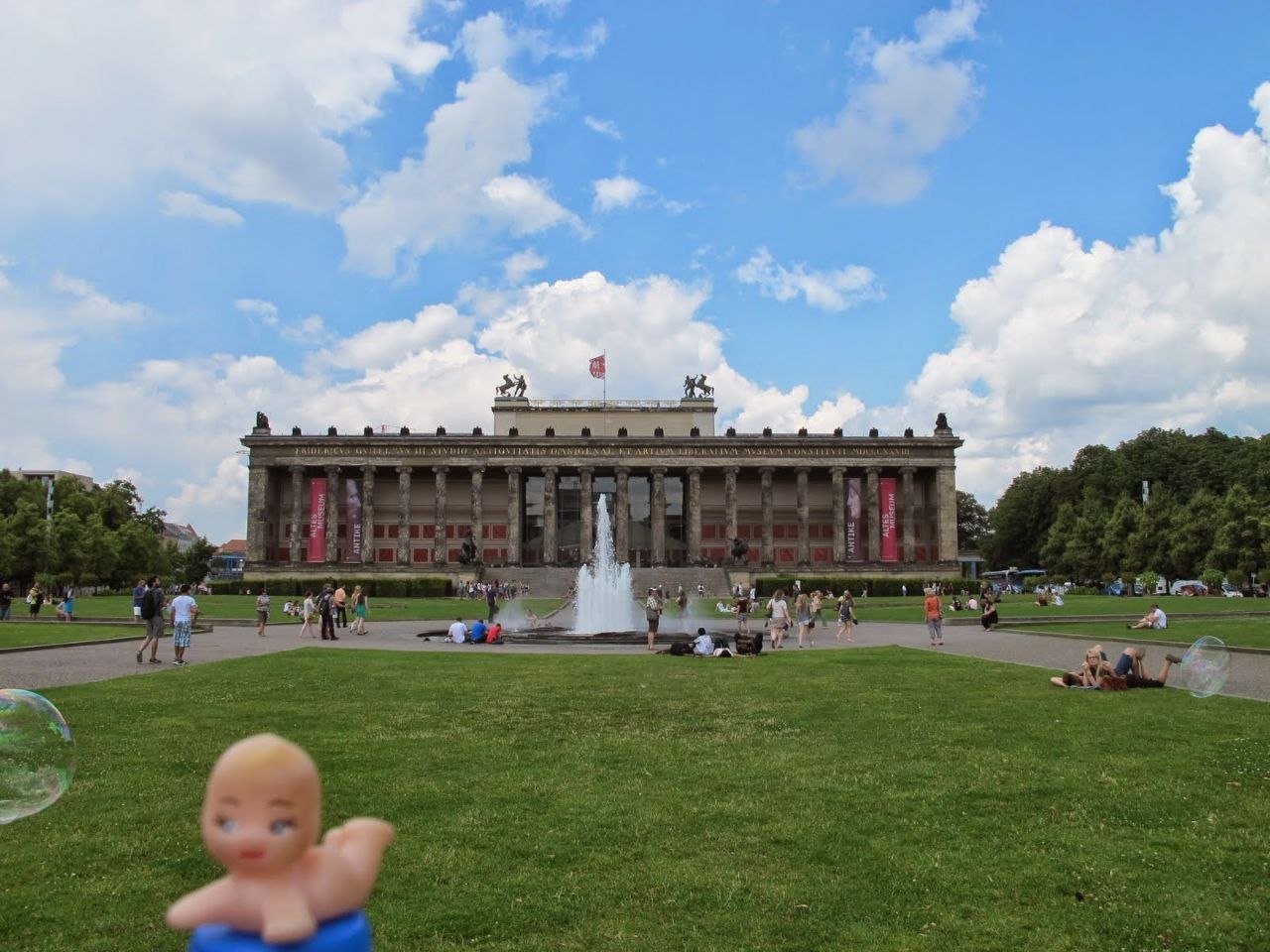
Museum Island (Museumsinsel) is a UNESCO World Heritage Site occupying the northern tip of an island in the Spree River in the heart of Berlin. It contains five major state museums built between 1830 and 1930: the Altes Museum, Neues Museum, Alte Nationalgalerie, Bode Museum, and Pergamon Museum. Together they form one of the most significant concentrations of museums in the world, housing collections ranging from ancient Egyptian artifacts and Greek and Roman antiquities to 19th-century European painting and sculpture. The ensemble was inscribed as a UNESCO World Heritage Site in 1999.
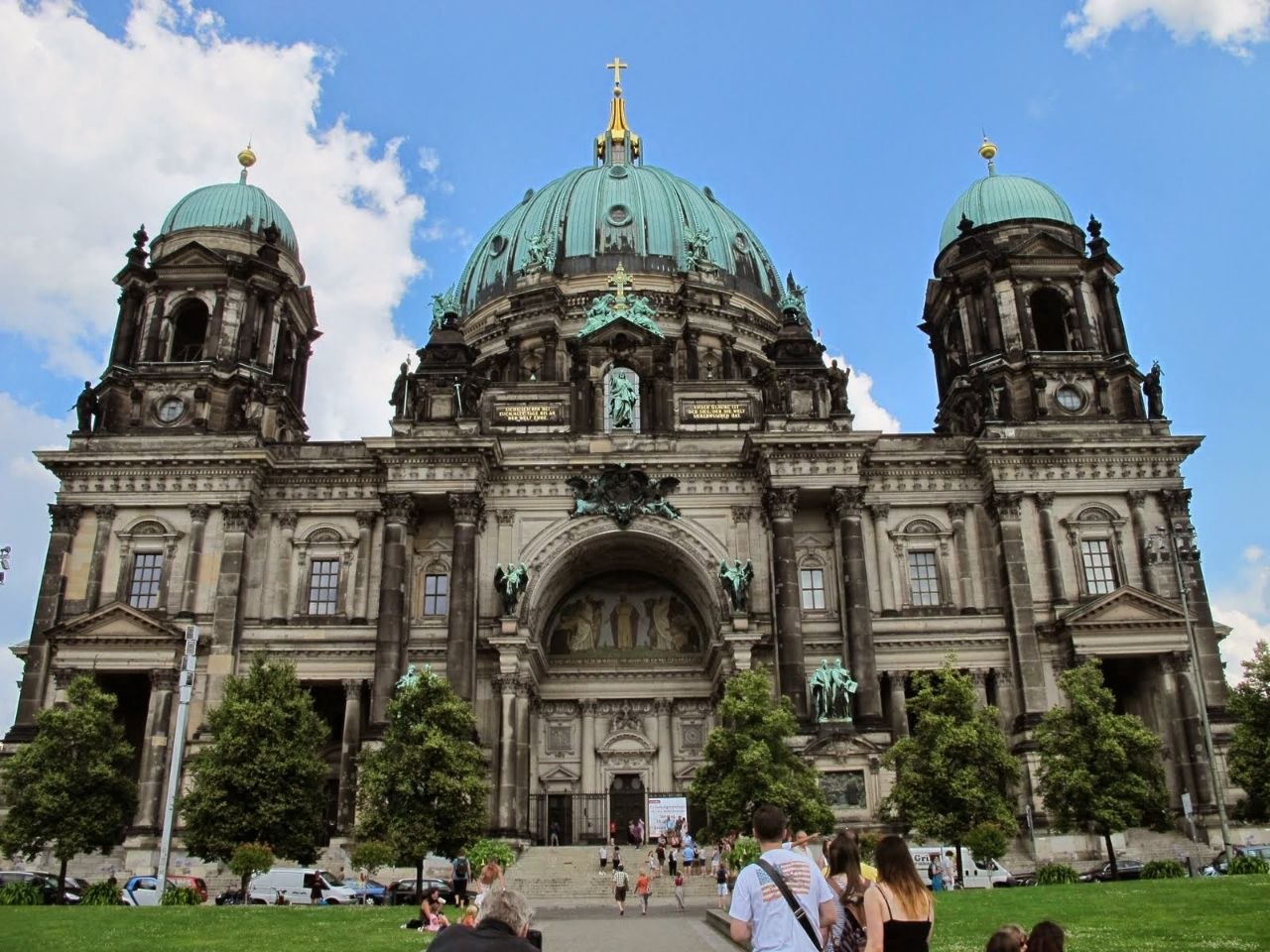
At the southern end of Museum Island, facing the Lustgarten park, stands the Berlin Cathedral (Berliner Dom) — the largest Protestant church in Germany. The present structure was built between 1894 and 1905 under Kaiser Wilhelm II to designs by Julius Carl Raschdorff in the Italian High Renaissance and Baroque Revival styles. Its most prominent feature is the central copper-green dome, rising 98 meters above street level. The cathedral houses the Imperial Hohenzollern Crypt, containing the sarcophagi of over 90 members of the Hohenzollern dynasty — the royal family that ruled Prussia and unified Germany. The building was badly damaged by bombing in 1943 and its reconstruction was not completed until 1993.
Checkpoint Charlie
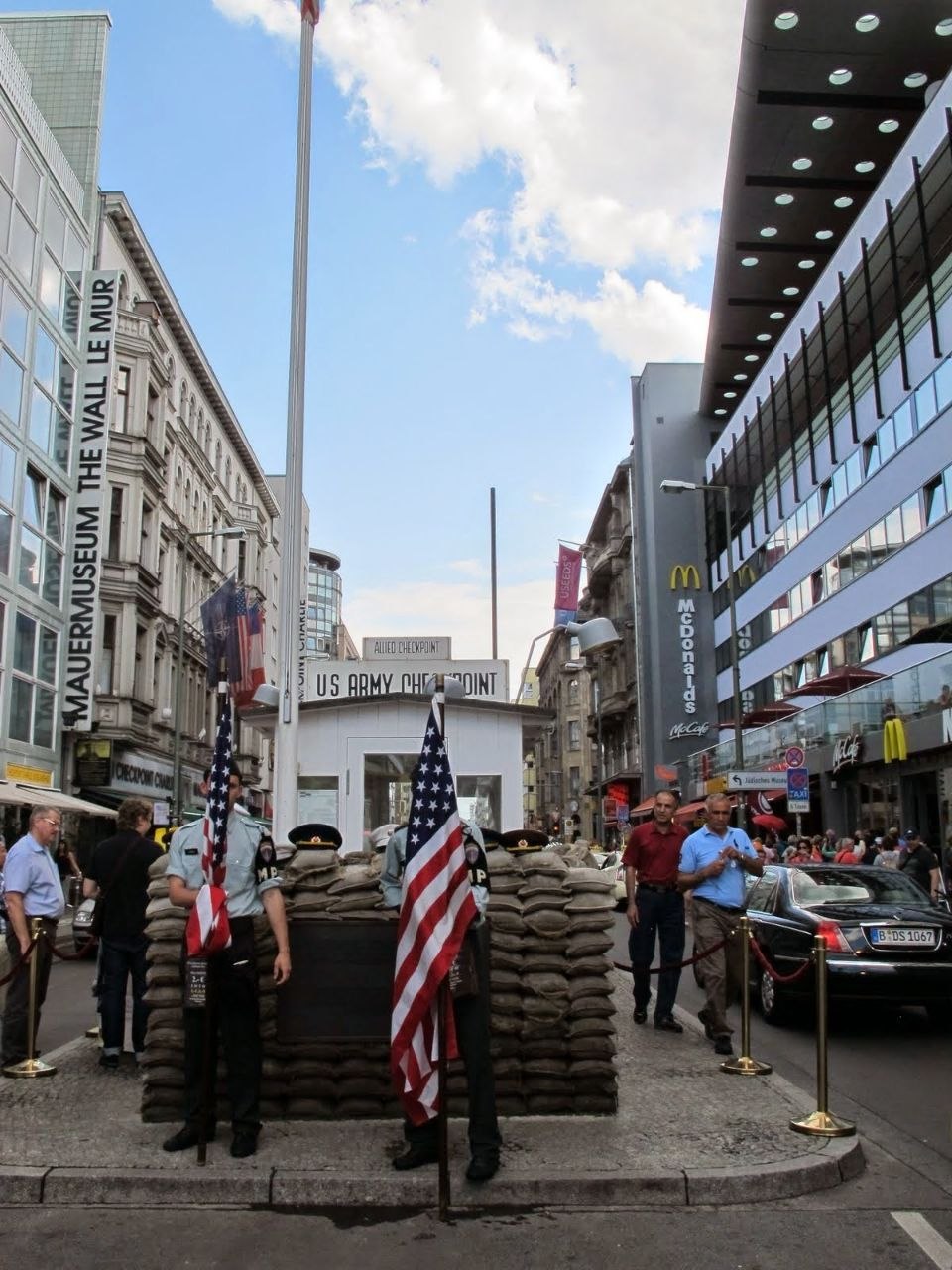
Checkpoint Charlie was the most famous of the border crossings between East and West Berlin during the Cold War, located on Friedrichstraße in the Mitte district. It was the only crossing point through the Berlin Wall available to Allied military personnel and Western diplomats, as well as the only crossing for foreigners visiting East Berlin. The name “Charlie” derives from the NATO phonetic alphabet — it was the third in a series of Allied checkpoints (“Alpha” at Helmstedt and “Bravo” at Dreilinden being the others along the transit route).
The checkpoint was the site of one of the most tense confrontations of the Cold War: in October 1961, just weeks after the Wall’s construction began, Soviet and American tanks faced each other across the crossing point for sixteen hours in a standoff that brought the two superpowers to the brink of direct military confrontation. The original Allied guardhouse was removed in 1990, shortly after the Wall fell. Today, a reconstruction of the US Army guardhouse stands at the original location as a memorial and tourist attraction, accompanied by the Mauermuseum — Haus am Checkpoint Charlie, which documents the history of the Wall and the many attempts made to cross it.
East Side Gallery
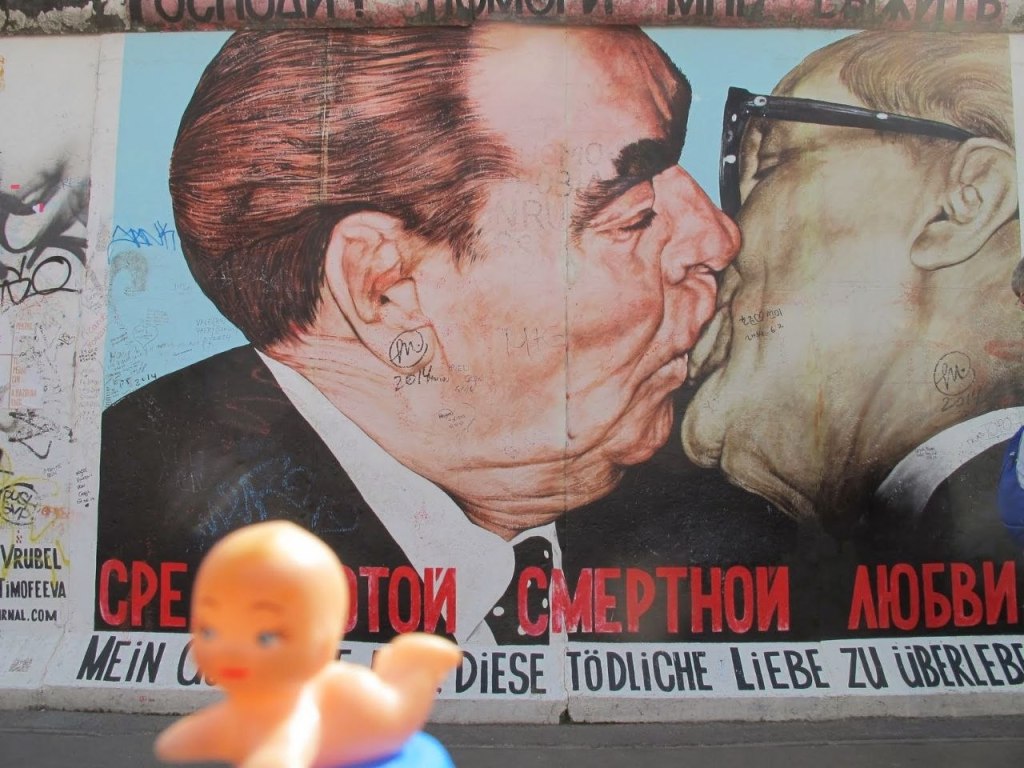
The East Side Gallery is the longest surviving stretch of the Berlin Wall still standing, running for approximately 1.3 kilometers along Mühlenstraße in the Friedrichshain district beside the Spree River. In the spring of 1990, shortly after the Wall’s fall but before German reunification was complete, a group of 118 artists from 21 countries were granted permission by the GDR authorities to paint the eastern face of the Wall — the side that had faced into East Berlin. The result is an open-air gallery of political murals, abstract works, and personal reflections, created during one of the most historically charged moments in modern European history.
Among the most famous works on the East Side Gallery is Dmitri Vrubel’s My God, Help Me to Survive This Deadly Love — depicting the notorious fraternal kiss between Soviet leader Leonid Brezhnev and East German leader Erich Honecker — and Birgit Kinder’s Test the Rest, showing a Trabant automobile bursting through the Wall. The gallery was restored in 2009, with many of the original artists invited to repaint their works. It is listed as a protected historical monument, though sections have been demolished under development pressure over the years.
Visiting Tips
Berlin is served by Berlin Brandenburg Airport (BER), which opened in 2020 after years of delay, as well as excellent rail connections across Germany and Europe. The city has an extensive public transport network of U-Bahn (subway), S-Bahn (commuter rail), trams, and buses. Most of central Berlin’s major landmarks are concentrated within a walkable area around Mitte and can be covered on foot or by bicycle. The Reichstag dome is free to visit but requires advance online registration. Museum Island’s five museums each charge separate admission; a combined day pass is available. The East Side Gallery is an outdoor, always-accessible attraction along the riverfront, free of charge. Berlin has no shortage of free public memorials — the Holocaust Memorial, Brandenburg Gate, and many Wall remnants can all be visited without cost.
 Jumping Timezones
Leave a comment