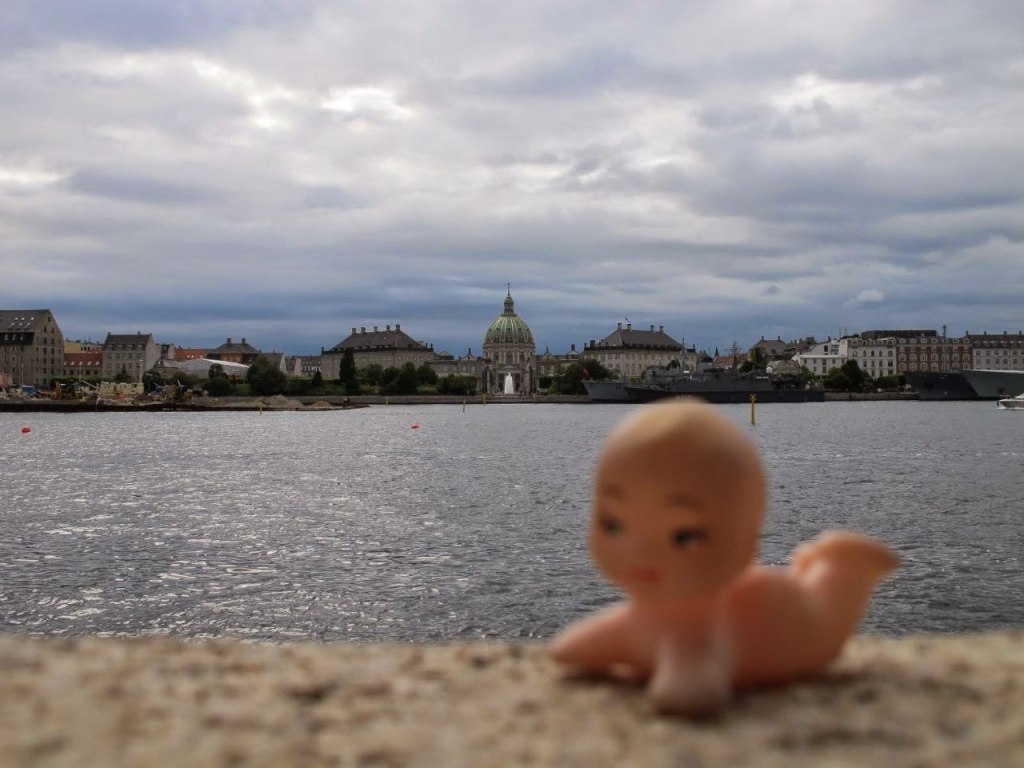
Copenhagen (København) is the capital and largest city of Denmark, situated on the eastern coast of the island of Zealand at the narrow Øresund strait separating Denmark from Sweden. The city takes its name from the Old Norse Køpmannæhavn — “merchants’ harbor” — a name that reflects its medieval origins as a trading port. A small fishing village in the 10th century, it grew rapidly after Bishop Absalon built a fortification here in 1167, and was designated the capital of Denmark in the early 15th century. Today Copenhagen is consistently ranked among the world’s most livable cities, recognized for its urban design, cycling culture, culinary scene, and extensive waterfront.
Amalienborg Palace
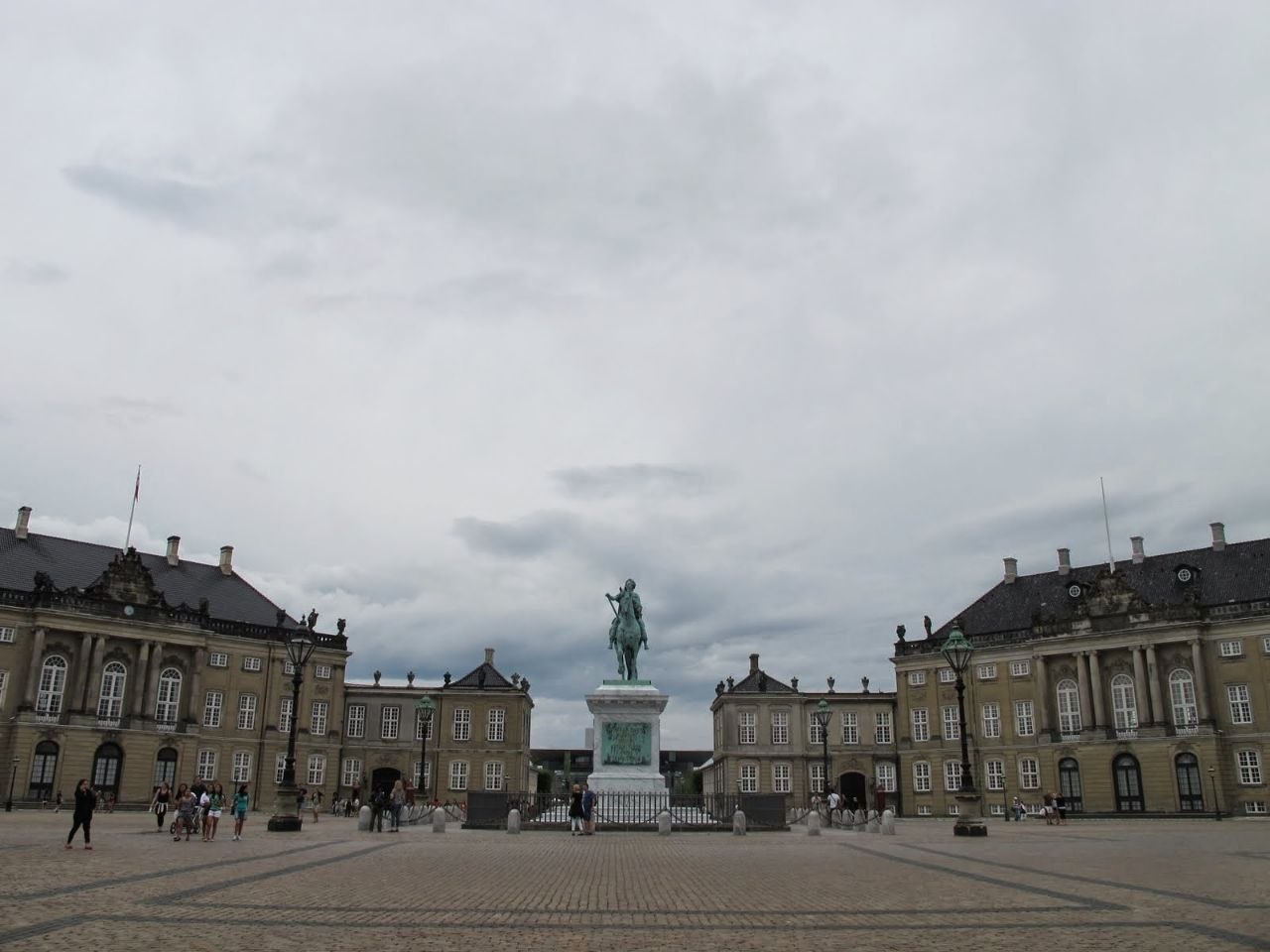
Amalienborg is the official winter residence of the Danish royal family and one of the finest examples of Rococo architecture in Scandinavia. It consists of four nearly identical palaces arranged symmetrically around a large octagonal courtyard, all built in the mid-18th century as part of the planned Frederiksstaden district — an ambitious urban development project commissioned by King Frederik V to celebrate the 300th anniversary of the House of Oldenburg. The four palaces were originally constructed for Danish nobles and were purchased by the Crown following the fire that destroyed Christiansborg Palace in 1794.
At the center of the octagonal square stands an equestrian bronze statue of King Frederik V, commissioned by the Danish Asiatic Company and sculpted by the French artist Jacques Saly. The statue took nearly two decades to complete — so long that Frederik V died before its unveiling in 1771 — and is considered one of the finest equestrian sculptures in Europe. The changing of the Royal Guard takes place daily at Amalienborg and draws large crowds throughout the year.
Frederik’s Church (The Marble Church)
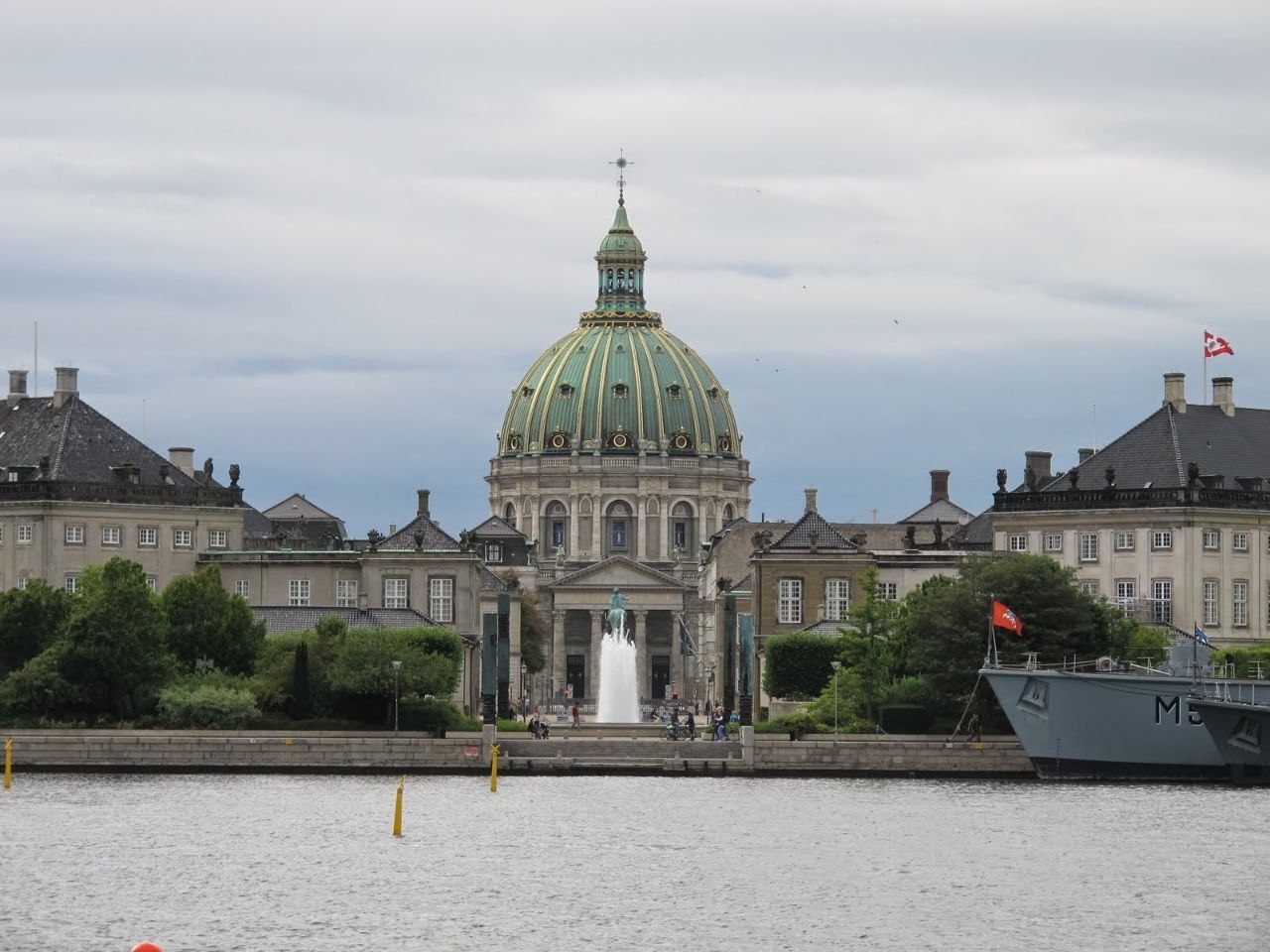
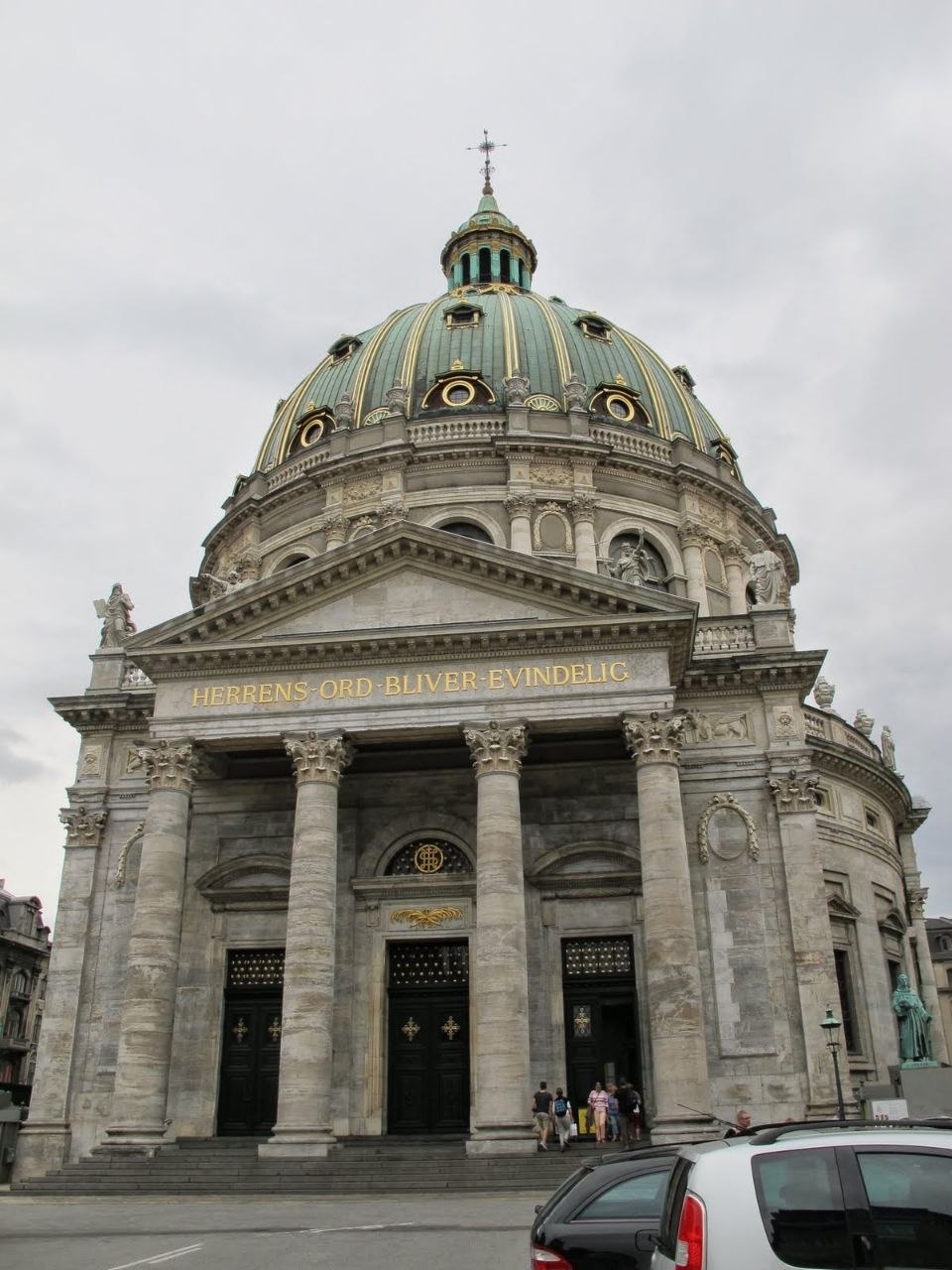
Rising directly behind Amalienborg and completing the ceremonial axis of Frederiksstaden is Frederik’s Church, universally known as the Marble Church (Marmorkirken) for the material originally intended for its construction. The church was commissioned by Frederik V in 1749, but the immense cost of quarrying Norwegian marble brought construction to a halt for over a century. It was eventually completed in 1894 — nearly 150 years after its foundation was laid — funded by the Danish financier Carl Frederik Tietgen, and finished by architect Ferdinand Meldahl in a style inspired by the great domed churches of Rome.
The building’s most striking feature is its copper-green dome, one of the largest in Scandinavia at approximately 31 meters in diameter and rising 46 meters to the interior apex. Twelve pillars support the dome over a circular nave, and the exterior drum is ringed with columns and statues of significant figures in Danish and Christian history. The dome can be climbed during summer months, offering panoramic views across the rooftops of central Copenhagen and across the Øresund to Sweden.
Copenhagen Opera House
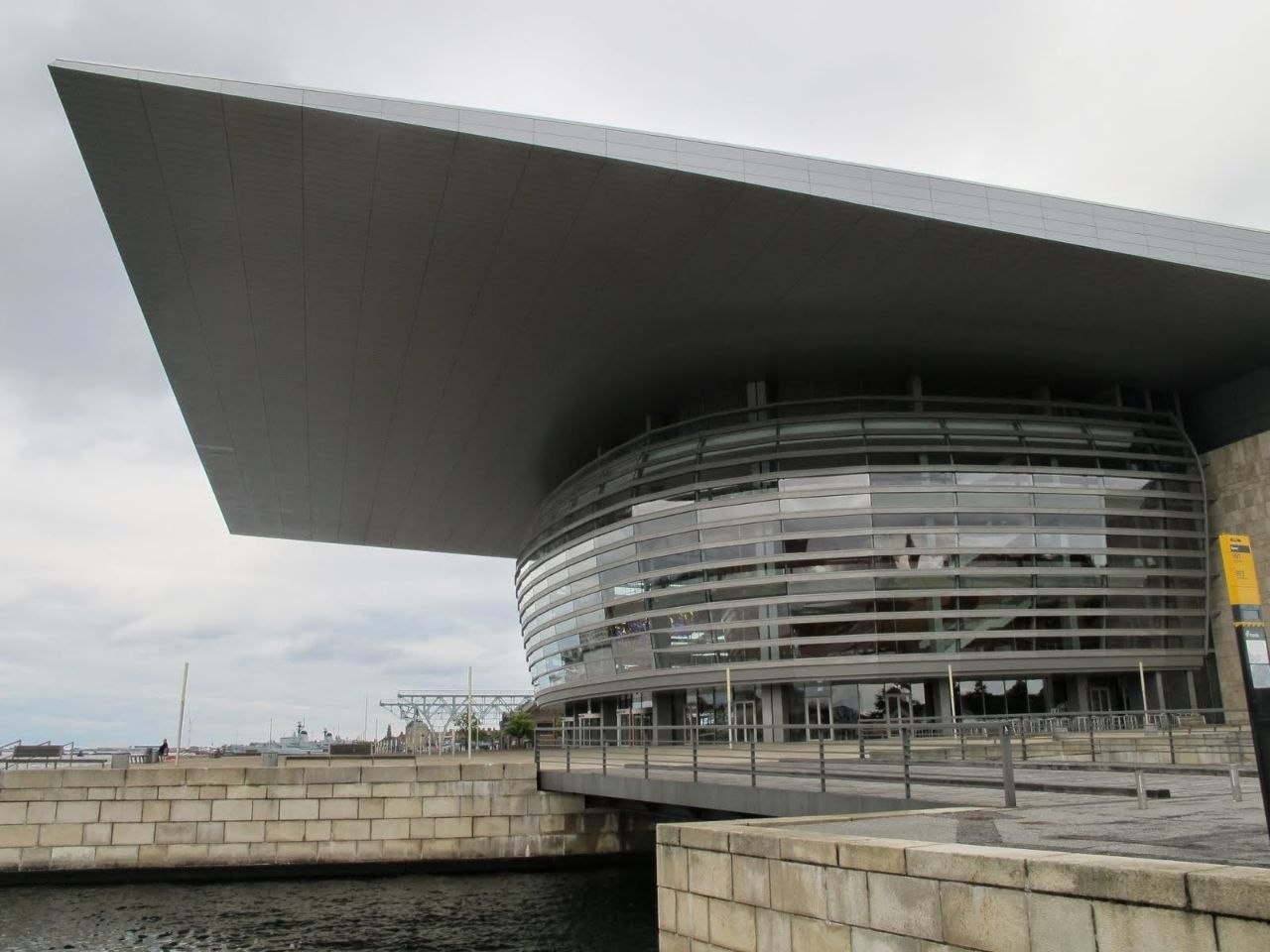
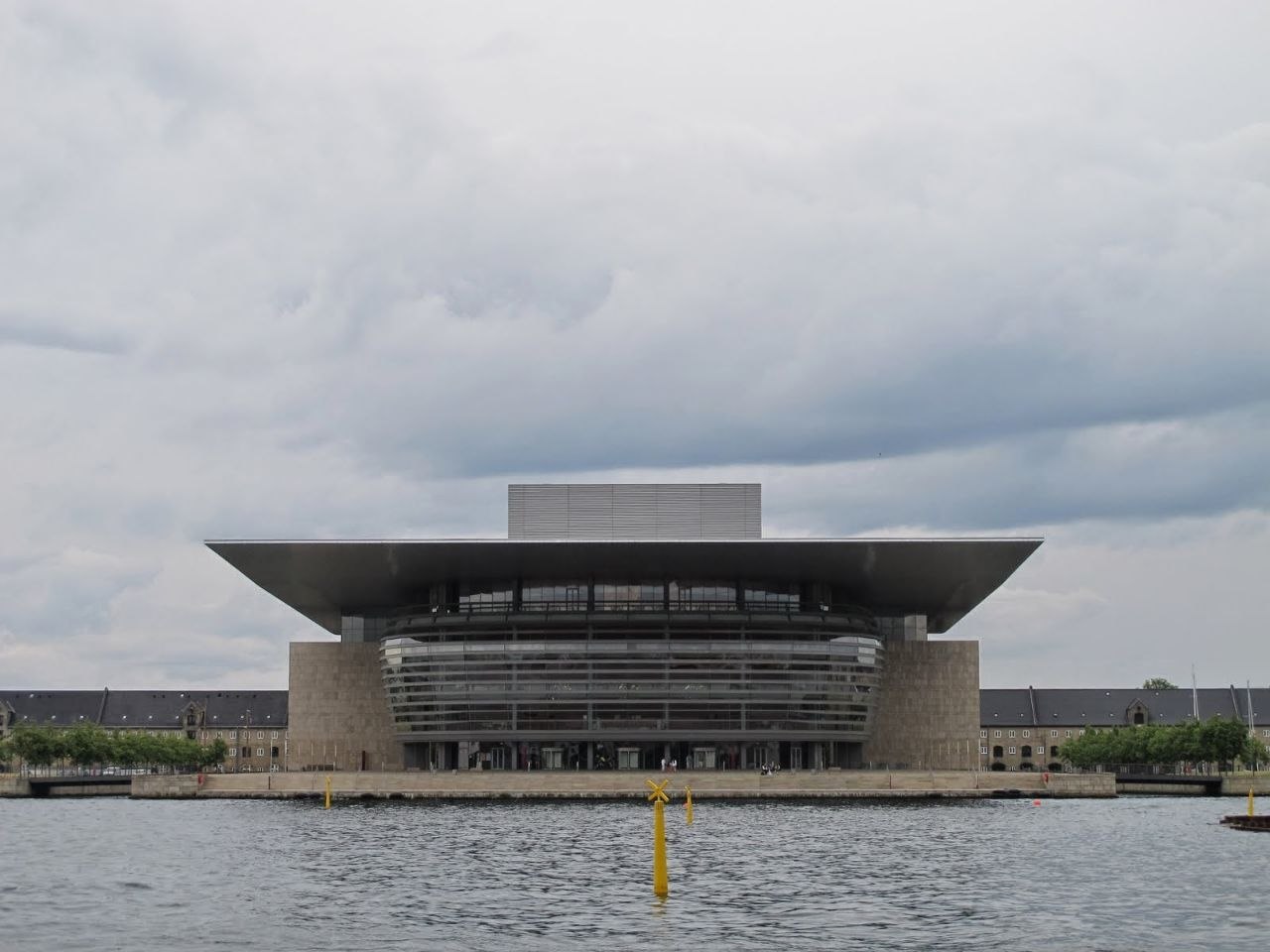
The Copenhagen Opera House (Operaen) is one of the most architecturally prominent buildings on the city’s inner harbor. Designed by Danish architect Henning Larsen, it occupies a prominent position on the former naval island of Holmen, directly across the harbor from Amalienborg Palace — a placement that places it on the historic ceremonial axis of Frederiksstaden. The building was inaugurated in January 2005 and was a gift to the Danish state from the A.P. Møller and Chastine Mc-Kinney Møller Foundation, making it one of the most expensive opera houses ever built.
The structure is defined by a vast cantilevered roof that extends dramatically over the main facade, sheltering the entrance and providing the building with its distinctive silhouette as seen from the harbor. The main auditorium seats approximately 1,700 and is renowned for its acoustics. The building encompasses over 41,000 square meters of floor area and contains 14 different stages and rehearsal spaces. Its location on Holmen, a district that has seen significant cultural and residential development since the naval yards closed, gives the Opera House a direct relationship with the water that is visible from much of the central city.
Tivoli Gardens
Tivoli Gardens is an amusement park and pleasure garden in the heart of Copenhagen, opened on 15 August 1843 by Georg Carstensen following a royal charter from King Christian VIII. It is the second-oldest operating amusement park in the world and one of the most visited attractions in Scandinavia, drawing millions of visitors each year with a combination of rides, concerts, theatre performances, restaurants, and ornamental gardens. Its central location — directly opposite Copenhagen Central Station — makes it uniquely accessible and embedded within the daily fabric of the city.
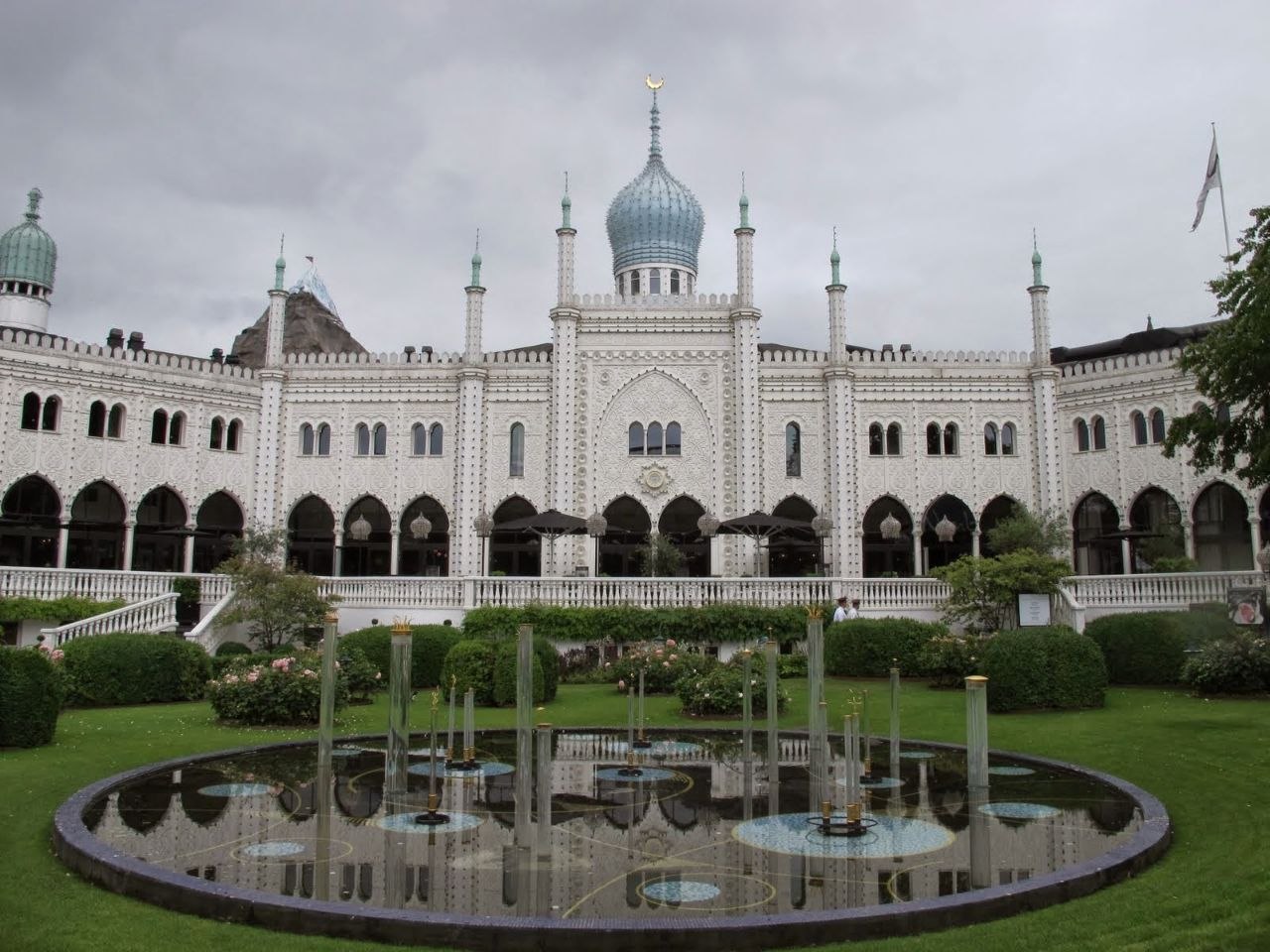
Among Tivoli’s most recognizable structures is the Nimb building, a Moorish-inspired confection of domes, minarets, and horseshoe arches built in 1909. Designed in an orientalist style that was fashionable in European pleasure gardens of the era, the Nimb building has functioned as a restaurant and entertainment venue throughout its history and today operates as a boutique hotel. Tivoli’s grounds also contain one of the world’s oldest wooden roller coasters, dating from 1914, which remains in operation. The park decorates seasonally — most famously during Halloween and Christmas — when its illuminations transform the gardens into an elaborately lit spectacle.
The Little Mermaid
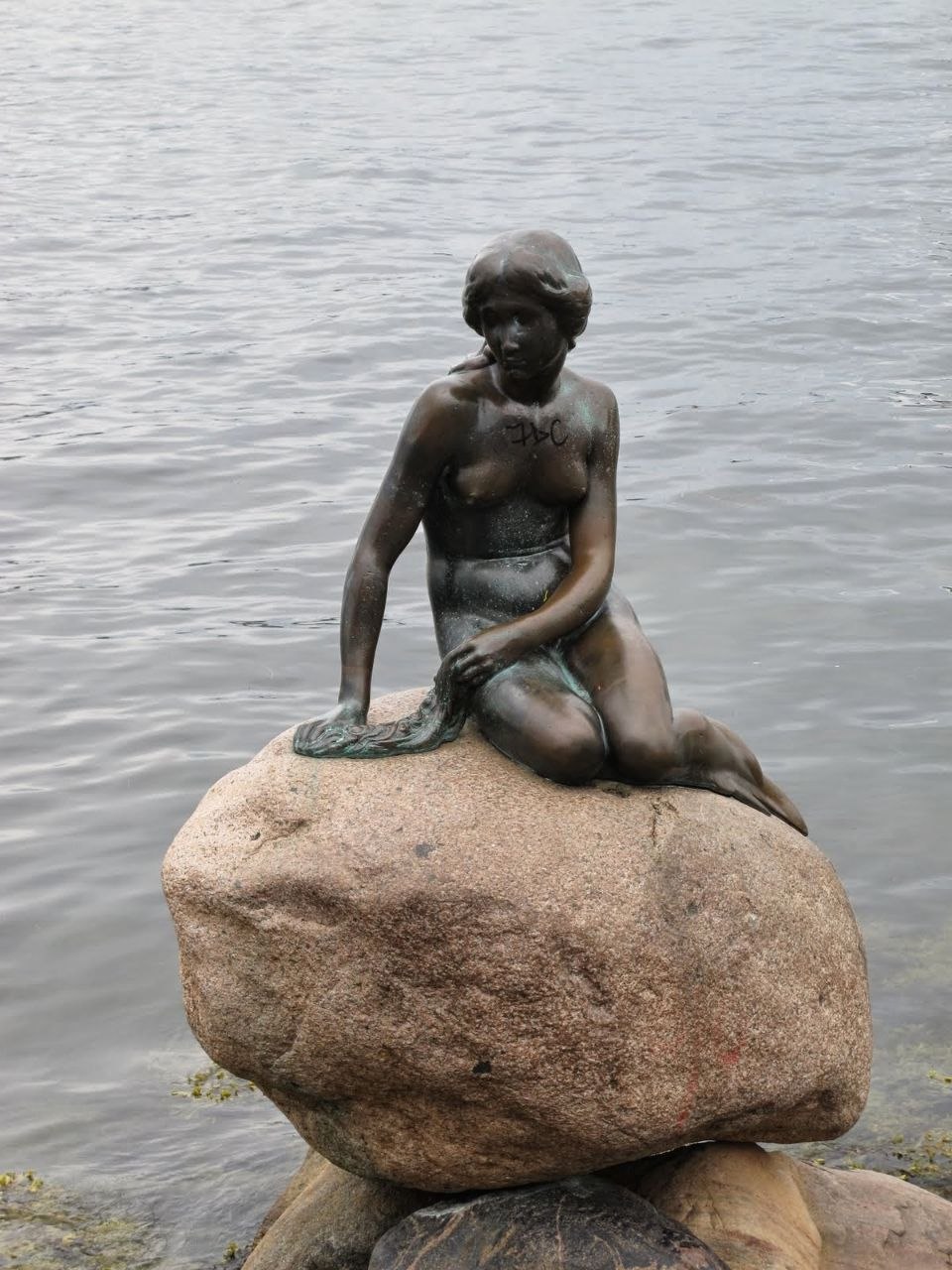
Perched on a rock at the edge of the Langelinie promenade along Copenhagen’s harbor, The Little Mermaid is a small bronze sculpture that has served as the unofficial symbol of the city since its unveiling on 23 August 1913. The statue was commissioned by Danish brewer Carl Jacobsen, who was moved by a Royal Theatre ballet performance based on Hans Christian Andersen’s fairy tale of the same name. Jacobsen approached the ballet’s lead dancer, Ellen Price, to serve as the model, but she declined to pose unclothed; the statue’s body was ultimately modeled after Jacobsen’s daughter-in-law, while the face was based on Price.
The sculpture was created by Edvard Eriksen and measures just 1.25 meters in height — a scale that surprises many visitors who encounter it for the first time after its outsize reputation. Despite its modest size, it is one of the most photographed sculptures in the world and has become inseparable from the city’s identity. The statue has been subject to repeated acts of vandalism over the decades — decapitated twice, painted, and temporarily removed for international exhibitions — but always restored and returned to its harbor rock.
Visiting Tips
Copenhagen is served by Copenhagen Airport (Kastrup), the largest airport in Scandinavia, with direct rail connections to the city center in approximately 15 minutes. The city is compact and exceptionally cycle-friendly; rental bikes and the city’s extensive Bycyklen e-bike network are practical options for getting around. The Copenhagen Card provides unlimited public transport and free or discounted entry to many museums and attractions. Tivoli charges an entry fee and is open seasonally (spring through autumn and during Christmas). The Little Mermaid is free to visit and accessible year-round along the Langelinie promenade, a pleasant waterfront walk from the city center. The Marble Church dome climb is available in summer and is free of charge.
 Jumping Timezones
Leave a comment