Riga is the capital of Latvia and the largest city in the Baltic states, situated at the mouth of the Daugava River where it meets the Gulf of Riga. Founded in 1201 by Bishop Albert of Buxhoevden as a base for the Christianization of the region, the city grew rapidly into one of the most important trading centers of the medieval Hanseatic League. Today, Riga is home to roughly 600,000 people and holds a UNESCO World Heritage designation for its historic center — a remarkably intact medieval Old Town paired with one of Europe’s finest concentrations of Art Nouveau architecture.
Old Town (Vecrīga)
Vecrīga, Riga’s Old Town, occupies a compact peninsula bounded by the Daugava to the west and a curving canal to the east — the former line of the city’s medieval walls. Its street plan has changed little since the 13th century, and the area retains a dense layering of architectural styles: Romanesque, Gothic, Renaissance, Baroque, and Classicism, often stacked within a single block. The Old Town was inscribed as a UNESCO World Heritage Site in 1997, recognized alongside the city’s Art Nouveau district as an Outstanding Universal Value.
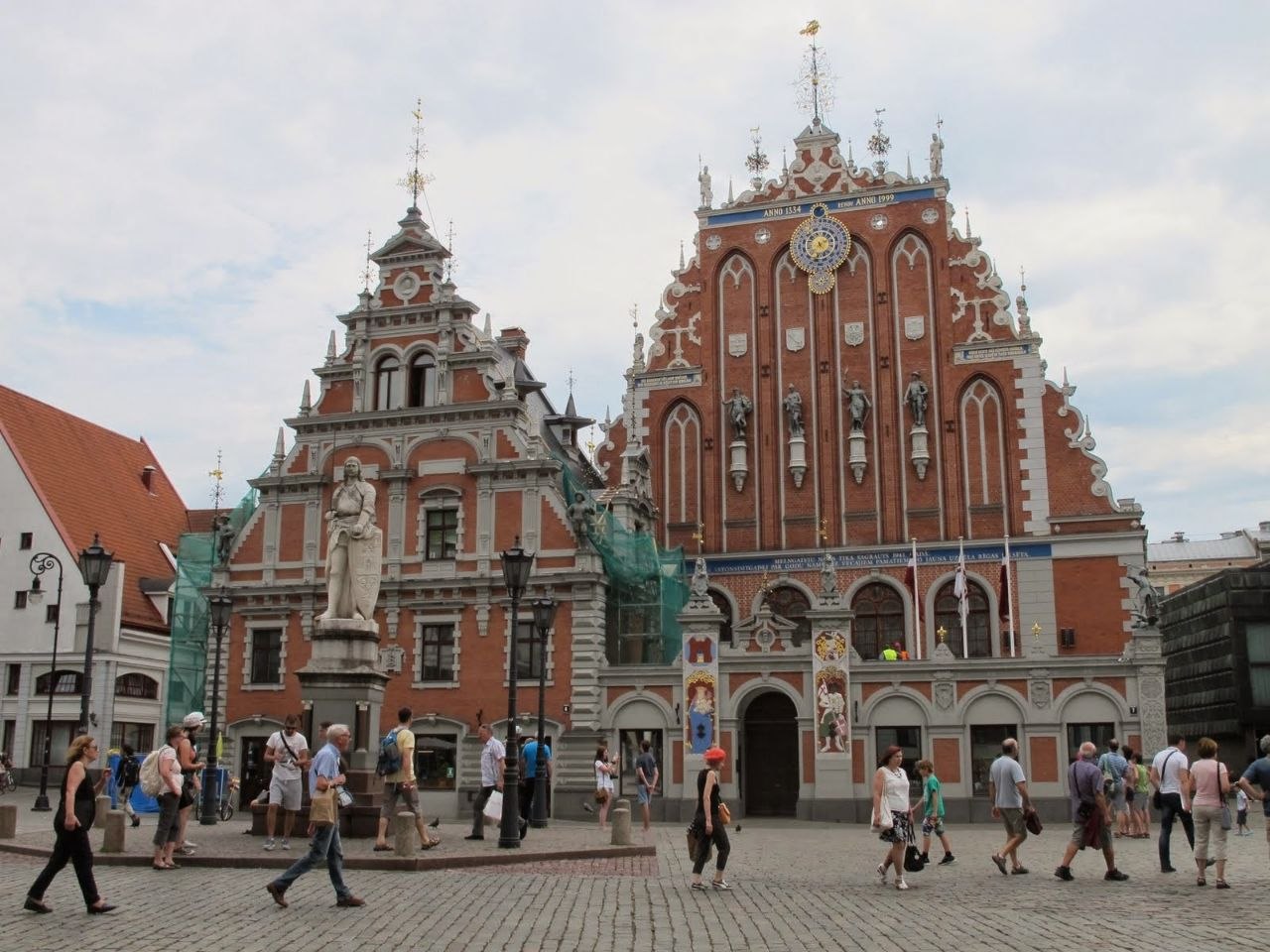
Among its most recognizable landmarks is the House of the Blackheads (Melngalvju nams) on Town Hall Square, originally built in the 14th century as a meeting hall for the Brotherhood of Blackheads — a guild of unmarried foreign merchants. The building was heavily damaged in World War II and demolished by Soviet authorities in 1948. A full reconstruction was completed in 2001, restoring the ornate Dutch Renaissance facade with its stepped gable and elaborate decorative program. The building now functions as a museum and ceremonial venue.
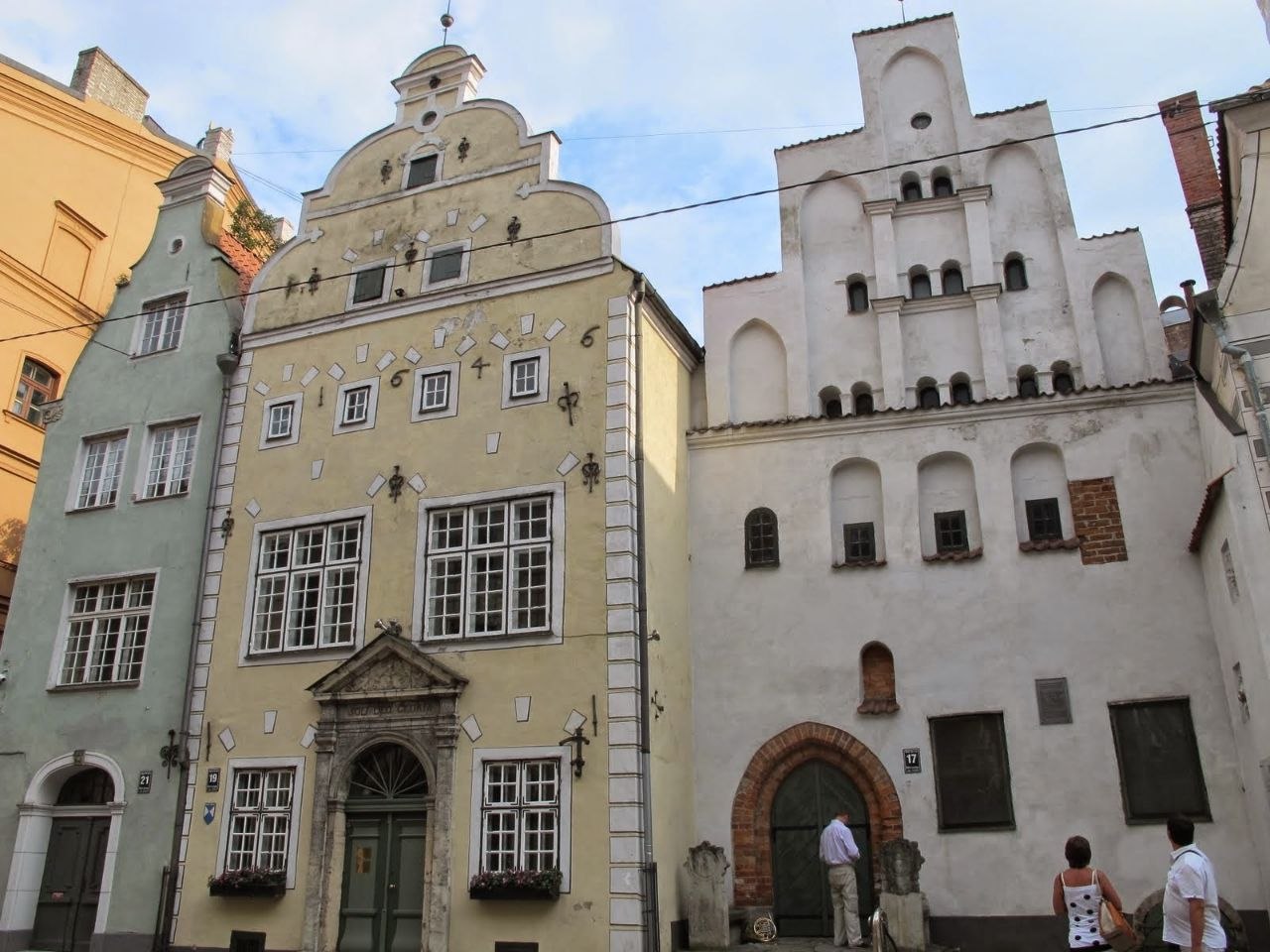
The Three Brothers (Trīs brāļi) on Maza Pils iela form the oldest surviving ensemble of medieval residential architecture in Riga. The three adjoining stone houses date from the 15th to the 17th centuries and represent successive architectural periods: the oldest, at number 17, is a late Gothic structure from around 1490; the middle house is 17th-century Mannerist; and the youngest displays early Baroque features. The complex now houses the Latvian Museum of Architecture.
Riga Cathedral & Dome Square
Riga Cathedral (Rīgas Doms), begun in 1211 under Bishop Albert, is the largest medieval church in the Baltic states. Its construction spanned several centuries, resulting in a building that blends Romanesque, Gothic, and Baroque elements across its nave, chapels, and tower. The cathedral’s interior is notable for its 1884 organ, once the largest in the world, which retains its 6,768 pipes and continues to be used for concerts. The cloisters, dating from the 13th century, contain an archaeological museum with stone fragments and artifacts from the original structure.
Dome Square (Doma laukums) in front of the cathedral is the largest public square in Old Riga and serves as the civic heart of Vecrīga. Surrounding buildings include restored merchant houses and the former headquarters of medieval guilds. The Great Guild Hall, a 14th-century structure expanded in the 19th century, stands nearby and now functions as a concert hall.
Art Nouveau Architecture
Approximately one third of all buildings in central Riga were constructed between 1896 and 1913, and the majority of these are in the Art Nouveau style — giving the city one of the highest densities of such architecture anywhere in the world. The movement took root here during a period of rapid economic growth, when Riga was one of the Russian Empire’s most important industrial and commercial cities.
Alberta iela (Albert Street) is the most celebrated of Riga’s Art Nouveau thoroughfares. The street was developed from 1901 onward and contains eight buildings designed almost entirely in the eclectic or perpendicular Art Nouveau style, several by the architect Mikhail Eisenstein. Eisenstein’s buildings are characterized by elaborate sculptural facades featuring masks, figures, allegorical ornaments, and dynamic asymmetrical compositions. Alberta iela 2a, 4, 6, 8, and 13 are among the most studied examples of the style in Europe.
Freedom Monument
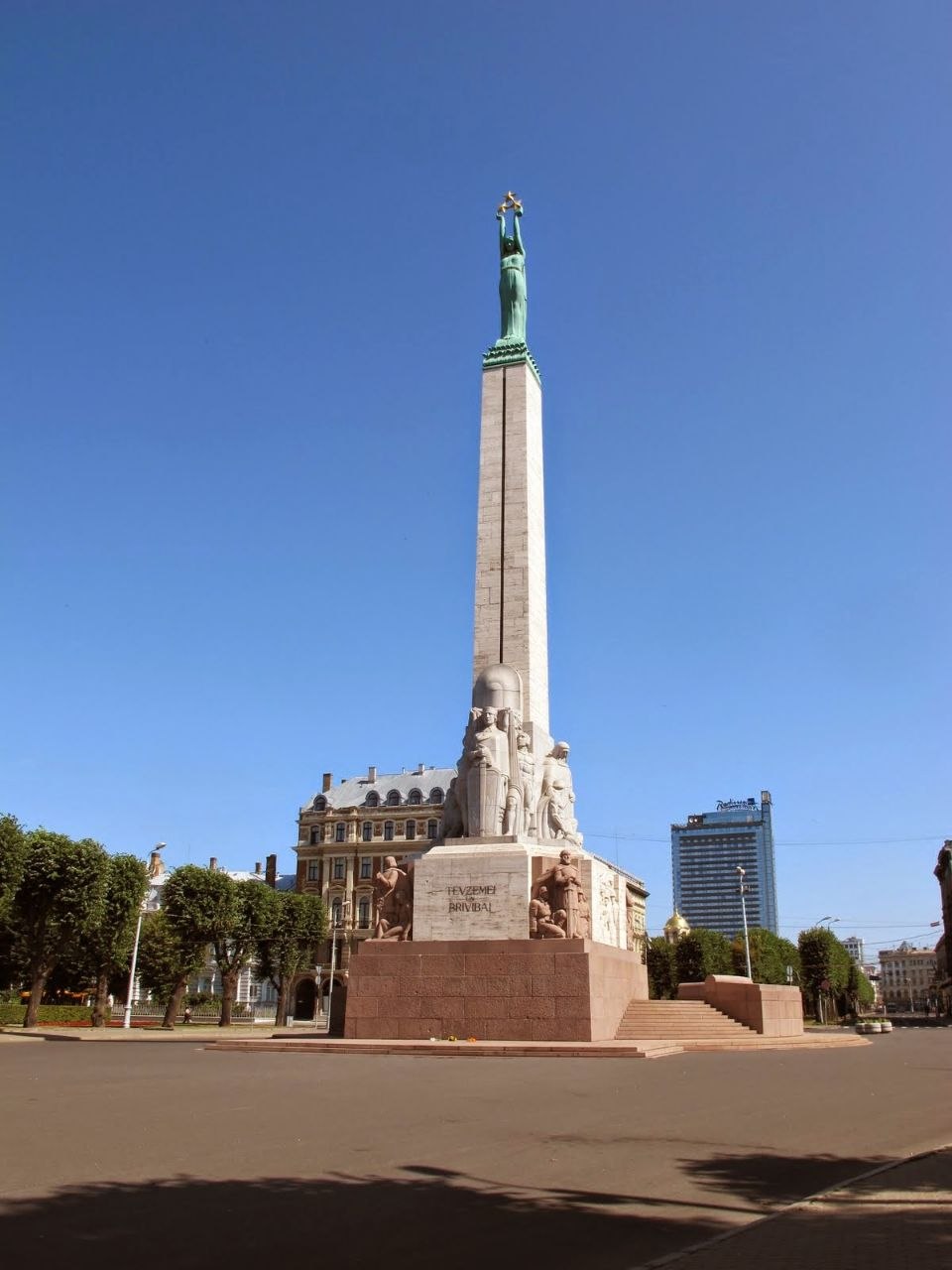
The Freedom Monument (Brīvības piemineklis) stands at the intersection of Brīvības bulvāris and Raiņa bulvāris, at the boundary between Old Riga and the city center. Designed by sculptor Kārlis Zāle and architect Ernests Štālbergs, it was unveiled on November 18, 1935 — the anniversary of Latvian independence. The monument rises 42 meters and is crowned by a copper figure of a woman holding three golden stars aloft, representing the three historical regions of Latvia: Kurzeme, Vidzeme, and Latgale. The base is decorated with bas-reliefs depicting scenes from Latvian history, mythology, and the independence struggle.
During the Soviet occupation, public gatherings at the monument were forbidden and it was considered a symbol of nationalist resistance. Since the restoration of Latvian independence in 1991, it has served as the primary site for national commemorations. An honor guard maintains a ceremonial watch at the base daily.
Riga Central Market
Riga Central Market (Rīgas Centrāltirgus), located just south of the Old Town along the Daugava, is one of the largest and oldest markets in Europe. It occupies five enormous pavilions built from repurposed German World War I Zeppelin hangars, which were dismantled and transported to Riga in the 1920s. The market opened in 1930 and continues to operate as a functioning food market, with separate pavilions dedicated to meat, fish, dairy, vegetables, and dry goods. The complex is included within the UNESCO World Heritage buffer zone and is recognized as an important example of interwar functionalist architecture.
Visiting Tips
Riga’s Old Town is compact and walkable; most major landmarks are within 15–20 minutes on foot of one another. The city is served by Riga International Airport (RIX), located approximately 10 kilometers southwest of the center, with bus and taxi connections to the city. Public transport within Riga uses trams, trolleybuses, and buses; the central stops around Vecrīga and the National Opera are well connected to all main districts. Alberta iela and the surrounding Art Nouveau district are best explored on foot; several organized walking tours depart from Town Hall Square. The Riga Card provides free entry to many museums and unlimited public transport. Summer (June–August) is the most popular period, with long daylight hours and outdoor markets; the city is also well visited in December for its Christmas market, one of the oldest in Europe.
 Jumping Timezones
Leave a comment