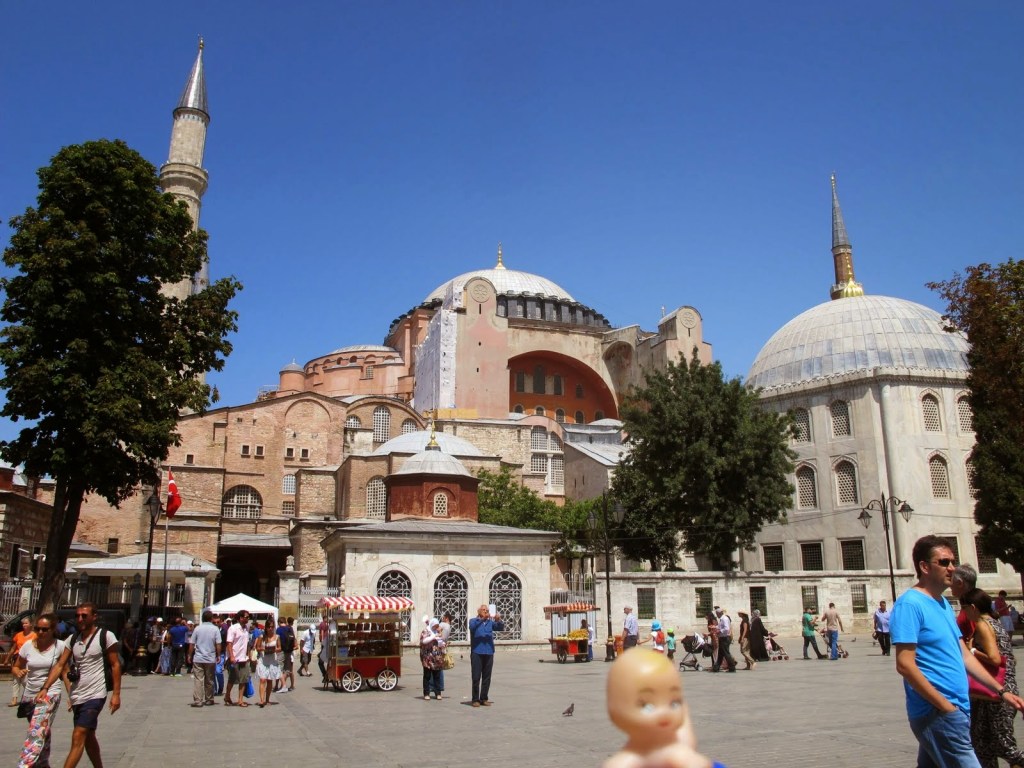
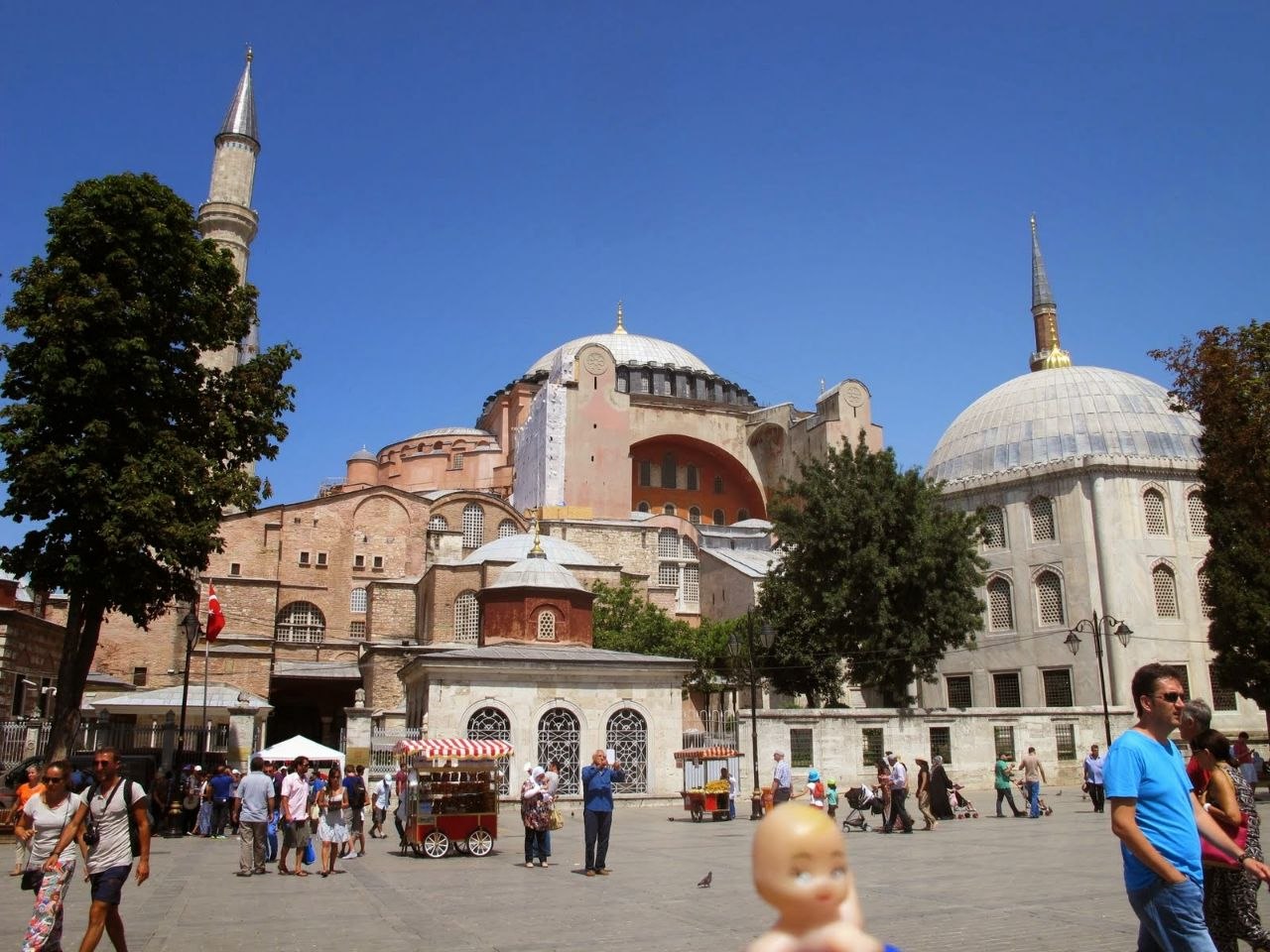
Hagia Sophia, or Ayasofya, is one of Istanbul’s most iconic landmarks and a masterpiece of world architecture. First inaugurated in 537 CE under the Byzantine Emperor Justinian I, it served for nearly a thousand years as the empire’s principal cathedral before becoming an Ottoman imperial mosque in 1453. Converted into a museum in 1935 and re-designated as a mosque in 2020, it remains a living monument where layers of history are visible in a single glance.
The building is renowned for its innovative architecture, especially its vast central dome, which seemed to defy engineering limits in late antiquity. The main space is framed by semi-domes and supported by colossal piers, while light enters through rings of windows that give the dome an almost weightless appearance. Visitors can still see glittering Byzantine mosaics depicting Christ, the Virgin Mary, and imperial figures, partially revealed after centuries of being plastered over. Side by side with these are monumental Ottoman calligraphic panels, mihrab, minbar, and other elements of mosque architecture, creating a rare visual dialogue between Christian and Islamic traditions.
Over the centuries, Hagia Sophia has played a central role in religious, political, and cultural life. It was the setting for imperial ceremonies in the Byzantine period, the model for many Ottoman mosques that followed, and a symbol frequently invoked in discussions about faith, identity, and heritage. Today it continues to function as a mosque while also welcoming visitors from around the world, making it both a place of worship and a major cultural attraction.
Hagia Sophia is located in Istanbul’s historic Sultanahmet district, within easy walking distance of the Blue Mosque and Topkapı Palace. Entry procedures vary over time, but visitors can generally expect security checks at the entrance and designated areas set aside for non-worshippers during prayer times. Modest dress is required, and head coverings are requested for women when entering the prayer hall. Photography is usually permitted, though tripods and flash may be restricted. To better appreciate the details of the dome, mosaics, and architectural layout, many travelers choose to join a guided tour or use an audio guide, turning a visit into an in-depth journey through nearly 1,500 years of history.
 Jumping Timezones
Leave a comment