Vatican City is an independent city-state enclaved within Rome, Italy, and serves as the spiritual and administrative centre of the Roman Catholic Church. With an area of roughly 44 hectares and a population of around 800 residents, it is one of the smallest sovereign states in the world by both size and population. Despite its compact territory, it concentrates religious, artistic, and political institutions of global influence.
The state is governed as an elective monarchy with the Pope as head of state, supported by various dicasteries and commissions of the Holy See. Its territory is enclosed by walls and marked by monumental entrances, most prominently the area of St. Peter’s Square in front of St. Peter’s Basilica. Within these borders lie major cultural landmarks including the Vatican Museums, the Apostolic Palace, the Vatican Gardens, and extensive archival and library collections.
St. Peter’s Square and Basilica
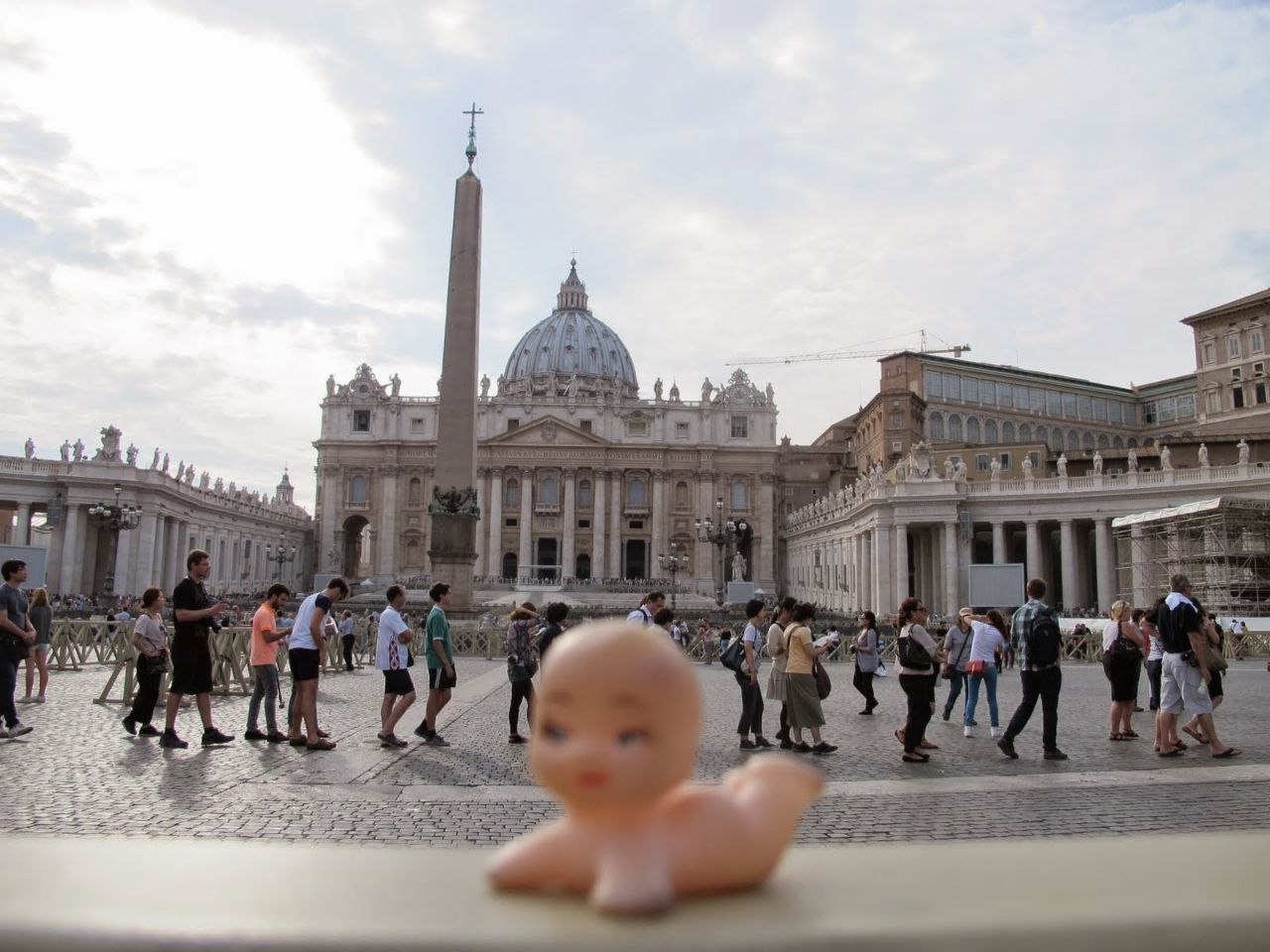
St. Peter’s Square (Piazza San Pietro) forms the principal forecourt of St. Peter’s Basilica and is one of the most recognisable public spaces in the world. Designed in the 17th century by Gian Lorenzo Bernini, the square has a distinctive elliptical layout framed by sweeping colonnades composed of four rows of Doric columns. At the centre stands an ancient Egyptian obelisk, relocated to its present position in 1586 under Pope Sixtus V, flanked by large fountains that balance the composition of the piazza.
St. Peter’s Basilica, completed in the 17th century and traditionally identified as the burial site of Saint Peter the Apostle, dominates the square with its monumental façade and vast dome. The basilica is a major site of pilgrimage and liturgical celebration and houses masterpieces such as Michelangelo’s Pietà and Bernini’s Baldacchino over the papal altar. The interior, with its long nave, side chapels, and richly decorated transept, reflects contributions from several leading architects and artists of the Renaissance and Baroque periods.
The Dome and Rooftop Terraces of St. Peter’s
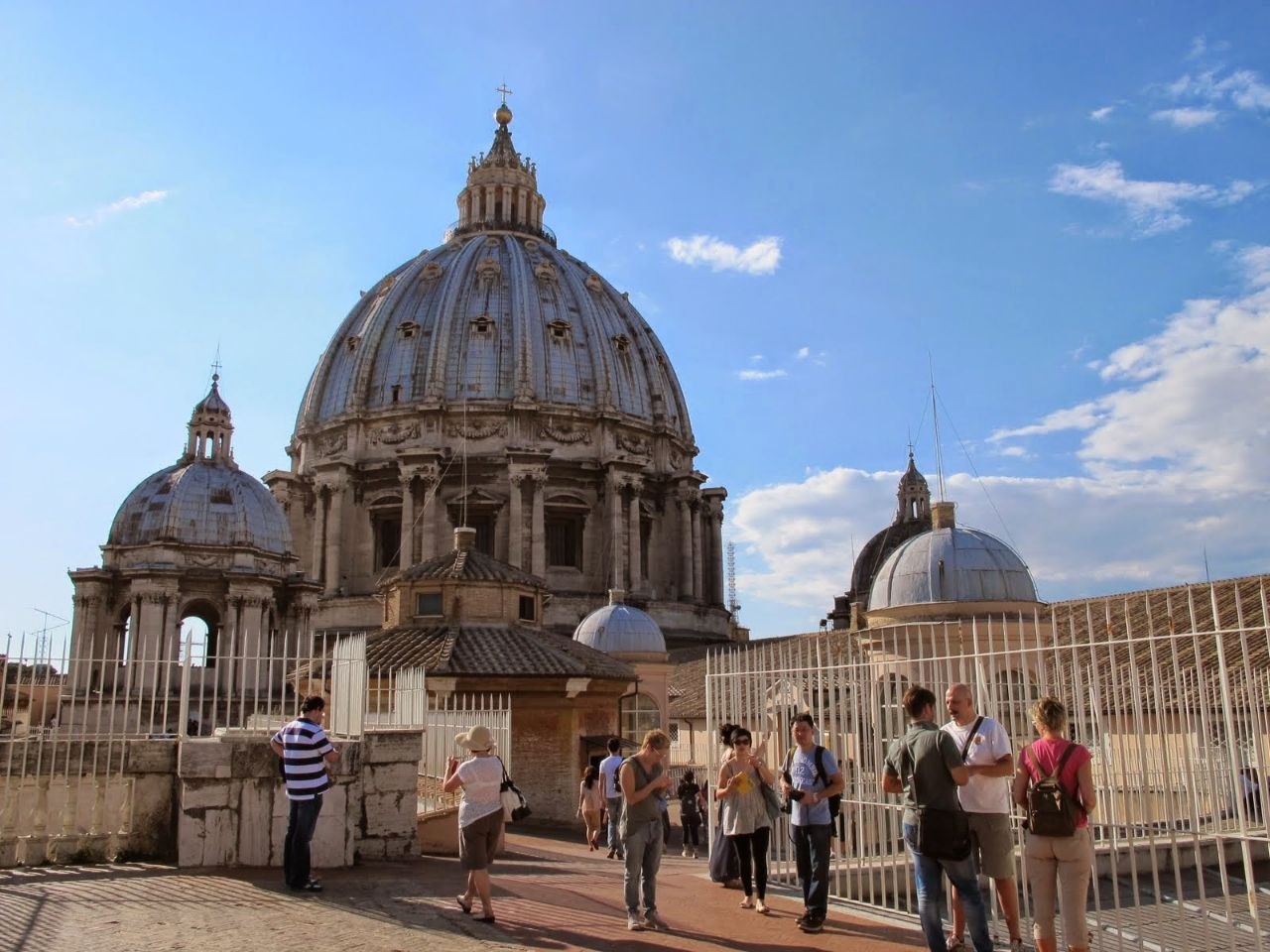
The dome of St. Peter’s Basilica, designed in its definitive form by Michelangelo and completed after his death, is a defining feature of the Vatican skyline and of Rome more broadly. Rising to a total height of over 130 metres from the floor of the basilica, the dome rests on a drum punctuated by large windows and is supported by massive piers concealed within the structure of the building. Its double-shell construction and ribbed profile influenced numerous later church domes across Europe and beyond.
Below the main cupola, a system of terraces and walkways surrounds the base of the dome and the roofs of the basilica. From these upper levels, the radial arrangement of the smaller subsidiary domes and the complex roofscape of St. Peter’s can be clearly observed. The structural solutions employed to distribute the enormous weight of the dome and its lantern across the basilica’s piers exemplify advanced engineering techniques of the late Renaissance period.
The Vatican Museums and the Cortile della Pigna
The Vatican Museums comprise an extensive complex of galleries, courtyards, and palaces that hold one of the world’s most important collections of art and antiquities. Established on the basis of papal collections assembled over centuries, the museums include classical sculpture, Etruscan and Egyptian artefacts, Renaissance and Baroque painting, and significant holdings of decorative arts and ethnographic material. Their layout connects a sequence of architecturally distinct spaces, from the Pio-Clementino Museum and the Gallery of Maps to the Raphael Rooms and the Sistine Chapel.
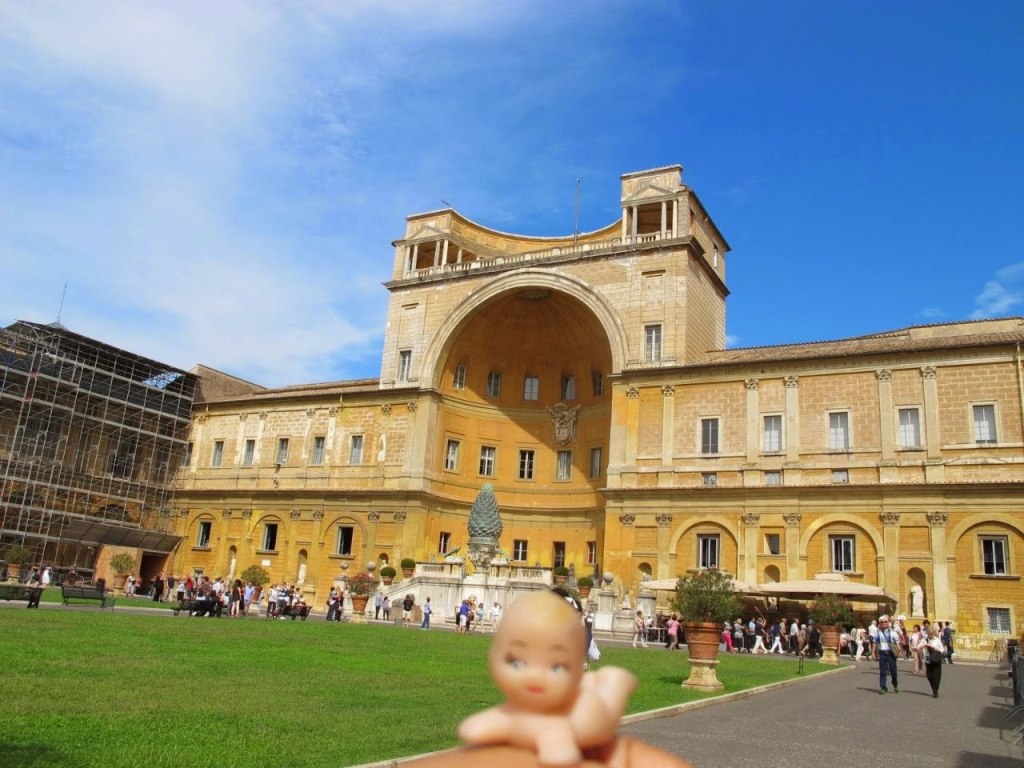
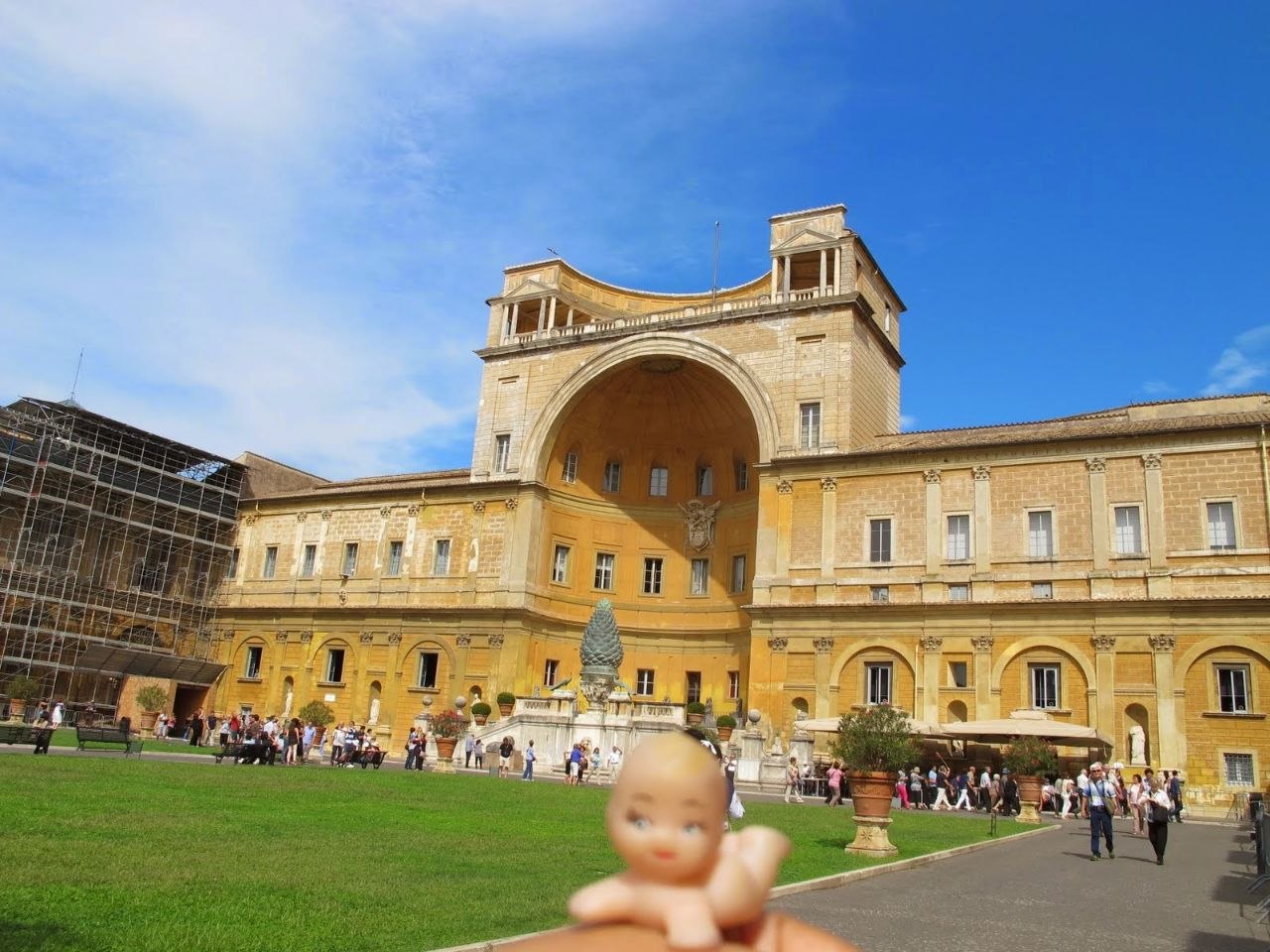
The Cortile della Pigna, or Pinecone Courtyard, is one of the best-known outdoor spaces of the Vatican Museums. It takes its name from a monumental ancient bronze pine cone, probably dating to the 1st or 2nd century CE, which now stands in a niche of the courtyard. In the central lawn of the courtyard is the contemporary bronze sculpture Sfera con sfera (Sphere Within Sphere) by Arnaldo Pomodoro, created in 1990. The juxtaposition of the ancient pine cone and the modern rotating sphere symbolises the layering of historical periods contained within the Vatican’s collections.
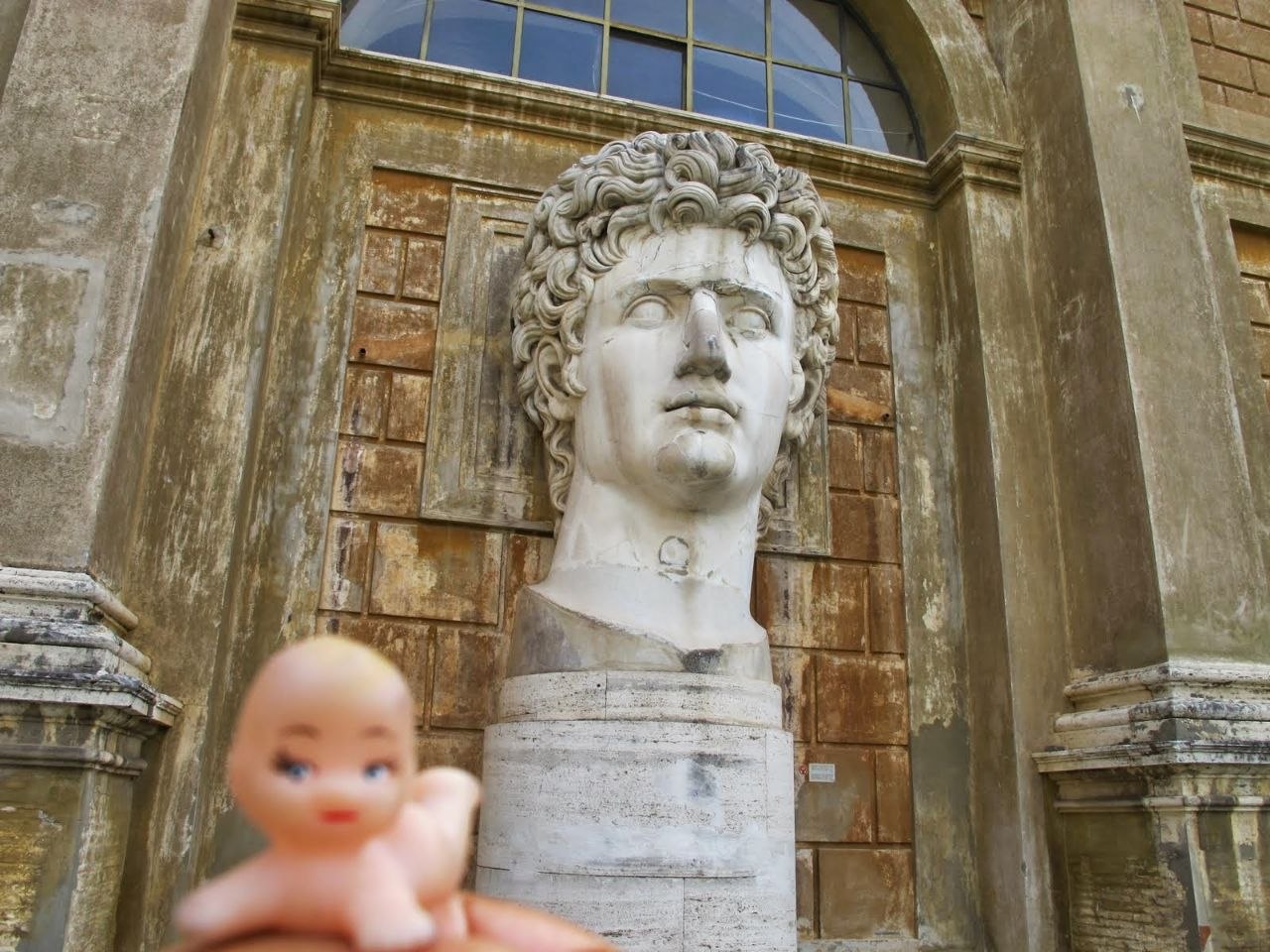
Among the classical works preserved in the museums are numerous portrait sculptures of Roman emperors and elites, including colossal heads and fragmentary statues. Such pieces, often retrieved from imperial residences and public spaces in Rome, exemplify the propagandistic role of portraiture in the Roman world. The enlarged scale of these heads, combined with idealised features and carefully rendered hairstyles, was intended to project authority, stability, and continuity of rule.
The Pinacoteca Vaticana and Raphael’s Madonna di Foligno
The Pinacoteca Vaticana, or Vatican Picture Gallery, houses the principal collection of panel and canvas paintings of the Holy See. Arranged in chronological sequence from the Middle Ages to the 19th century, its rooms display works by major Italian masters including Giotto, Fra Angelico, Perugino, Raphael, Titian, Caravaggio, and Guido Reni. The collection reflects both the devotional functions of religious imagery and the evolving artistic languages of the Italian schools.
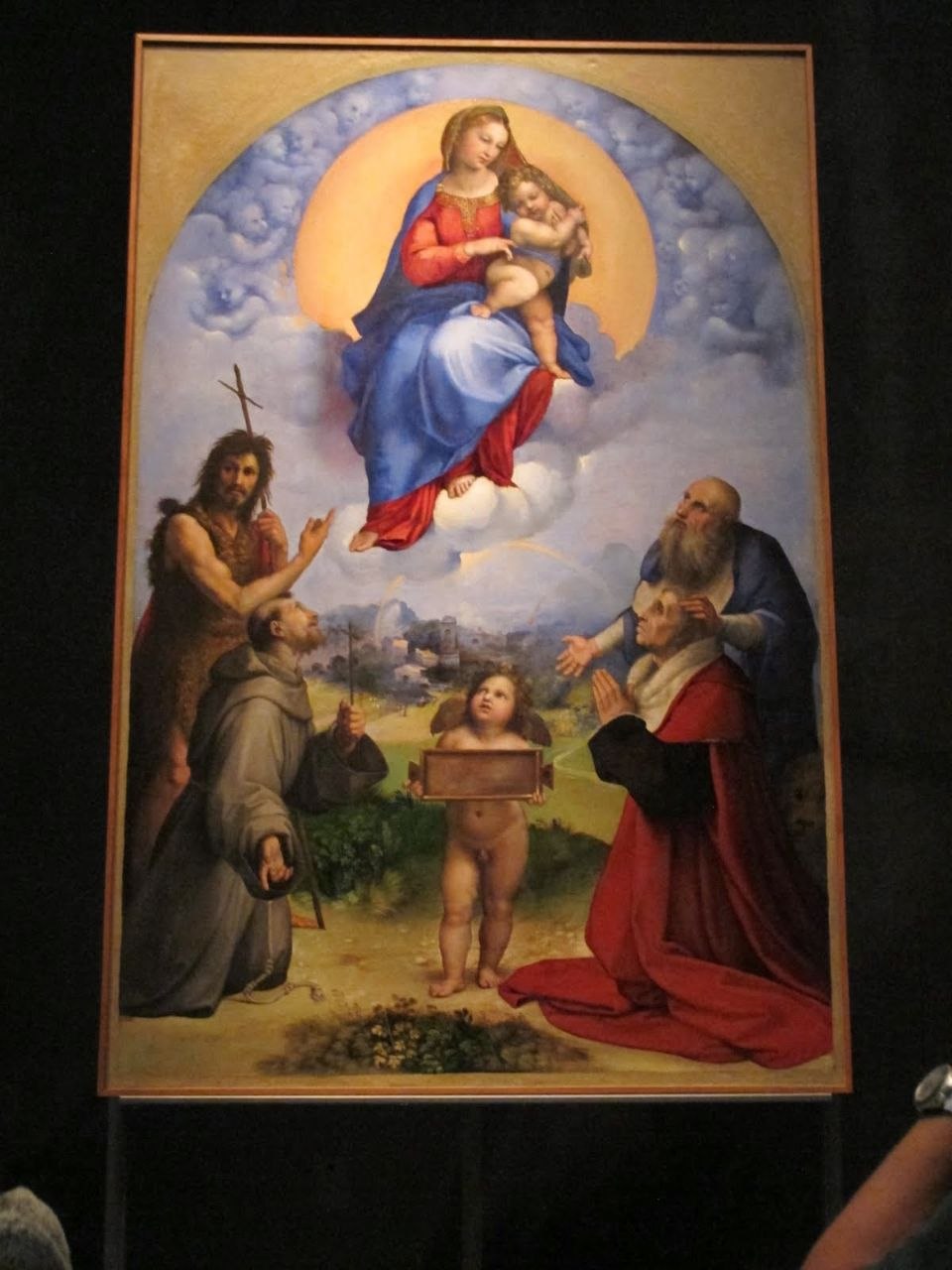
Raphael’s Madonna di Foligno, painted around 1511–1512, is among the most celebrated works in the Pinacoteca. The altarpiece presents the Virgin and Child enthroned on clouds above a luminous sky, surrounded by angels, while saints and the donor, Sigismondo de’ Conti, occupy the lower register. The composition is notable for its harmonious balance, nuanced colour transitions, and subtle atmospheric effects, which illustrate Raphael’s mature style in the High Renaissance. The painting’s complex iconography has been linked to themes of intercession, protection, and gratitude for deliverance.
Communications, Administration, and the Vatican Post
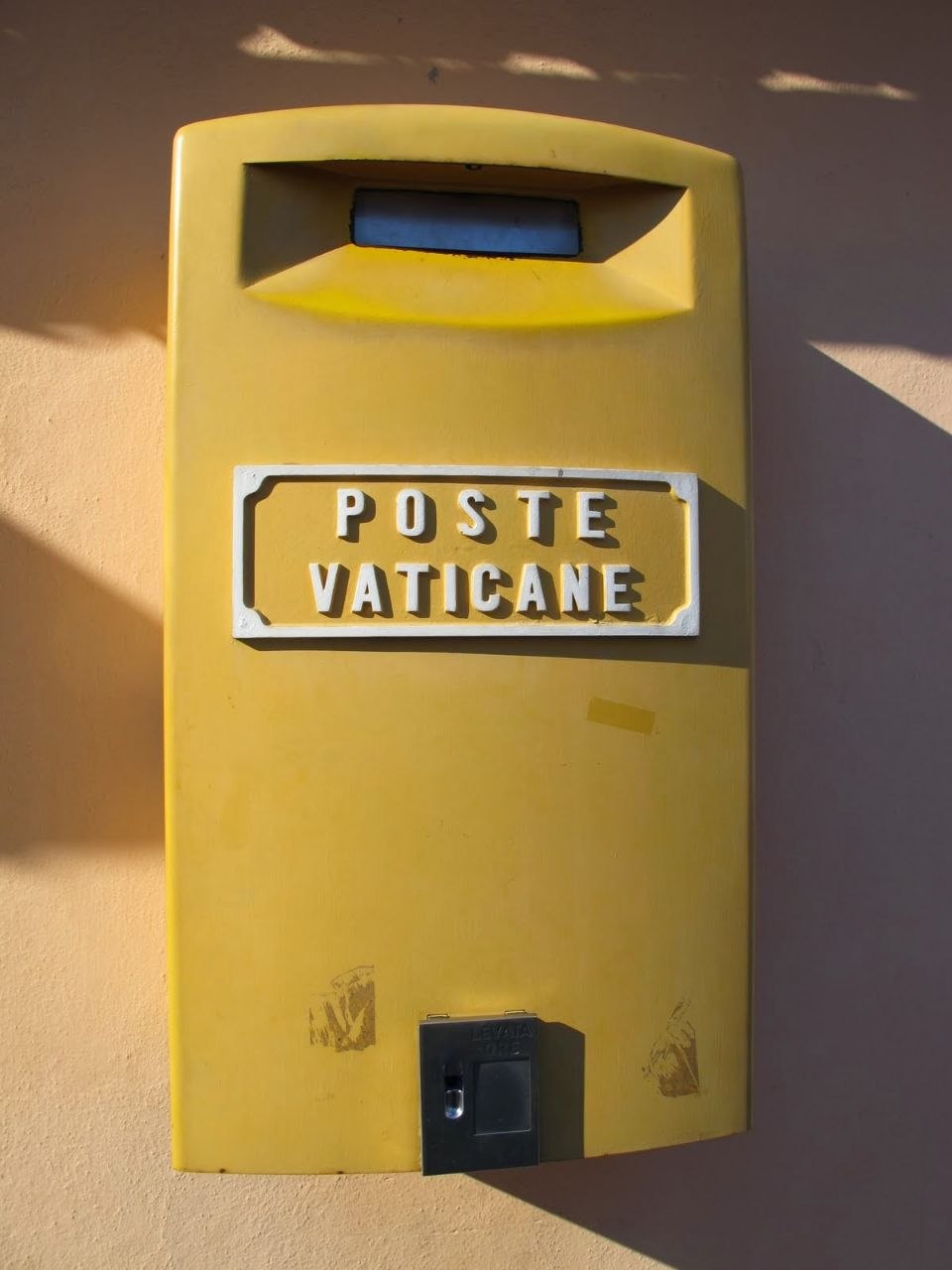
As a sovereign entity, Vatican City maintains its own communication and logistical services, distinct from those of Italy. The Vatican post office, operated by the Poste Vaticane, issues its own postage stamps and manages mail services within the territory and to international destinations. Characteristic yellow letter boxes installed on the walls of buildings inside the city have become recognisable symbols of this separate postal system.
Postal services form part of a broader infrastructure that includes a dedicated radio station, a small railway connection, and a range of administrative offices that support the governance of the Holy See and the functioning of the city-state. These institutions illustrate the ways in which a very small territorial entity sustains the full range of services associated with modern statehood while also serving as the central organ of a global religious community.
Visiting Tips
Security checks at St. Peter’s Square and the entrances to the Vatican Museums often generate queues, particularly during major religious events and peak tourist seasons. Allowing additional time for these controls helps to accommodate possible delays, and awareness of restrictions on large bags and sharp objects can reduce complications at checkpoints.
Modest dress codes apply within St. Peter’s Basilica and other sacred spaces, generally requiring covered shoulders and knees. Photography rules vary between different areas, with some sections of the museums and religious sites subject to limitations intended to protect artworks or preserve liturgical decorum. Checking current guidelines in advance supports respectful access to both religious and cultural sites.
Tickets for the Vatican Museums are frequently sold out well in advance on busy days, and advance reservations through official channels are commonly used to manage entry times. Public transport and pedestrian access from central Rome converge on the perimeter of Vatican City, with nearby metro and bus stops providing connections to the surrounding districts of the city of Rome.
 Jumping Timezones
Leave a comment