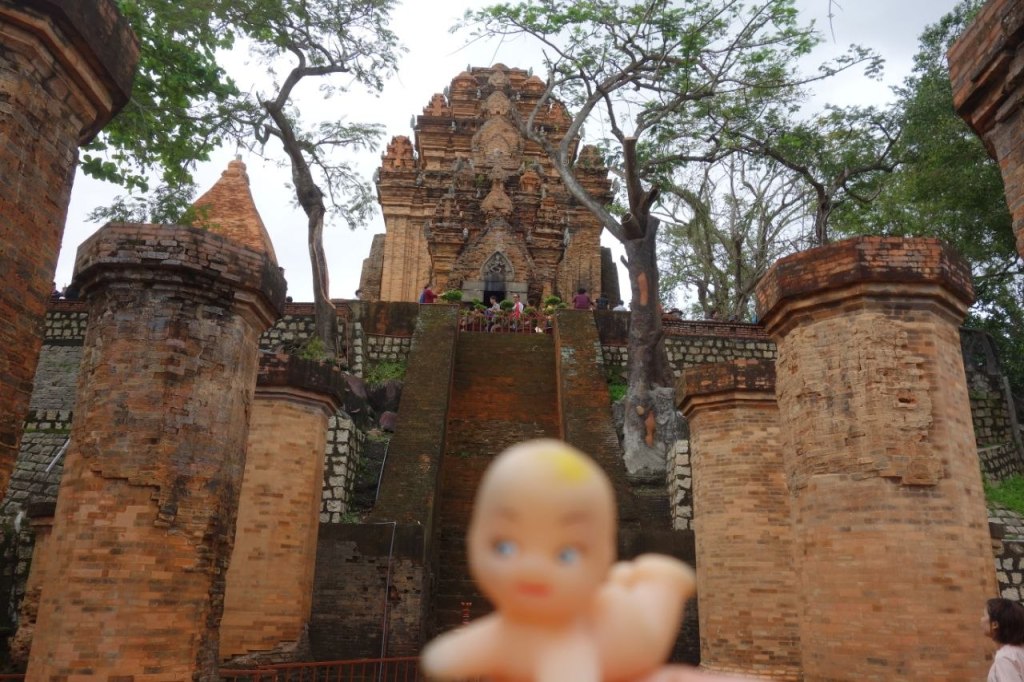
Hoi An and Nha Trang are two of central and south-central Vietnam’s most visited destinations, each offering a distinct character. Hoi An, a UNESCO World Heritage Site on the Thu Bồn River, preserves one of Southeast Asia’s best-surviving examples of a historical trading port — its ancient town a compact grid of merchant houses, Chinese assembly halls, and covered bridges accumulated over five centuries of international commerce. Nha Trang, 500 kilometres to the south on the South China Sea, is a coastal city known for its long sandy beach and its proximity to the Po Nagar Cham Towers, a group of Hindu temple towers built between the 7th and 12th centuries that stand on a granite hill above the Cái River. Together, the two cities offer a concentrated cross-section of Vietnamese cultural and coastal heritage.
Hoi An Ancient Town
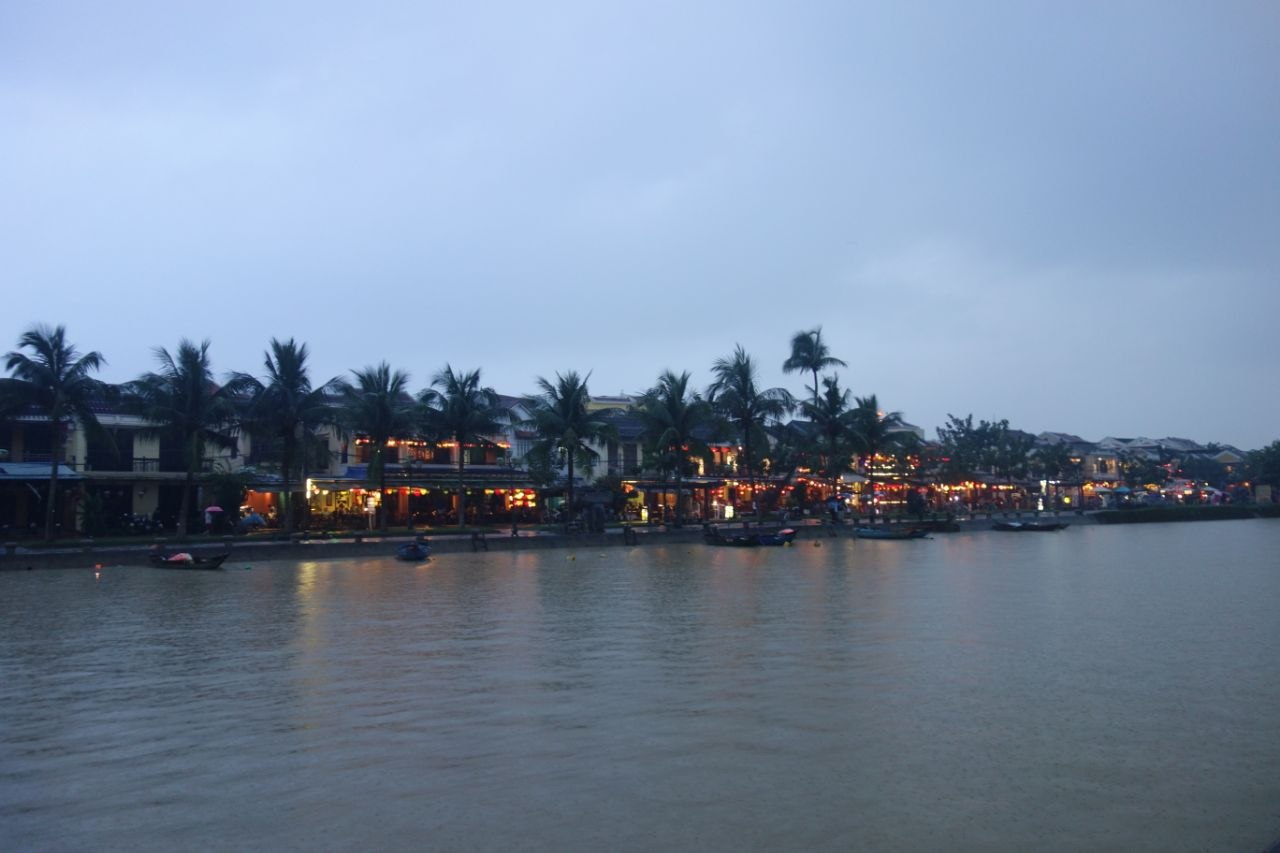
The ancient town of Hoi An developed as an international trading port from the 15th century onward, attracting merchants from China, Japan, the Netherlands, Portugal, and India who settled in the town and left behind a layered architectural legacy. The town’s street grid, waterfront, and surviving buildings reflect successive waves of construction and adaptation across several centuries, with Chinese merchant families responsible for the largest number of surviving structures. The Thu Bồn River runs along the southern edge of the ancient town, its waterfront lined with two- and three-storey merchant houses whose ground floors once served as trading warehouses. At dusk, the waterfront and narrow lanes of the ancient town are illuminated by hundreds of silk lanterns — a visual identity that has become closely associated with Hoi An — their coloured light reflecting in the river and casting warm tones across the tile-roofed streetscapes. The ancient town area is largely closed to motor vehicles, making it walkable in its entirety.
Chinese Assembly Halls
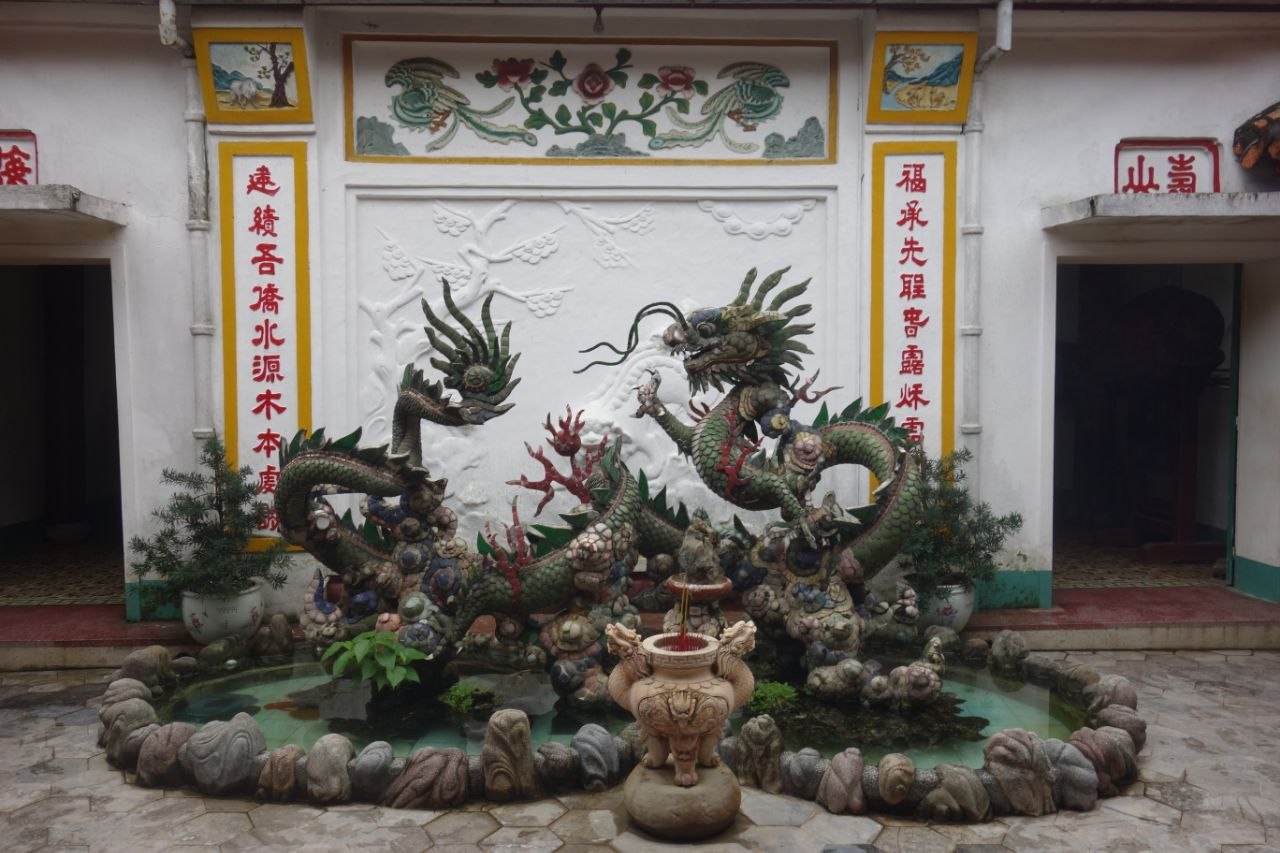
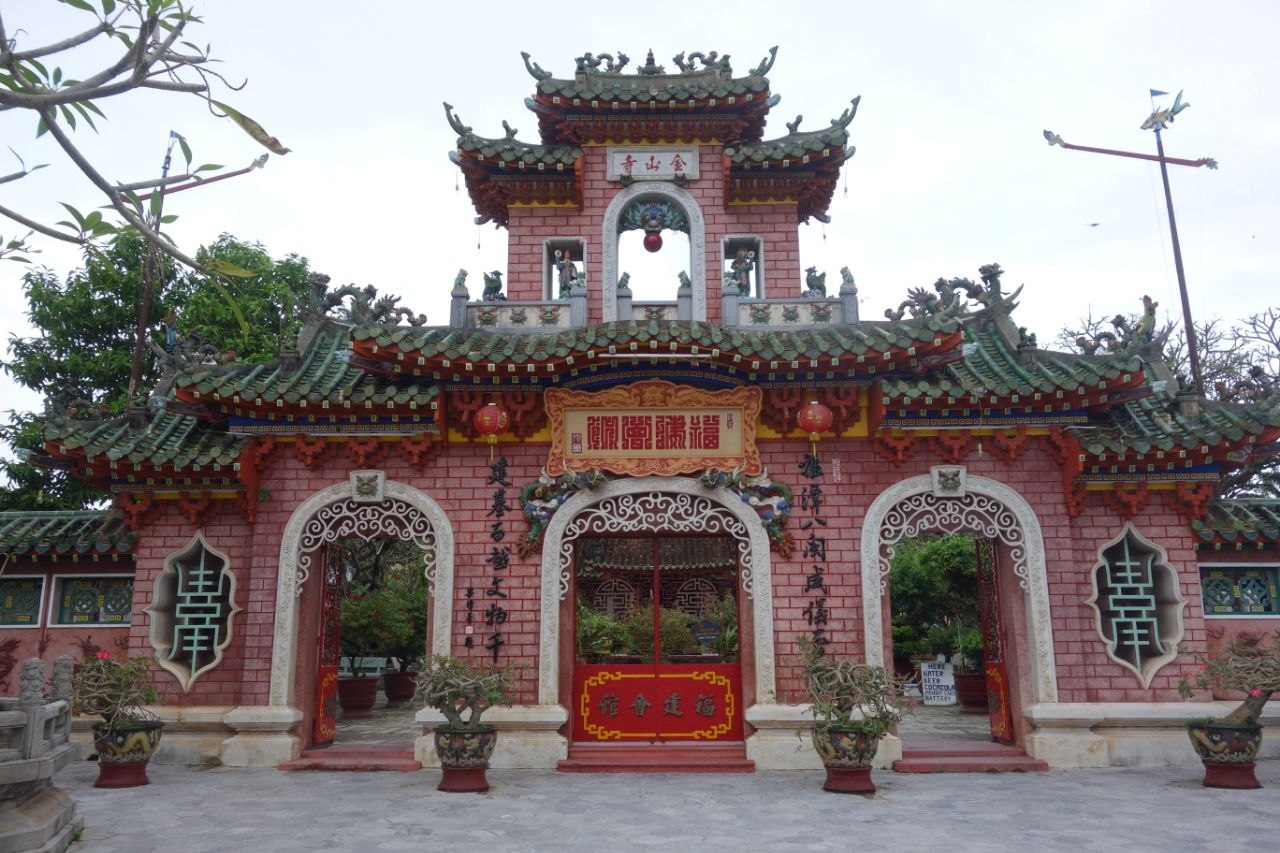
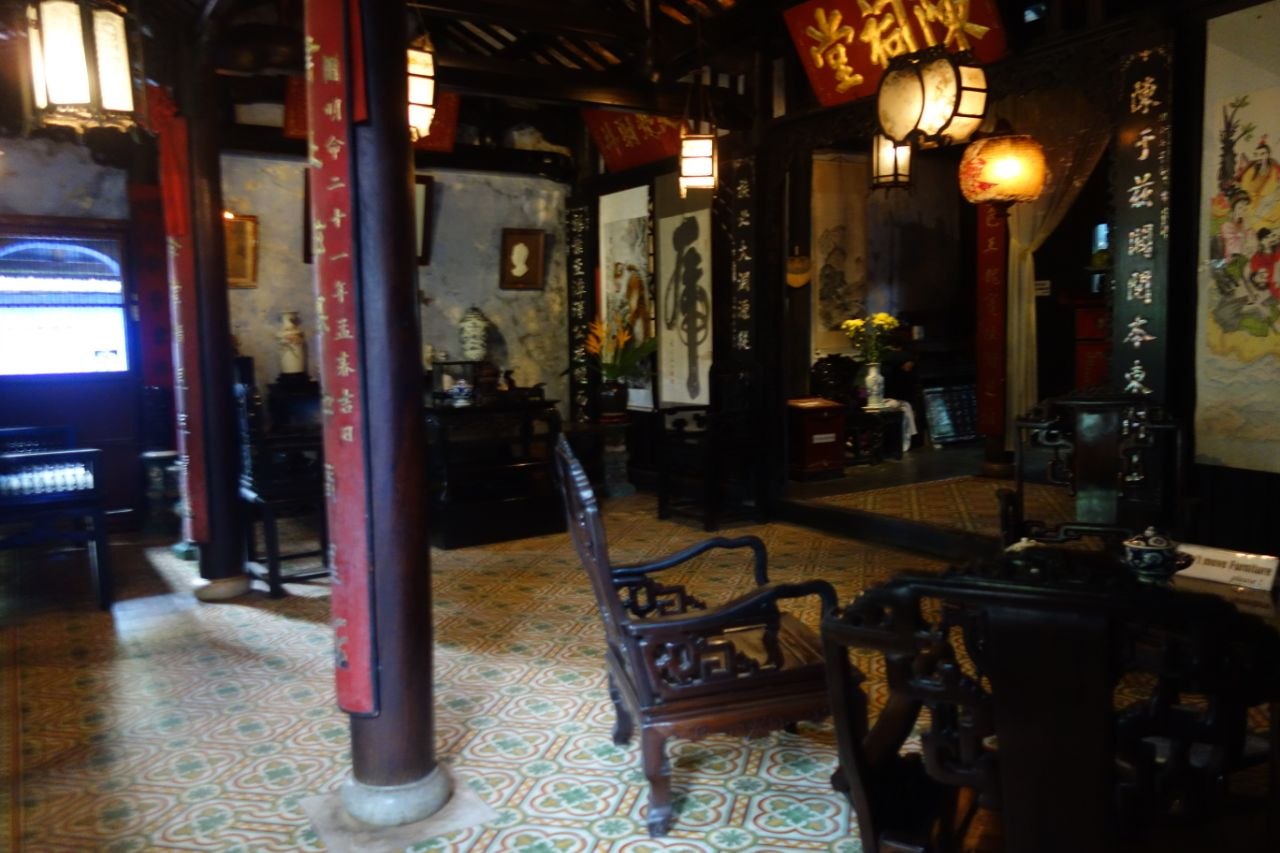
The most architecturally elaborate structures in the ancient town are the Chinese assembly halls (hội quán), built by the various Chinese dialect communities — Fujian, Cantonese, Teochew, Hainanese, and Hakka — as meeting places, community centres, and places of worship dedicated to their patron deities. The Fujian Assembly Hall (Hội Quán Phúc Kiến), the largest and most visited, was founded in the 17th century and dedicated to Thiên Hậu, the goddess of the sea and protector of sailors. Its entrance gate, main courtyard, and succession of worship halls are richly decorated with carved stonework, ceramic roof ridges, gilded altarpieces, and large coiled incense spirals hanging from the ceiling — a standard feature of Hokkien temple architecture. The dragon sculpture in the courtyard, rendered in painted ceramic mosaic, and the ornate tiered gate facade with its brightly painted guardian figures and upswept roof ridges are among the most photographed elements in the ancient town. Each assembly hall functions as an active place of worship and community gathering as well as a heritage site.
The Japanese Covered Bridge
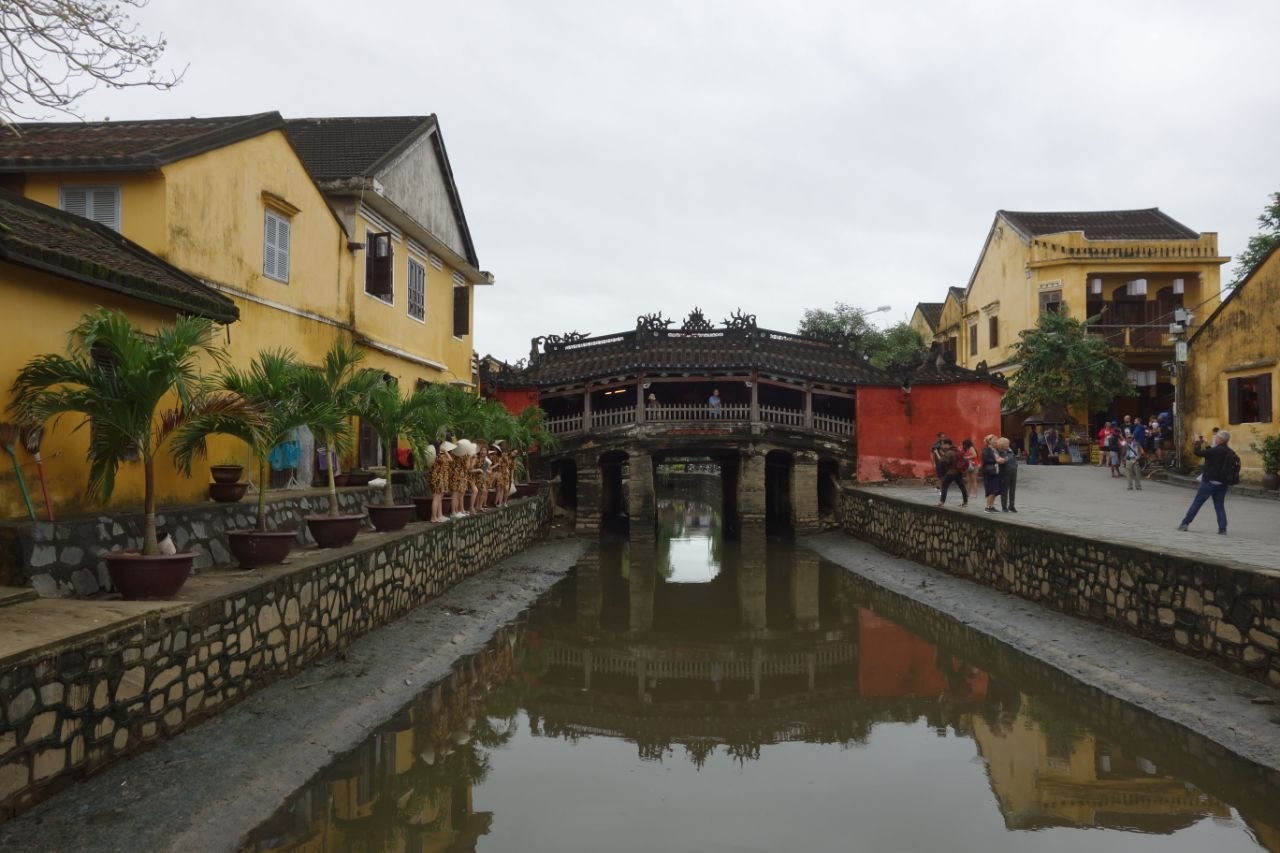
The Japanese Covered Bridge (Chùa Cầu) is the most iconic single structure in Hoi An, built by the Japanese merchant community in the early 17th century to link the Japanese and Chinese quarters of the town across a narrow canal. The covered bridge is a short, arched wooden structure with a small pagoda-style shrine integrated into its northern side — dedicated to Trấn Võ Bắc Đế, the Taoist deity of weather and the north. The bridge’s exterior is painted in a deep ochre-red with dark timber detailing, its roof tiled and its ends flanked by carved stone dog and monkey statues, said to reference the Japanese years in which the bridge was begun and completed. Despite its modest scale, the bridge has become the defining symbol of Hoi An and appears on the Vietnamese 20,000 đồng banknote. The structure was recently closed for restoration work and has reopened to visitors.
Mỹ Sơn Sanctuary
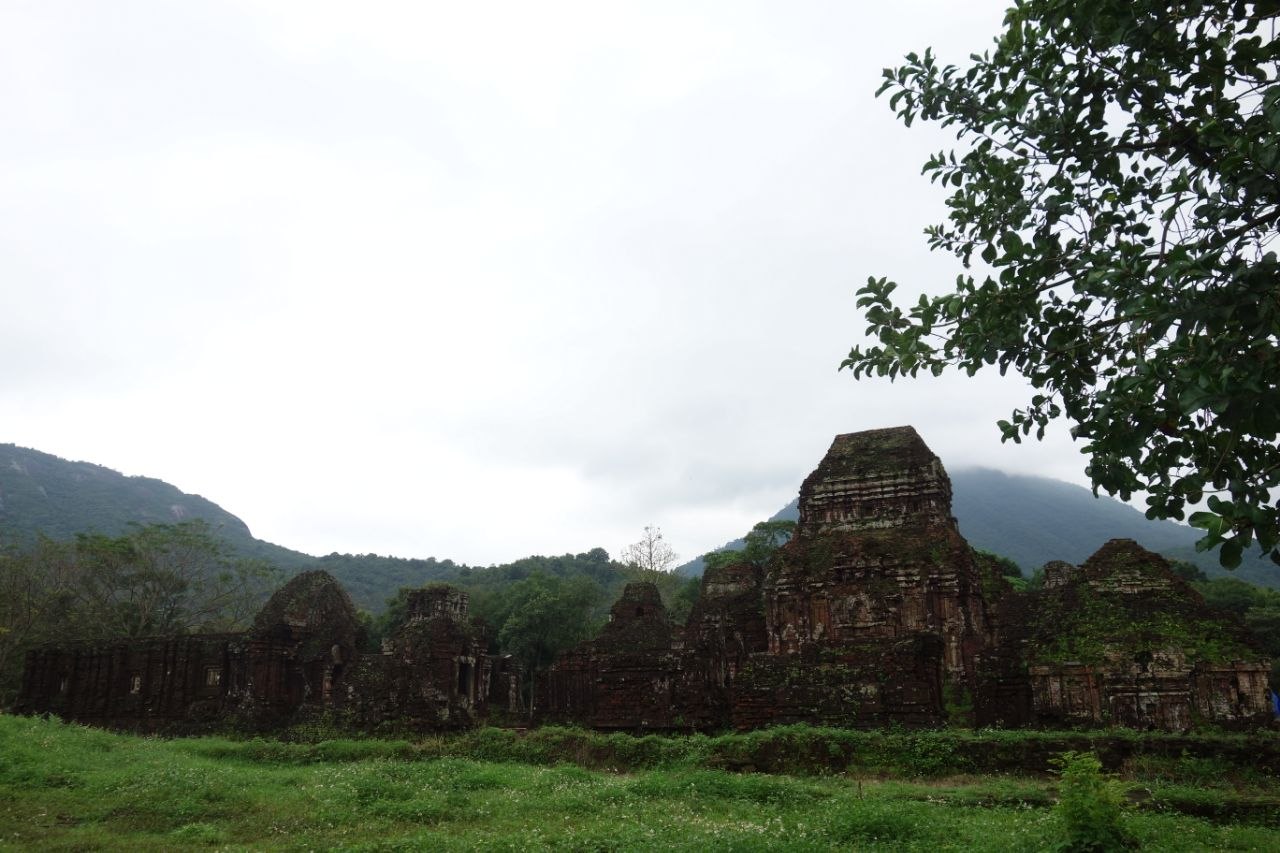
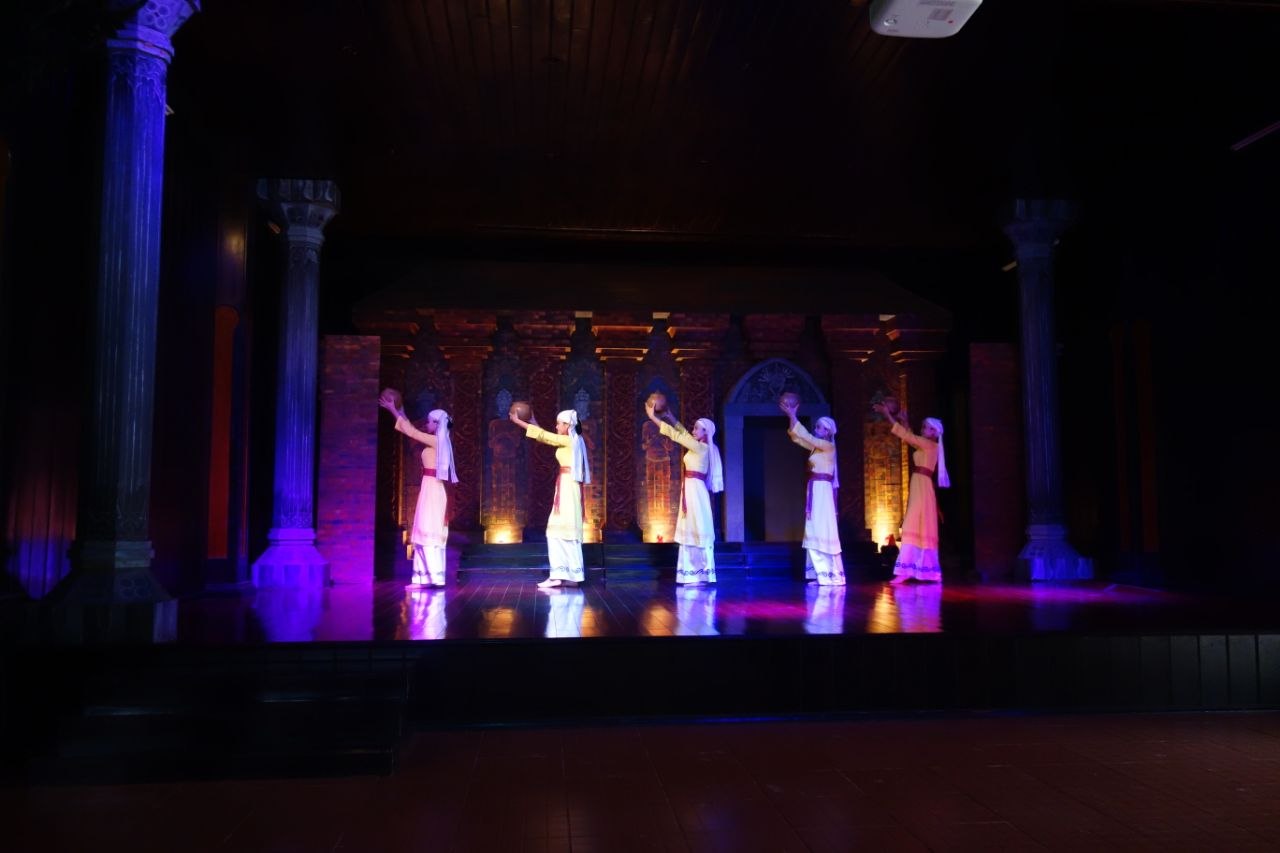
Located approximately 40 kilometres southwest of Hoi An in a forested valley surrounded by hills, Mỹ Sơn is a UNESCO World Heritage Site comprising the ruins of a series of Hindu temple towers built by the Cham civilisation between the 4th and 13th centuries. The Cham people, who ruled a powerful Indianised kingdom along the central Vietnamese coast for over a millennium, constructed Mỹ Sơn as their principal religious sanctuary, dedicating it primarily to Shiva under the name Bhadresvara. The surviving towers are built of fired brick in a distinctive Cham architectural style characterised by tall tapering superstructures, elaborately carved sandstone doorframes and lintels, and decorative brick relief panels depicting deities, celestial dancers (apsaras), and mythological animals. Many of the towers were severely damaged by US bombing during the Vietnam War, and the site is partially cleared of unexploded ordnance. The mist-covered hills surrounding the sanctuary provide a dramatically atmospheric backdrop, and the surviving structures — even in ruin — convey the scale and ambition of Cham religious architecture.
Po Nagar Cham Towers, Nha Trang
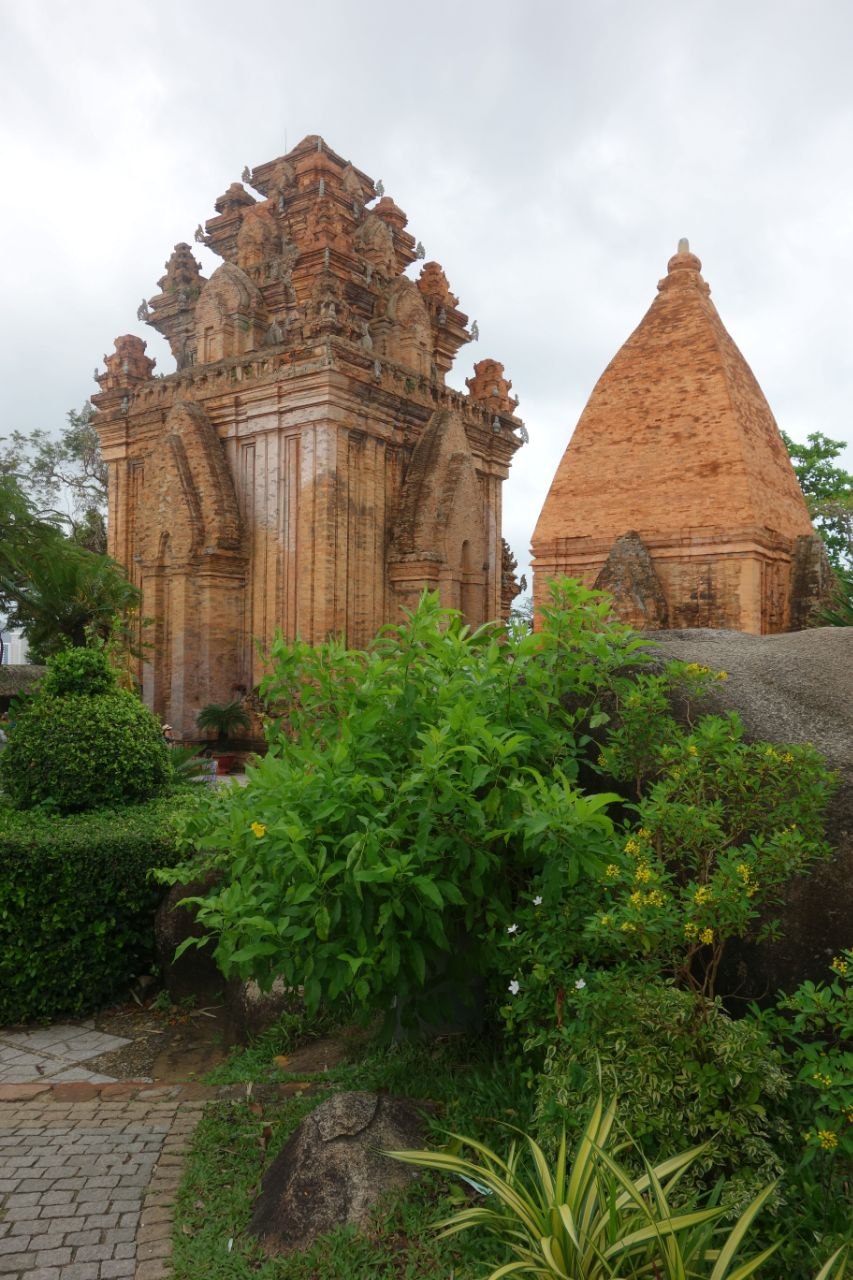
The Po Nagar Cham Towers (Tháp Bà Ponagar) occupy a granite hill on the north bank of the Cái River at the northern edge of Nha Trang, commanding views over the river mouth and the coastline. The complex was originally built between the 7th and 12th centuries as the principal sanctuary of the southern Cham kingdom of Kauthara, dedicated to the goddess Po Nagar — the mother goddess of the Cham people, associated with creation, agriculture, and the land. At its peak the complex comprised between seven and eight towers; four survive today in varying states of preservation. The largest and most intact is the North Tower (Tháp Chính), a tall multi-tiered brick structure with a pyramidal superstructure of diminishing tiers, its sandstone doorframe carvings still partially legible and a statue of the ten-armed goddess Po Nagar enshrined in its interior. The towers continue to function as an active place of worship for both Cham and Vietnamese devotees, and visitors frequently encounter incense offerings, prayer, and ceremonial activity at the shrines. The view from the hill’s summit over the Cái River and out toward the bay provides a useful orientation point for the city.
Food
Hoi An has a particularly well-defined local food culture, with several dishes closely associated with the town. Cao lầu is the most distinctive — thick, slightly chewy rice-flour noodles served with slices of braised pork, crispy rice crackers, fresh herbs, and a small amount of rich broth, the noodles traditionally made using water drawn from a specific well in the ancient town and ash from trees on Cham Island to achieve their particular texture. Bánh mì Hội An is recognised across Vietnam as one of the best regional variations of the Vietnamese sandwich — a crispy French-style baguette filled with layers of pâté, cold cuts, pickled daikon and carrot, cucumber, coriander, and chilli, assembled to order at street stalls that begin trading before dawn. White rose dumplings (bánh bao vạc) are a delicate Hoi An speciality — thin translucent rice-flour wrappers shaped into white flower forms and filled with minced shrimp, served with a fried shallot topping and a dipping sauce. In Nha Trang, the dominant local dish is bún chả cá — a fish cake noodle soup built on a clear, lightly sweet fish-based broth with vermicelli noodles and sliced fish cakes, typically garnished with fresh herbs, spring onion, and chilli.
Visiting Tips
Hoi An’s ancient town is accessed via a combined ticket that covers entry to a set number of heritage sites chosen from a list of museums, assembly halls, ancient houses, and the Japanese Covered Bridge — the ticket system is managed by the Hoi An Centre for Monuments Management and Preservation and is required for entry to all ticketed sites. The ancient town is most pleasant in the early morning before the main tourist crowds arrive, and in the late afternoon and evening when the lanterns are lit. Motorbikes and cars are restricted in the core ancient town area during peak hours. Mỹ Sơn is a 40–45 minute drive from Hoi An and is best visited in the morning before the midday heat. In Nha Trang, Po Nagar is a short ride from the city centre and is open daily; modest dress is required as an active place of worship. The best time to visit both cities is between February and May, during the dry season — Hoi An in particular is subject to significant flooding from October to December during the rainy season, which can temporarily inundate parts of the ancient town.
 Jumping Timezones
Leave a comment