Hanoi is the capital of Vietnam and its second-largest city, situated in the north of the country on the western bank of the Red River, approximately 1,760 kilometres north of Ho Chi Minh City. With a history stretching back over a thousand years — the city was founded as Thăng Long (“Ascending Dragon”) by Emperor Lý Thái Tổ in 1010 — it has served as Vietnam’s political and cultural capital for the majority of its existence, interrupted only by the division of the country between 1954 and 1975. Hanoi is a city of lakes, tree-lined boulevards, and layered architectural history: French colonial administrative buildings in yellow stucco and white trim sit alongside ancient communal temples, Soviet-influenced government structures, and the dense commercial streets of the Old Quarter, where each narrow lane was historically dedicated to a single trade. The Ba Đình district in the west of the city contains the principal monuments of the Vietnamese state, including the Ho Chi Minh Mausoleum complex and the Imperial Citadel of Thăng Long.
Ho Chi Minh Mausoleum & Ba Đình Square
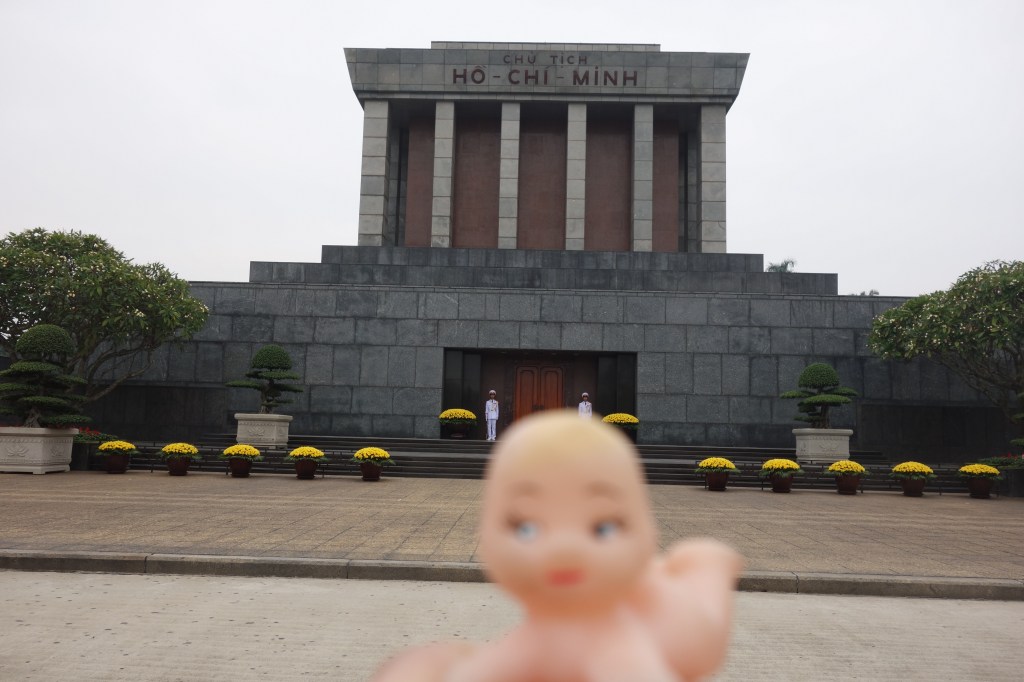
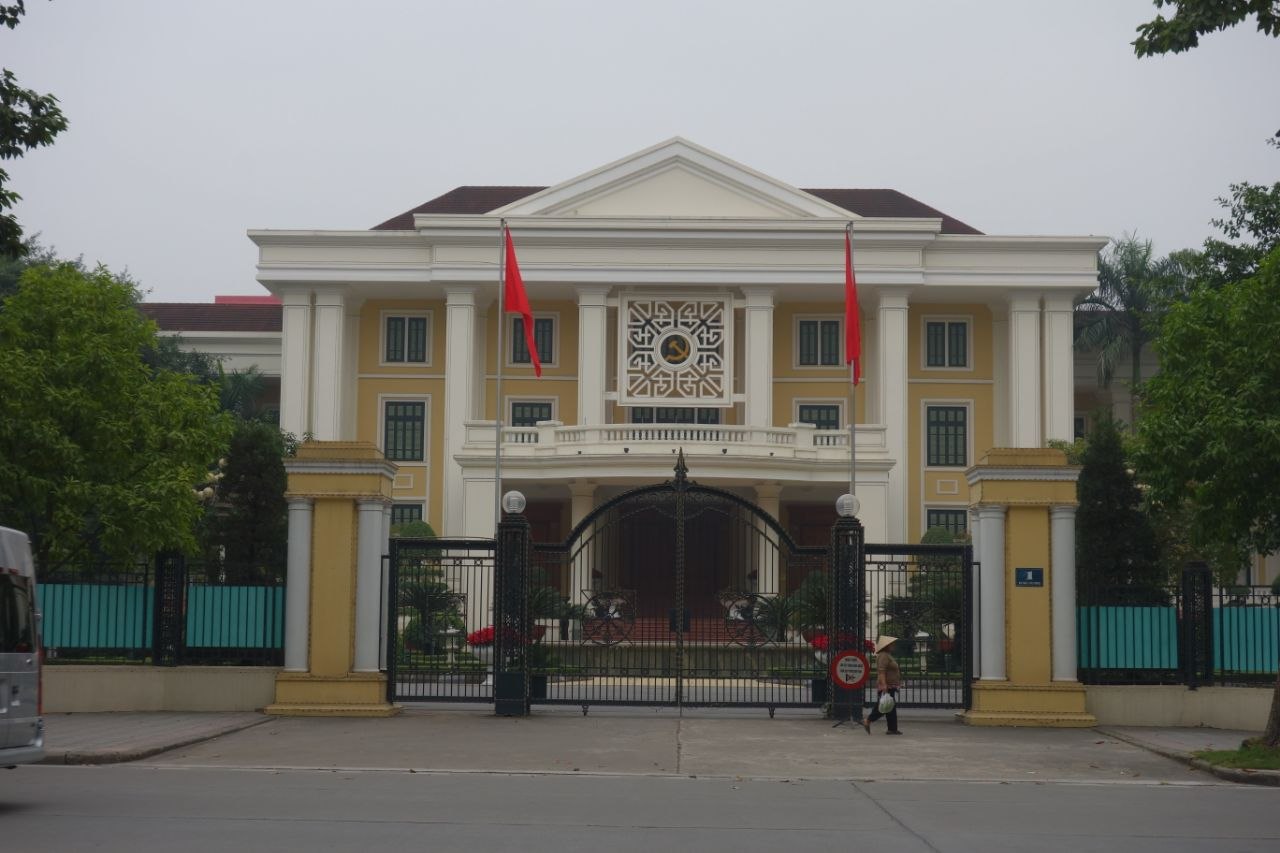
The Ho Chi Minh Mausoleum stands on the western side of Ba Đình Square — the large ceremonial plaza where Hồ Chí Minh read the Vietnamese Declaration of Independence on September 2, 1945. The mausoleum itself is a massive grey granite structure completed in 1975, modelled loosely on Lenin’s Mausoleum in Moscow, where Ho Chi Minh’s embalmed body has lain in state since his death in 1969. The surrounding Ba Đình complex includes the Presidential Palace — a yellow French colonial building originally constructed in 1906 as the residence of the Governor-General of Indochina, now used for state functions — and the Ho Chi Minh Museum, a large modernist building housing an extensive collection of documents, photographs, and artefacts relating to his life and the Vietnamese revolutionary movement. The broader Ba Đình district is the administrative heart of the Vietnamese state: wide, straight boulevards lined with mature trees and yellow colonial-era government buildings flying red flags, several bearing the hammer-and-sickle emblem of the Communist Party of Vietnam prominently on their facades.
Imperial Citadel of Thăng Long
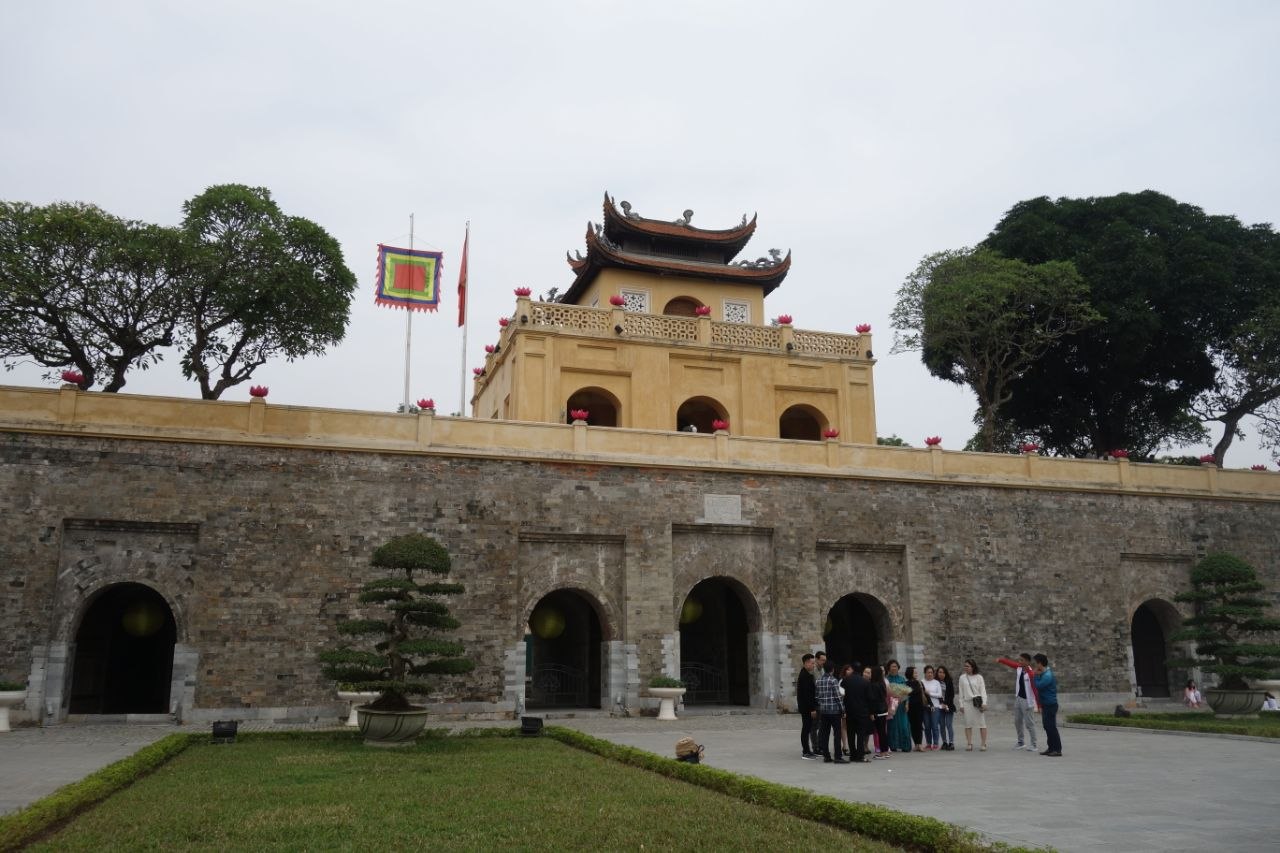
The Imperial Citadel of Thăng Long is a UNESCO World Heritage Site in the Ba Đình district, comprising the remains of the imperial enclosure that served as the political centre of Vietnam for over a millennium — from the Lý dynasty’s establishment of Thăng Long in 1010 through successive dynasties until the Nguyễn court’s move to Huế in 1810. The citadel was built on the site of an earlier Chinese administrative centre and expanded continuously over centuries, its walls enclosing the royal palaces, government buildings, and ceremonial spaces of the imperial court. The most visible surviving structure at the main entrance is the Đoan Môn — the principal southern gate of the inner citadel — a massive masonry gatehouse of yellow-ochre stucco with five arched passages through the lower level and a three-storey Vietnamese-style pavilion of upswept tiled roofs and red lotus-bud finials rising above the battlemented wall, flanked by bonsai pines and the red and yellow flags of Vietnam. Archaeological excavations beneath the site since 2003 have uncovered extensive remains of successive palaces and administrative structures, including decorated tiles, ceramics, and foundations spanning the Lý, Trần, Lê, and Mạc dynasties.
Phở
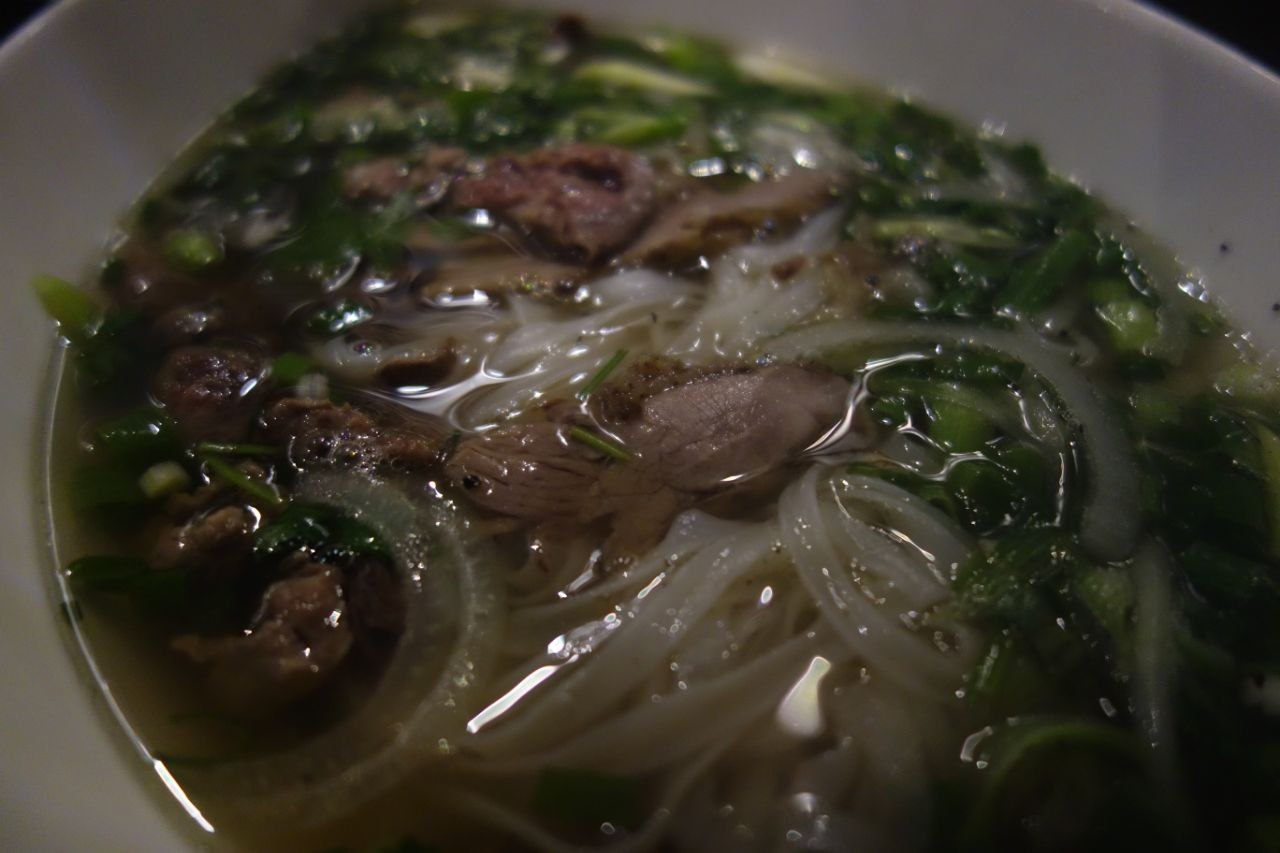
Phở is Vietnam’s most internationally recognised dish and, in Hanoi, a deeply embedded part of daily life consumed at any hour from dedicated phở shops that open before dawn and often sell out by mid-morning. Hanoi phở — phở Hà Nội — is considered the original and most traditional form of the dish, distinct from the sweeter, more garnish-laden southern version associated with Ho Chi Minh City. The Hanoi style is characterised by a clear, deeply flavoured beef broth built from bones roasted to remove impurities and then simmered for many hours with charred ginger and onion, star anise, cloves, cinnamon, and coriander seed — the fat skimmed continuously to produce a clean, amber-coloured liquid of concentrated savour. The broth is ladled over flat rice noodles (bánh phở) and topped with thinly sliced rare beef (phở tái), well-done brisket (nạm), or tendon, garnished with white onion rings, spring onion, and a small amount of fresh coriander. The Hanoi version is served with fewer accompaniments than the southern style — typically only a squeeze of lime, a few slices of chilli, and quẩy (fried dough sticks) on the side — allowing the clarity and depth of the broth to remain the focus.
Visiting Tips
Hanoi is served by Nội Bài International Airport (HAN), approximately 45 minutes from the city centre by taxi or the airport bus. The Old Quarter, Hoàn Kiếm Lake, and the Temple of Literature are all walkable from one another in the city’s historic core. The Ba Đình complex — Ho Chi Minh Mausoleum, Presidential Palace grounds, and the One Pillar Pagoda — is approximately 2 kilometres west of Hoàn Kiếm Lake, reachable by taxi or a pleasant walk along the tree-lined boulevards. The mausoleum is closed on Mondays and Fridays, and for approximately two months each year (typically September–November) when Ho Chi Minh’s body is sent to Russia for maintenance — check current schedules before visiting. Strict dress requirements apply: shoulders and knees must be covered, and visitors must remain silent and move in single file. The Imperial Citadel of Thăng Long is a short walk from the mausoleum and warrants at least two hours. For phở, the streets of the Old Quarter — particularly Phố Bát Đàn and Phố Lý Quốc Sư — have the most celebrated traditional phở shops; arrive early as the best ones sell out before 9am.
 Jumping Timezones
Leave a comment