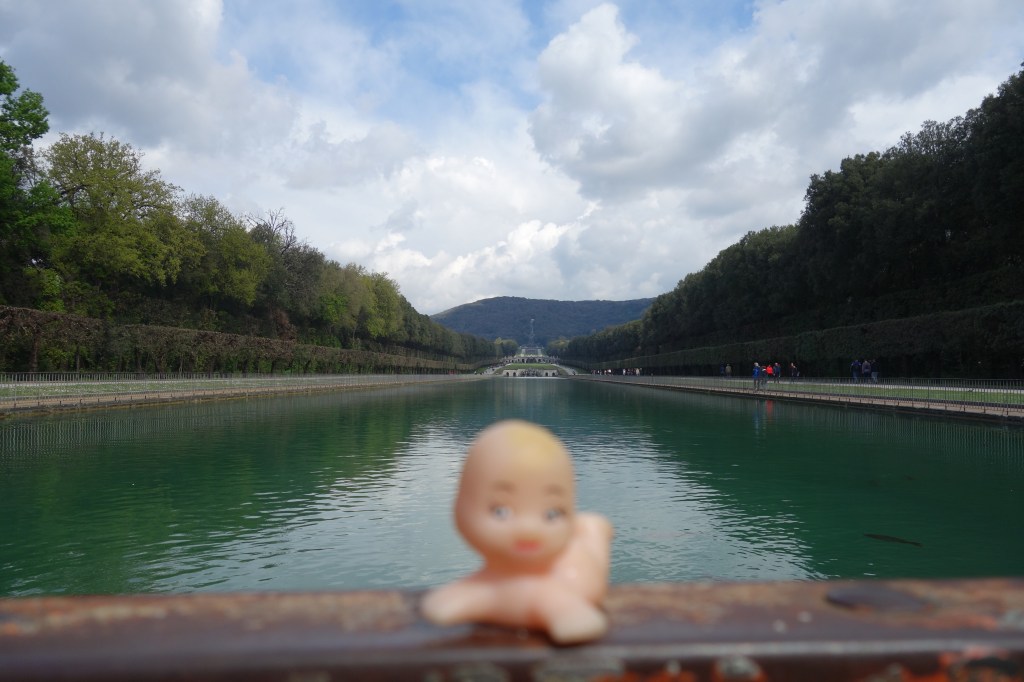
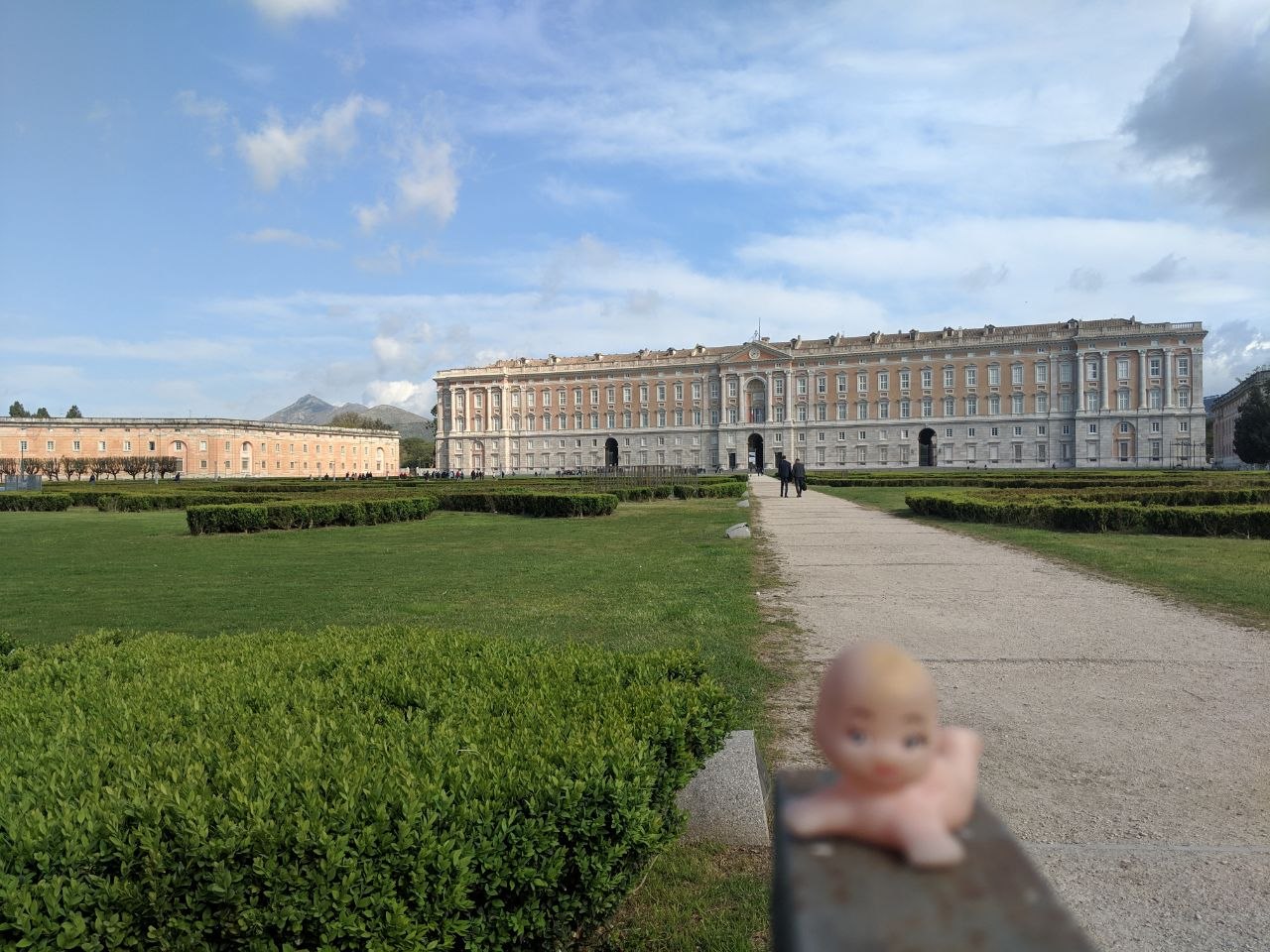
Caserta is a city in the Campania region of southern Italy, located approximately 35 kilometres north of Naples at the foot of the Campanian Apennines. It is best known as the site of the Reggia di Caserta — the Royal Palace of Caserta — one of the largest royal residences in the world and a UNESCO World Heritage Site since 1997. Commissioned by Charles VII of Naples (later Charles III of Spain) in 1752 and designed by the architect Luigi Vanvitelli, the palace was conceived as a southern Italian rival to Versailles: a statement of Bourbon power and ambition on a scale that remains staggering today. The complex encompasses the palace itself, its vast formal gardens stretching three kilometres into the hillside behind, an English landscape garden, and the Belvedere hill from which an aqueduct — the Carolino Aqueduct — delivered water to feed the park’s cascades and fountains.
The Palace & Architecture
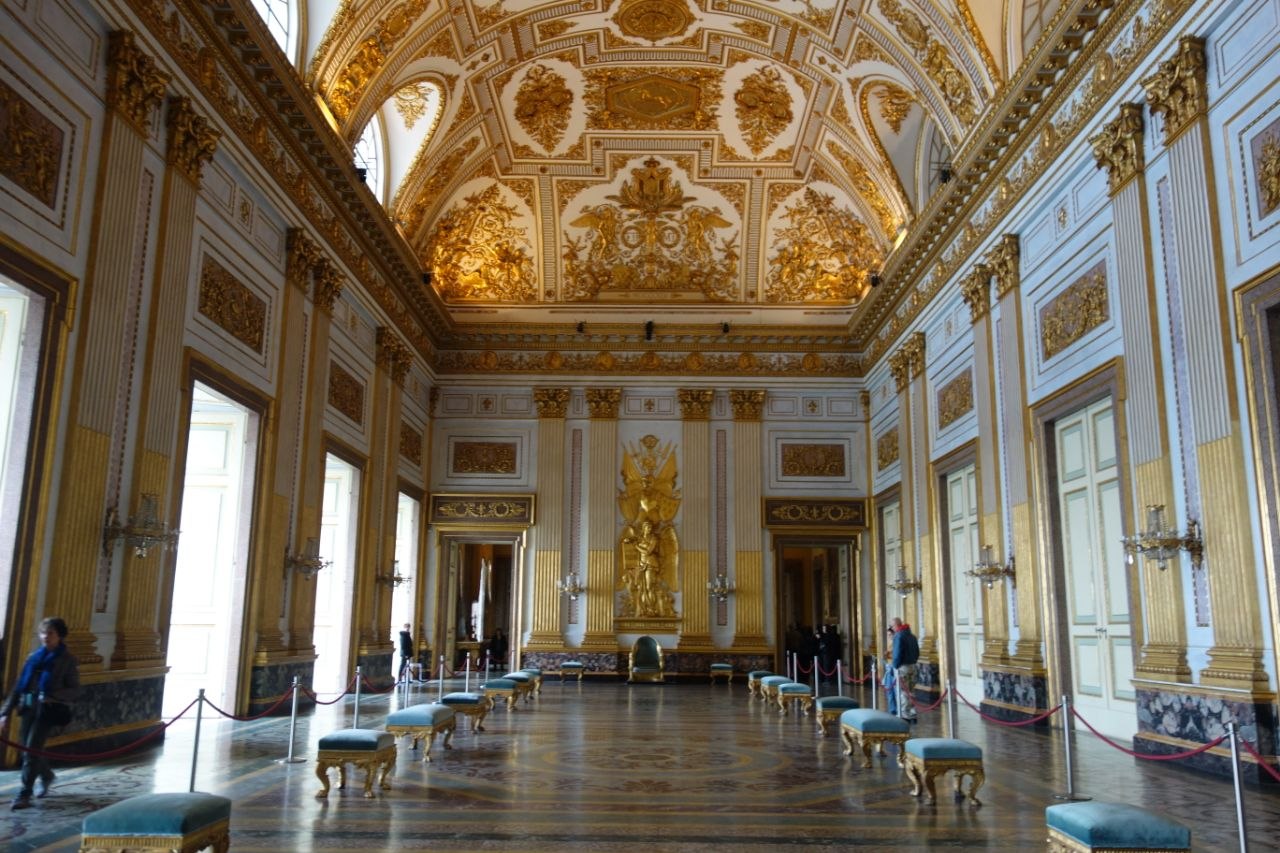
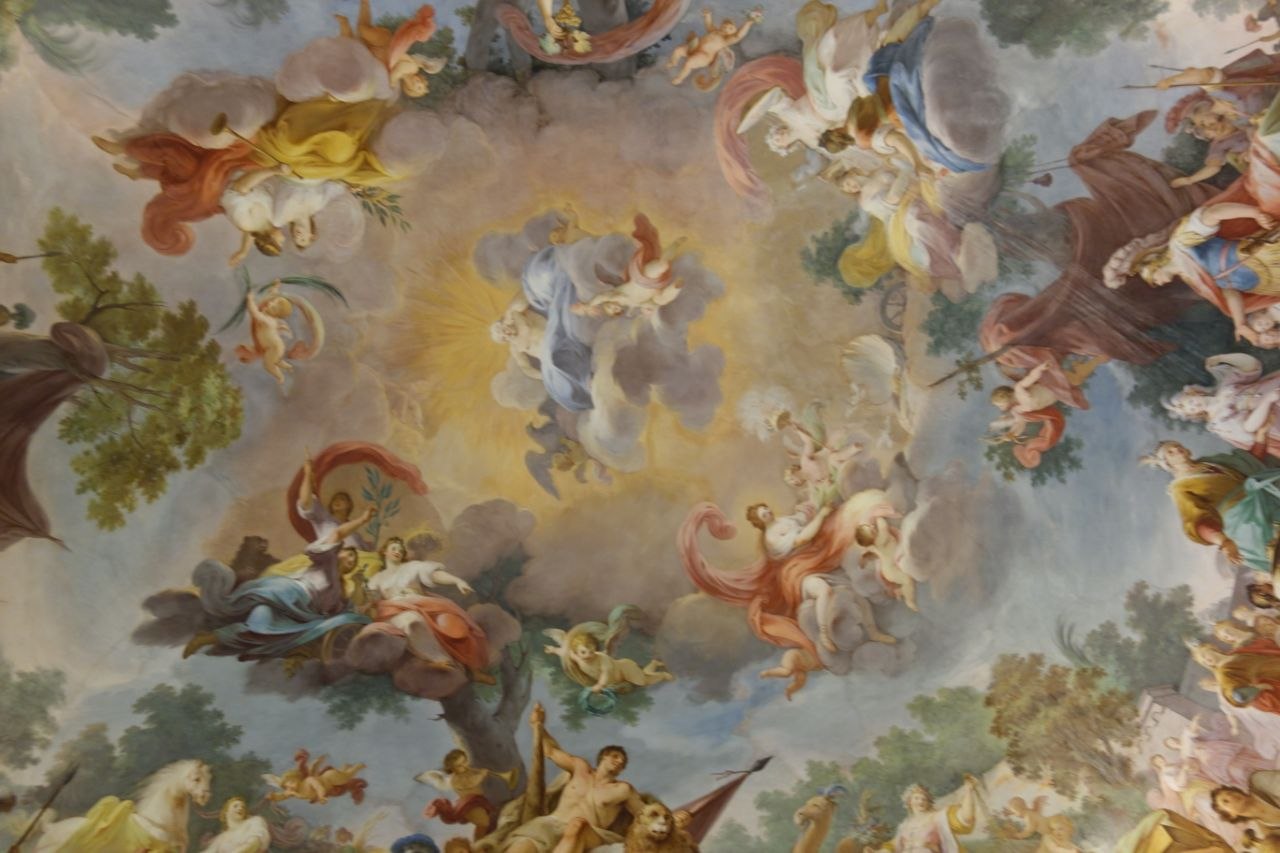
The Reggia di Caserta is one of the largest buildings in the world by volume — a monumental rectangular block measuring 247 by 190 metres, rising five storeys and containing 1,200 rooms, 1,742 windows, 34 staircases, and a private theatre modelled on the Teatro San Carlo in Naples. Vanvitelli’s design draws on the Italian Baroque tradition while incorporating French and Spanish influences appropriate to the Bourbon dynasty. The palace is organised around four internal courtyards and entered through three great archways in the central façade. The grand staircase — the Scalone d’Onore — rises from the vestibule in a single flight that divides into two symmetrical flights at a landing decorated with lion sculptures, ascending to the royal apartments above under a barrel-vaulted ceiling of extraordinary height. The royal apartments are a sequence of state rooms decorated in Empire style, many dating to the reign of Ferdinand IV in the late 18th and early 19th centuries: walls hung with silk, floors of inlaid marble and parquet, and ceilings covered in elaborate gilded stucco relief and allegorical fresco painting. The Throne Room — the Salone del Trono — is among the most impressive: a long, high hall with a gilded barrel vault encrusted with relief ornament, walls lined with pilasters and mirror-panelled doors, and a golden sculptural group above the throne at the far end.
The Royal Chapel
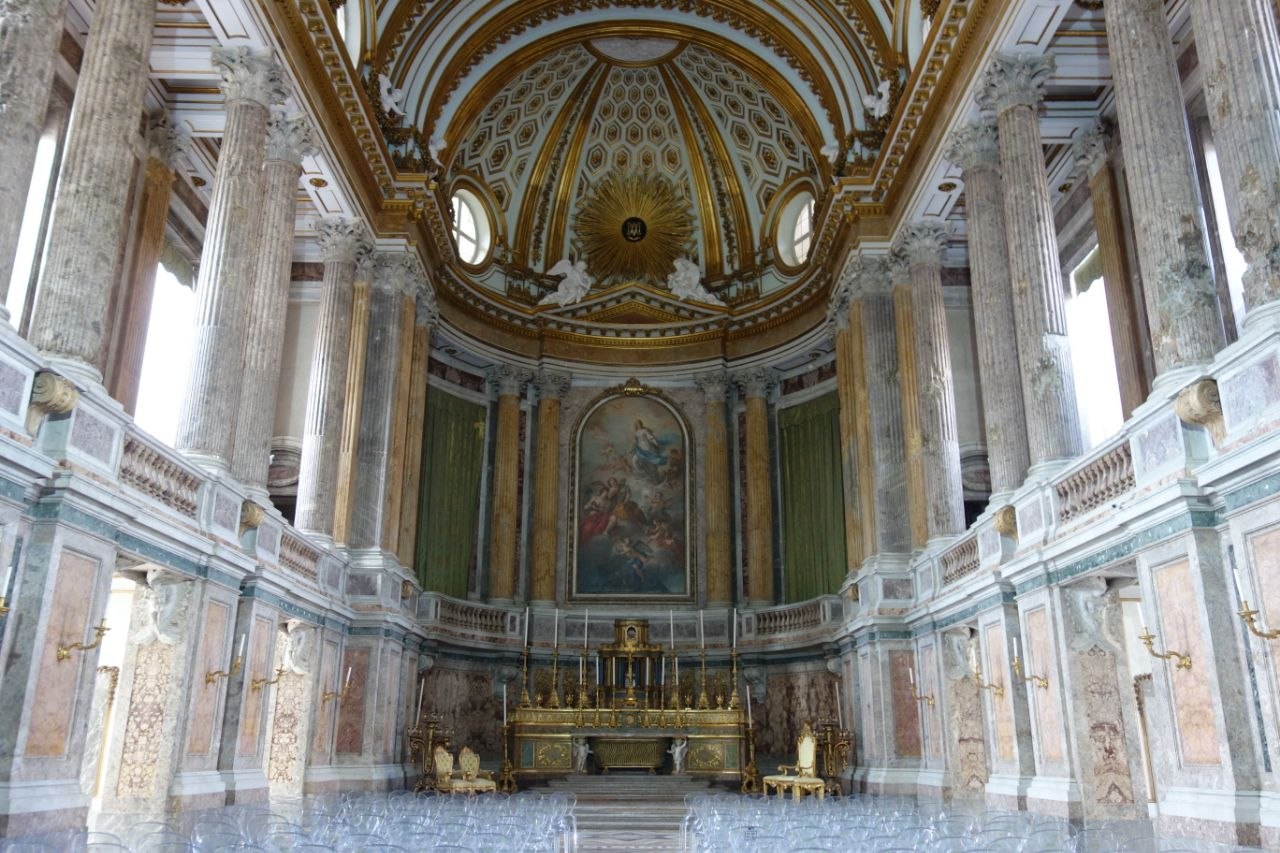
The palatine chapel of the Reggia — the Cappella Palatina — is accessed from the ground floor vestibule and is modelled closely on the Royal Chapel at Versailles. It is a two-storey space of exceptional refinement: walls and columns clad entirely in polychrome marble in shades of grey, green, and rose, rising to a coffered octagonal dome finished in gilded stucco with a central sunburst and radiating gold ribs. The apse is painted with a large altarpiece of the Immaculate Conception, and the altar itself is set with gilt bronze furnishings and candelabra. The proportions and material richness of the chapel — the play of variegated marble against gilded stone — make it one of the finest interiors in the palace.
The Gardens & Fountains
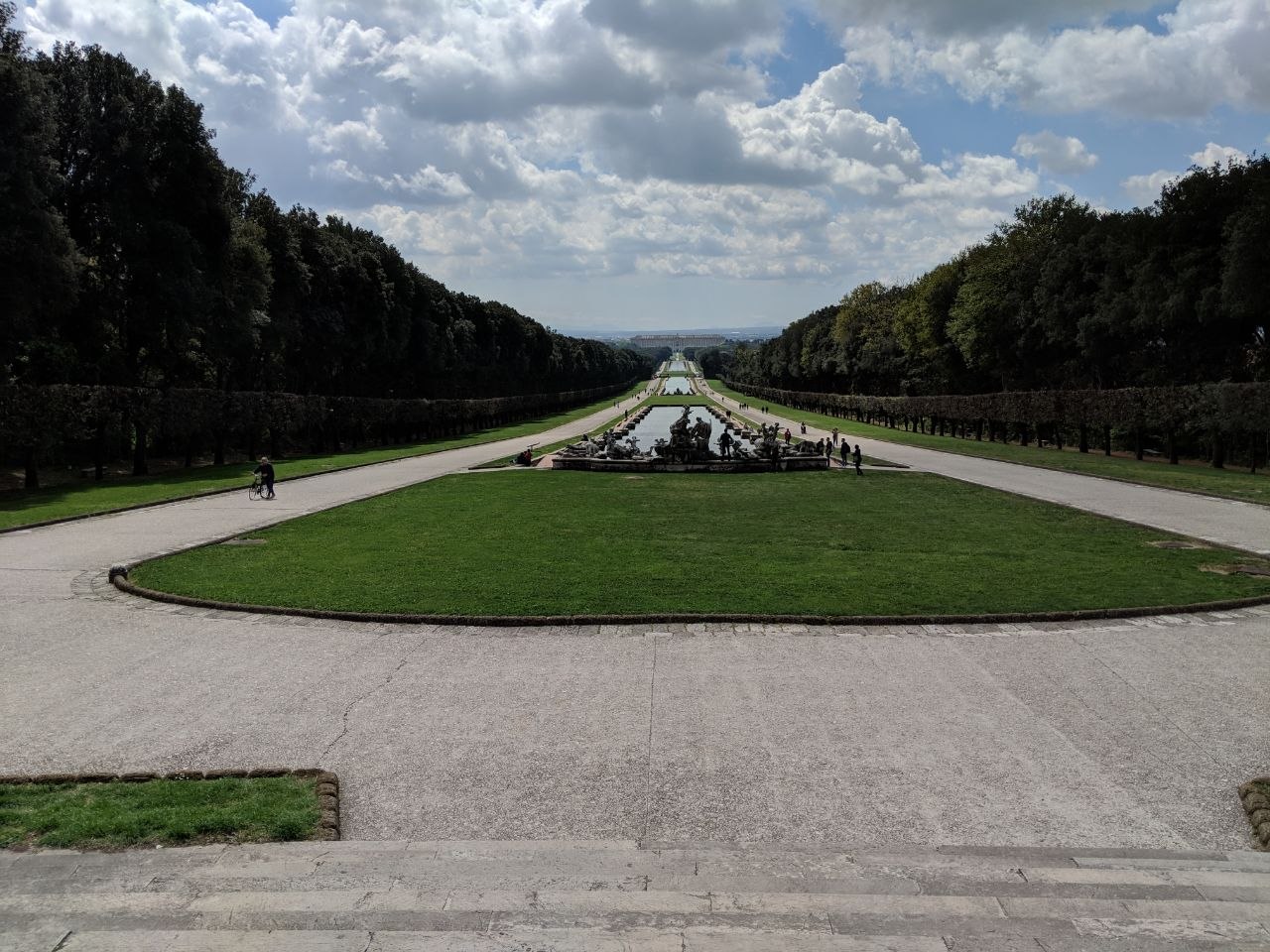
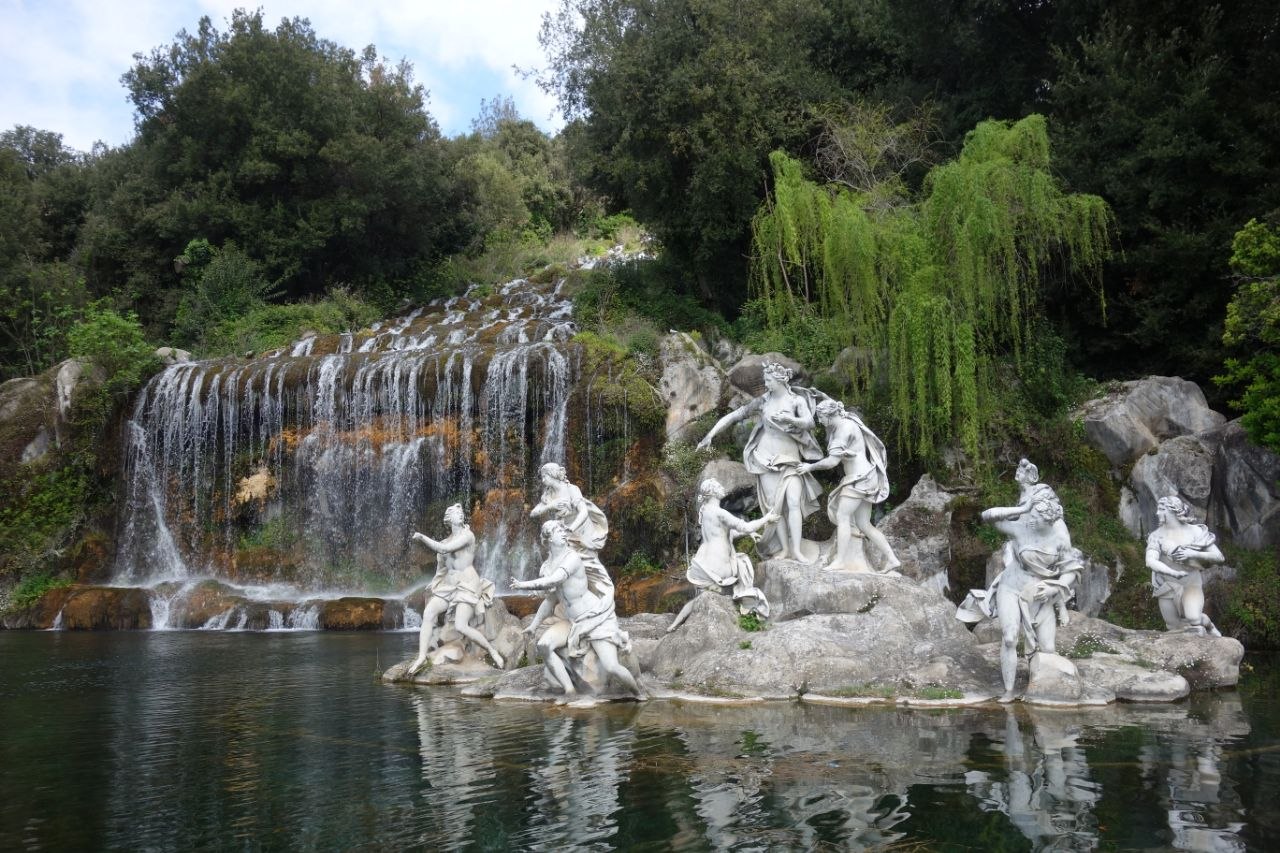
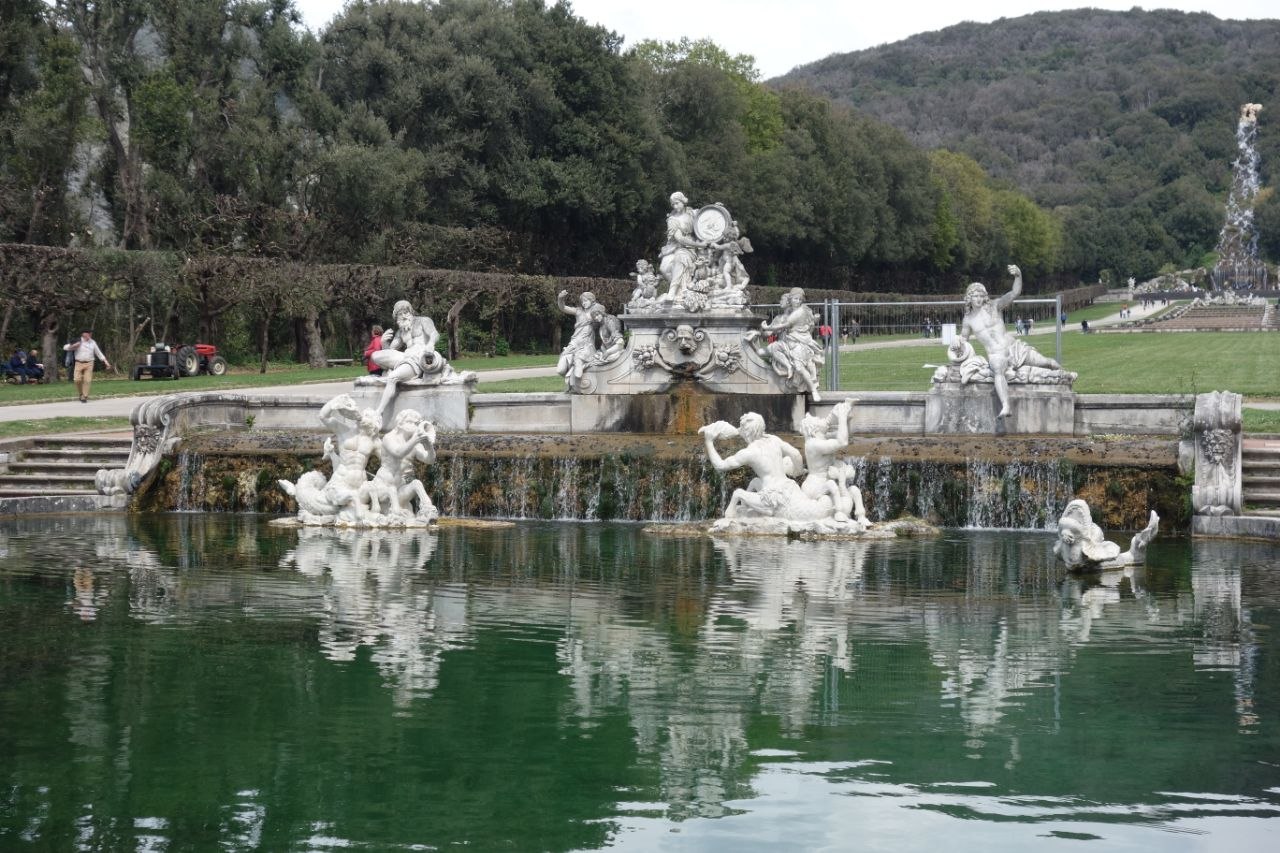
The gardens of the Reggia extend in a straight axis of approximately three kilometres from the rear of the palace up a gentle slope to the wooded hillside of the Belvedere, where a great artificial waterfall marks the terminus of the water channel. The central axis is organised as a sequence of formal basins and fountains connected by long reflecting pools and gravel paths, flanked throughout by allées of clipped trees. The fountains are among the finest surviving examples of Baroque garden sculpture in Italy. The Fontana di Cerere (Fountain of Ceres) presents a multi-tiered basin ringed by reclining river gods and tritons pouring water, their white marble forms reflected in the dark green water below. Higher up the slope, at the foot of the cascade, the Fontana di Diana e Atteone depicts the mythological moment of transformation — Diana and her nymphs surprised at their bath, Actaeon beginning his metamorphosis into a stag — the figures arranged dramatically across a rocky island with the waterfall cascading behind them over moss-stained stone into a wide circular pool. The gardens can be explored on foot, by bicycle (rentable at the palace), or by a small shuttle train that runs along the main axis.
Visiting Tips
Caserta is easily reached from Naples by regional train — the journey takes approximately 35–40 minutes from Napoli Centrale, and the palace is a short walk from Caserta station. The site is open Tuesday through Sunday; it is closed on Mondays. A combined ticket covers the palace apartments, the chapel, and the gardens; audio guides are available. The gardens are vast — allow at least two to three hours to walk the full length to the waterfall and back, or use the shuttle service. Bicycles can be rented near the palace entrance and are an efficient way to cover the full garden axis. The English landscape garden (Giardino Inglese), located to the right of the main axis, contains exotic plantings, a fake ruined temple, and a bathing pool — it is easy to miss but worth seeking out. The palace interior is best visited in the morning before coach tour groups arrive. Caserta itself, beyond the palace, has limited tourist infrastructure — most visitors combine it with a day trip from Naples.
 Jumping Timezones
Leave a comment