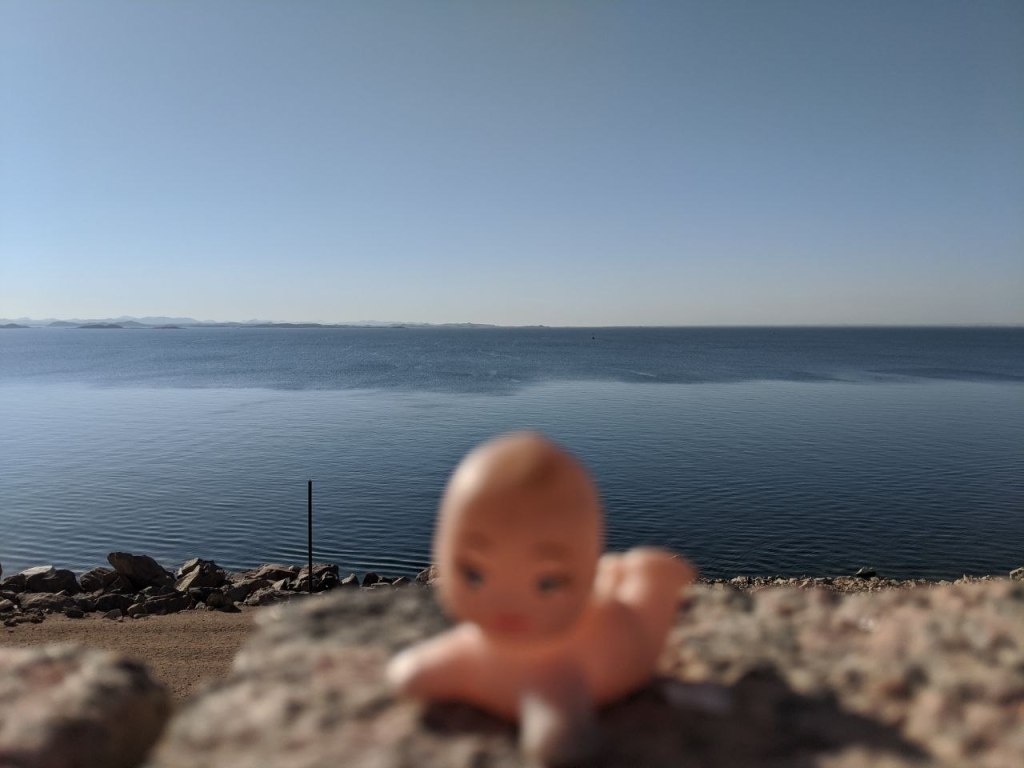
Aswan is the southernmost city of Egypt proper, situated on the east bank of the Nile at the point where the river narrows between granite outcroppings and the surrounding desert closes in from both sides. It is the gateway to Nubia — the ancient region stretching from the First Cataract at Aswan south into modern Sudan — and a city whose strategic and commercial importance stretches back to the earliest periods of pharaonic history. Aswan granite, quarried from the pink and grey outcrops that line the river, was used to construct obelisks, sarcophagi, and temple columns across Egypt for thousands of years. The city today is a base for visiting a remarkable concentration of monuments: the Temple of Philae, the Temple of Kom Ombo, the Aswan High Dam, and the Nubia Museum, as well as the surrounding landscape of the Nile — its islands, feluccas, and the dunes of the Western Desert rising directly from the far bank.
The Temple of Philae
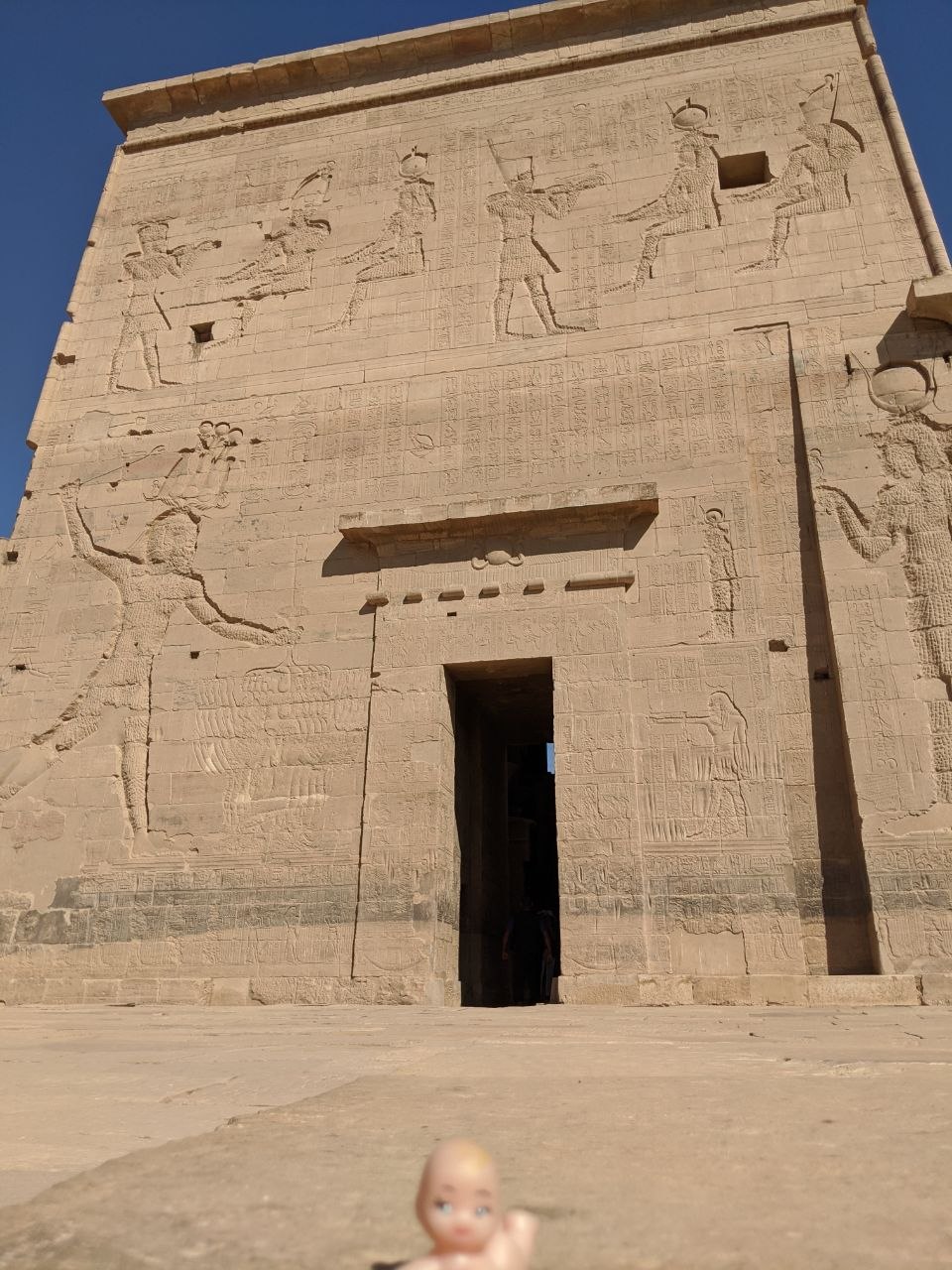
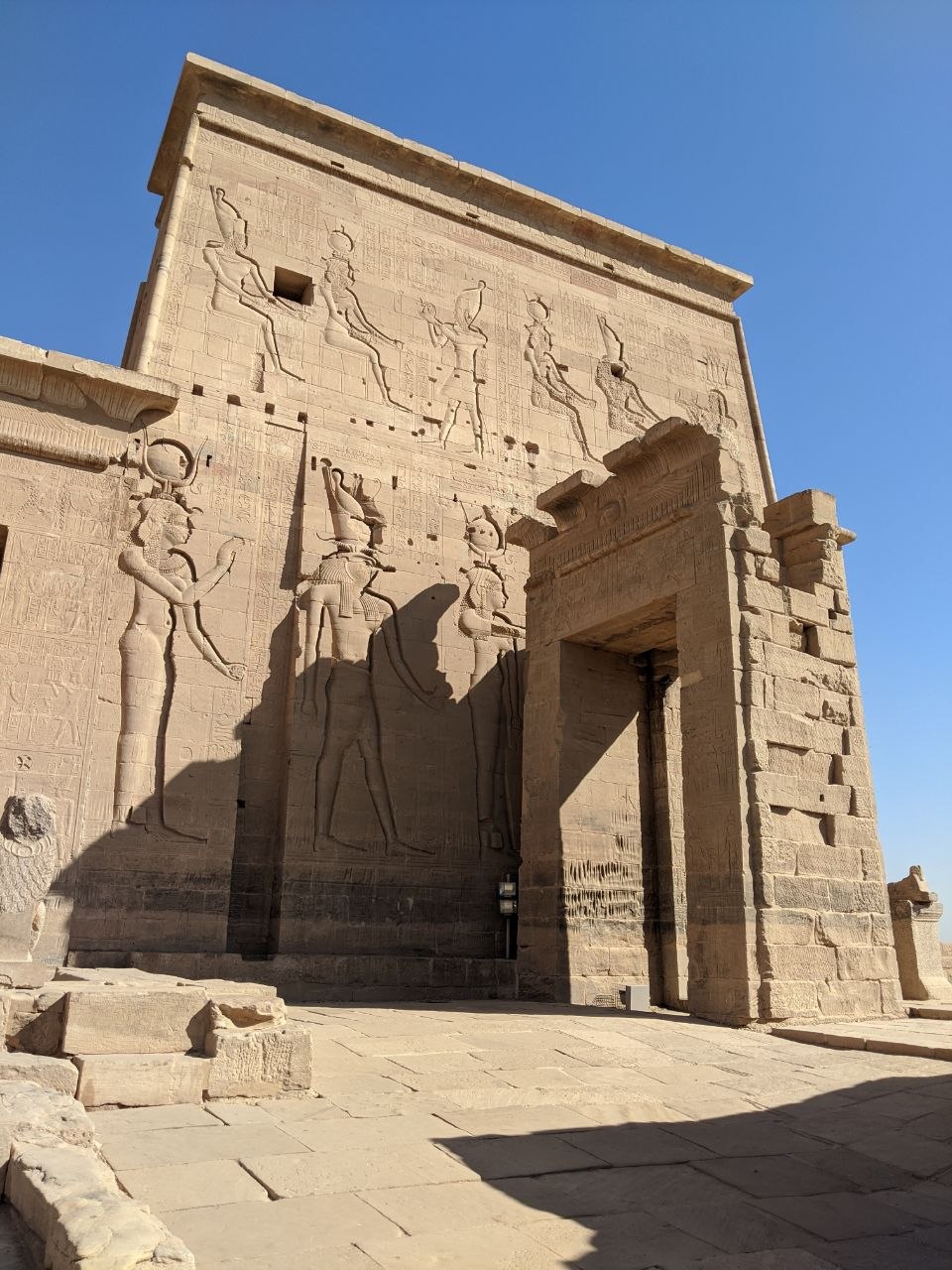
The Temple of Philae is a Ptolemaic and early Roman-period temple complex dedicated primarily to the goddess Isis, situated on Agilkia Island in the reservoir between the old Aswan Dam and the Aswan High Dam. The original island of Philae — considered one of the most sacred sites in ancient Egypt, believed to be the location where Isis found the heart of Osiris after his dismemberment — was submerged following the construction of the first Aswan Dam in 1902, becoming partially accessible only when the dam’s sluices were opened each year. When the High Dam was completed in 1970, permanent submersion became inevitable, and the entire temple complex was dismantled and relocated block by block to the nearby higher island of Agilkia between 1972 and 1980 as part of the same UNESCO salvage campaign that rescued Abu Simbel. The main pylon of the Temple of Isis is one of the finest examples of Ptolemaic pylon decoration in Egypt — its two massive towers covered in large-scale carved relief showing Ptolemy XII smiting enemies before Isis, Horus, and Hathor, the figures set against dense columns of hieroglyphic text. The adjoining colonnades, the birth house (mammisi), and the kiosk of Trajan — a graceful free-standing colonnade on the island’s eastern edge — complete a complex that reads as a nearly complete Ptolemaic sanctuary in miniature.
Kom Ombo & the Crocodile Museum
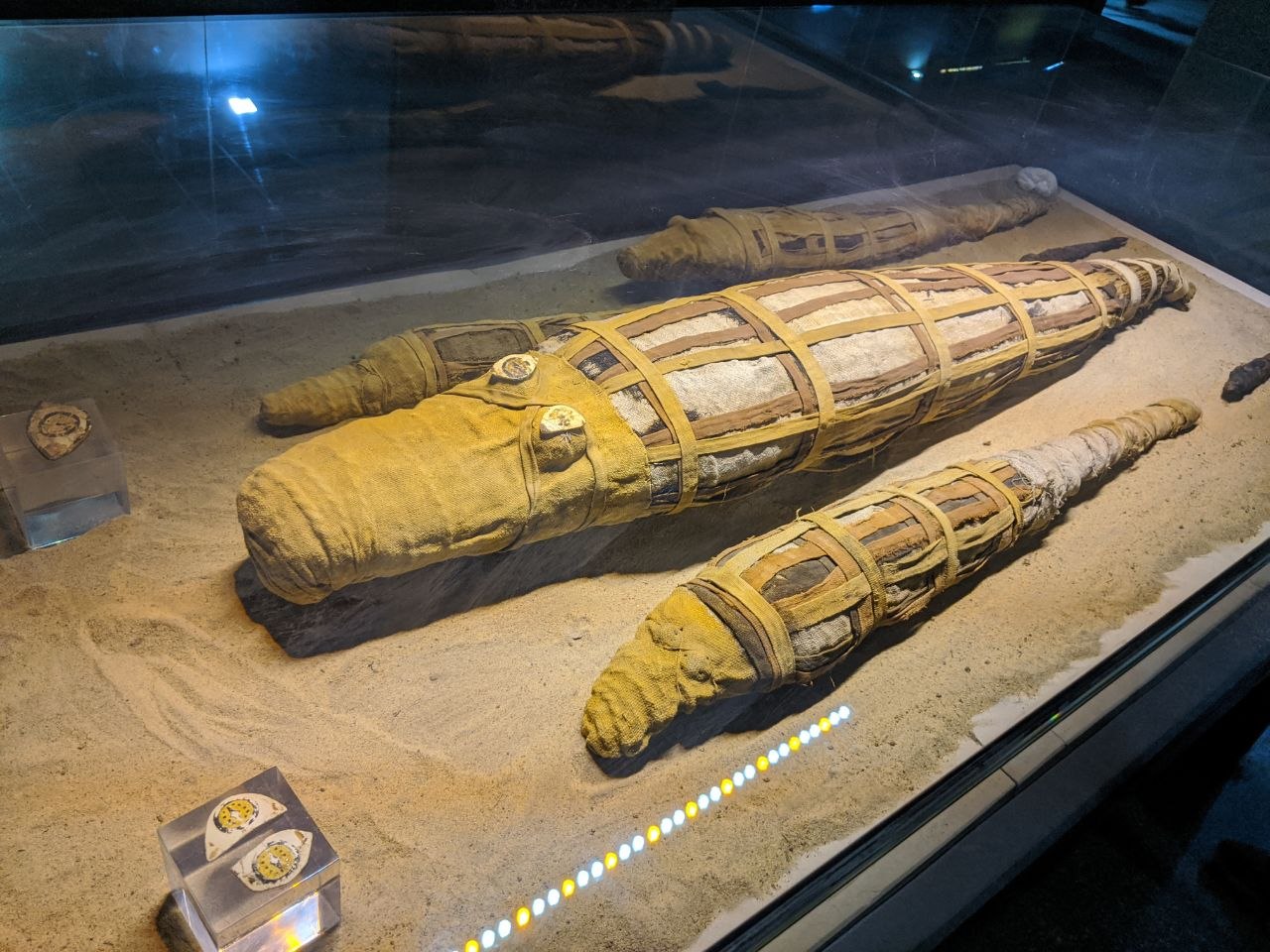
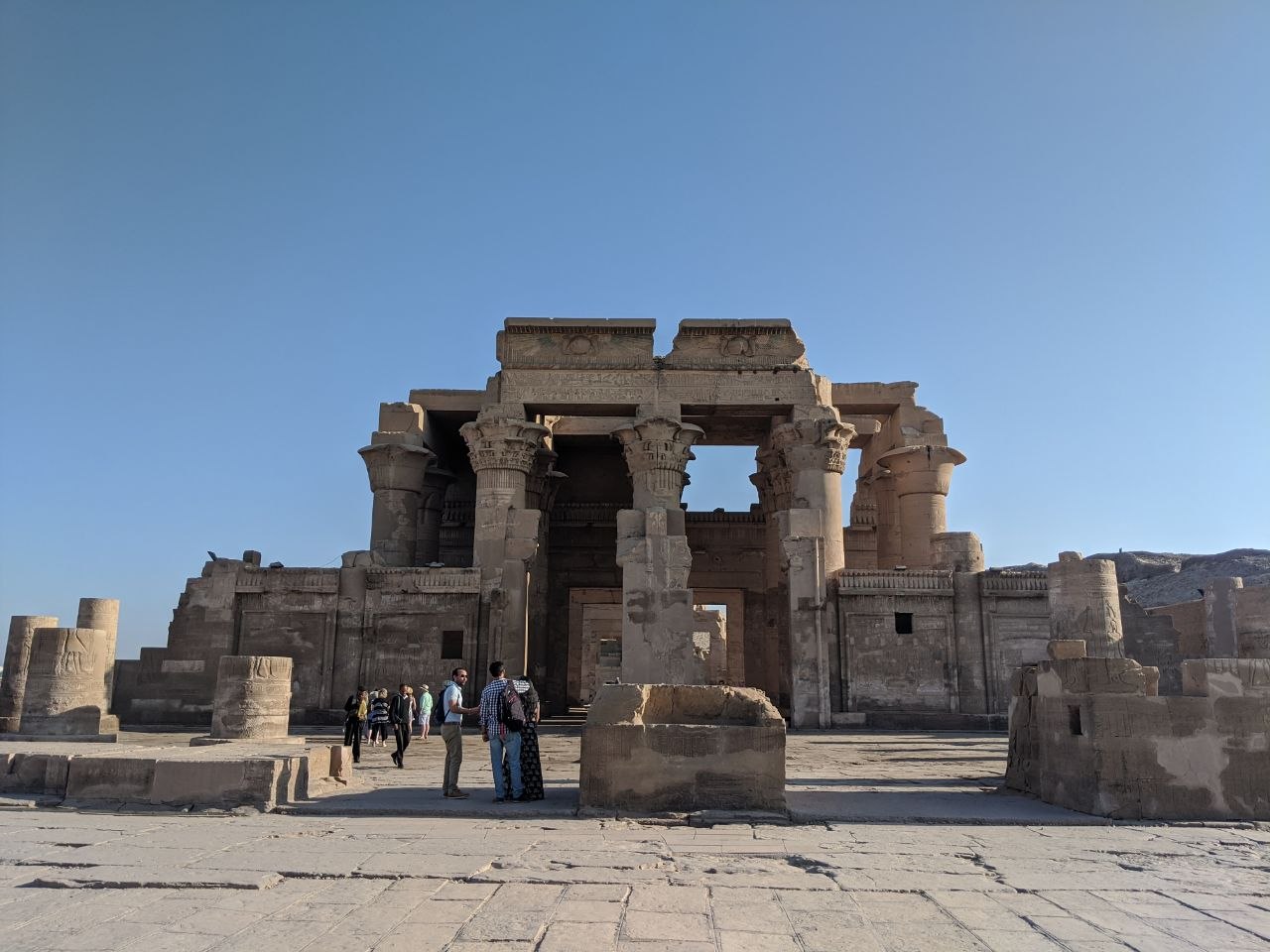
The Temple of Kom Ombo, situated approximately 45 kilometres north of Aswan on a promontory above the Nile, is unique in Egyptian temple architecture: a perfectly symmetrical double temple with two parallel axes, two sets of sanctuaries, two hypostyle halls, and two complete sets of pylons, dedicated equally to the crocodile-headed god Sobek and the falcon-headed Haroeris (Horus the Elder). The dual dedication reflects the importance of both deities at Kom Ombo — Sobek as lord of the Nile, fertility, and military power; Haroeris as protector of the pharaoh and god of the sky. The temple was built primarily during the Ptolemaic period and is today significantly ruined, with much of the rear wall and roof collapsed or missing, giving the complex an unusually open and skeletal quality that allows the full depth of the double temple plan to be appreciated from the forecourt. The reliefs of the inner chambers include a famous panel depicting what are commonly identified as the earliest known surgical instruments — scalpels, forceps, probes, and scales — carved in raised relief on the south wall of the inner corridor. Within the temple precinct, a dedicated Crocodile Museum houses a collection of mummified crocodiles recovered from the surrounding area — ranging from small juveniles to large adults over two metres long — displayed in sand-filled cases. Crocodiles were sacred to Sobek and were kept in temple pools at Kom Ombo; their mummified remains were offered as votive dedications.
The Aswan High Dam & Soviet-Egyptian Friendship Monument
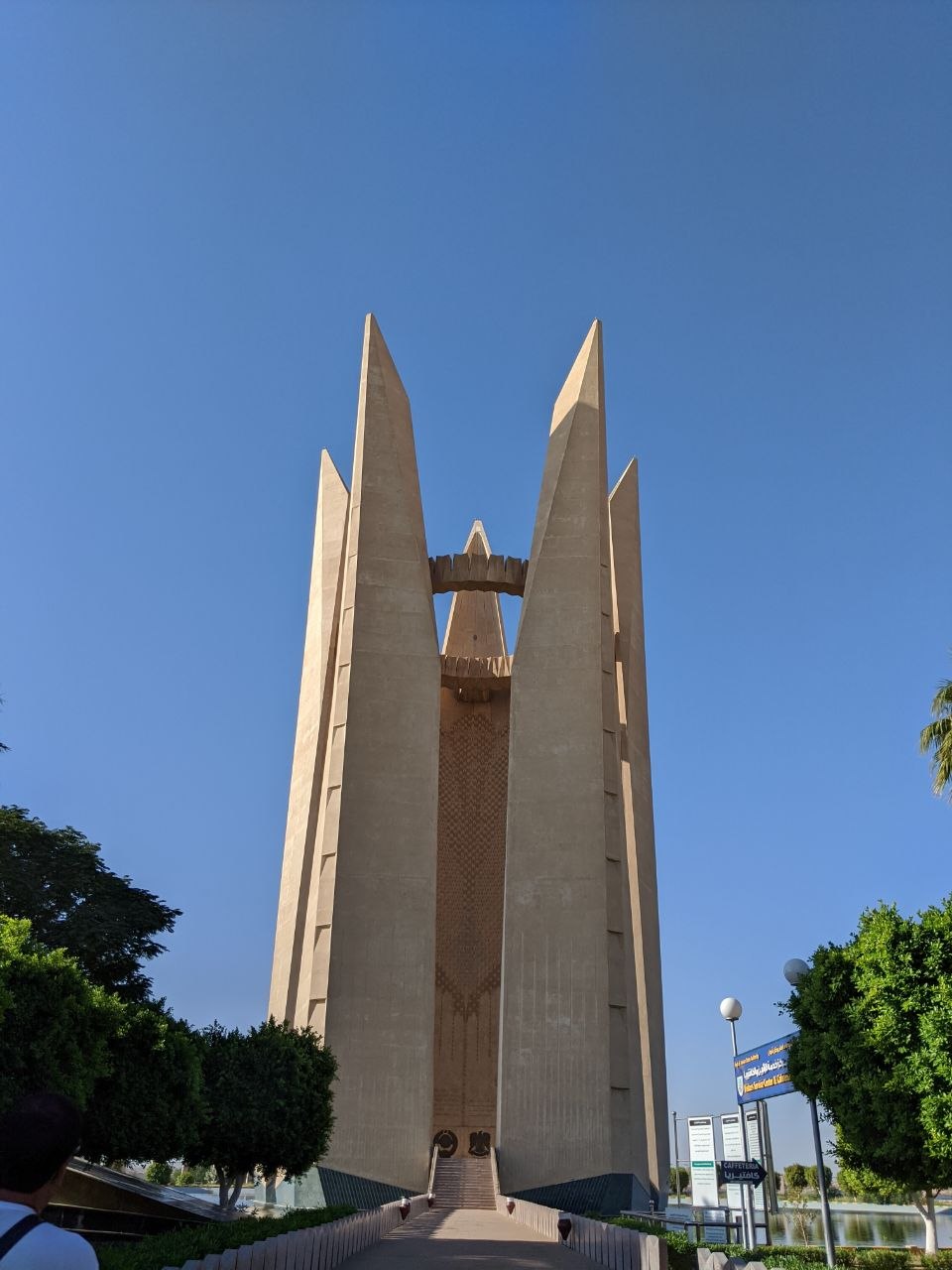
The Aswan High Dam — known in Arabic as Sadd el-Aali — is one of the largest embankment dams in the world, constructed between 1960 and 1970 with Soviet technical and financial assistance following the withdrawal of Western support for the project after Egypt’s nationalisation of the Suez Canal in 1956. The dam is approximately 3,830 metres long, 111 metres high, and 980 metres wide at its base, impounding Lake Nasser — one of the largest artificial lakes in the world, stretching over 500 kilometres south into Sudan. Its construction permanently transformed the Nile Valley: the annual flood that had deposited fertile silt along the river banks for millennia was ended, replaced by year-round controlled irrigation; the electricity generated by the dam’s twelve Soviet-built turbines powered a significant portion of Egypt’s national grid. The Soviet-Egyptian Friendship Monument, a striking modernist structure rising in four tapering concrete pylons at the northern end of the dam, was erected in 1971 to commemorate the Soviet role in the dam’s construction. Its form is abstract — the four pylons converge toward a central lotus-flower motif suspended between them — and its scale is imposing against the flat horizon of the dam and the surrounding desert. An internal staircase and viewing platform at the top offers a panorama across the dam, Lake Nasser, and the surrounding landscape.
Visiting Tips
Aswan is most easily reached from Luxor by train — the journey takes approximately 3.5 to 4 hours — or by Nile cruise, which typically stops at Edfu and Kom Ombo en route. The Temple of Philae is reached by motorboat from the Shellal boat landing south of the old Aswan Dam; boats depart regularly and the crossing takes about 10 minutes. Philae is best visited in the morning when the light falls on the pylon facade from the east. Kom Ombo is a natural stop between Luxor and Aswan and is most conveniently visited as part of a Nile cruise or private car journey. The Aswan High Dam and Friendship Monument are visited by taxi or organised tour from central Aswan and are typically combined with Philae as a half-day circuit. The Nubia Museum in central Aswan is among the best regional museums in Egypt and provides essential context for the monuments, peoples, and history of the Nubian region before and after the dam’s construction. Felucca sailing on the Nile at Aswan — particularly around Elephantine Island and the Botanical Garden on Kitchener’s Island — is one of the most pleasant ways to spend a late afternoon in the city.
 Jumping Timezones
Leave a comment