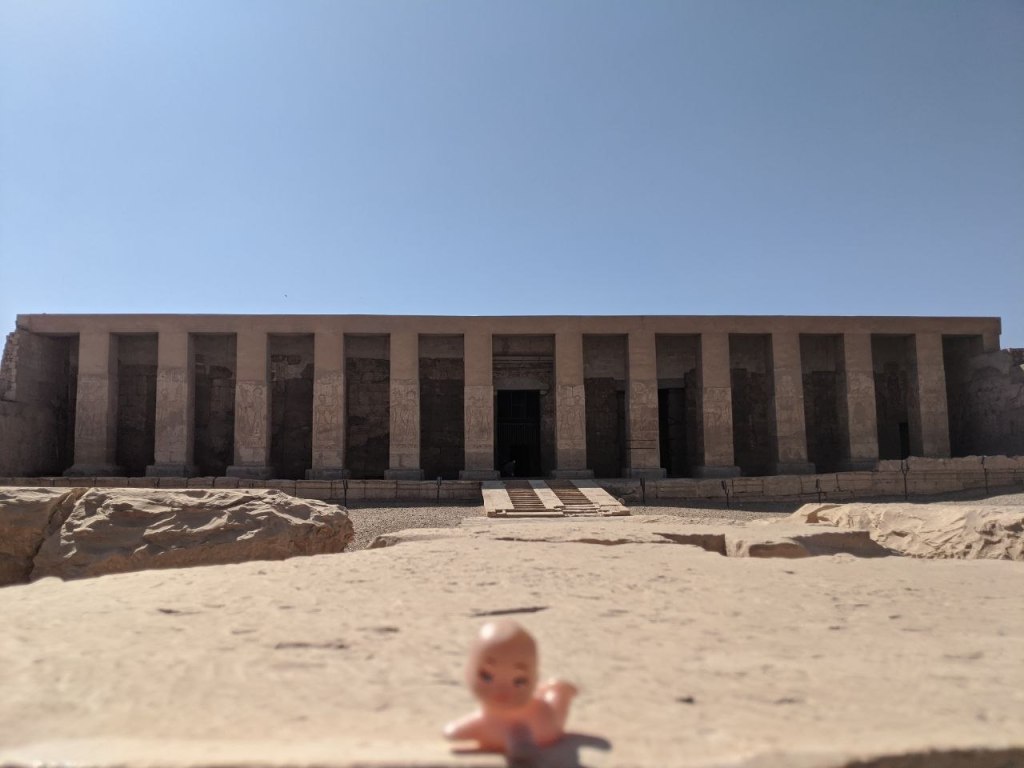
Abydos and Dendera are two of the most significant ancient religious sites in Egypt, located in the governorate of Sohag and Qena respectively, roughly midway between Luxor and Cairo along the Nile Valley. Abydos was one of the oldest and most sacred cities in ancient Egypt — the cult centre of Osiris, god of the dead and resurrection, and a site of royal burials stretching back to the very earliest dynasties. Dendera, approximately 60 kilometres to the south, was home to one of the best-preserved temple complexes in Egypt: the Temple of Hathor, a Ptolemaic-era sanctuary whose dark hypostyle halls and rooftop chapels survive in exceptional condition. The two sites are most commonly visited together as a single long-day excursion from Luxor.
Abydos & the Temple of Seti I
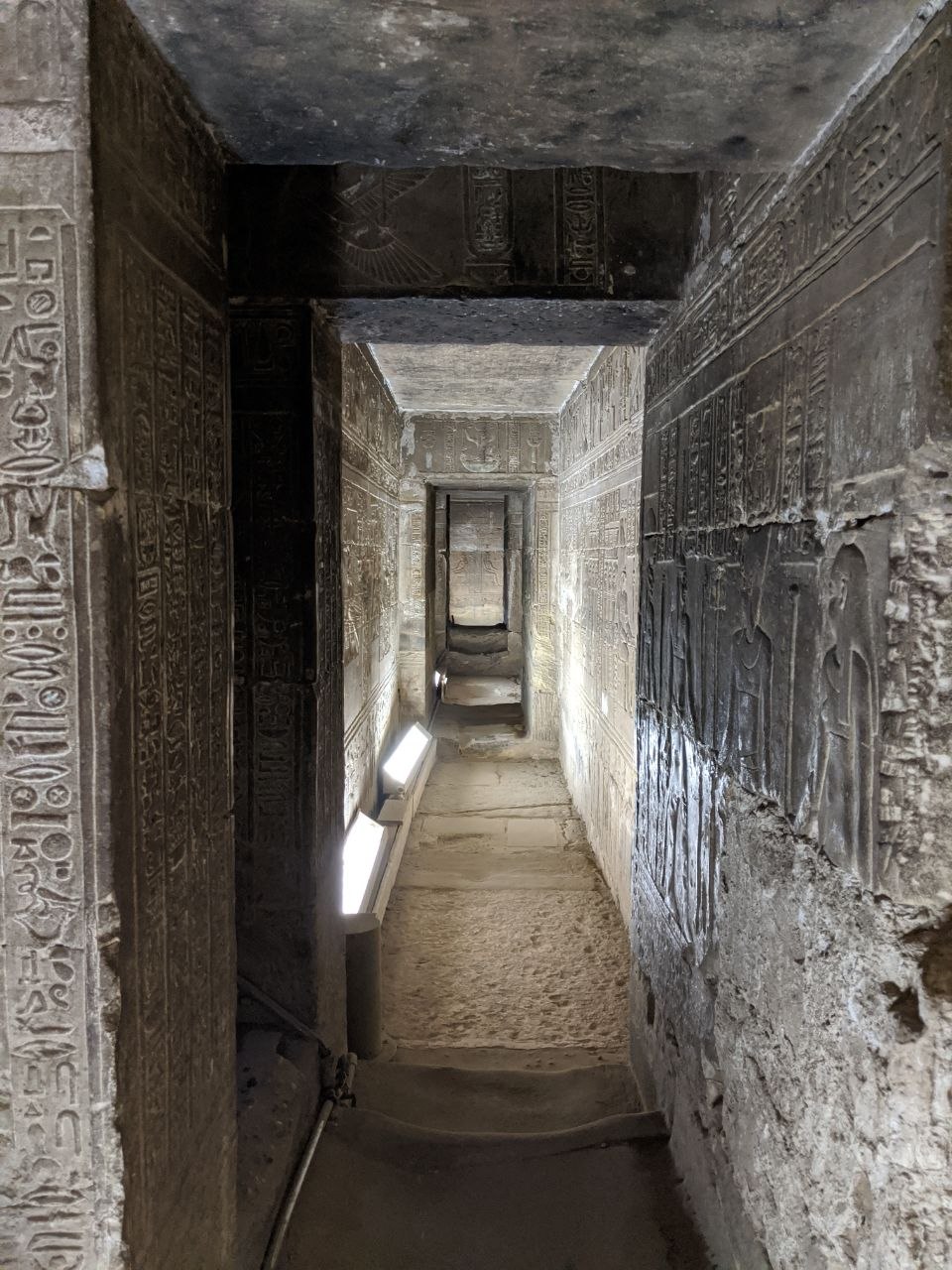
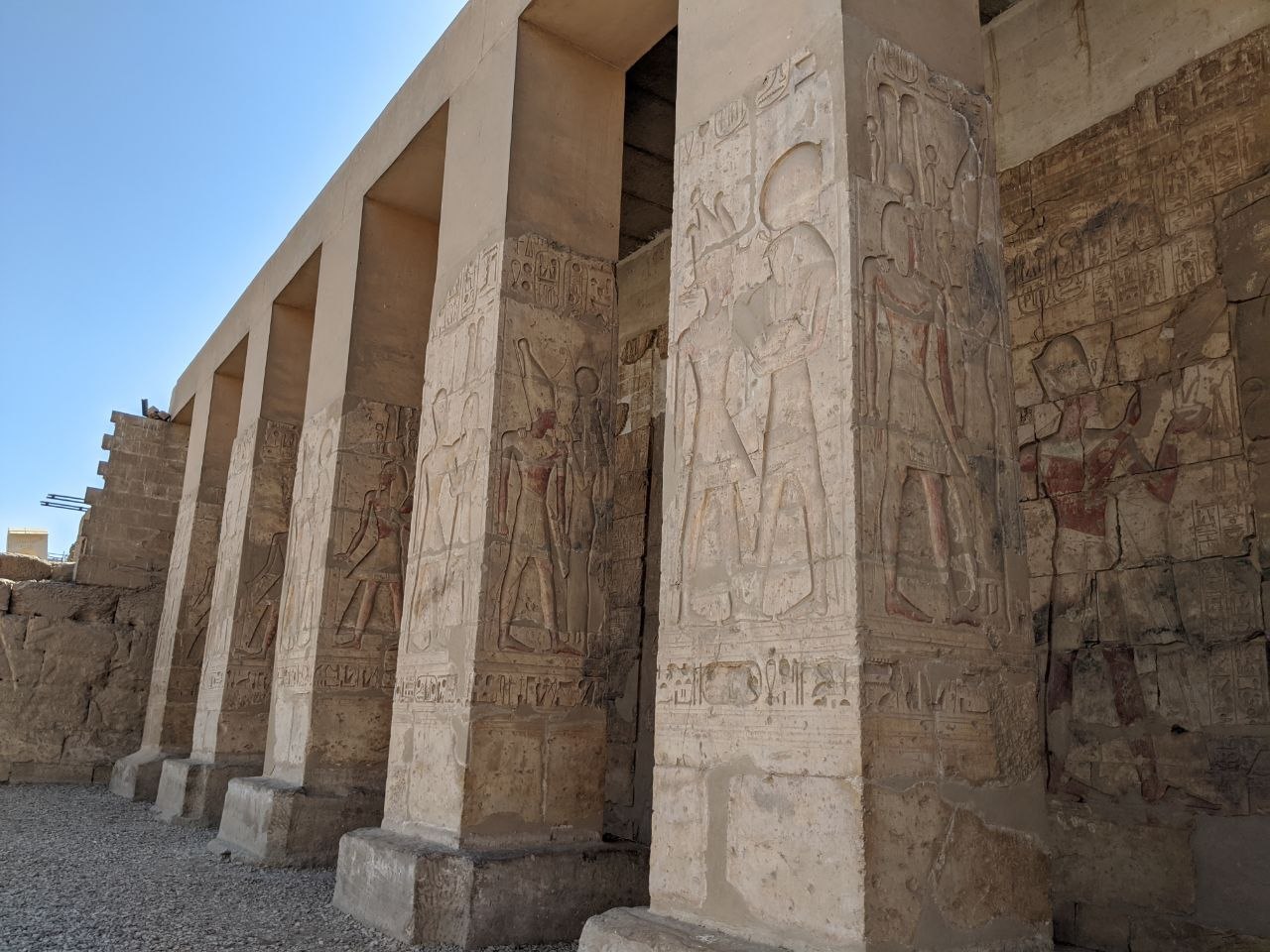
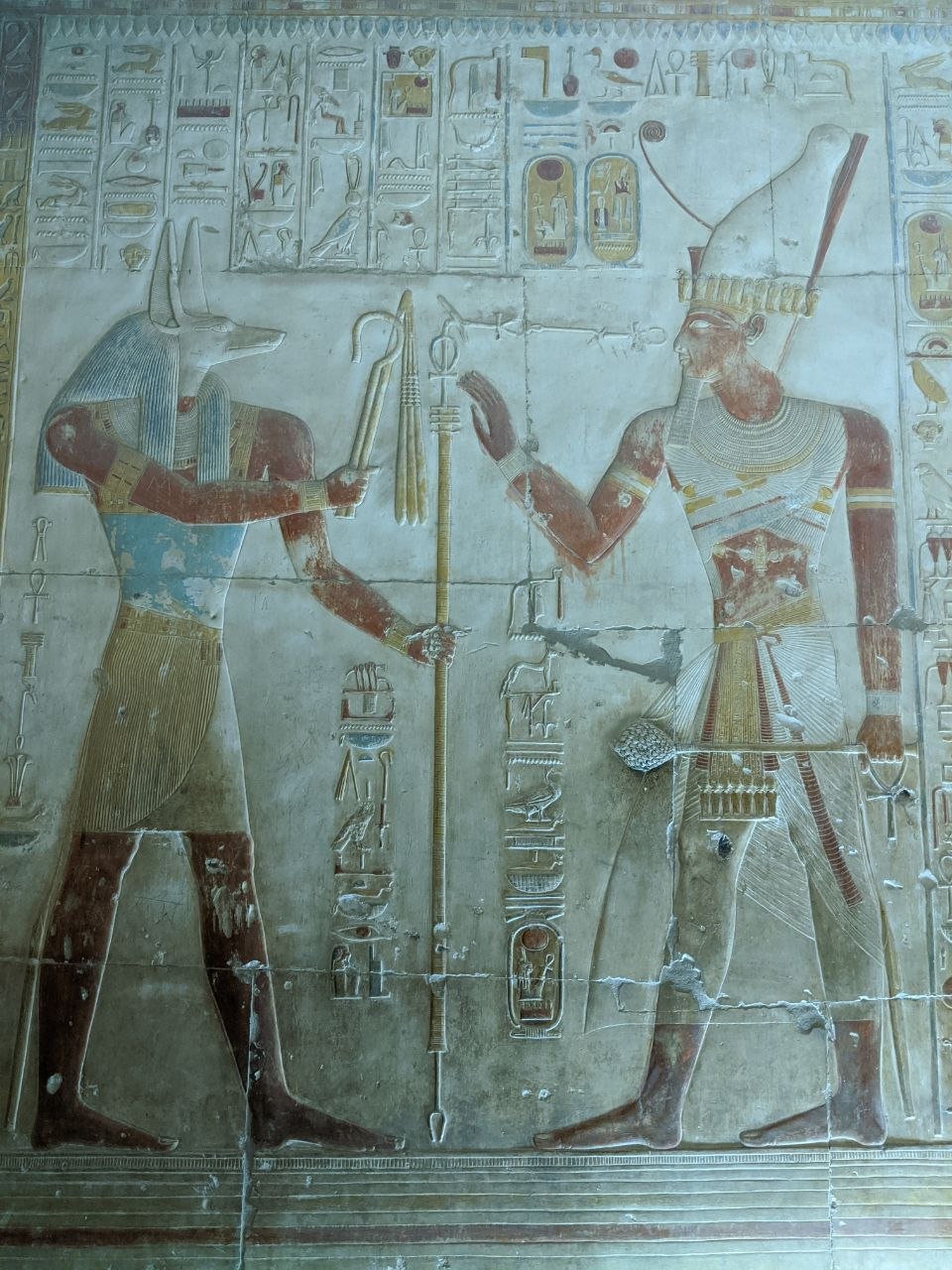
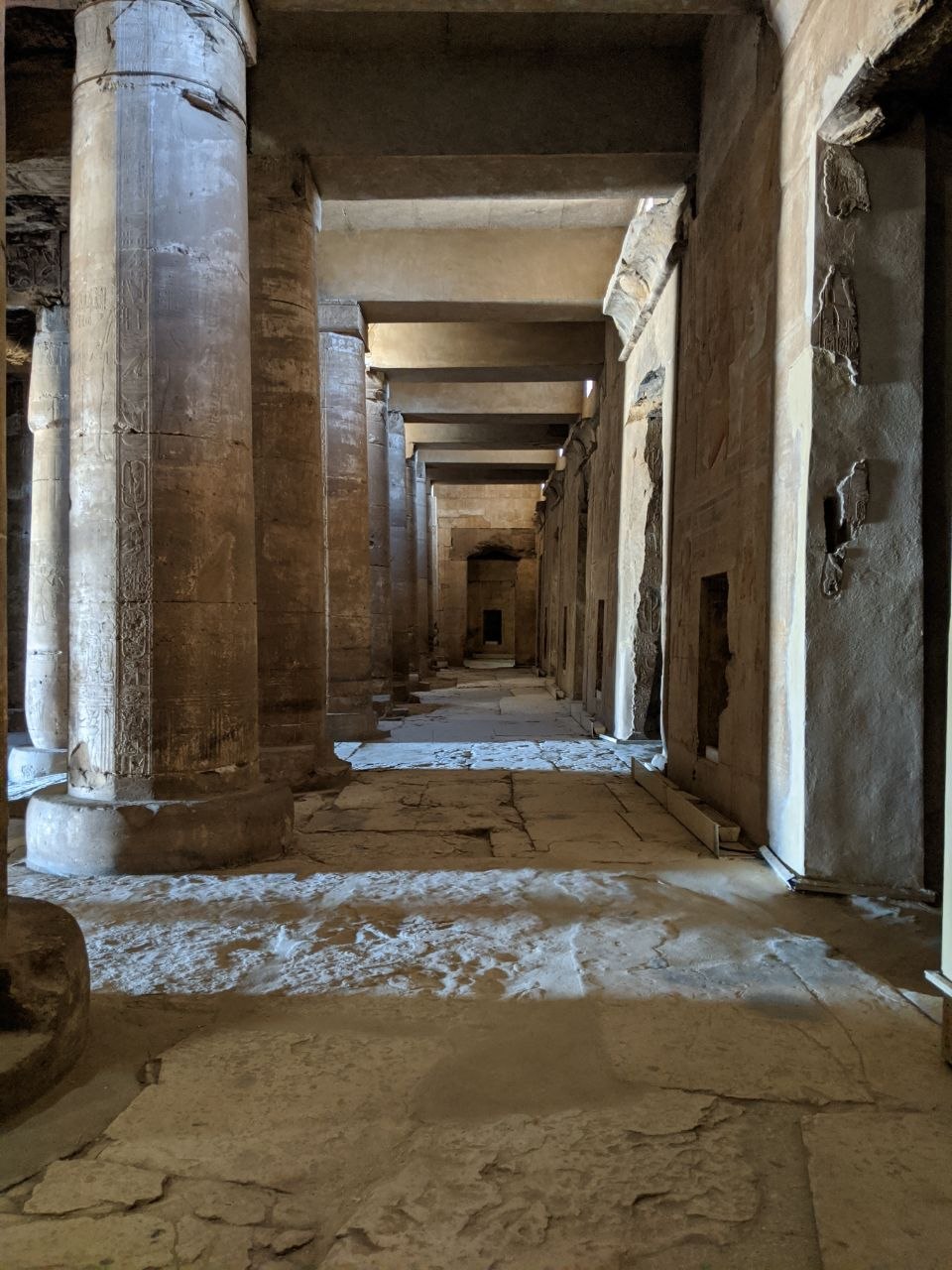
Abydos was one of the earliest centres of pharaonic power, with royal tombs from the First and Second Dynasties — including those of Egypt’s very first kings — buried in the desert cemetery of Umm el-Qa’ab to the west of the town. For most of Egyptian history, however, Abydos was most important as the principal cult site of Osiris, the god of the underworld, resurrection, and eternal life. According to religious tradition, the head of Osiris was buried at Abydos following his dismemberment by his brother Set, making the site a place of immense sanctity. Pilgrims from across Egypt sought to be buried near Abydos or to leave votive stelae on the processional route to the god’s tomb, and thousands of such monuments have been excavated from the site. The dominant monument at Abydos today is the Mortuary Temple of Seti I, built during the reign of the 19th Dynasty pharaoh Seti I (c. 1290–1279 BC) and completed by his son Ramesses II. The temple is distinctive for its unusual L-shaped plan — dictated by the presence of the Osireion, a symbolic tomb of Osiris directly behind it — and for the extraordinary quality of its painted bas-relief decoration, which is among the finest surviving examples of New Kingdom temple art. Seven sanctuaries dedicated to the deified Seti I and to the gods Ptah, Re-Horakhty, Amun-Ra, Osiris, Isis, and Horus are arranged side by side across the rear of the building, each retaining vivid polychrome painted relief of exceptional preservation. The Abydos King List, inscribed on one of the temple’s interior walls, records the cartouches of 76 kings from Menes to Seti I in an unbroken sequence — one of the most important historical documents of ancient Egypt.
The Temple of Hathor at Dendera
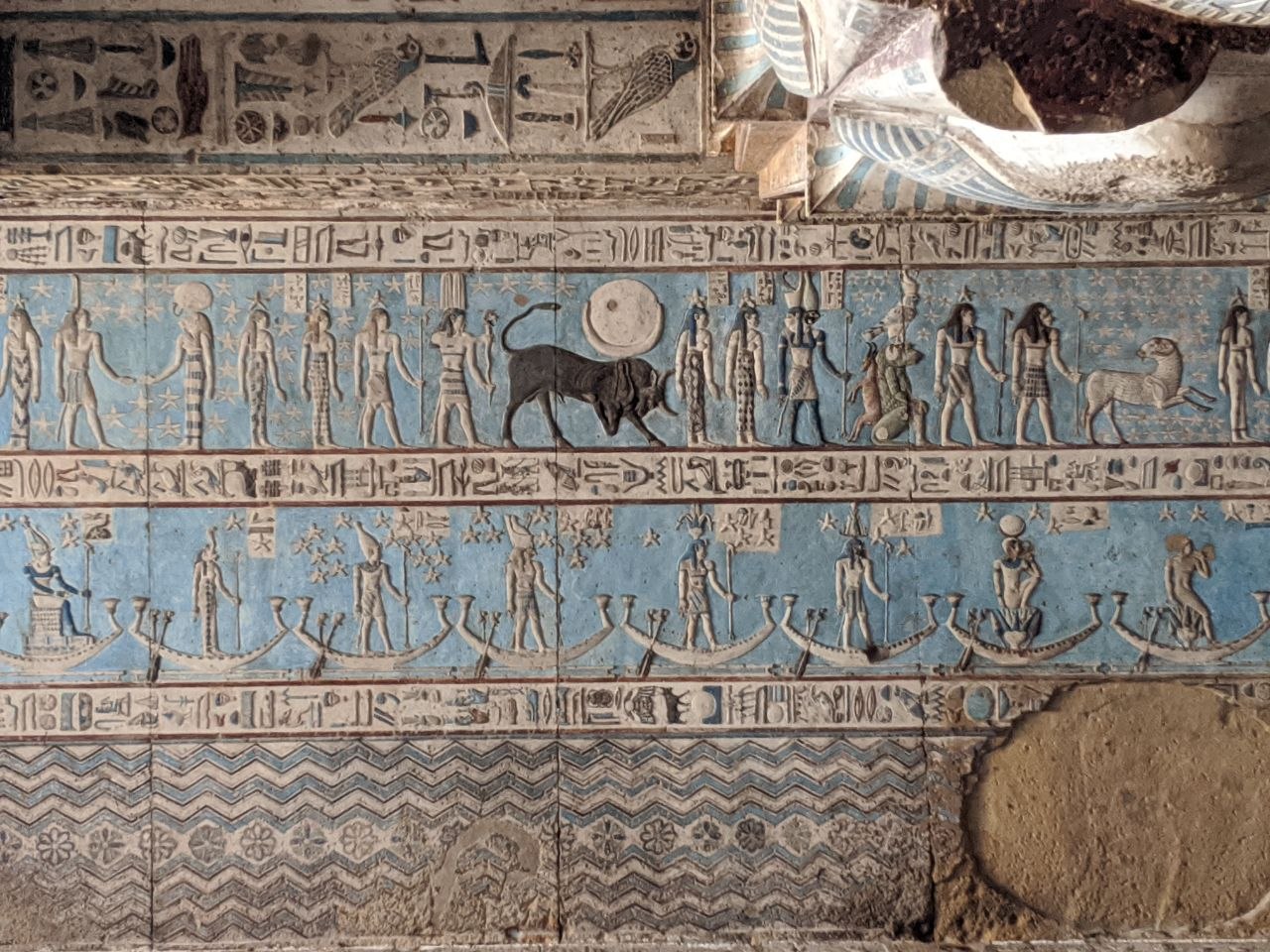
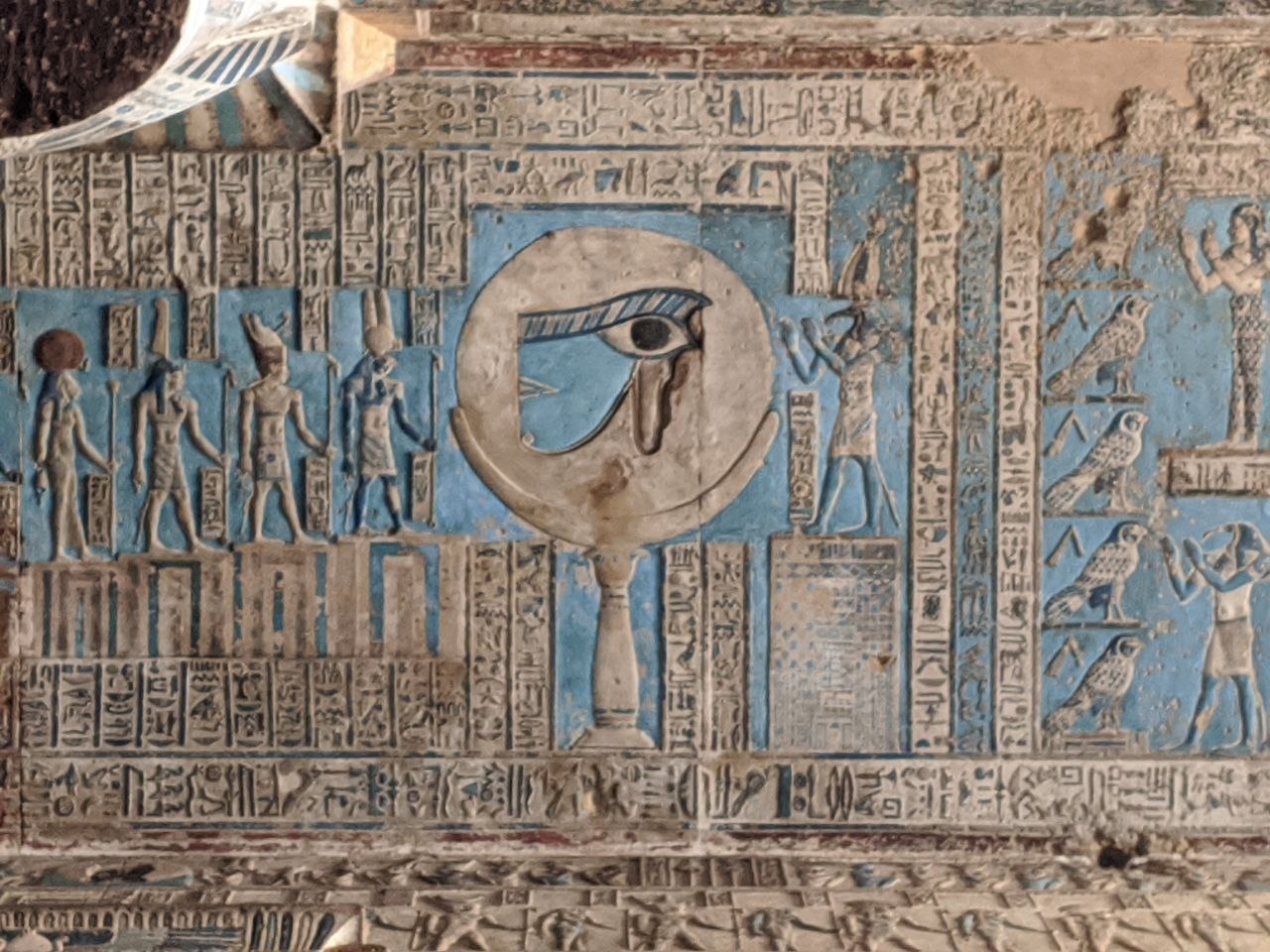
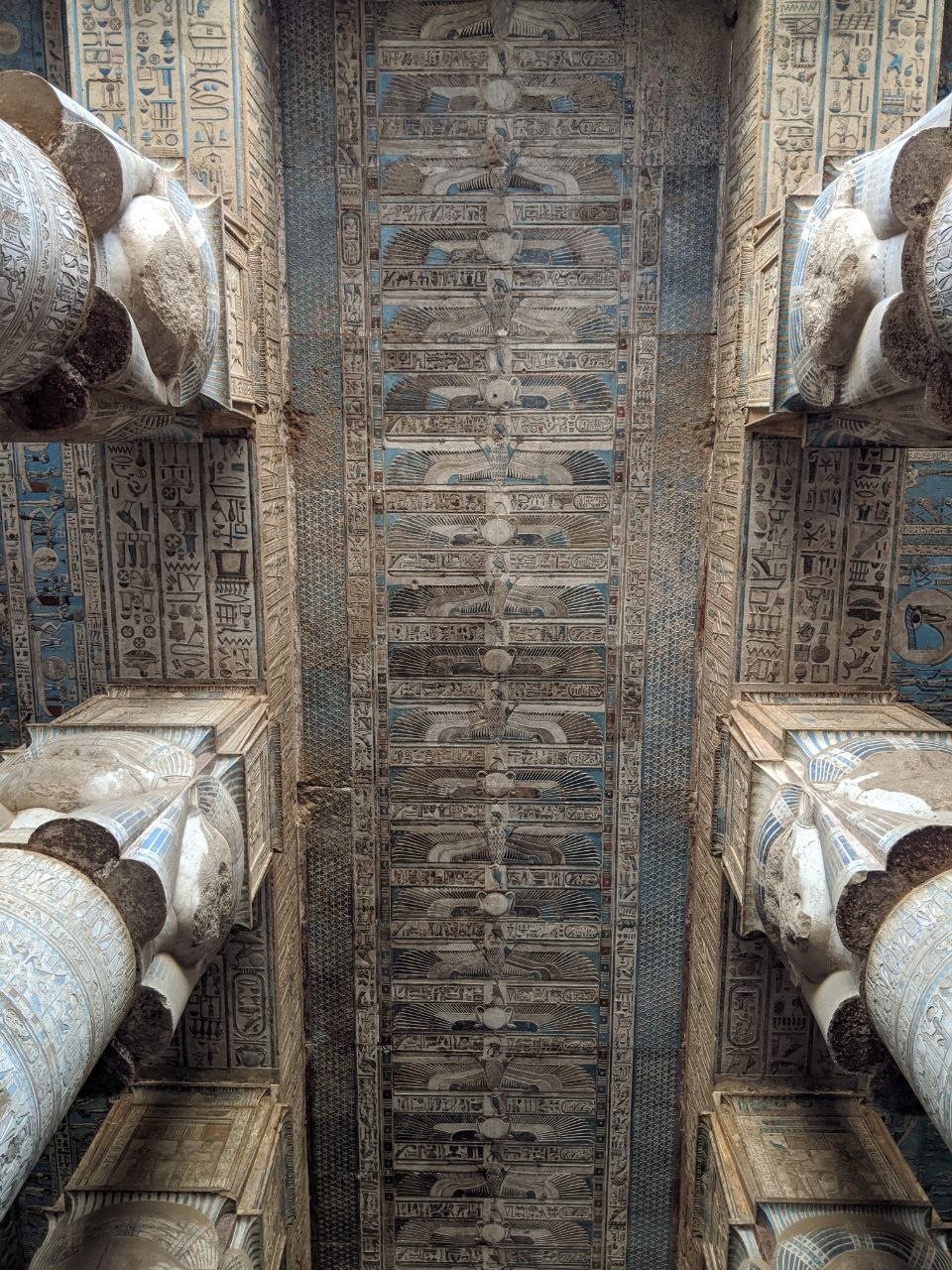
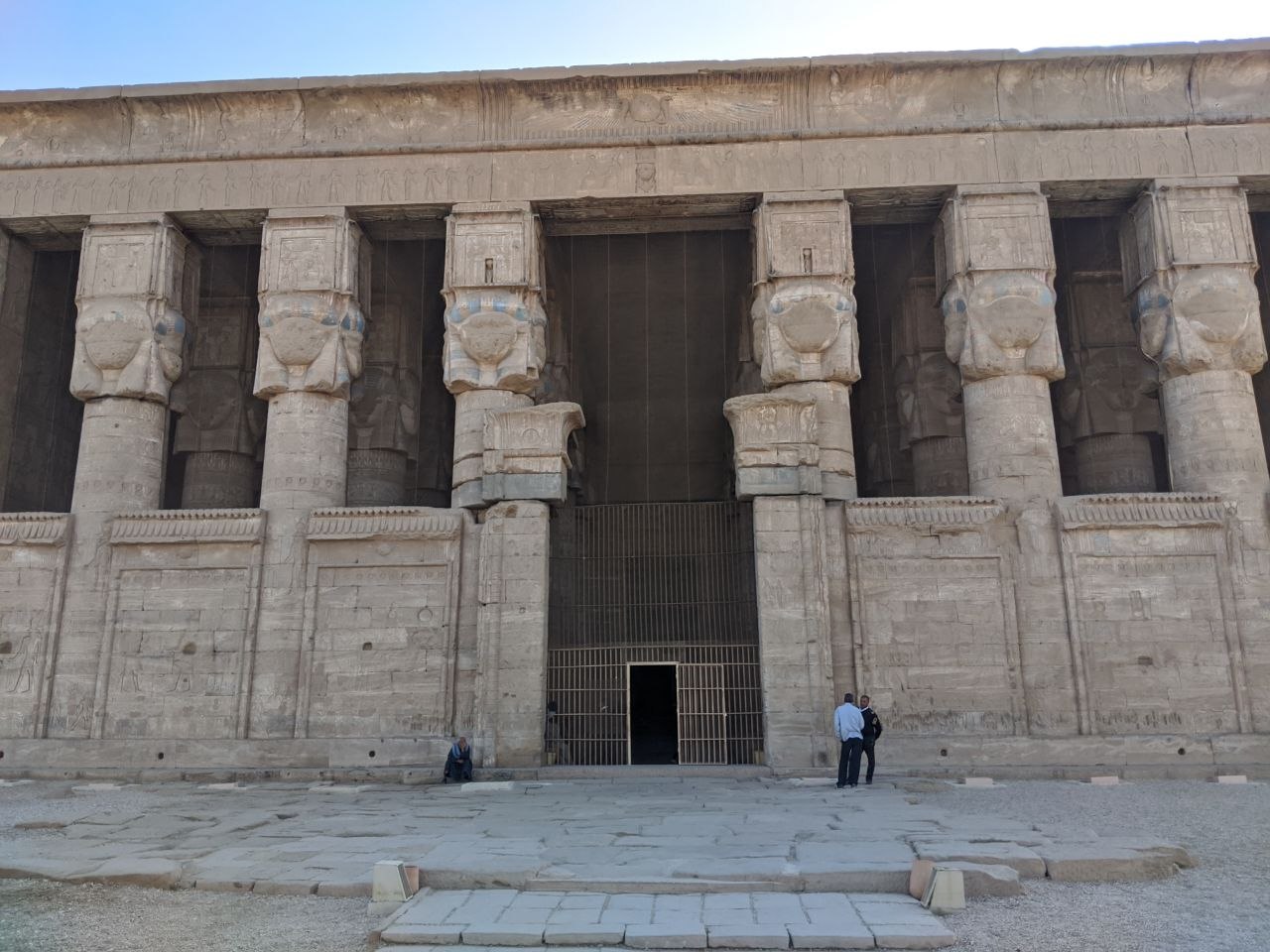
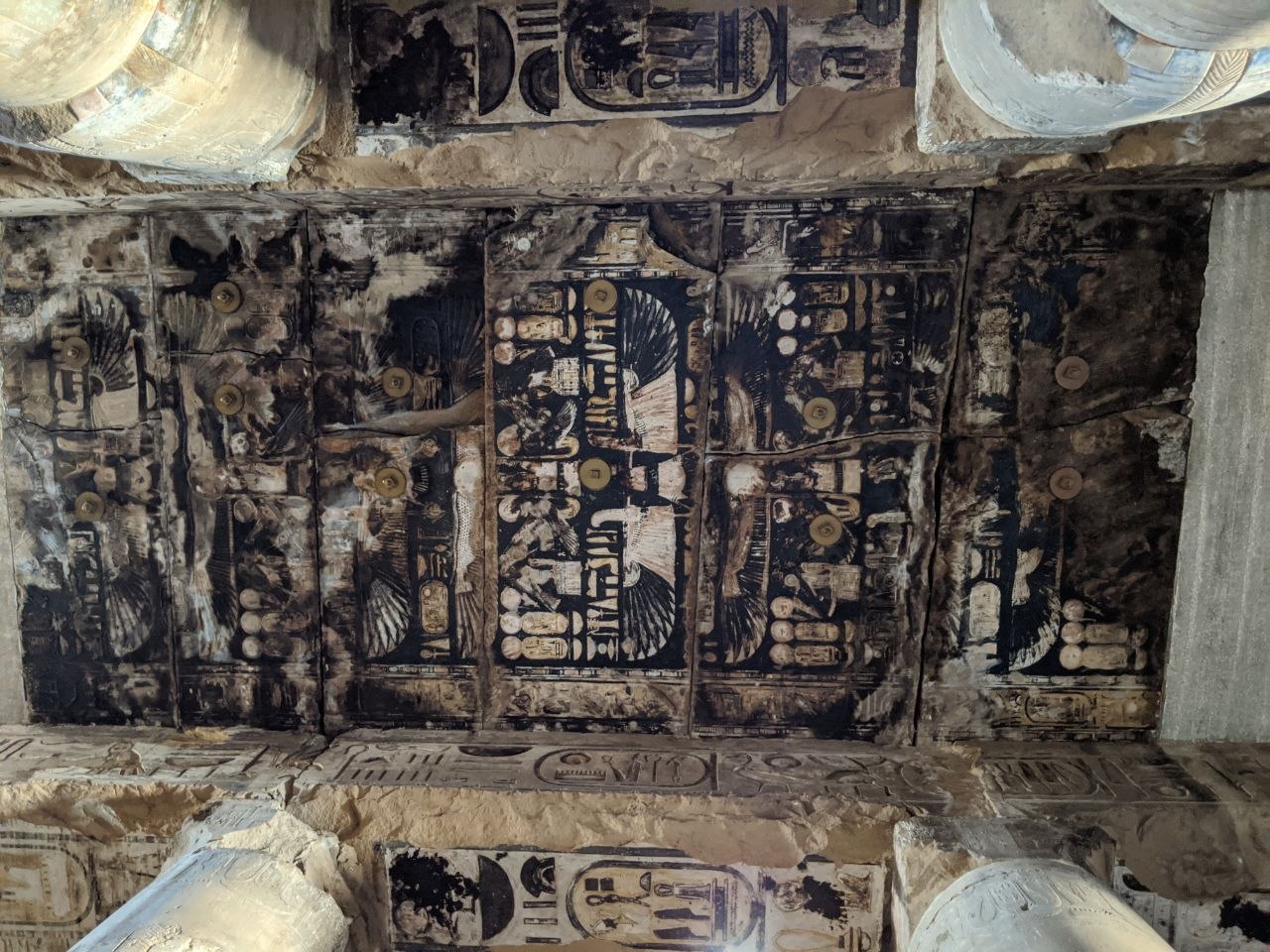
The Temple of Hathor at Dendera is one of the best-preserved ancient Egyptian temple complexes in existence, built primarily during the late Ptolemaic period (c. 54–20 BC) on the foundations of much earlier sanctuaries stretching back to the Old Kingdom. Hathor — goddess of love, beauty, music, and joy — was the principal deity of Dendera, and her temple reflects the fully developed theological and architectural programme of the Ptolemaic period, when Greek rulers of Egypt commissioned temples in traditional Egyptian style as a demonstration of their legitimacy. The temple’s exterior facade is dominated by a monumental hypostyle hall whose six Hathor-headed columns — square pillars topped with the four-faced sistrum-shaped capital bearing the face of Hathor — still retain traces of the painted decoration that once covered every surface. The interior hypostyle hall beyond is a forest of 18 further Hathor columns, their ceiling painted with a deep blue astronomical composition depicting the sky goddess Nut, zodiac signs, and solar and lunar cycles. The rooftop of the temple is accessible via two spiral staircases and contains a series of small chapels used for New Year ceremonies, including the famous Dendera Zodiac — the original of which is now in the Louvre in Paris, replaced here by a cast.
The Dendera Zodiac & Astronomical Ceiling
The Dendera Zodiac is a bas-relief carving originally decorating the ceiling of one of the rooftop chapels of the Temple of Hathor, created around 50 BC during the reign of Cleopatra VII. It is the earliest known complete representation of the classical zodiac — depicting the twelve signs of the Babylonian zodiac alongside Egyptian astronomical figures, decans, and the five planets known to antiquity, all arranged in a circular composition around the north celestial pole. The original sandstone disc, measuring approximately 2.5 metres in diameter, was removed by French engineers in 1820 and transported to Paris, where it is now displayed in the Louvre. A plaster cast occupies the original ceiling position in the rooftop chapel. The main astronomical ceiling of the outer hypostyle hall below is equally remarkable — a vast painted composition covering the entire ceiling with a systematic representation of the Egyptian astronomical year, divided into two halves by a central band showing the twelve months, each populated with their associated deities and star groups.
Visiting Tips
Abydos and Dendera are most commonly combined into a single day trip from Luxor, though the total driving time — approximately 3 hours each way from Luxor to Abydos, with Dendera visited on the return — makes for a long day. Starting as early as possible is strongly recommended to avoid afternoon heat and to have adequate time at both sites. Abydos in particular receives relatively few tourists compared to the Luxor monuments, which makes it one of the most rewarding sites in Egypt to visit — the painted reliefs of Seti I’s temple can often be appreciated in near-total quiet. Dendera is more frequently visited, particularly by cruise passengers stopping en route between Luxor and Cairo, and can be busier in the mid-morning hours. Both sites have basic facilities near the entrance. A licensed guide or private driver familiar with the road between the two sites is the most practical arrangement for the day.
 Jumping Timezones
Leave a comment