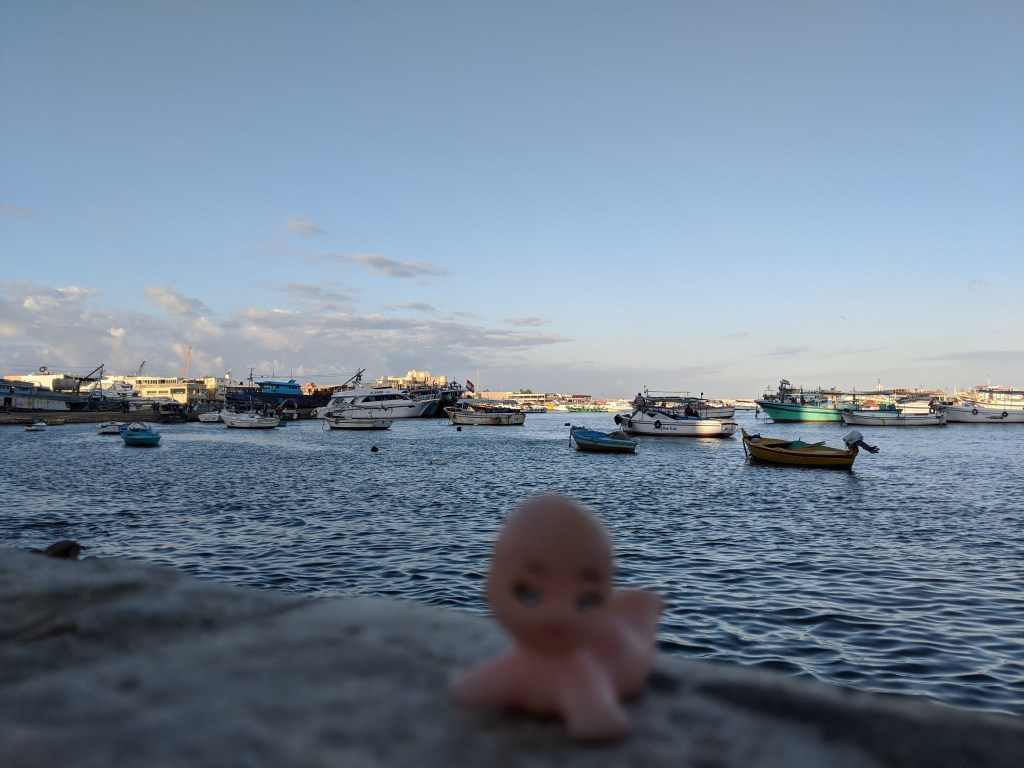
Alexandria is Egypt’s second-largest city and its primary Mediterranean port, situated on a narrow strip of land between the sea and Lake Mariout on the northwestern edge of the Nile Delta. Founded by Alexander the Great in 331 BC, the city served for three centuries as the capital of Ptolemaic Egypt and one of the greatest centres of learning, commerce, and culture in the ancient world. Today it is a city of layered histories — Hellenistic, Roman, early Christian, Arab, Ottoman, and colonial — with monuments ranging from underground Roman-era tombs to a landmark 21st-century library built on the site of the ancient world’s most celebrated institution of knowledge.
History & Foundation
Alexander the Great chose the site for his new city with characteristic strategic precision: a natural harbour on the Mediterranean coast, a causeway connecting the mainland to the island of Pharos, and proximity to the Nile without the flooding risks of the Delta. After Alexander’s death, his general Ptolemy I Soter claimed Egypt and made Alexandria the capital of his dynasty. Under the Ptolemies, Alexandria became the intellectual capital of the Hellenistic world — home to the Great Library, the Mouseion (an ancient research institution), the Pharos Lighthouse (one of the Seven Wonders of the Ancient World), and scholars including Euclid, Eratosthenes, and Archimedes. The city passed to Roman control in 30 BC following the defeat of Cleopatra VII and Mark Antony. It remained a major Roman city for centuries before the Arab conquest of 641 AD shifted Egypt’s capital to Fustat, near present-day Cairo, beginning Alexandria’s long decline from its ancient prominence.
Bibliotheca Alexandrina
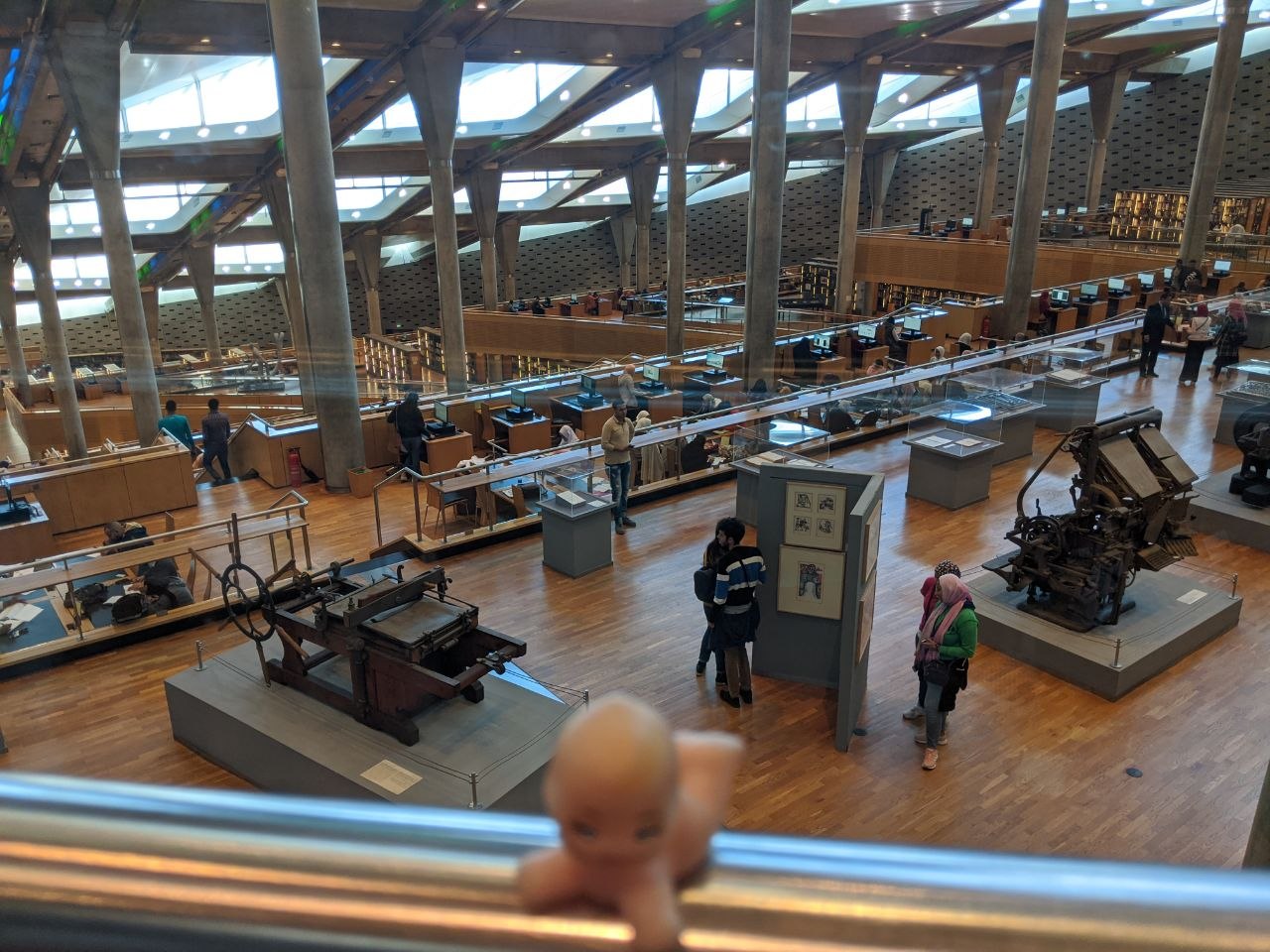
The Bibliotheca Alexandrina opened in 2002 as a cultural institution built near the site of the ancient Great Library of Alexandria, which was one of the largest and most significant libraries of the ancient world before its destruction. The modern library was a joint project between the Egyptian government and UNESCO, designed by the Norwegian architectural firm Snøhetta. Its most distinctive feature is the main reading room — a vast tilted disc of reinforced concrete and glass, its roof a cascade of skylights that flood the interior with natural light across eleven cascading floor levels. The exterior wall of the building is clad in Aswan granite carved with letters and characters from 120 different scripts from around the world. The complex houses multiple specialised libraries, four museums, a planetarium, and a conference centre. The main reading room can accommodate up to 2,000 readers simultaneously and holds several million volumes.
Pompey’s Pillar & the Serapeum
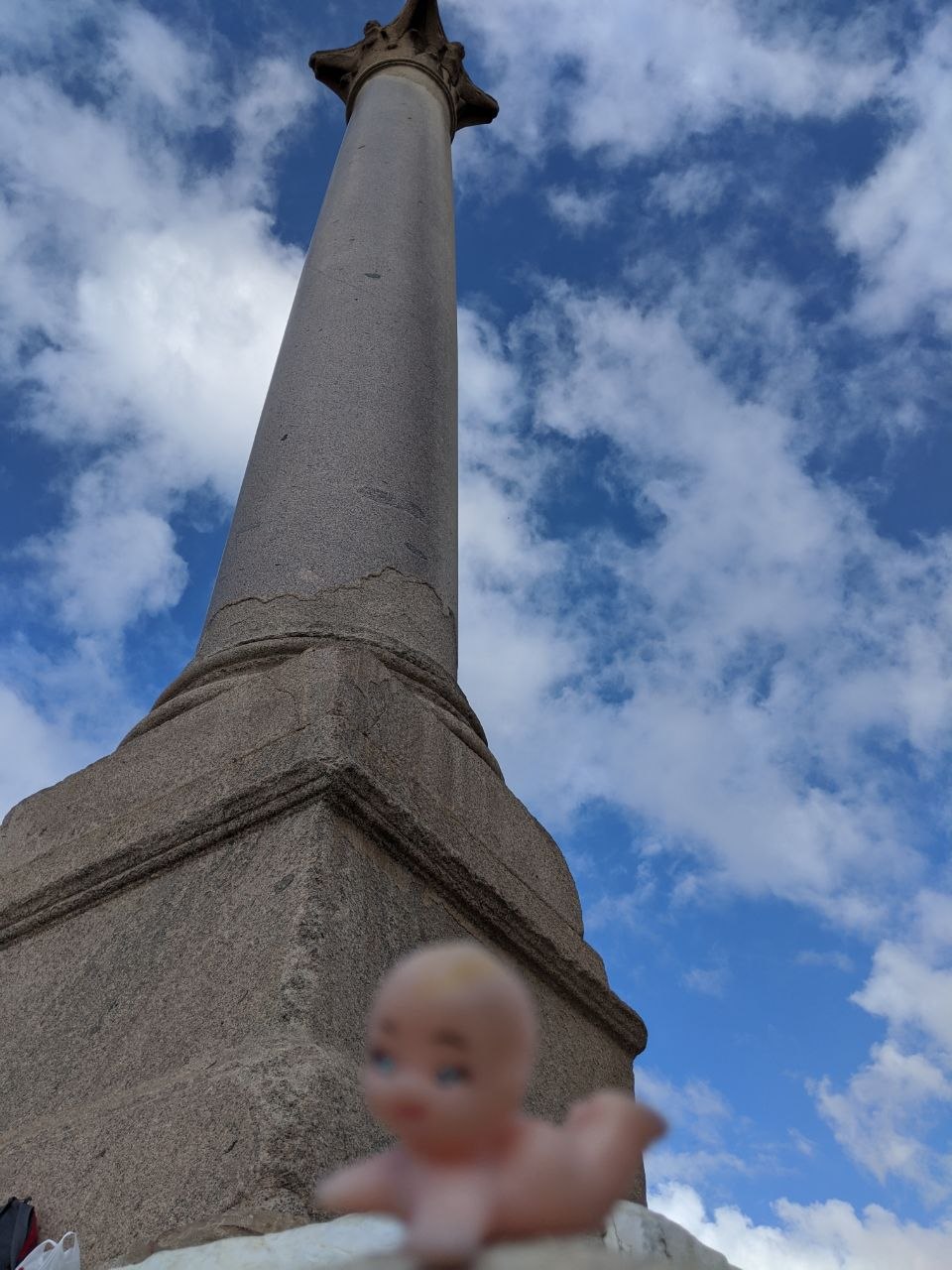
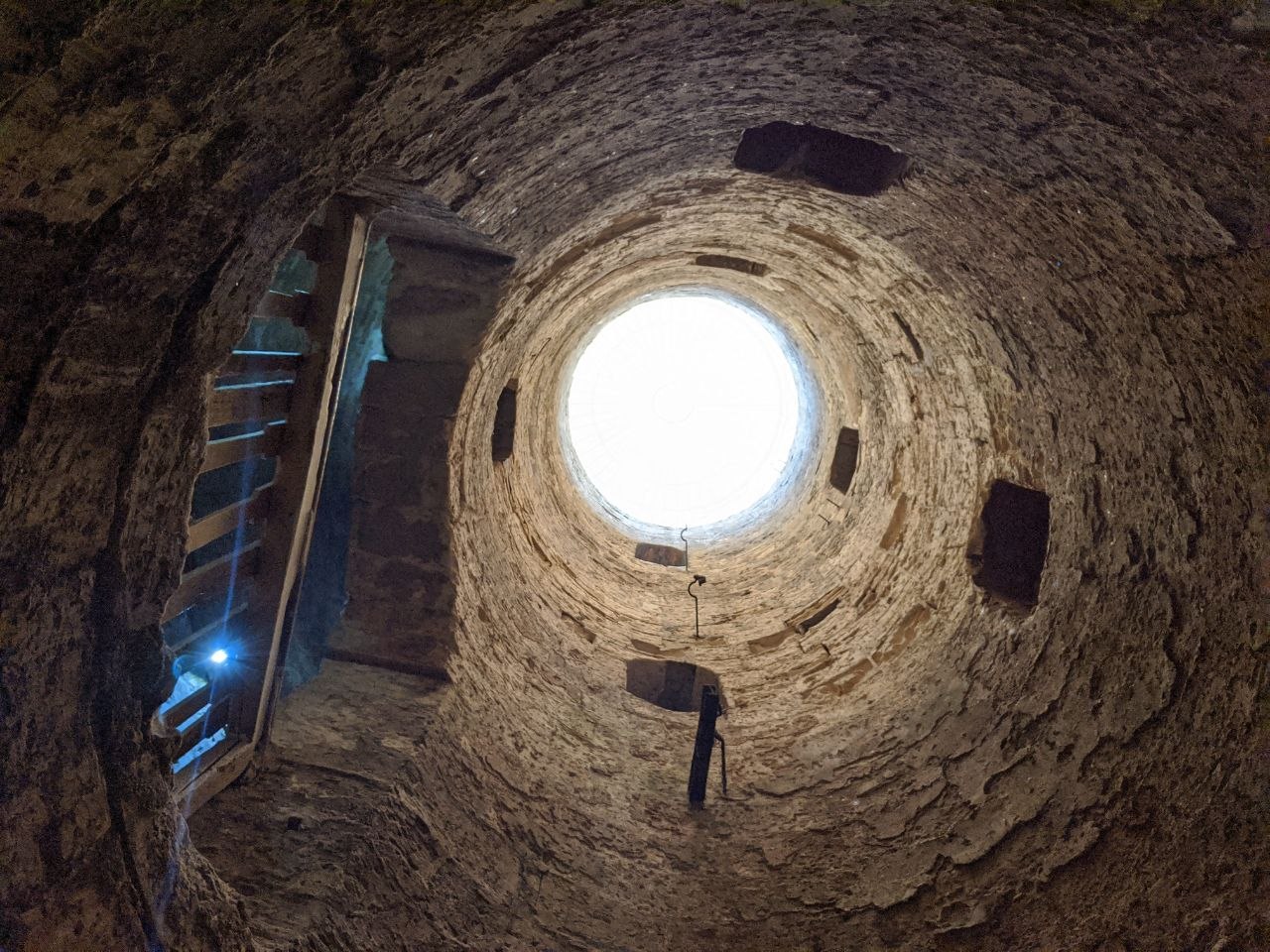
Pompey’s Pillar is the largest ancient monolith outside of Rome and Constantinople — a freestanding red Aswan granite column rising approximately 27 metres from a low hill in the Karmouz district of Alexandria. Despite its name, the column has no connection to the Roman general Pompey; it was erected in 297 AD in honour of the Emperor Diocletian, who suppressed a revolt in Alexandria and provided grain relief to the population. The column stands on the site of the ancient Serapeum — a temple complex dedicated to the Greco-Egyptian god Serapis, one of the greatest religious sanctuaries of the ancient Mediterranean world. The Serapeum was destroyed in 391 AD on the orders of the Bishop Theophilus during the Christianisation of the Roman Empire. Beneath the temple complex, a network of underground cisterns and tunnels cut from the living rock supplied the site with water from the Nile. These subterranean passages — which include a cylindrical shaft open to the sky — are accessible from the archaeological site.
Catacombs of Kom el Shoqafa
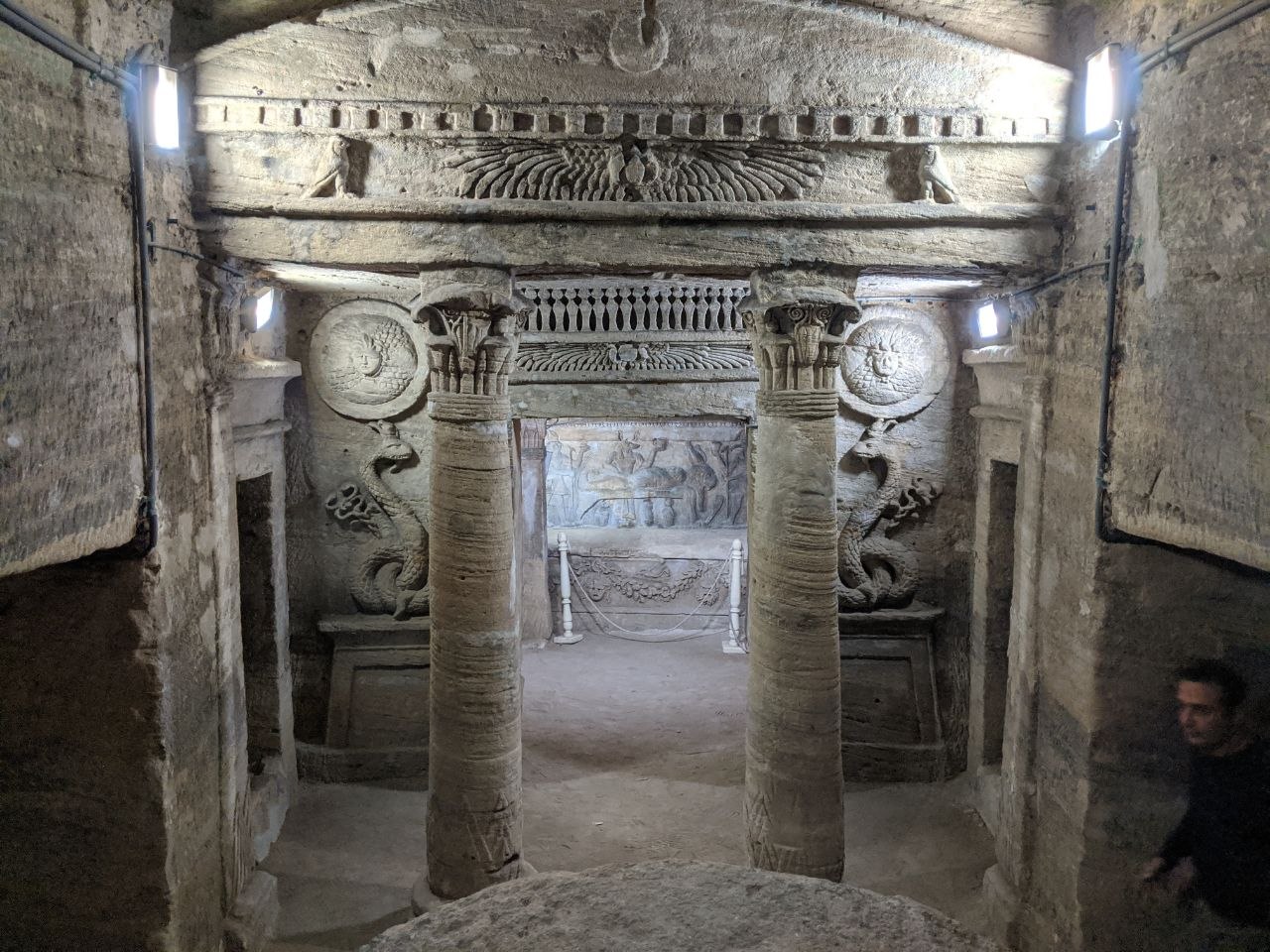
The Catacombs of Kom el Shoqafa are the largest known Roman-era funerary complex in Egypt and one of the Seven Wonders of the Middle Ages. Discovered accidentally in 1900 when a donkey fell through a shaft into the underground chambers, the catacombs date to the 2nd century AD and were used for burials through at least the 4th century. They descend three levels into the bedrock beneath the Karmouz district, accessed by a spiral staircase cut into the rock. The decorative programme of the catacombs is a remarkable synthesis of Egyptian and Greco-Roman artistic traditions: the main burial chamber features carved columns with Corinthian capitals entwined by serpents, an Egyptian-style winged sun disc above the entrance lintel, and relief panels depicting Egyptian funerary deities rendered in a hybrid Greco-Roman sculptural style. Loculi — rectangular niches cut into the rock walls — provided individual burial spaces for the deceased. The central hall, known as the Hall of Caracalla, contains the bones of horses as well as humans, believed to relate to a massacre of Alexandrian youth ordered by Emperor Caracalla in 215 AD.
Visiting Tips
Alexandria is approximately 220 kilometres northwest of Cairo and is most commonly reached by intercity train from Ramses Station — the journey takes around two hours on express services. The Bibliotheca Alexandrina is open to visitors daily except Fridays; admission covers the main reading room and the permanent exhibitions. Pompey’s Pillar and the Catacombs of Kom el Shoqafa are within walking distance of each other in the Karmouz district and are typically combined into a single half-day itinerary. The Corniche — Alexandria’s waterfront boulevard — stretches for approximately 20 kilometres along the Mediterranean and is best walked in the late afternoon when the light is flat and the sea breeze picks up. The city’s street food scene, particularly the seafood restaurants along the eastern harbour and the fuul and ta’meya stalls in the older districts, is a highlight of any visit. Winters are mild and the crowds are thin; summers are hot and humid.
 Jumping Timezones
Leave a comment