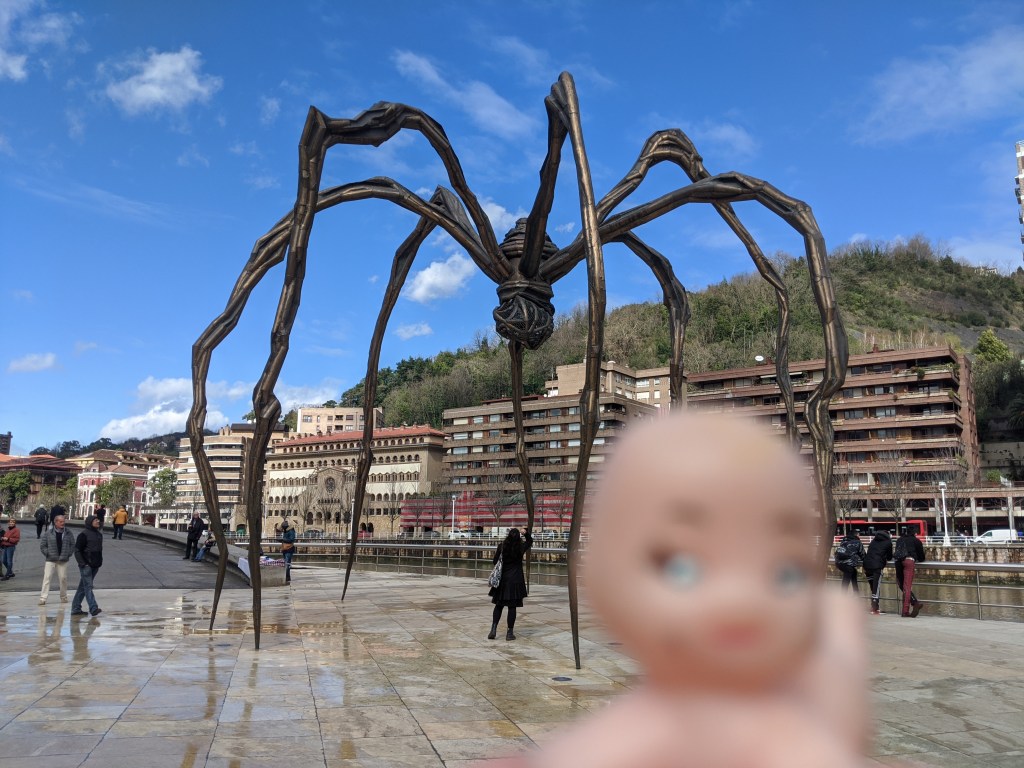
Bilbao (Bilbo in Basque) is the largest city in the Basque Country of northern Spain, with a metropolitan population of around one million. It sits inland from the Bay of Biscay along the Nervión estuary, historically one of the most important industrial and commercial ports in Spain. For much of the 20th century, Bilbao was a city defined by heavy industry — steel, shipbuilding, and manufacturing — but the collapse of that industrial base in the 1980s prompted one of the most celebrated urban regenerations in modern European history. The opening of the Guggenheim Museum Bilbao in 1997, designed by Frank Gehry, is widely credited as the catalyst for a transformation that has since made Bilbao a major destination for architecture, gastronomy, and culture. The city’s compact old town (Casco Viejo), its riverfront, and its neighbourhoods each carry distinct characters shaped by this layered industrial and post-industrial history.
Guggenheim Museum Bilbao
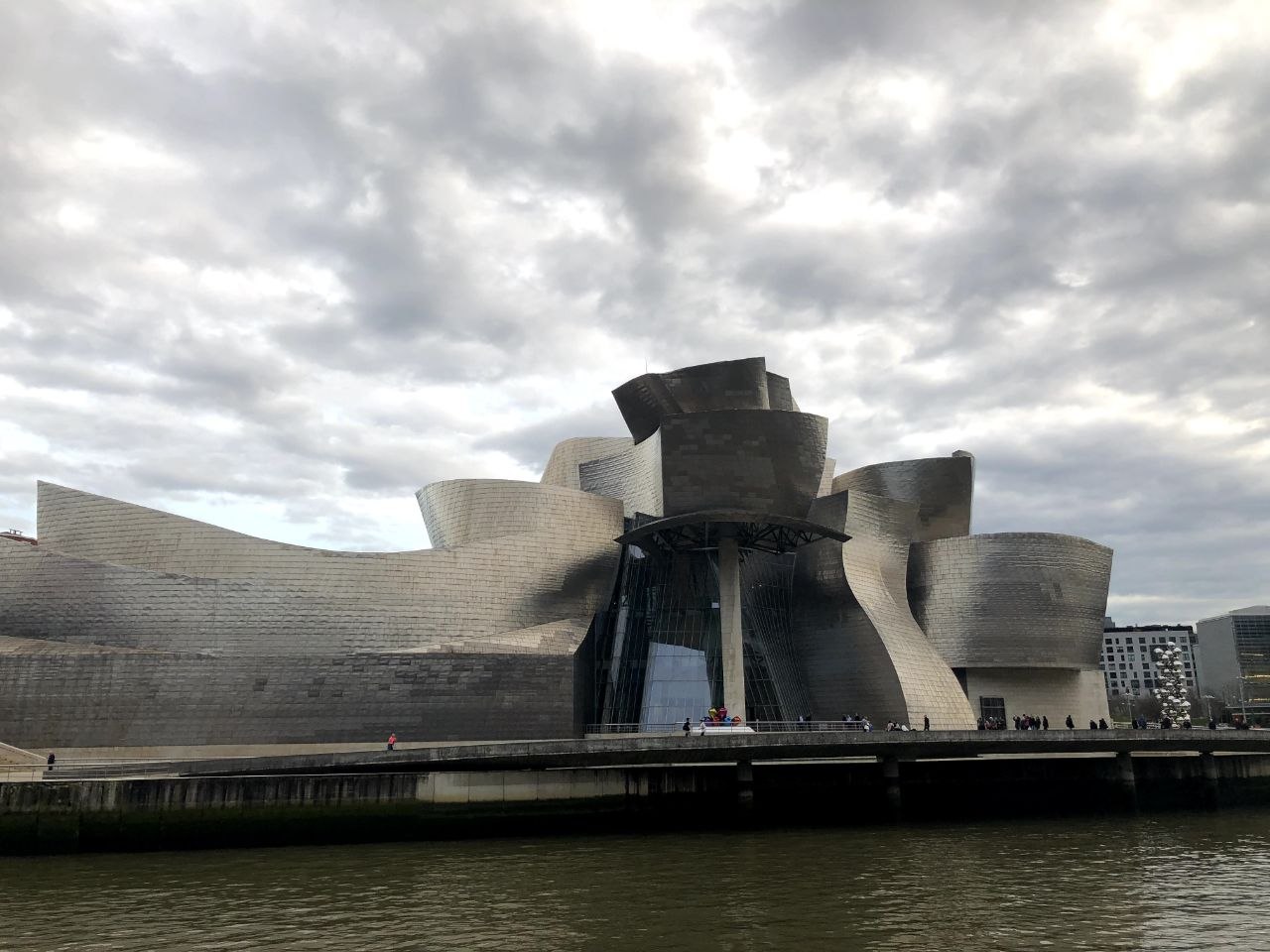
The Guggenheim Museum Bilbao, opened in October 1997, is one of the most significant works of architecture of the late 20th century and a defining landmark of contemporary museum design. Designed by Canadian-American architect Frank Gehry, the building occupies a prominent site on the south bank of the Nervión at the edge of the city centre, where the river bends beneath the La Salve bridge. The structure is clad almost entirely in thin titanium panels — approximately 33,000 of them — which shift in colour across the day from silver to gold depending on the angle of light. The building’s form is a composition of curved and angular volumes: interconnected blooms and towers that seem to grow organically from the riverbank. The exterior is best viewed from the opposite bank, or from the La Salve bridge above, where the full sculptural complexity of the mass can be appreciated against the sky. The museum’s permanent and temporary collections focus on modern and contemporary art at an international scale.
The Vizcaya Bridge
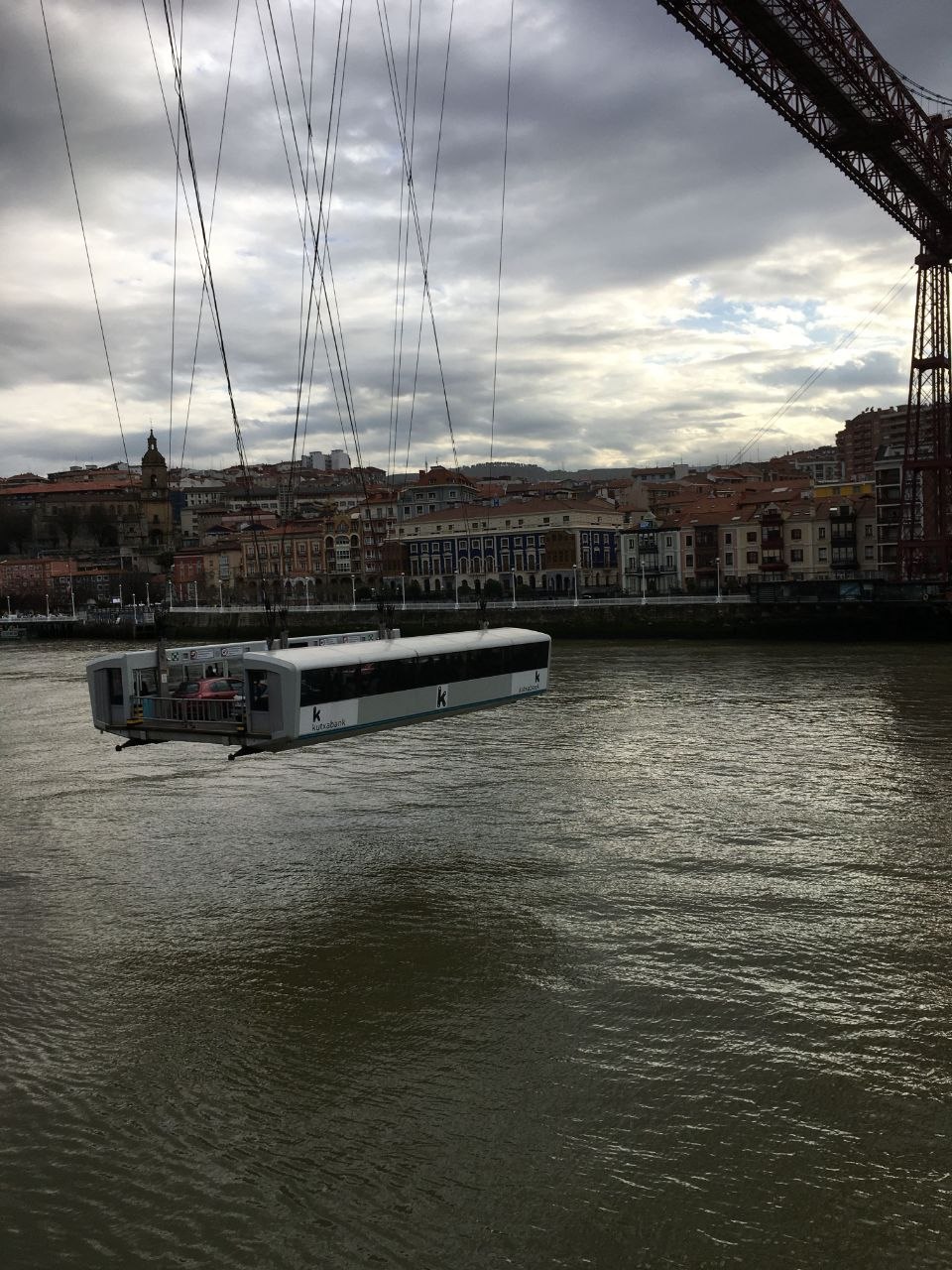
The Puente Colgante (Vizcaya Bridge) spans the mouth of the Nervión estuary between the towns of Portugalete and Getxo, approximately 12 kilometres downstream from central Bilbao. Built in 1893 to a design by Alberto de Palacio — a student of Gustave Eiffel — it is the oldest transporter bridge in the world still in operation and was designated a UNESCO World Heritage Site in 2006. Rather than crossing the river at road level, the bridge carries a suspended gondola — a low platform hanging from the bridge’s upper structure by steel cables — which ferries passengers, bicycles, and vehicles across the estuary in a matter of minutes. The gondola is a remarkable piece of living industrial infrastructure: passengers board from a floating pontoon at water level and are carried across the 160-metre span while suspended above the tidal estuary. A walkway runs along the upper girders of the bridge for those who wish to cross on foot at height.
Estación de Abando
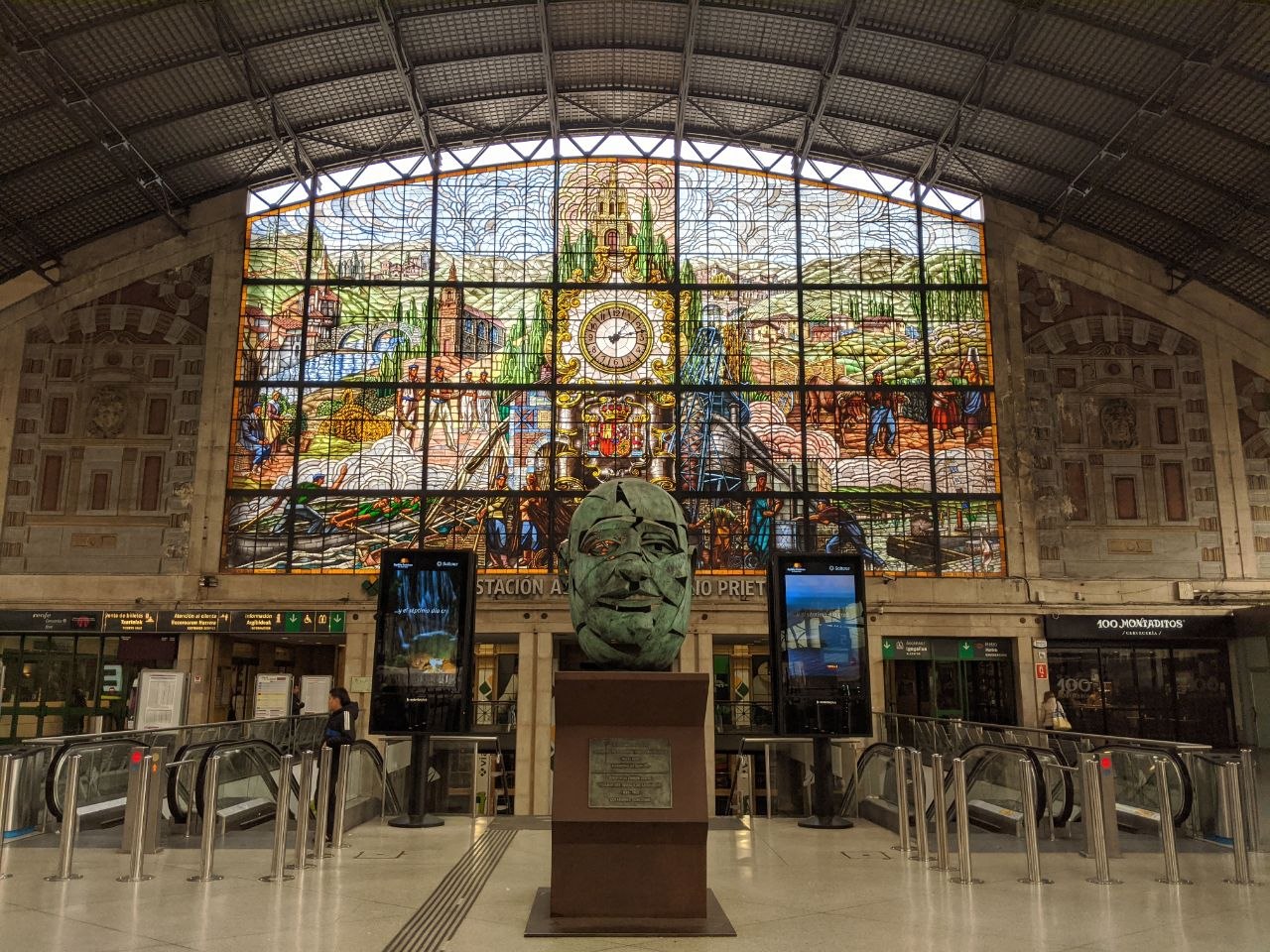
Bilbao’s Estación de Abando (officially Estación Abando Indalecio Prieto) is the city’s main railway terminus, a handsome Beaux-Arts structure completed in 1948 on the Plaza Circular at the edge of the Ensanche district. The station’s most remarkable feature is its enormous stained glass window, which fills the entire rear wall of the main concourse above the ticket barriers — a composition of extraordinary scale and complexity depicting scenes from Basque rural and industrial life: farmsteads, forests, coastal fishing, ironworks, and the Basque coat of arms at its centre, all rendered in vivid greens, blues, ambers, and reds. A large bronze sculptural head on a plinth stands at the centre of the concourse beneath the window. The overall effect — the sweep of the arched iron-and-glass roof, the monumental stained glass, the sculptural focal point — makes Abando one of the most visually impressive railway stations in Spain.
Visiting Tips
Bilbao is served by Bilbao Airport (BIO), approximately 12 kilometres from the city centre, with connections to major Spanish and European cities. The city is also reachable by train from Madrid (approximately 5 hours) and San Sebastián (approximately 1 hour). The Guggenheim Museum is open Tuesday to Sunday; tickets should be purchased in advance online, particularly in peak season. The Casco Viejo (Old Town) is easily walkable and contains the city’s highest concentration of pintxos bars — the evening txikiteo (bar-hopping) culture here rivals that of San Sebastián. The Vizcaya Bridge is reachable by metro (Portugalete station on Line 2) and operates throughout the day; the gondola crossing takes just a few minutes and costs a small fare. Bilbao’s metro system, designed by Norman Foster, is efficient and covers the main areas of the city and its suburbs along the Nervión estuary.
 Jumping Timezones
Leave a comment