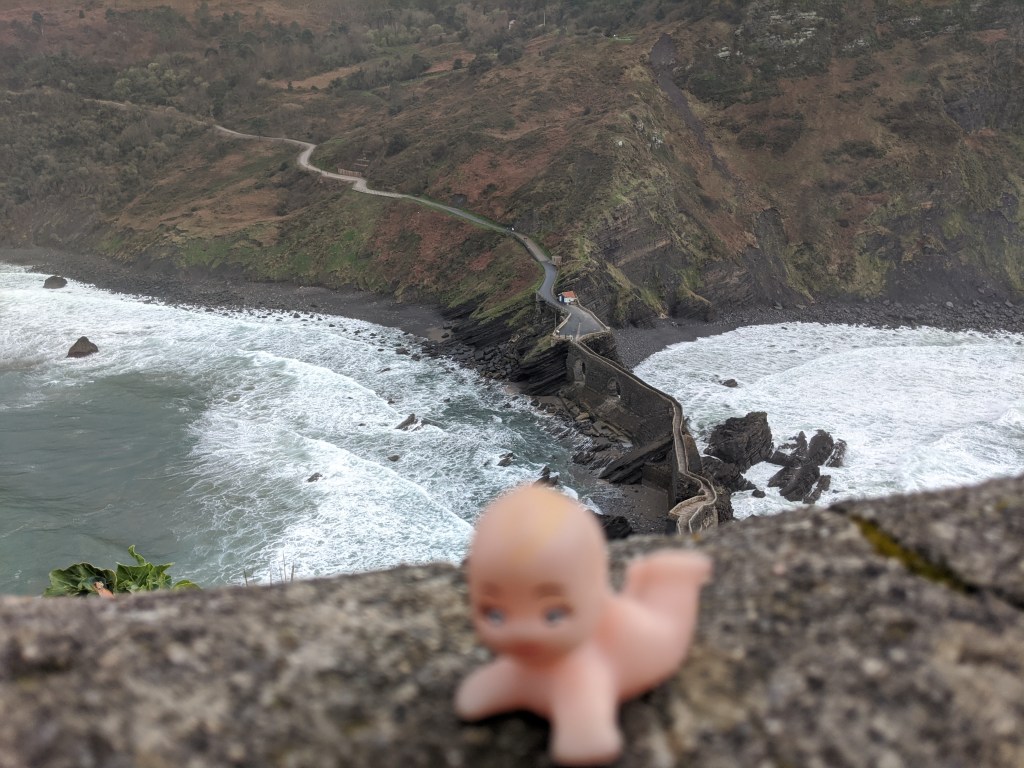
San Juan de Gaztelugatxe is a small rocky islet on the Basque Coast of northern Spain, connected to the mainland by a narrow man-made causeway and a stone staircase of 241 steps. It sits within the municipality of Bermeo, in the province of Biscay, approximately 35 kilometres from Bilbao. The islet is dominated by a Romanesque hermitage dedicated to Saint John the Baptist, whose origins date to at least the 10th century, and possibly earlier — historical records link the site to the Knights Templar and to pilgrimages made by figures including King Ferdinand the Catholic. The Basque Coast surrounding Gaztelugatxe was designated a UNESCO Global Geopark in 2015, recognised for its exceptional geological formations and coastal landscape. The site became internationally known following its use as a filming location for the television series Game of Thrones, where it appeared as Dragonstone.
The Causeway and Staircase
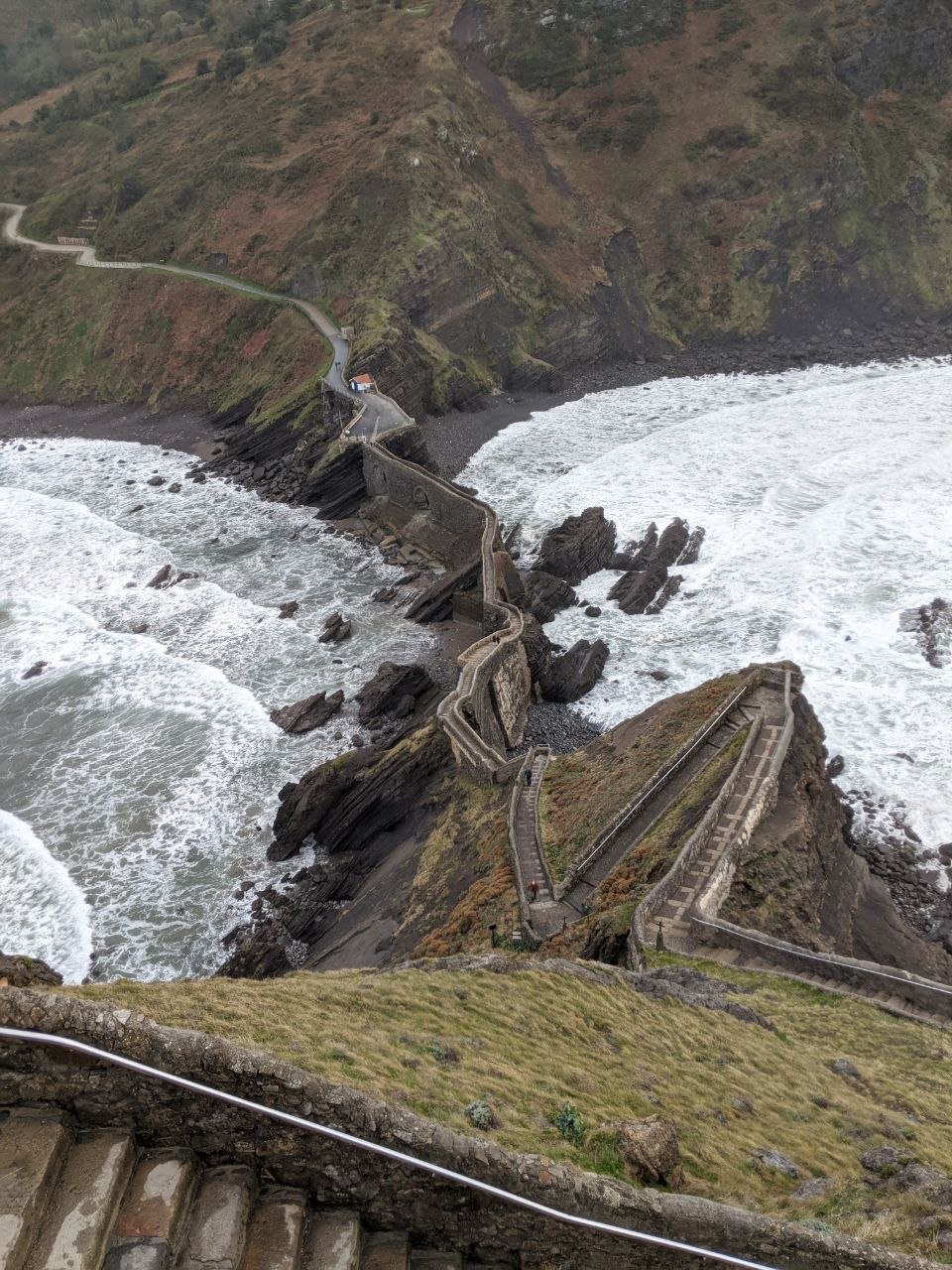
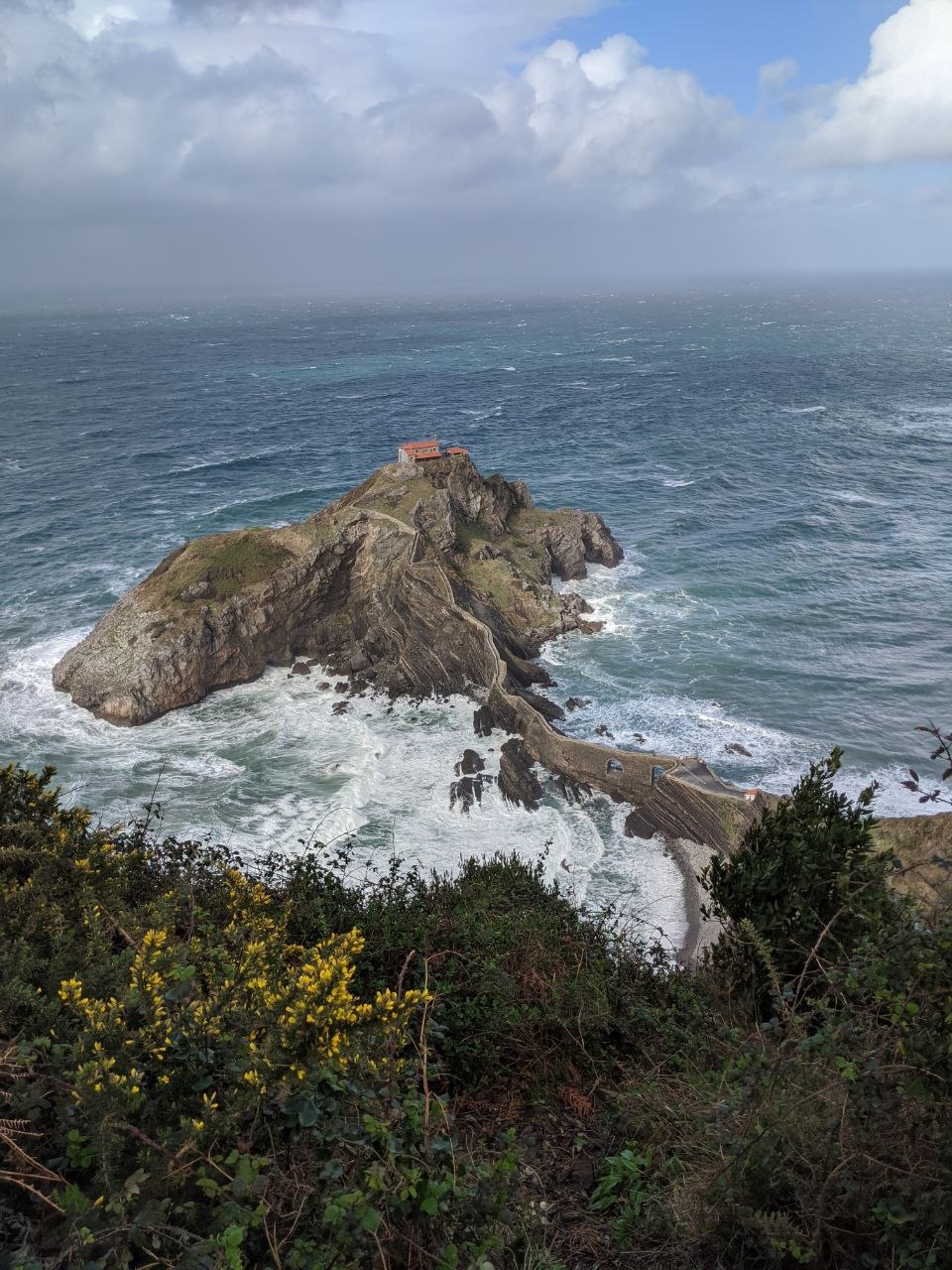
Access to the islet requires descending from the clifftop car park to the coast and then crossing the narrow stone causeway — a path built directly onto the rocky ridge connecting Gaztelugatxe to the mainland. The causeway winds along the ridge with the Bay of Biscay dropping steeply on both sides, exposed to the full force of Atlantic weather. On days of heavy swell, waves break directly over the lower sections of the path. The 241 stone steps that climb the islet itself are worn smooth by centuries of pilgrims and visitors, rising steeply in three distinct sections — each separated by a small landing — to the hermitage at the summit. The view looking back down the staircase toward the causeway and the coast from above is one of the most dramatic perspectives on the Basque coastline. The entire approach rewards both the effort and the weather — the site is particularly striking in winter and early spring, when storms drive heavy seas against the rocks.
The Hermitage
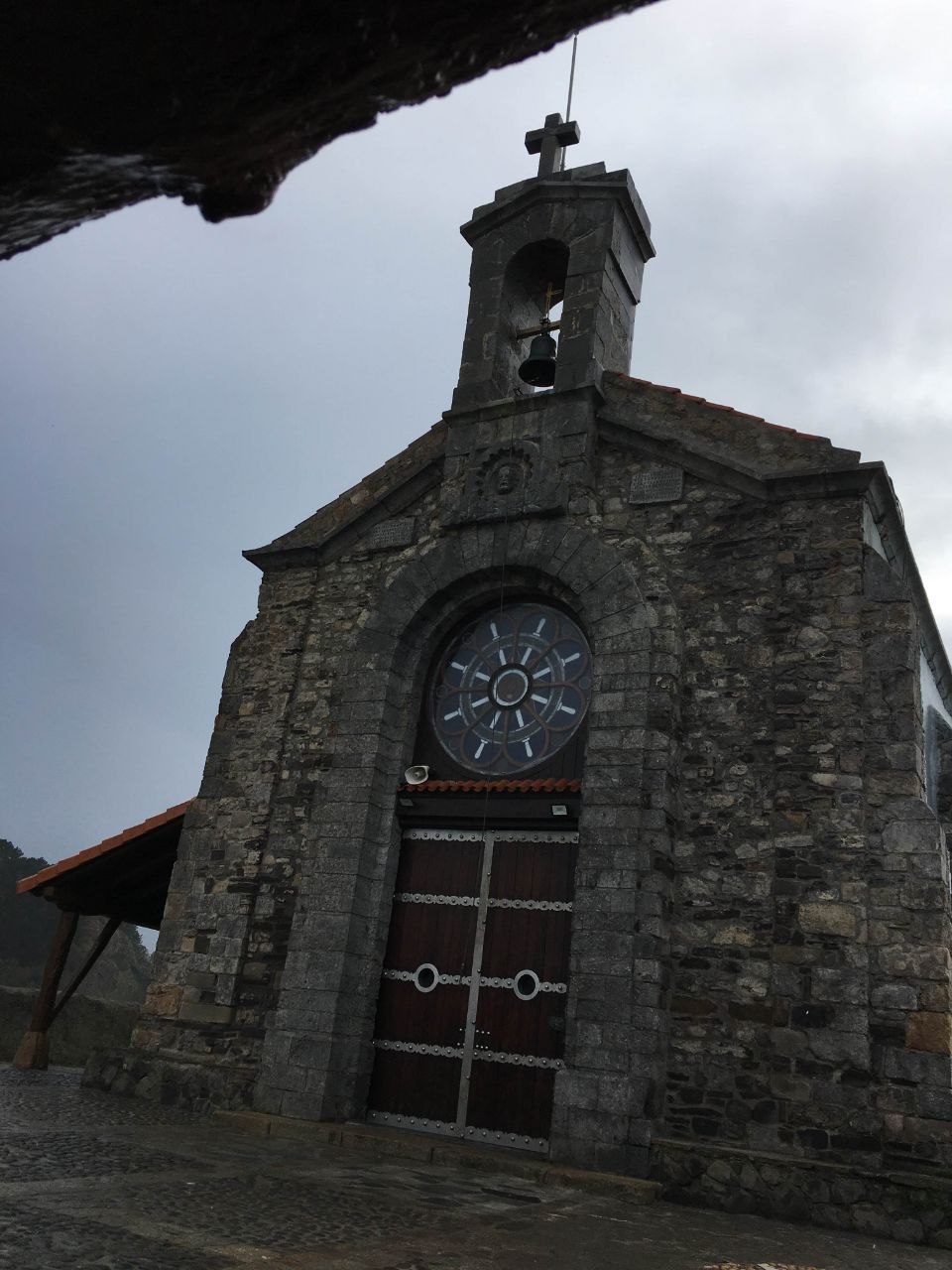
The Hermitage of San Juan de Gaztelugatxe occupies the highest point of the islet, its stone walls rising directly from the rock. The current structure dates largely from the 10th century, though it has been rebuilt and restored multiple times following fires, pirate raids, and storm damage over its long history. The facade is plain and austere — rough-cut stone blocks, a heavy wooden door with iron fittings, and a circular rose window set into the arch above the entrance. A small bell tower rises above the roofline, and it is traditional for visitors arriving at the summit to ring the bell three times and make a wish. The interior of the hermitage is modest, with whitewashed walls and simple religious furnishings. Pilgrims have made their way here on the feast days of Saint John the Baptist — most notably June 24 — for many centuries, and the site remains an active place of Basque religious tradition.
The Basque Coast
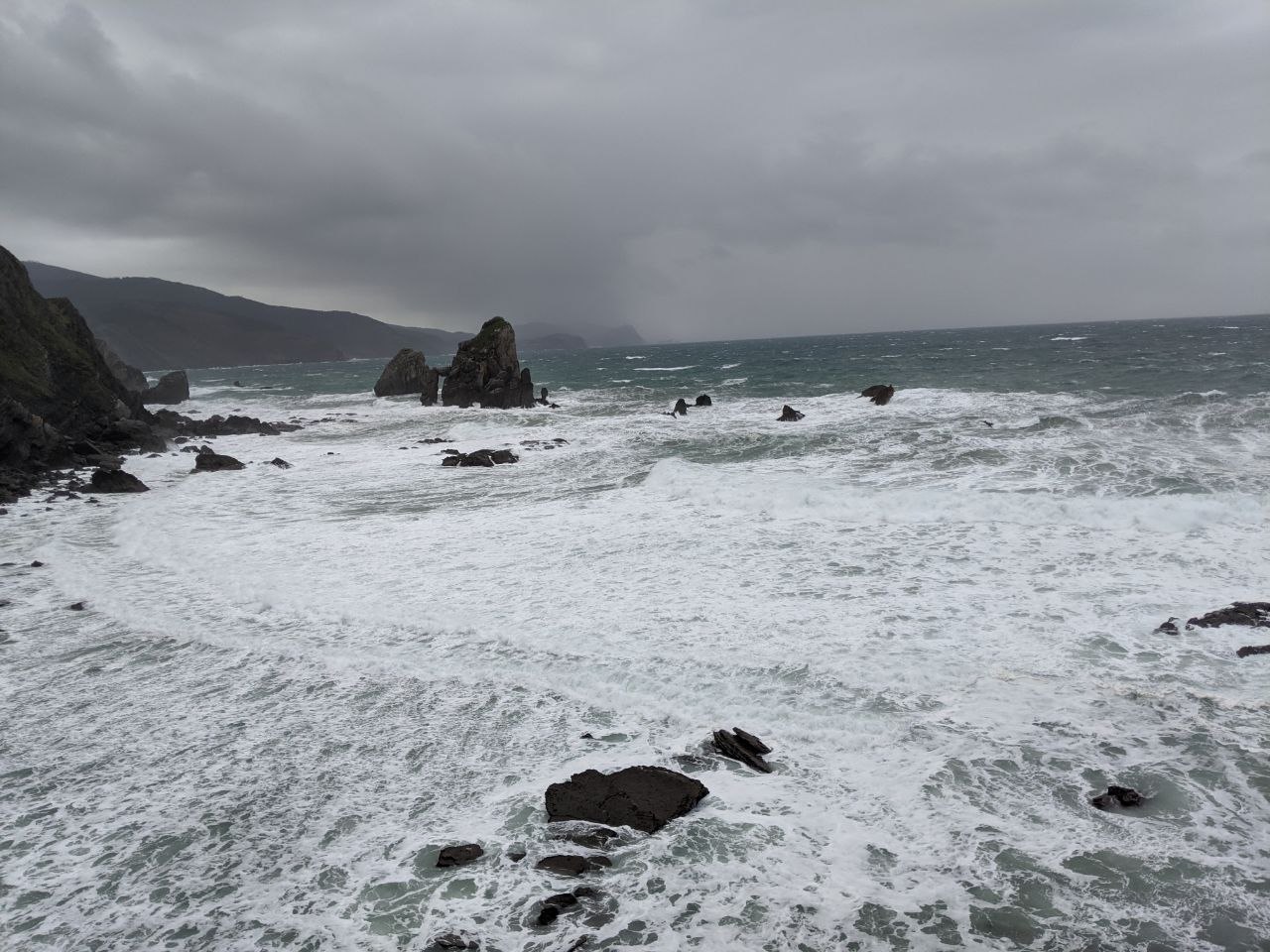
The coastline surrounding Gaztelugatxe is among the most geologically distinctive in Europe. The rocks here are flysch — alternating layers of limestone and shale deposited on the ocean floor during the Cretaceous period and subsequently folded, tilted, and exposed by tectonic movement. The result is a coast of dramatic stacked strata, with rock faces layered in near-vertical bands that have been sculpted into sea stacks, arches, and deep coves by the relentless action of the Atlantic. In heavy weather, the sea off this coast is forceful and green-grey, with white water breaking across the exposed rock formations and spray carried inland on the wind. The landscape around the islet, particularly to the east toward Bermeo, is characterised by steep green hillsides dropping directly to the cliff edge, with the rugged silhouette of Machichaco cape in the distance.
Visiting Tips
San Juan de Gaztelugatxe is located roughly 35 kilometres from Bilbao and is most easily reached by car via the BI-2101 road to the clifftop car park at Gaztelugatxe. From peak season (June–September), visitor numbers are managed through a timed reservation system operated by the Basque Government — bookings must be made in advance online and are strongly recommended. From the car park, the walk down to the causeway and up the staircase takes approximately 45 minutes each way; the path is uneven and exposed, and suitable footwear is essential. The site is open year-round, but access may be restricted during storms or when swell makes the causeway unsafe. Visiting outside the summer peak — particularly in late winter or early spring — brings dramatically fewer crowds and a rawer, more atmospheric experience of the Basque coast.
 Jumping Timezones
Leave a comment