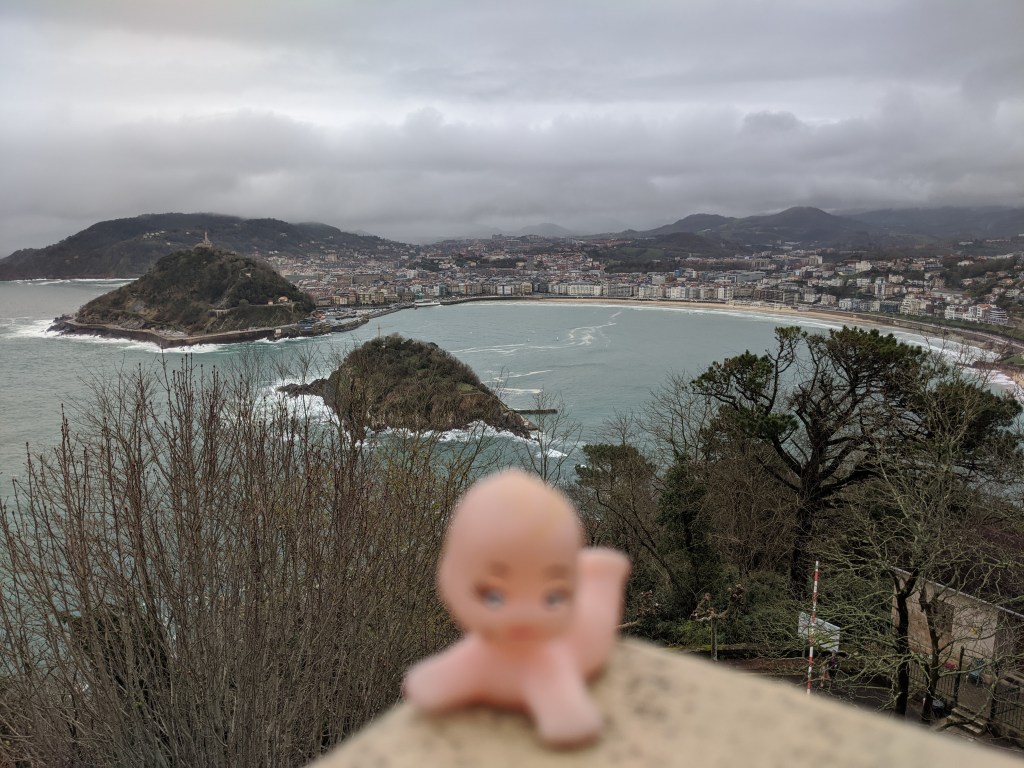
San Sebastián (Donostia in Basque) is a coastal city in the Basque Country of northern Spain, set on the Bay of Biscay at the mouth of the Urumea River. With a population of around 190,000, it is the capital of the Gipuzkoa province and one of the most acclaimed culinary destinations in the world — the city and its surrounding region have more Michelin stars per square kilometre than almost anywhere else on Earth. San Sebastián is characterised by its sweeping bay, framed by the wooded hills of Monte Urgull and Monte Igueldo, its grand Belle Époque seafront architecture, and its dense concentration of pintxos bars in the Parte Vieja (Old Town). The city hosted the 2016 European Capital of Culture designation and is a year-round destination that draws visitors for its beaches, gastronomy, culture, and film festival.
Monte Igueldo and the Bay
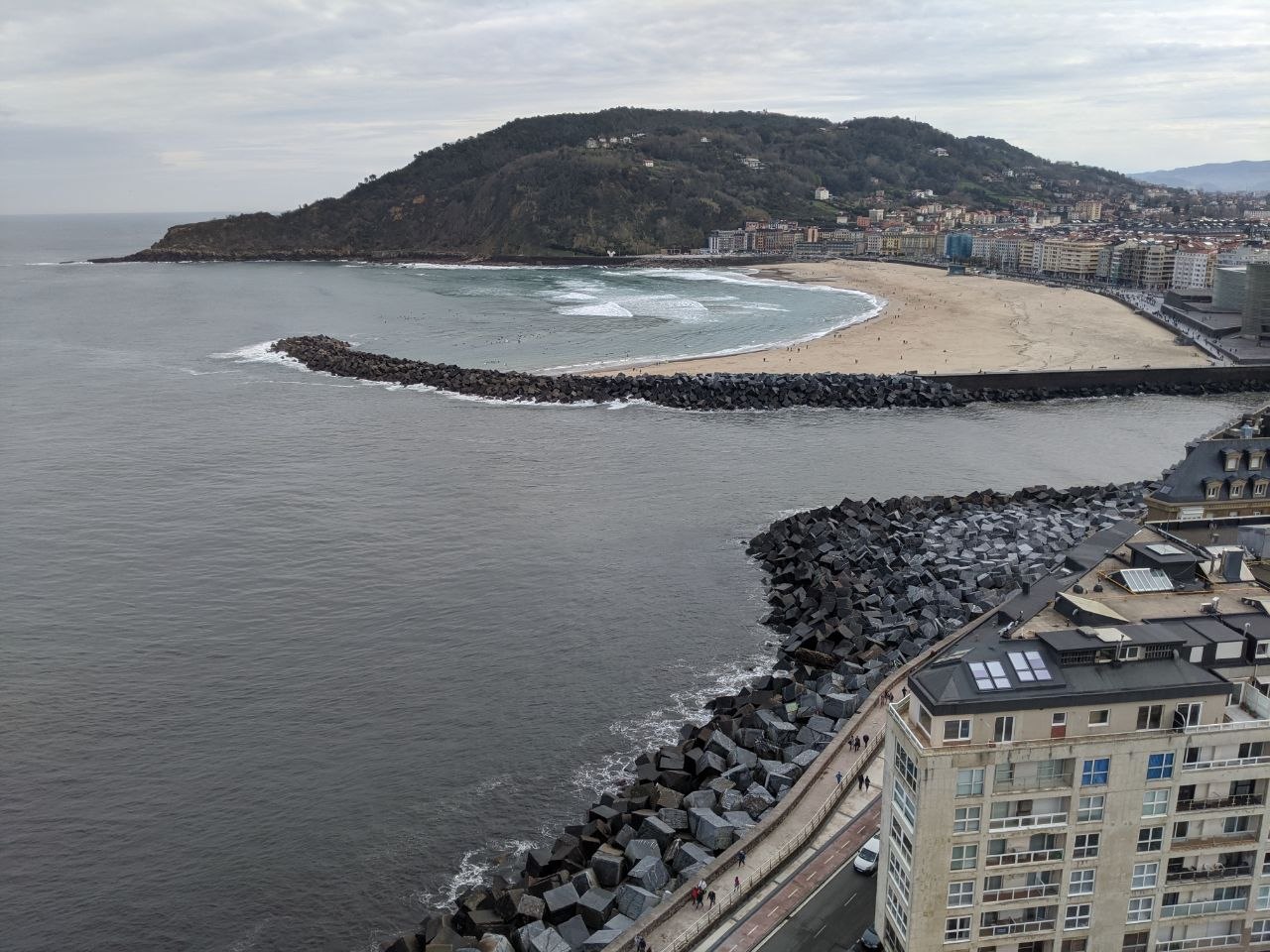
Monte Igueldo rises to 181 metres at the western end of La Concha bay and offers the most comprehensive panoramic view of San Sebastián. From its summit, the full arc of the city is visible — the crescent of La Concha beach, the island of Santa Clara sitting at the centre of the bay, the opposing headland of Monte Urgull to the east with its castle and Christ statue, and Zurriola beach stretching beyond the Kursaal building toward the mouth of the Urumea. A funicular railway dating from 1912 connects the base of the hill to the summit, where a small amusement park has operated since the same era. The view from Monte Igueldo at any time of day is exceptional, but the late afternoon light — when it falls across the city from the west — is particularly striking.
Pintxos
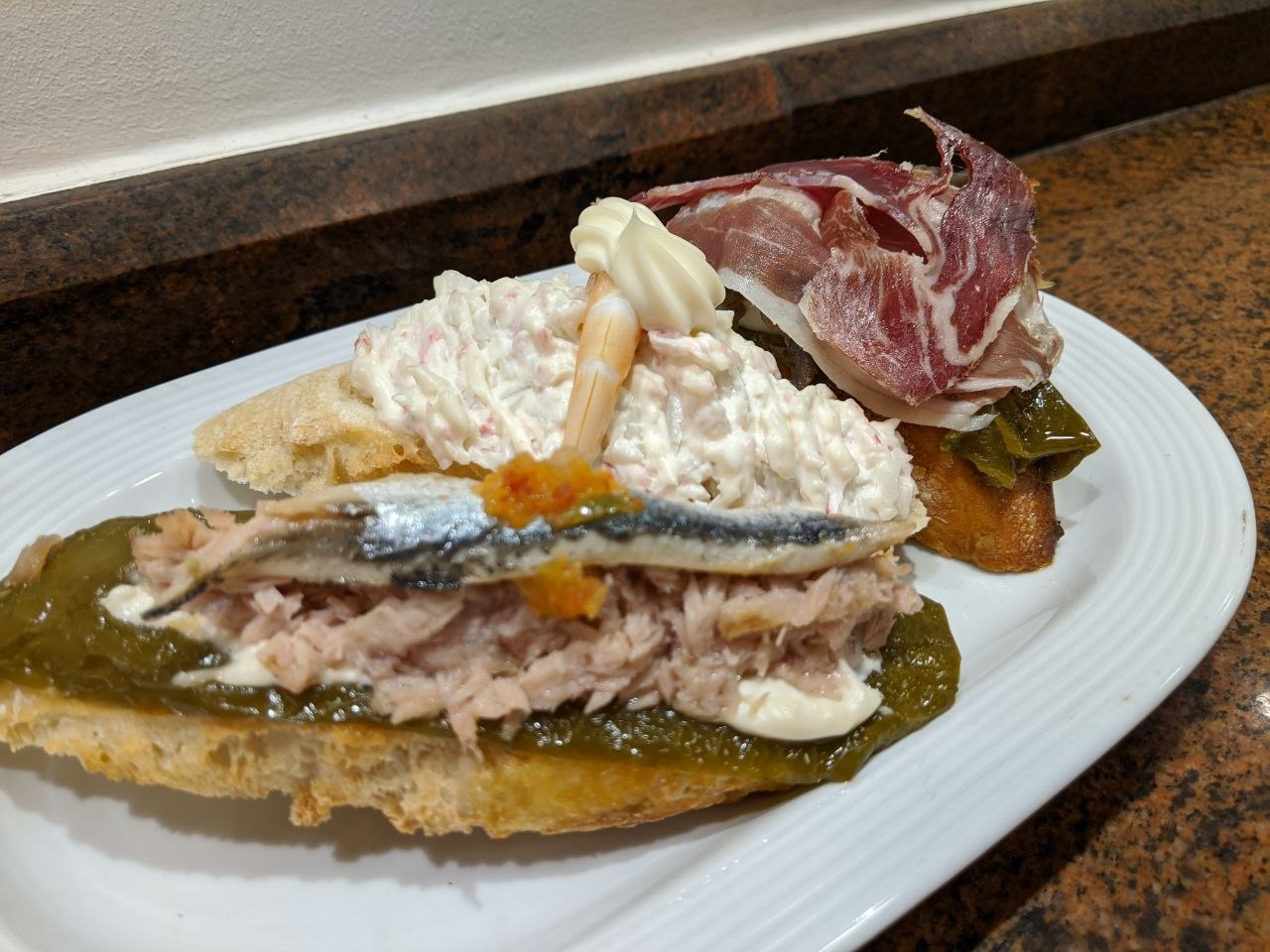
Pintxos (pronounced “peen-chos”) are the defining food of San Sebastián and the broader Basque Country — small portions of food, typically served on a slice of bread and often secured with a toothpick, displayed along the counters of the city’s bars. The Parte Vieja contains the highest concentration of pintxos bars in the city, and bar-hopping between them is a central part of daily social life for locals and visitors alike. The range of pintxos on offer extends well beyond the traditional: alongside classic combinations — anchovies with roasted peppers, jamón with pickled guindilla, gildas — bars serve elaborate constructions involving spider crab, foie, bacalà, and seasonal ingredients. The convention is to order one or two pieces at a time alongside a small glass of txakoli (a local sparkling dry white wine) or local cider, and then move to the next bar.
Basque Cider
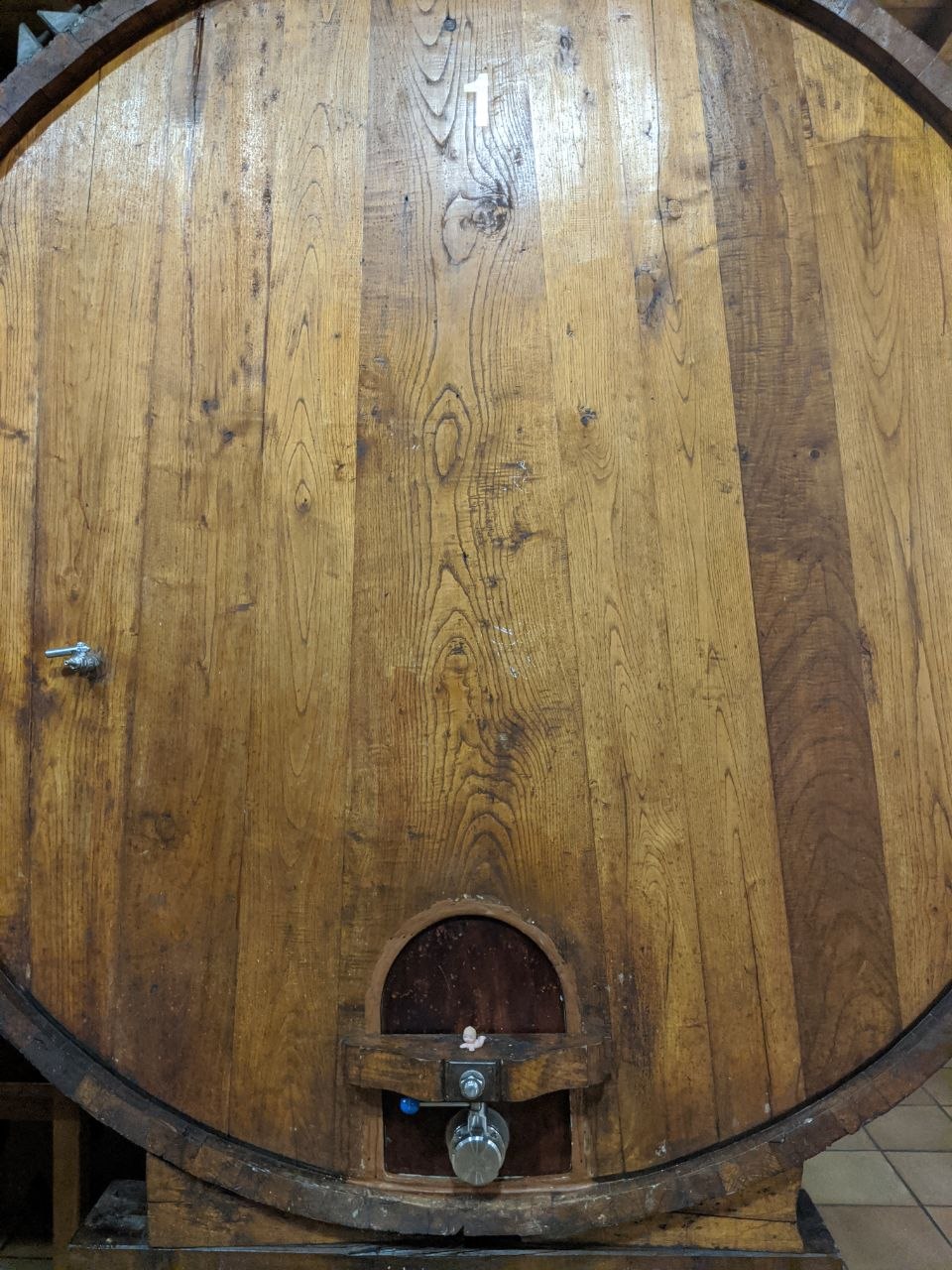
The Basque cider tradition is one of the oldest agricultural practices in the region, with records of apple cultivation and cider production dating back to the 11th century. The cider houses (sagardotegiak) are concentrated in the Gipuzkoa valleys south of San Sebastián, particularly around Astigarraga, and open to the public for the traditional cider season from January to April. Inside a sagardotegia, large oak barrels — some holding several thousand litres — line the cellar walls. The custom is to hold a glass at waist height and catch a thin stream of cider poured directly from the barrel tap (the txotx), aerating it in the process. The cider is sharp, dry, and low in alcohol, traditionally accompanied by a fixed menu of salt cod omelette, grilled T-bone steak, and local cheese with walnuts and quince paste.
San Telmo Museum and the Parte Vieja
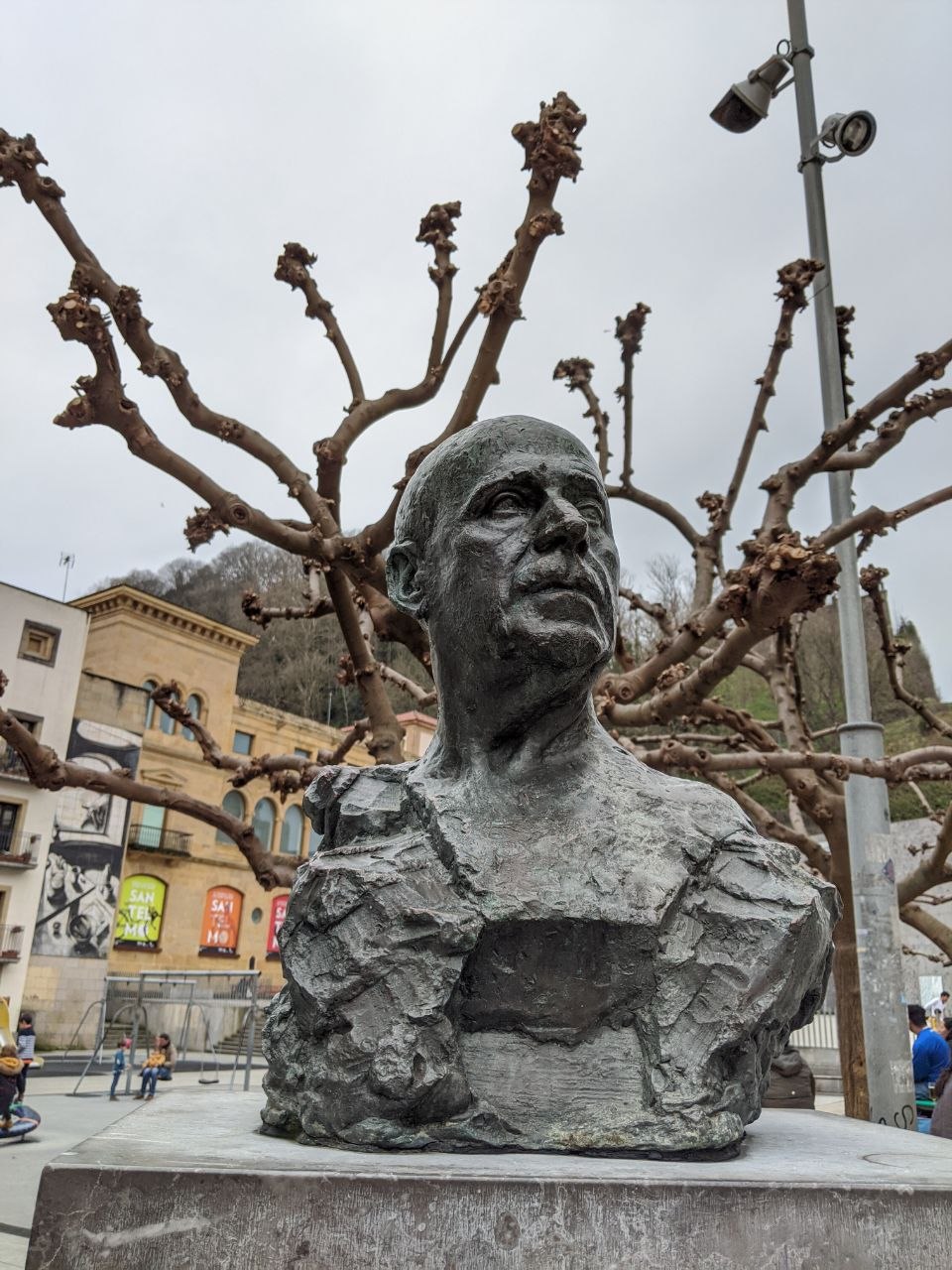
The Parte Vieja (Old Town) occupies the area between Monte Urgull and the Urumea River and is the historic core of San Sebastián. Its grid of narrow streets contains the majority of the city’s pintxos bars, the Baroque church of Santa María del Coro, and the San Telmo Museoa — one of the most important Basque museums, housed in a 16th-century Dominican convent with a striking contemporary extension added in 2011. The museum’s collection covers Basque history, society, and art across its original cloister and nave, which were decorated in the 1930s with large-scale murals by José María Sert depicting scenes from Basque history. Outside the museum’s entrance, a bronze bust sculpture stands in the small plaza, its fractured surface and upward gaze characteristic of the expressive tradition of Basque sculpture.
Visiting Tips
San Sebastián is reachable by train from Madrid (approximately 5 hours on the Alvia service) or by bus, and is a short drive from Bilbao (approximately 1 hour). The city is compact and best explored on foot. The pintxos bars in the Parte Vieja are busiest on weekday evenings and weekend lunchtimes — arriving early (around 7–8pm) secures the best selection before the most popular pieces sell out. Basque cider houses outside the city require a reservation and are typically only open January through April; a taxi or rental car is the most practical way to reach them. Monte Igueldo is reachable by bus from the city centre to the funicular base. July and August bring peak summer crowds and the highest hotel rates; the San Sebastián International Film Festival takes place each September and draws significant visitors.
 Jumping Timezones
Leave a comment