Guayaquil is Ecuador’s largest city and its principal port, situated on the western bank of the Guayas River near the Pacific coast. With a population of over 2.5 million, it is the country’s commercial and industrial centre — a dense, hot, and energetic lowland city that contrasts sharply with the cooler Andean highlands. Founded in the 16th century, Guayaquil has a long history tied to trade, independence, and the sea. Its historic centre, riverfront malecón, and hilltop neighbourhoods offer a concentrated range of architectural and cultural landmarks within easy walking distance of one another.
Parque Bolívar and the Cathedral
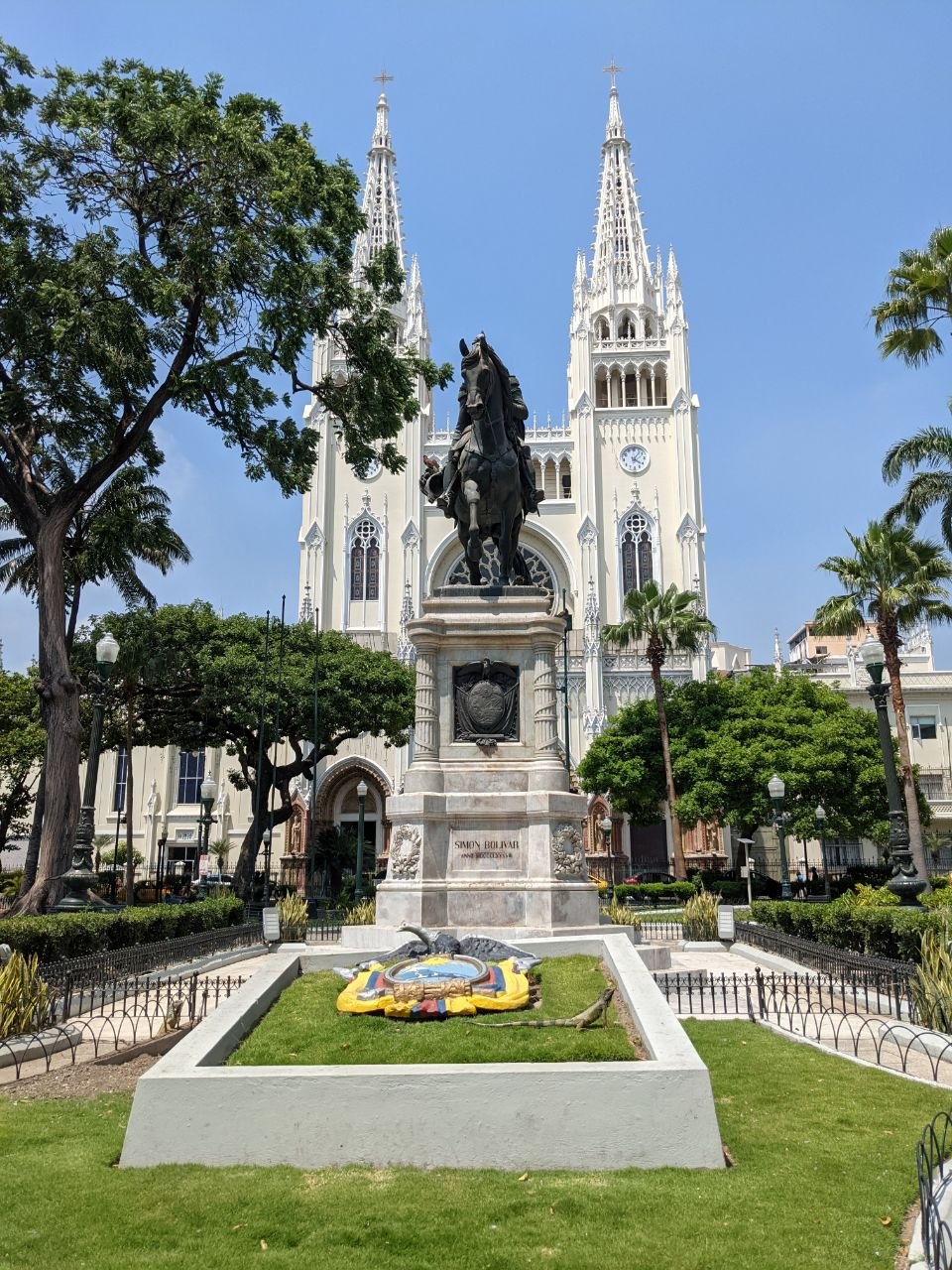
At the heart of Guayaquil’s historic centre is Parque Bolívar — also known as Parque Seminario — a shaded plaza dominated by a large bronze equestrian statue of Simón Bolívar on a marble pedestal. The park bears witness to a pivotal moment in South American history: in 1822, Bolívar and José de San Martín met in Guayaquil for the famous Guayaquil Conference, a meeting that helped determine the final course of independence across the continent. Facing the park is the Metropolitan Cathedral of Guayaquil, a striking white Neo-Gothic structure with twin pointed spires, lancet windows, and a large clock face — a landmark visible from much of the surrounding neighbourhood. The cathedral dates in its current form to the early 20th century, though a church has occupied the site since the colonial era.
The Iguanas of Parque Seminario
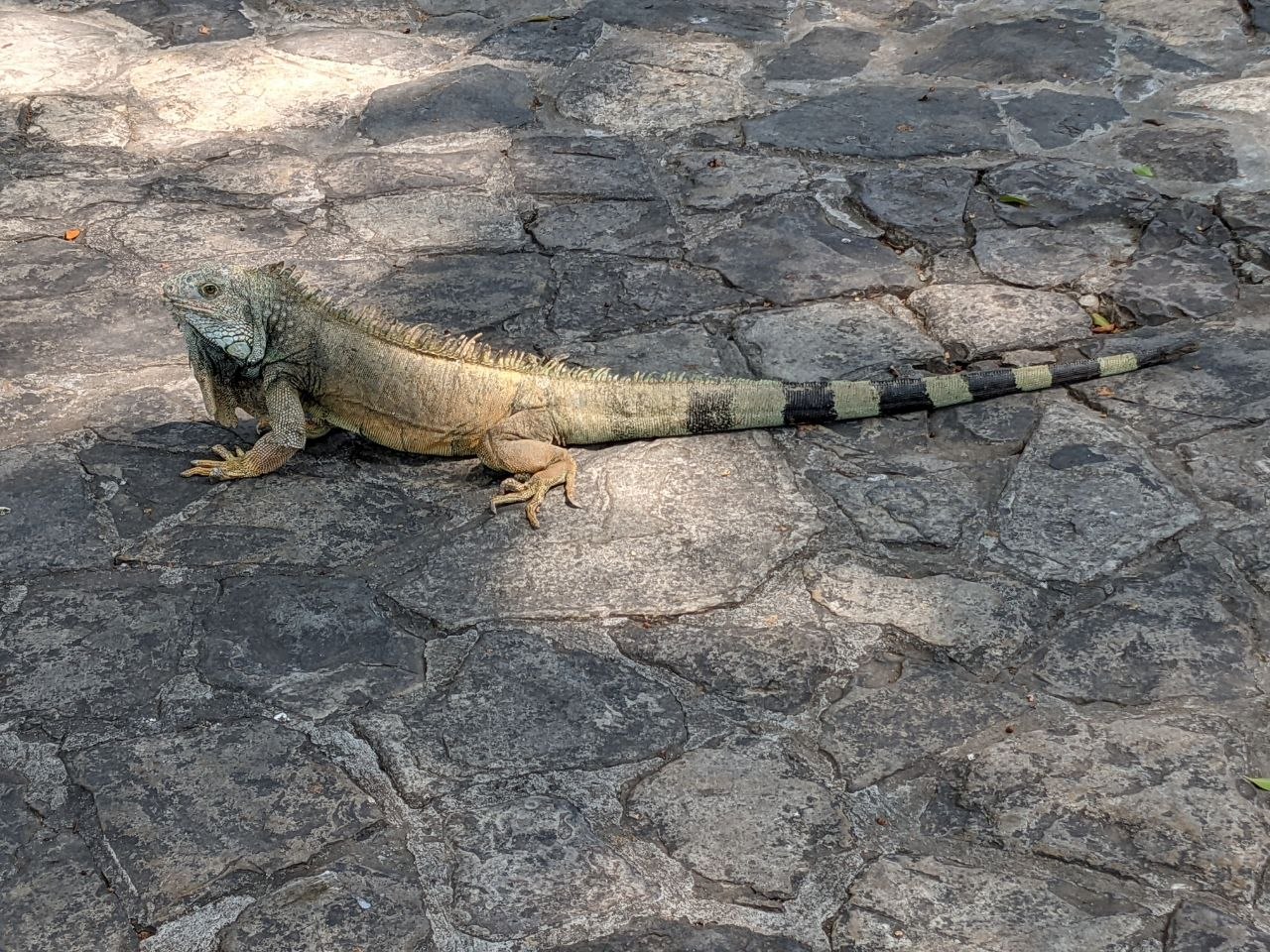
Parque Bolívar is equally famous for its resident population of free-roaming green iguanas (Iguana iguana), which have inhabited the park for generations. Dozens of them bask on the cobblestones, climb the park’s mature trees, and move between the benches and pathways with complete indifference to the people around them. The iguanas are considered a protected species within the park and have become one of Guayaquil’s most distinctive urban attractions. Vendors sell fruit near the park entrance for visitors who wish to feed them. The sight of large iguanas wandering freely through a busy city-centre plaza — alongside pigeons and pedestrians — is one of the more memorable aspects of a visit to Guayaquil.
Encebollado
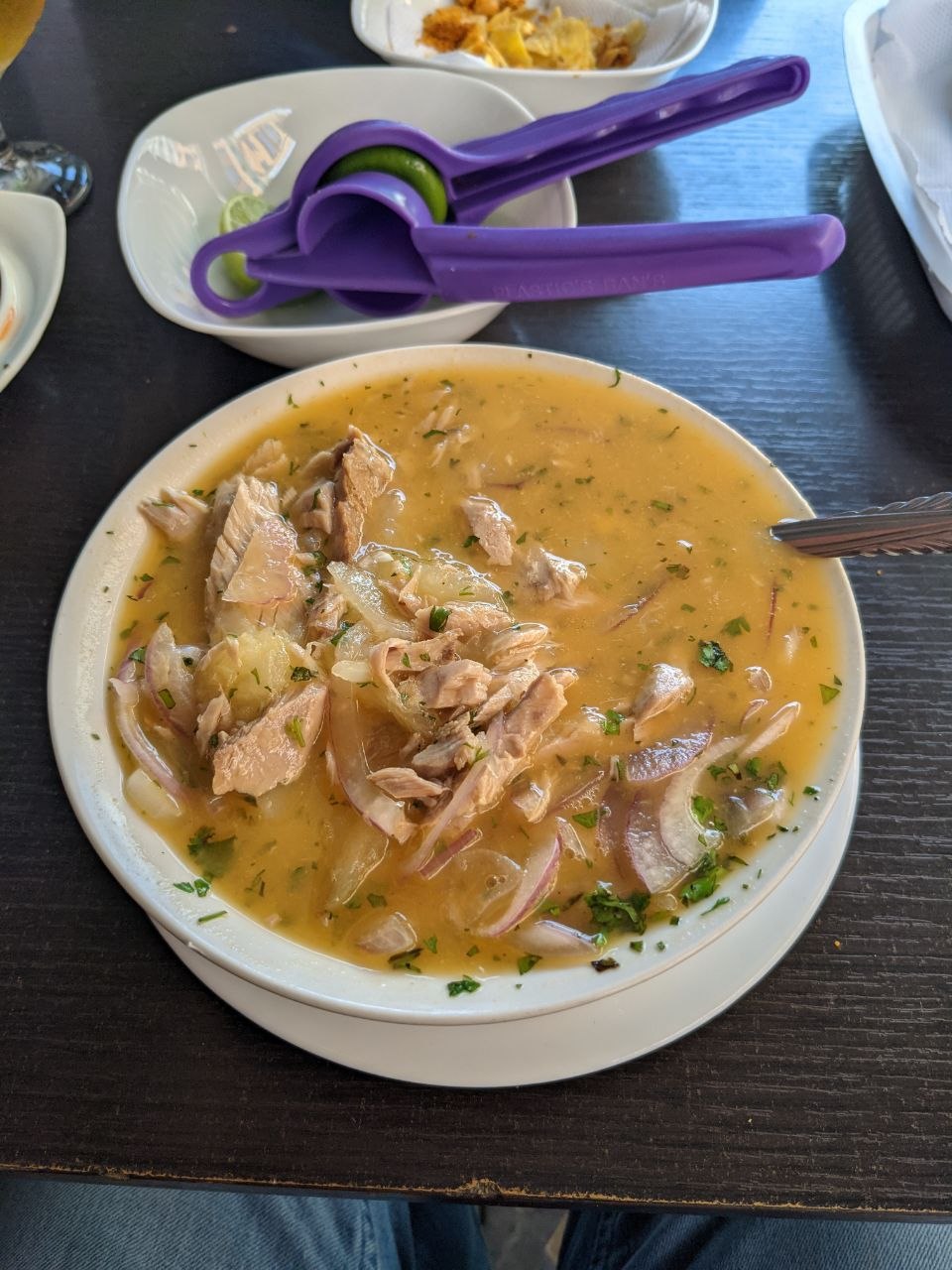
Guayaquil is the spiritual home of encebollado — widely regarded as Ecuador’s national dish and one of the most distinctive soups in South American cuisine. The dish consists of a rich, golden broth made from albacore tuna (or occasionally other fish), cooked with yuca and seasoned with cumin and coriander. It is served topped with curtido de cebolla — a sharp pickled red onion preparation — along with fresh cilantro and a squeeze of lime. Encebollado is consumed at all hours in Guayaquil, but particularly in the mornings as a restorative breakfast. Dedicated encebollado restaurants, open early and often packed by 8am, are found throughout the city. A purple lime squeezer alongside the bowl is a common — and functional — fixture on the table.
Cerro Santa Ana and Las Peñas
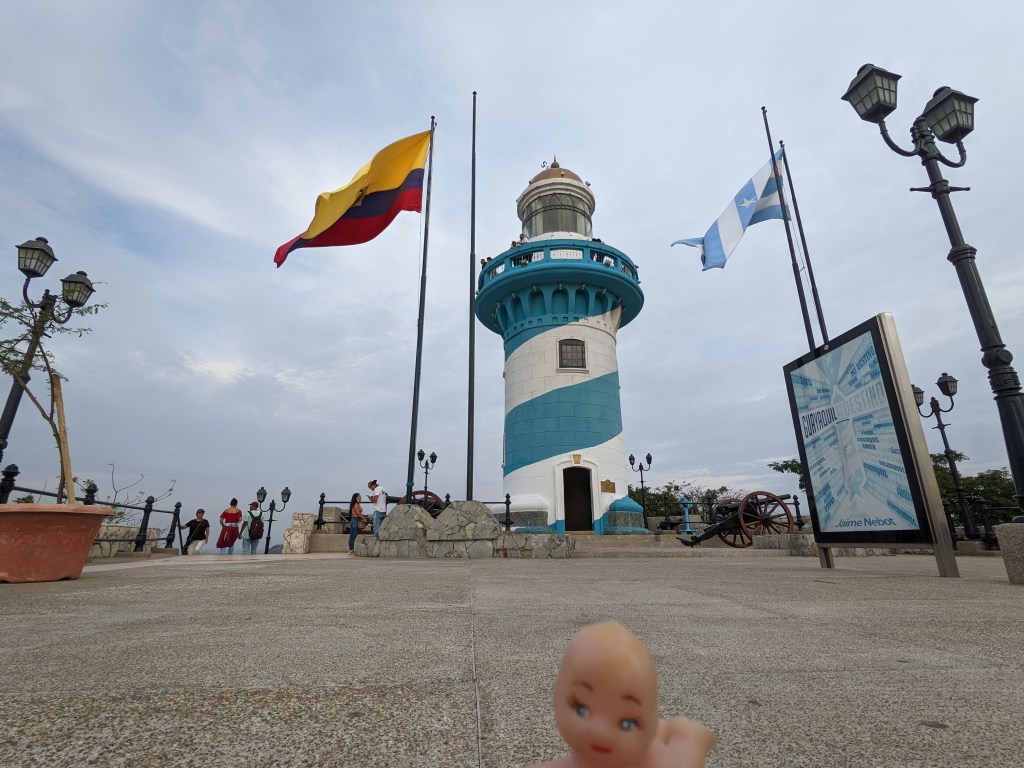
Rising above the northern end of the Malecón 2000 riverfront is Cerro Santa Ana, a steep hill topped by a lighthouse and a small chapel, reached via a long staircase of 444 steps that winds through the colourful Las Peñas neighbourhood. Las Peñas is considered the oldest neighbourhood in Guayaquil, with brightly painted wooden houses climbing the hillside along a narrow cobblestone lane. Art galleries, small bars, and restaurants occupy the ground floors of the historic buildings, and the staircase itself is lined with numbered steps and small murals. The view from the top of Cerro Santa Ana across the Guayas River and the city skyline is one of the best in Guayaquil.
Visiting Tips
Guayaquil is served by José Joaquín de Olmedo International Airport, with direct connections to Quito, Lima, Bogotá, Miami, and other major cities. The historic centre, Malecón 2000, Parque Bolívar, and Cerro Santa Ana are all within comfortable walking distance of one another. The city is hot and humid year-round — lightweight clothing and sun protection are essential. The dry season (June to November) is generally cooler and less humid than the wet season. Taxis and ride-hailing apps are the most practical way to move around the wider city. Guayaquil also serves as the main gateway for flights to the Galápagos Islands.
 Jumping Timezones
Leave a comment