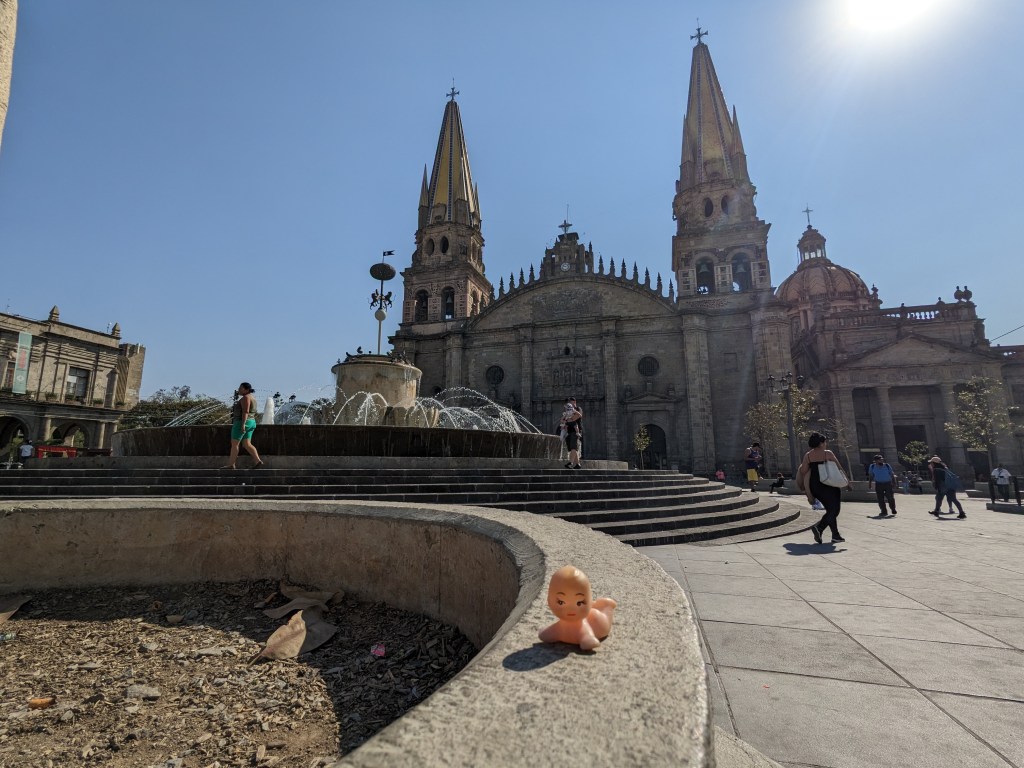
Guadalajara is the capital of the state of Jalisco and the second largest city in Mexico. Located in the western highlands of the country, it sits at an elevation of approximately 1,560 meters above sea level, giving it a mild, spring-like climate year-round. Known as the birthplace of mariachi music and the Mexican Hat Dance (Jarabe Tapatío), Guadalajara is one of the most culturally significant cities in Latin America, with a historic center packed with colonial architecture, public art, world-class museums, and a food scene rooted deeply in Jalisco’s culinary traditions.
The city blends its colonial past with a dynamic contemporary identity. Tapatíos — as residents of Guadalajara are known — take pride in their city’s traditions while embracing a thriving arts, design, and technology scene. Its plazas and pedestrian streets are animated by public sculpture, impromptu performances, and the daily rhythms of urban life, making the historic center one of Mexico’s most rewarding areas to explore on foot.
History
Guadalajara was founded by Spanish colonists in 1542, after several earlier attempts at establishing a permanent settlement in the region. It quickly became the administrative capital of the Kingdom of New Galicia, a vast territory covering much of western Mexico. The city’s central location and access to trade routes drove rapid growth through the colonial period, producing the churches, convents, and civic buildings that still define its core today.
During the Mexican War of Independence, Guadalajara played a pivotal role. Miguel Hidalgo, the insurgent priest who ignited the independence movement, briefly occupied the city in 1810 and issued a decree abolishing slavery — one of the first such acts in the Americas. The city changed hands multiple times during the conflict before Mexico achieved independence in 1821. In the 19th and 20th centuries, Guadalajara grew into a major industrial, commercial, and cultural hub, earning its reputation as the capital of western Mexico.
Plaza Guadalajara and the Cathedral
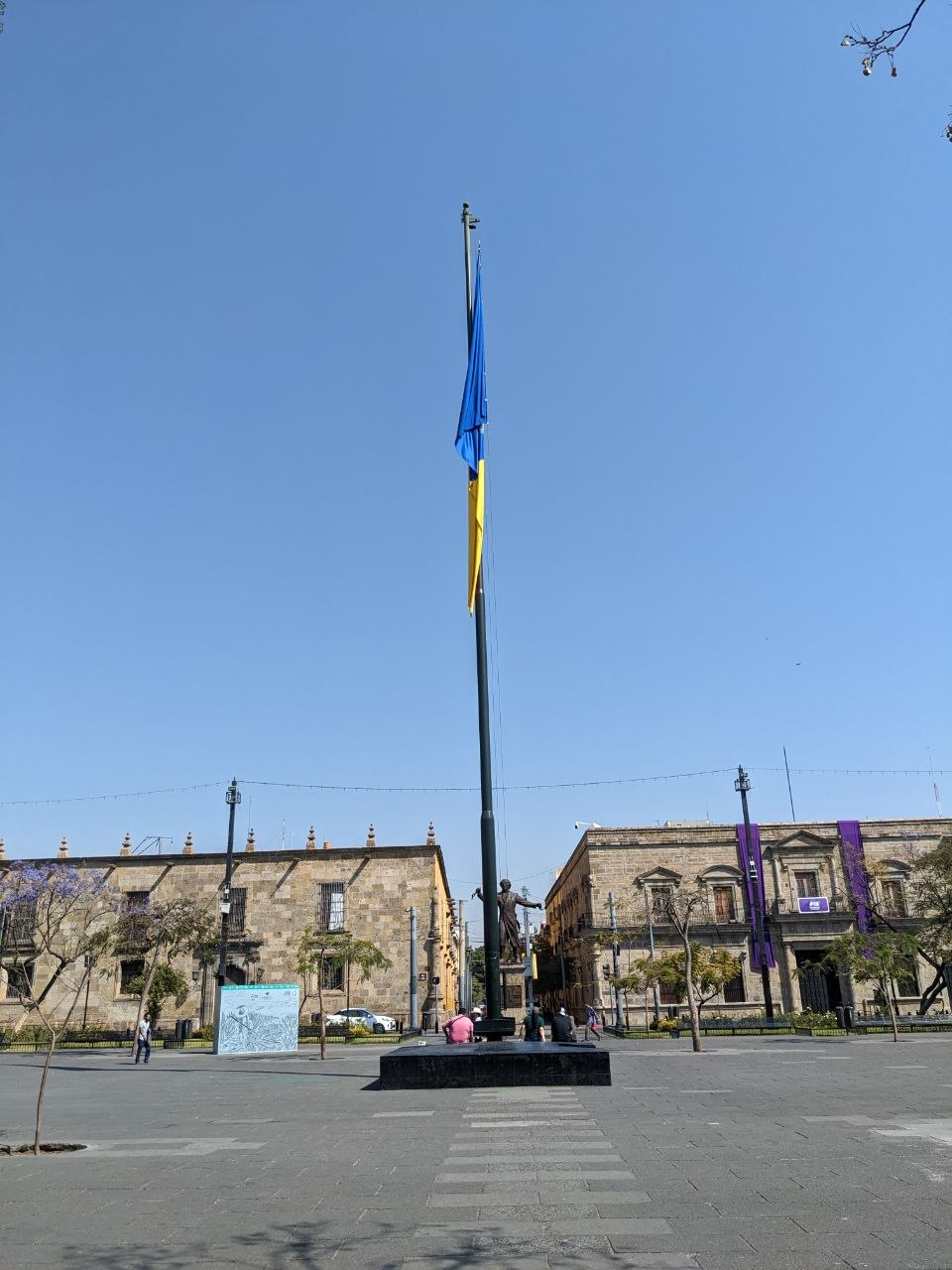
The historic center of Guadalajara is organized around a series of interconnected plazas, with Plaza Guadalajara serving as the main civic square in front of the city’s Cathedral. The square is anchored by a tall flagpole flying Jalisco’s blue and yellow flag and flanked by stone colonial buildings housing government offices and portales (arcaded walkways) with cafés and shops. Public sculptures are a constant presence in and around the plaza — surrealist bronze works by local and national artists are placed throughout the pedestrian areas, adding an element of playful creativity to the historic streetscape.
Guadalajara Cathedral, formally the Cathedral of the Assumption of Our Lady, dominates the north side of Plaza Guadalajara. Construction began in 1561 and continued for decades, resulting in a building that blends Gothic, Baroque, and Neoclassical elements. Its twin yellow-tiled spires have become the defining symbol of the city’s skyline. Inside, the cathedral houses important paintings, sculptures, and altarpieces from the colonial period.
Hospicio Cabañas
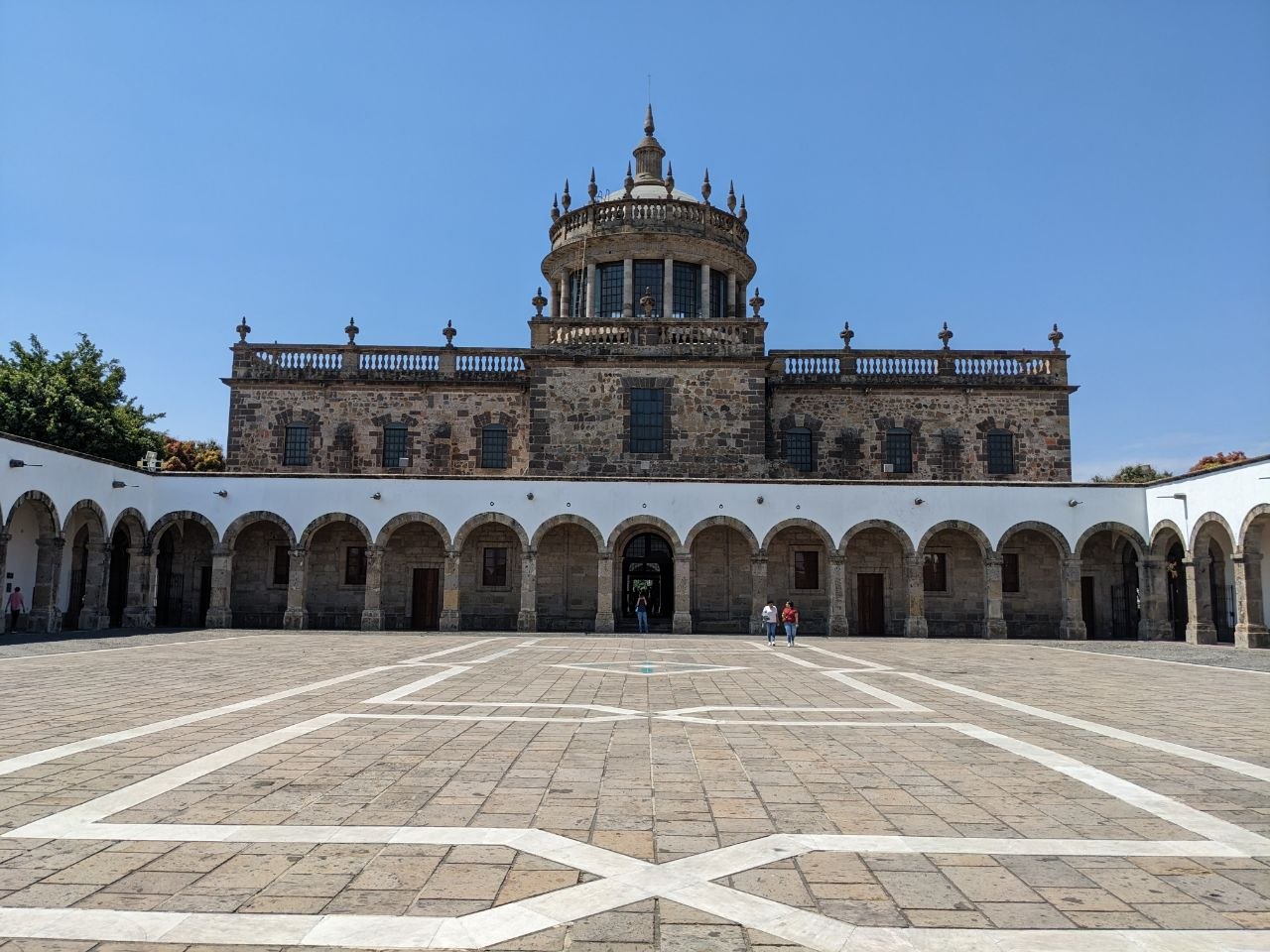
The Instituto Cultural Cabañas, originally built as the Hospicio Cabañas, is one of Guadalajara’s most important landmarks and a UNESCO World Heritage Site. Commissioned in the early 19th century by Bishop Juan Cruz Ruiz de Cabañas and designed by Spanish architect Manuel Tolsá, the neoclassical complex was built to serve as an orphanage and social welfare institution. Its vast courtyard, framed by colonnaded galleries on all sides and crowned by a central domed chapel, creates one of the most striking architectural spaces in Mexico.
The chapel ceiling and walls were painted by José Clemente Orozco between 1936 and 1939, producing a monumental mural cycle considered among the most important works of Mexican muralism. Orozco’s figures — depicting the conquest, the oppression of indigenous peoples, and a vision of fire and transformation — cover nearly every surface of the chapel interior with an intensity that makes the space one of the most powerful in Latin American art. The complex today functions as a cultural center hosting exhibitions, performances, and educational programs.
Food Culture
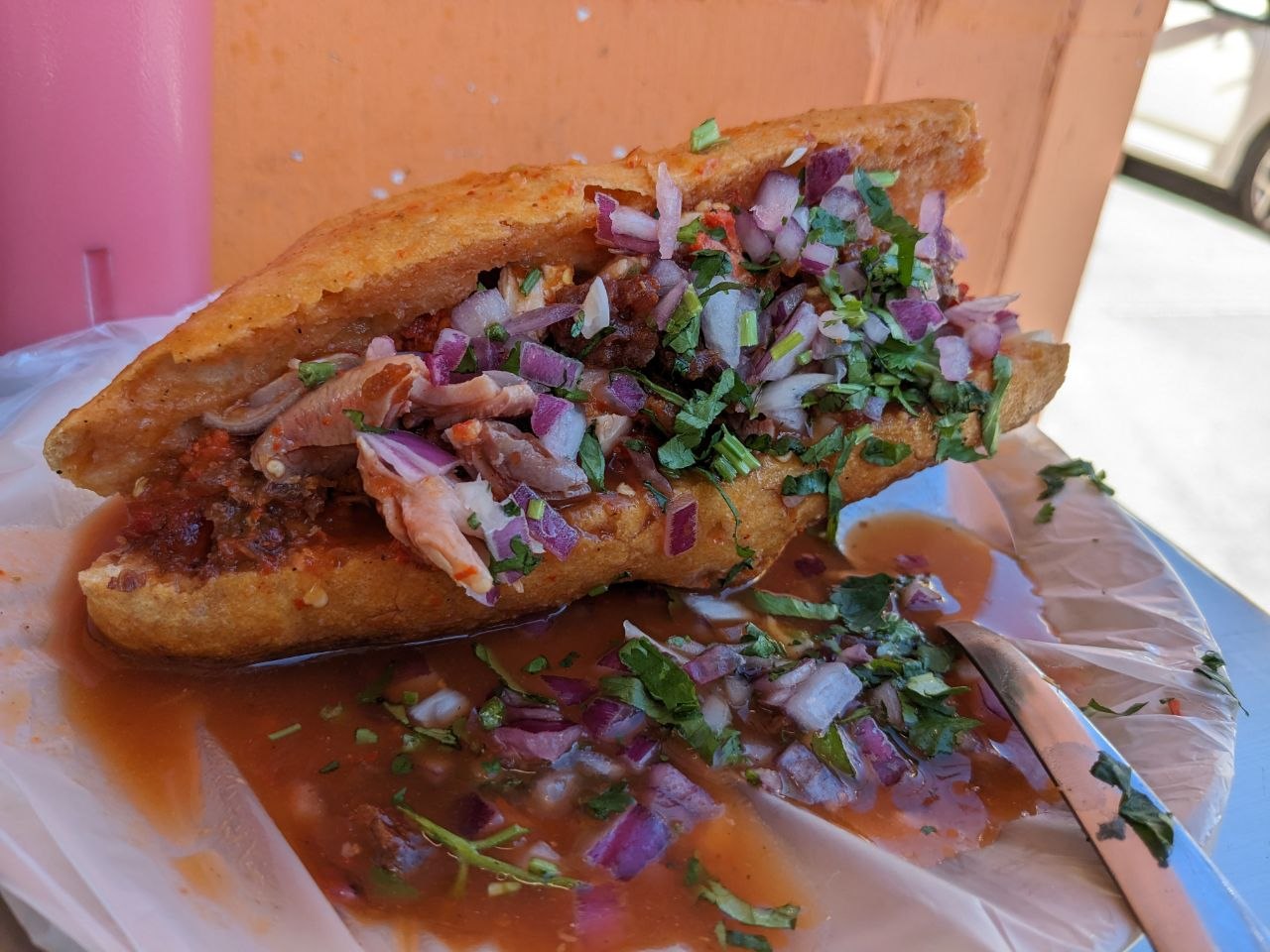
Guadalajara is the home of two of Mexico’s most distinctive regional dishes. The torta ahogada — literally “drowned sandwich” — is a birote bread roll filled with carnitas or chicken, submerged in a spicy tomato and chile de árbol sauce, and topped with finely chopped white onion, cilantro, and oregano. It is one of the most recognizable street foods in Jalisco, served at small stands and dedicated eateries throughout the city, often accompanied by a agua fresca or beer.
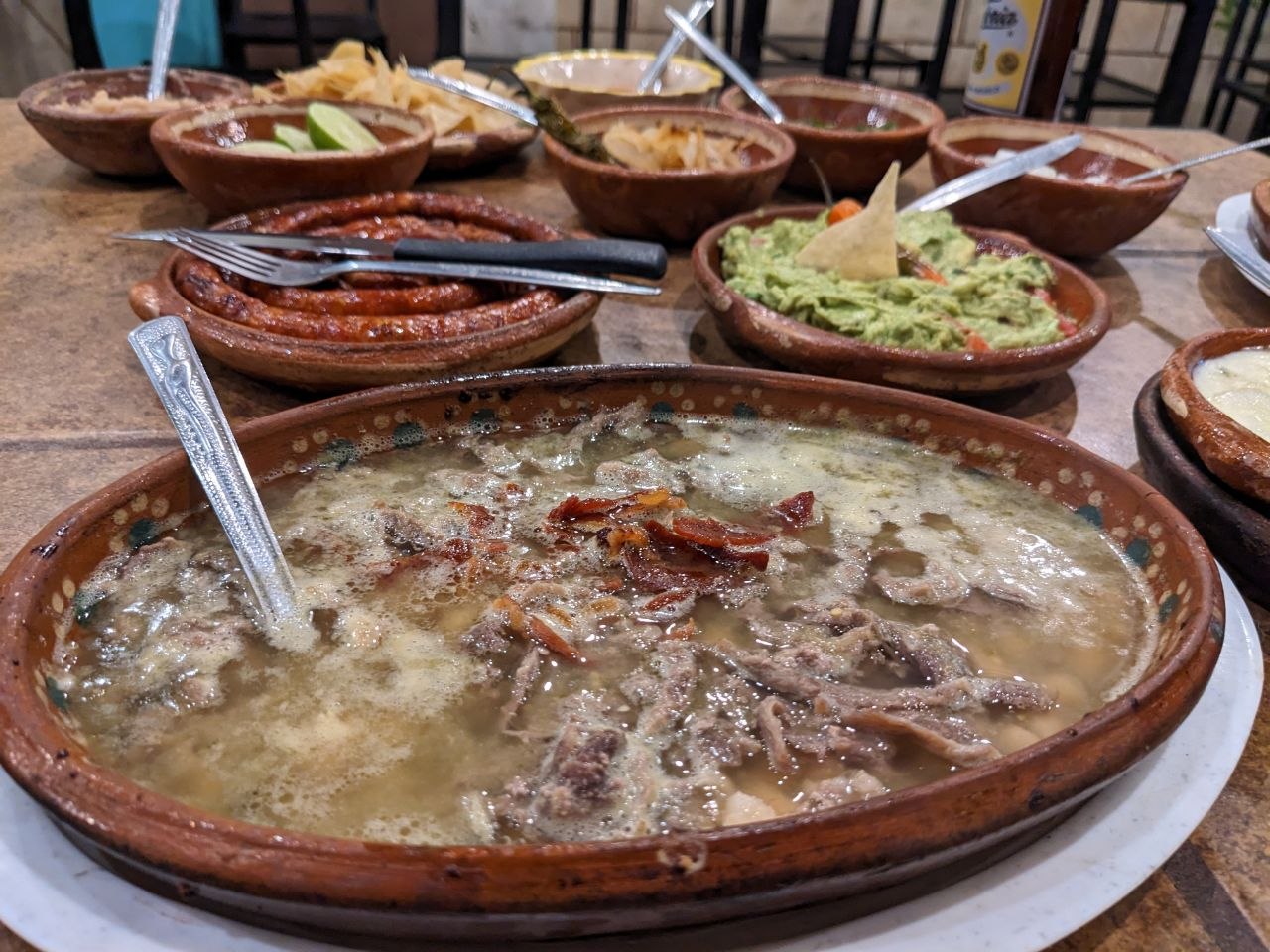
Birria is equally central to tapatío food culture. Traditionally prepared with goat slow-cooked in a broth of dried chilies, spices, and herbs, birria is typically served in a deep clay bowl with its consommé alongside side dishes of guacamole, chicharrón (fried pork rind), and various salsas and condiments. In Guadalajara, birria restaurants often serve the dish on clay cazuelas with an array of accompaniments, making the meal a communal and unhurried affair. The city’s markets and family-run restaurants serve as the most authentic venues for both dishes.
Public Art and Contemporary Sculpture
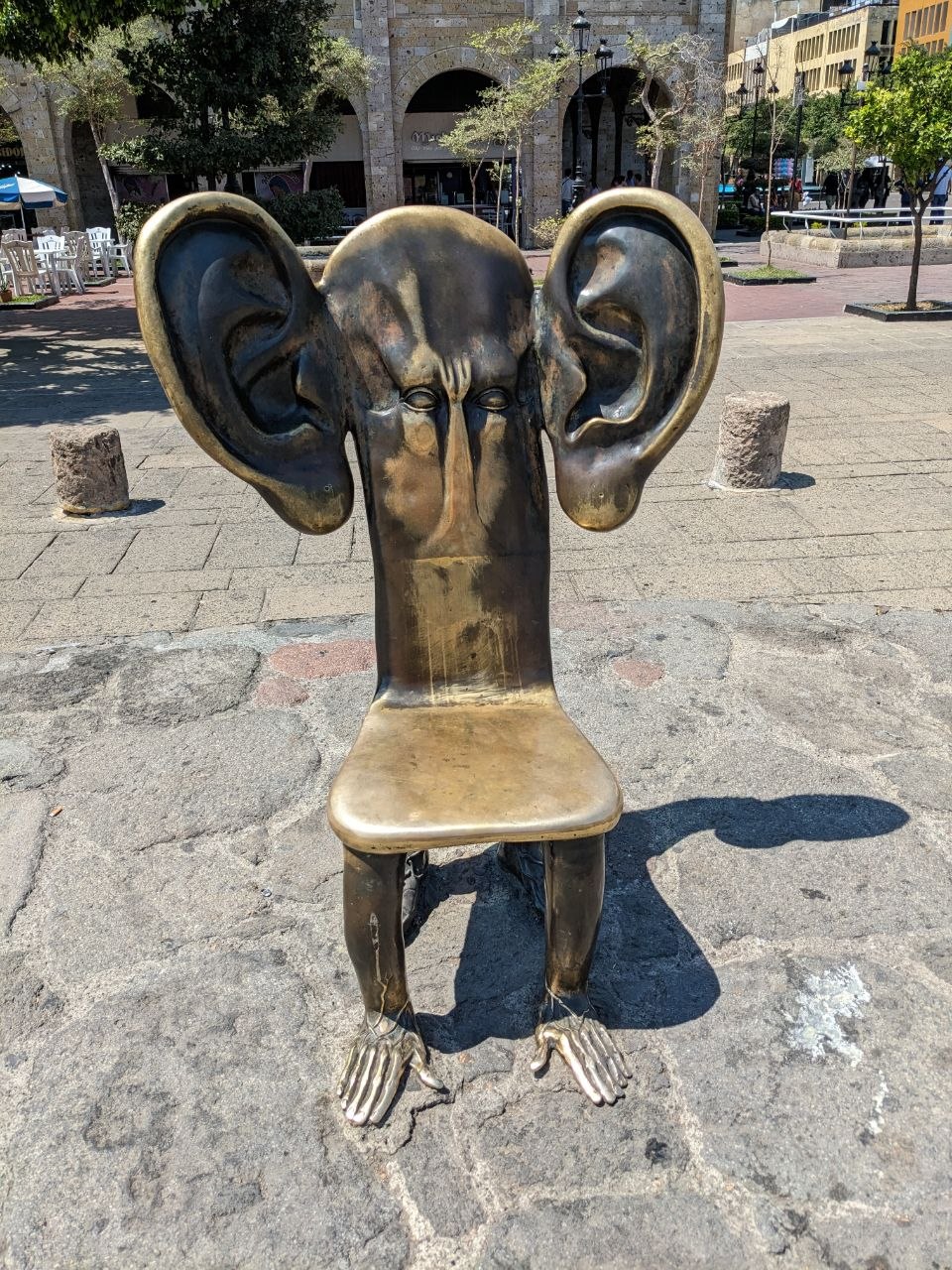
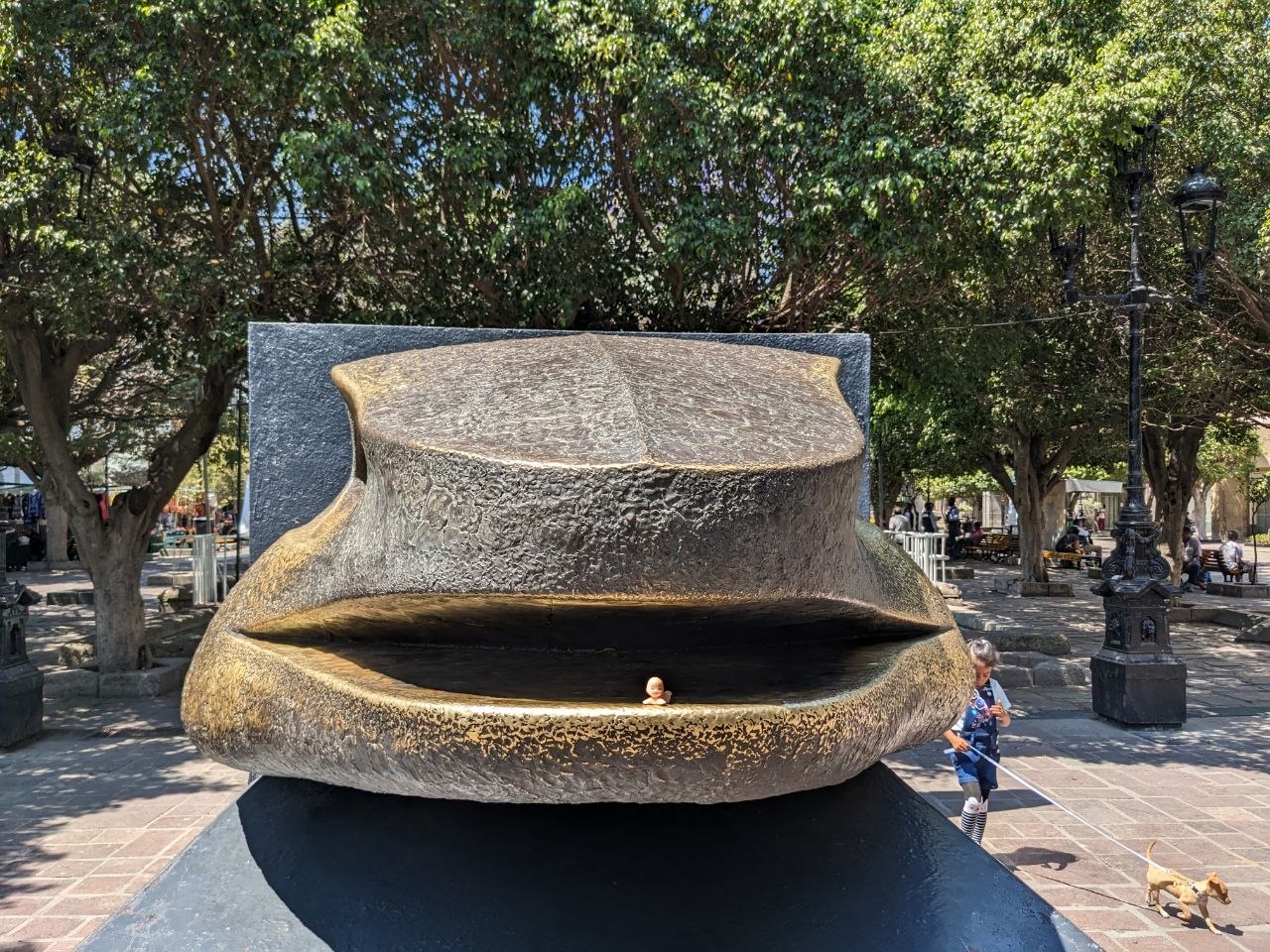
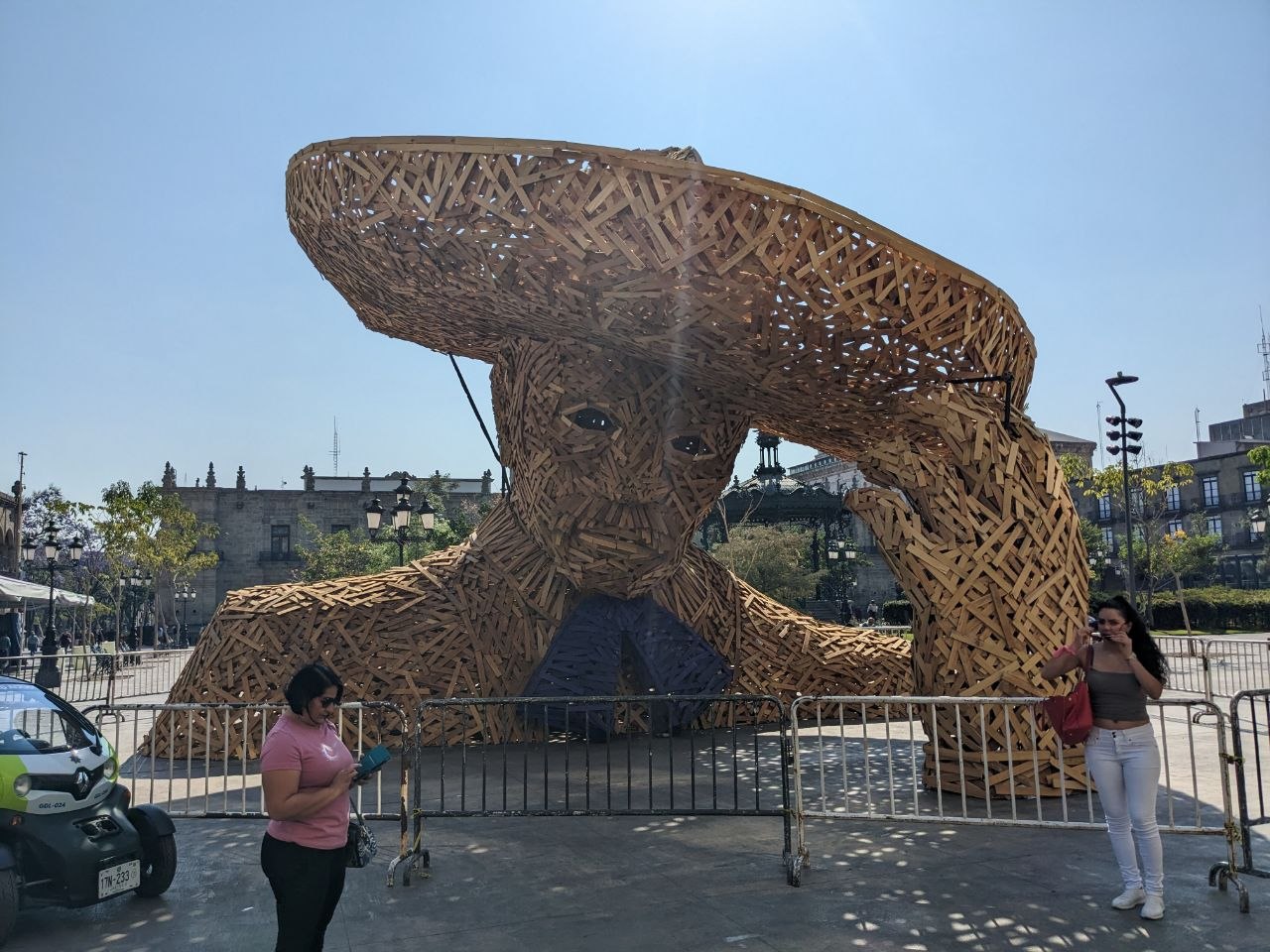
Public art is woven into the fabric of Guadalajara’s historic center in an unusually concentrated way. Across the plazas surrounding the Cathedral, visitors encounter bronze sculptures that range from surrealist to figurative — a chair with a face and oversized ears, a massive pair of lips opening like a mouth with a small figure inside, and large-scale temporary installations built from woven wood slats depicting iconic Mexican figures in sombrero form. These works reflect a civic commitment to placing contemporary art in dialogue with colonial architecture and public space.
Beyond the central plazas, the Andador Fray Antonio Alcalde and surrounding pedestrian streets are regularly used for outdoor exhibitions and cultural events. The presence of art in unexpected places — atop plinths, in the middle of walkways, framed against baroque church facades — gives the center a quality of visual discovery that rewards slow exploration. Guadalajara’s role as a major cultural city is reinforced by its hosting of the Guadalajara International Book Fair (FIL), the largest book fair in the Spanish-speaking world, held annually in late November.
Visiting Tips
The historic center is compact and best explored on foot. Most major sites — the Cathedral, Plaza Guadalajara, the Hospicio Cabañas, the Mercado San Juan de Dios, and the Teatro Degollado — are within walking distance of one another. The city’s mild climate makes walking comfortable year-round, though the dry season (November to May) offers the clearest skies and lowest chance of rain.
Guadalajara is well connected by air from major Mexican and international cities, and the historic center is accessible by the city’s light rail (Tren Ligero) system. For food, heading to local markets and neighborhood fondas provides the most direct access to tapatío cuisine at reasonable prices. Tortas ahogadas are best sought at dedicated stands in and around the center; birria restaurants tend to be busiest at weekend mornings. Visiting the Hospicio Cabañas early in the day allows more time in the chapel without crowds, and the building’s scale and the murals benefit from unhurried attention.
 Jumping Timezones
Leave a comment