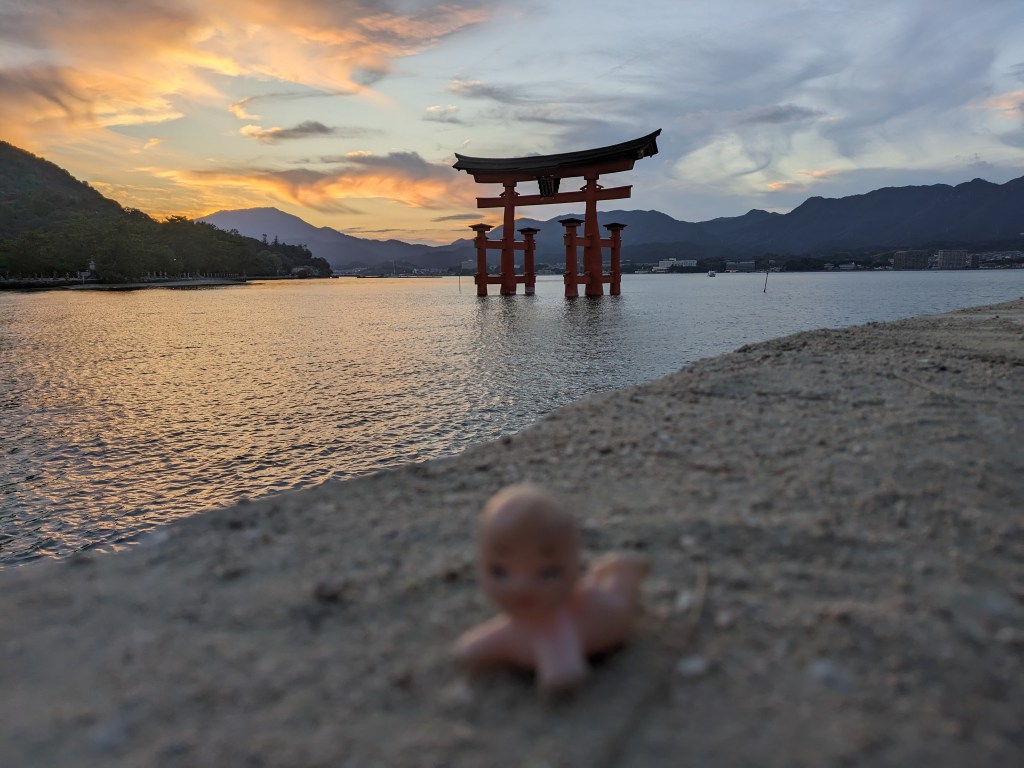
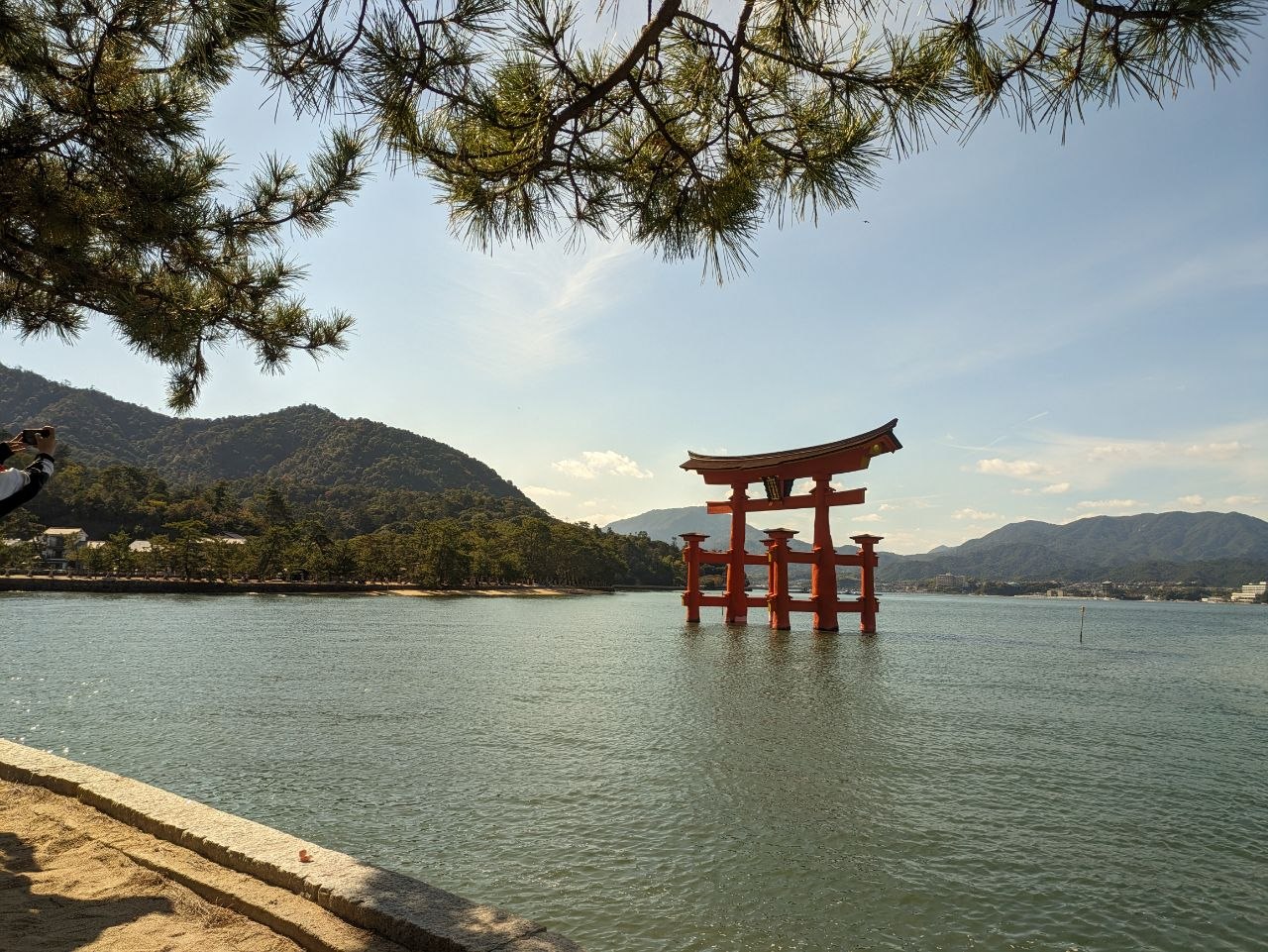
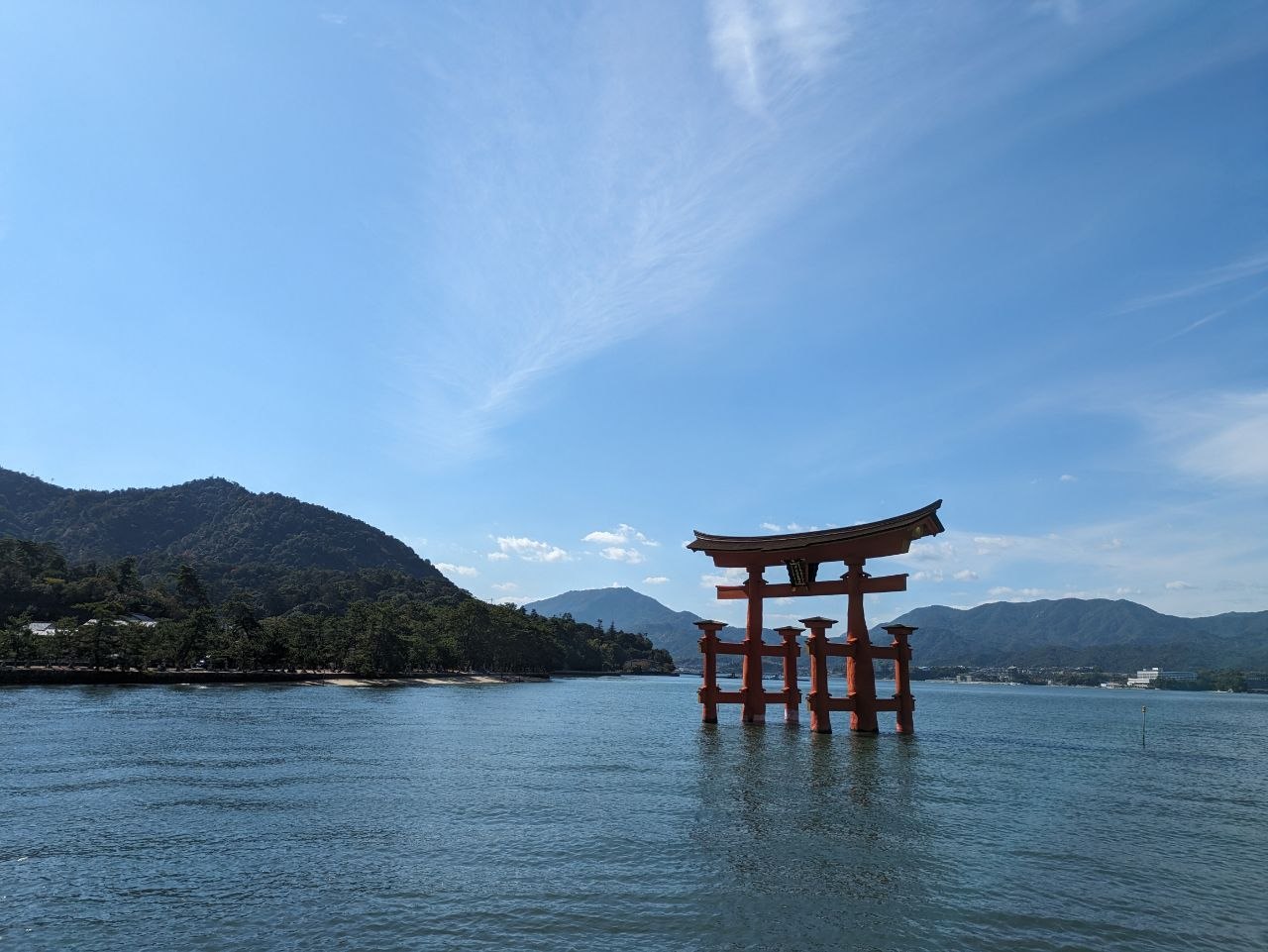
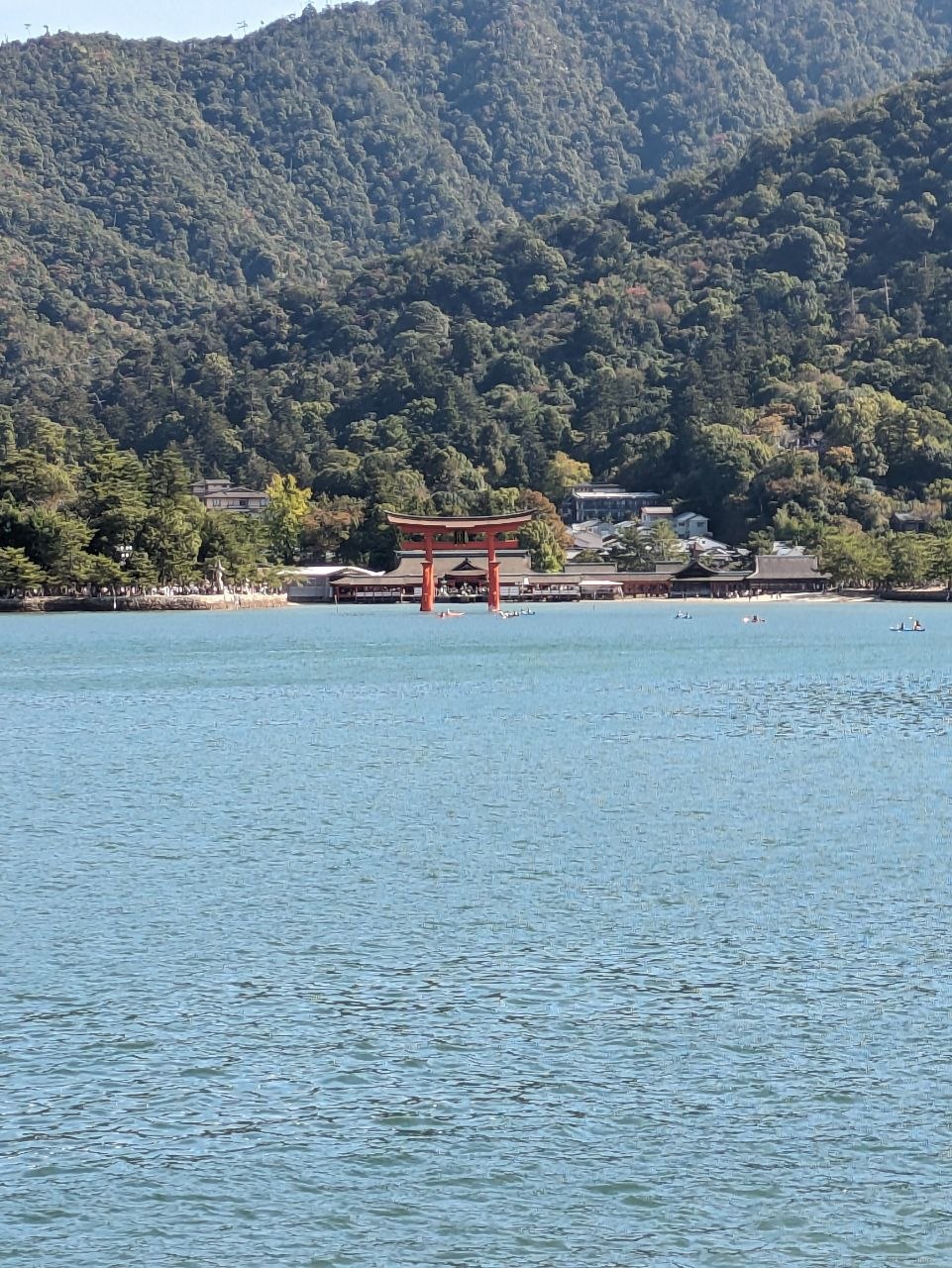
Itsukushima Jinja (厳島神社) is a Shinto shrine located on Itsukushima, commonly known as Miyajima Island, in Hiroshima Bay. Designated a UNESCO World Heritage Site in 1996, it is one of Japan’s most celebrated and frequently photographed landmarks. The shrine is renowned for its striking vermilion torii gate, which appears to float above the sea at high tide, creating one of the country’s most iconic views.
History
The origins of Itsukushima Jinja are traditionally dated to 593 CE, attributed to Saeki Kuramoto, a local clan leader who established a place of worship on the island. The shrine was dedicated to the three daughters of Susanoo-no-Mikoto, the Shinto god of seas and storms: Ichikishimahime, Tagorihime, and Tagitsuhime — collectively worshipped as deities of the sea and safe passage. The shrine rose to national prominence in the late 12th century when Taira no Kiyomori, the powerful head of the Taira clan, became a devoted patron and oversaw a grand rebuilding of the complex in its current architectural style around 1168. The Taira clan’s influence ensured the shrine received imperial and aristocratic patronage for generations. Despite destruction and reconstruction over the centuries — particularly during the civil wars of the Sengoku period — the shrine has been carefully maintained in alignment with its original Heian-period design.
Architecture and Layout
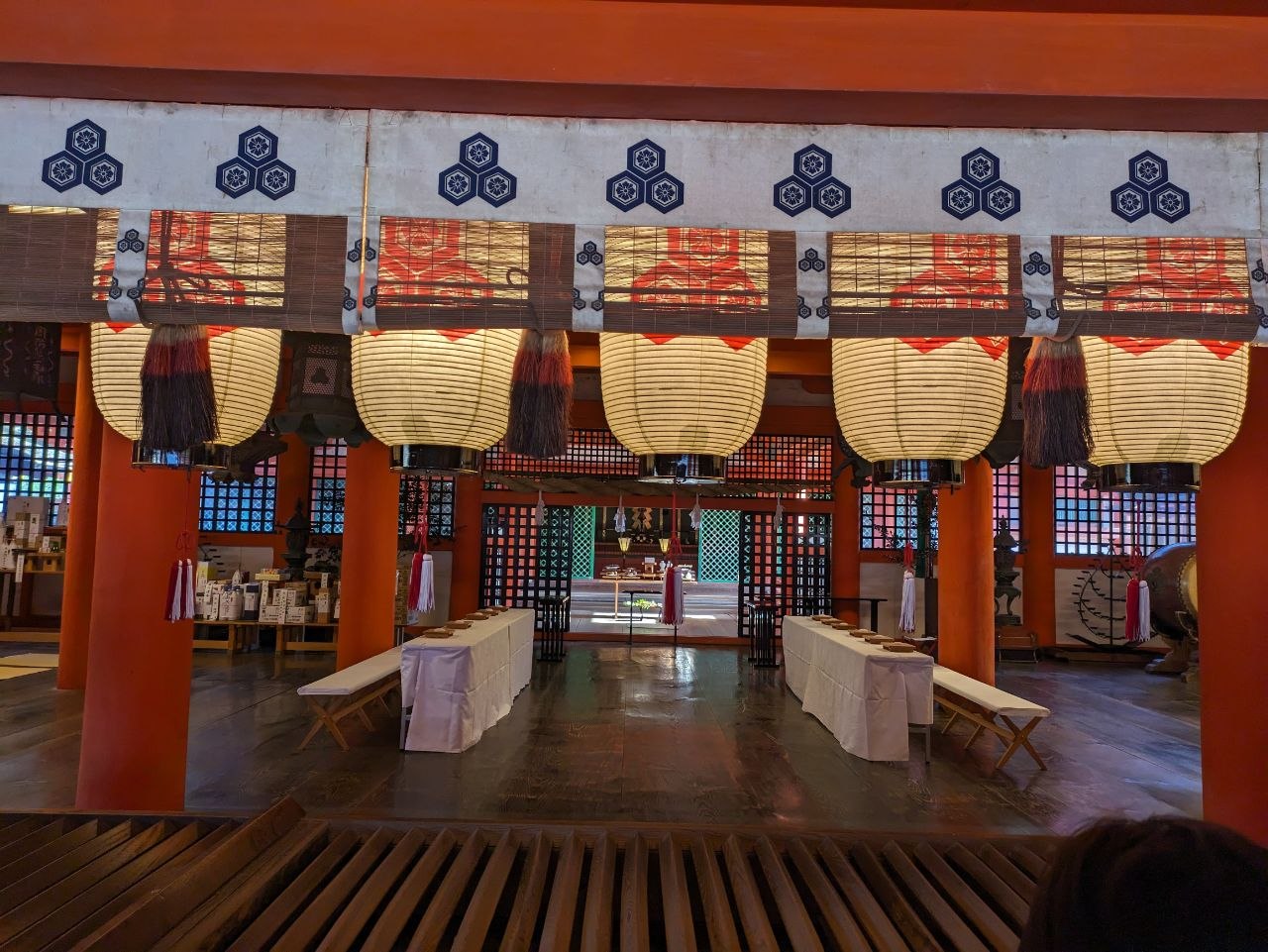
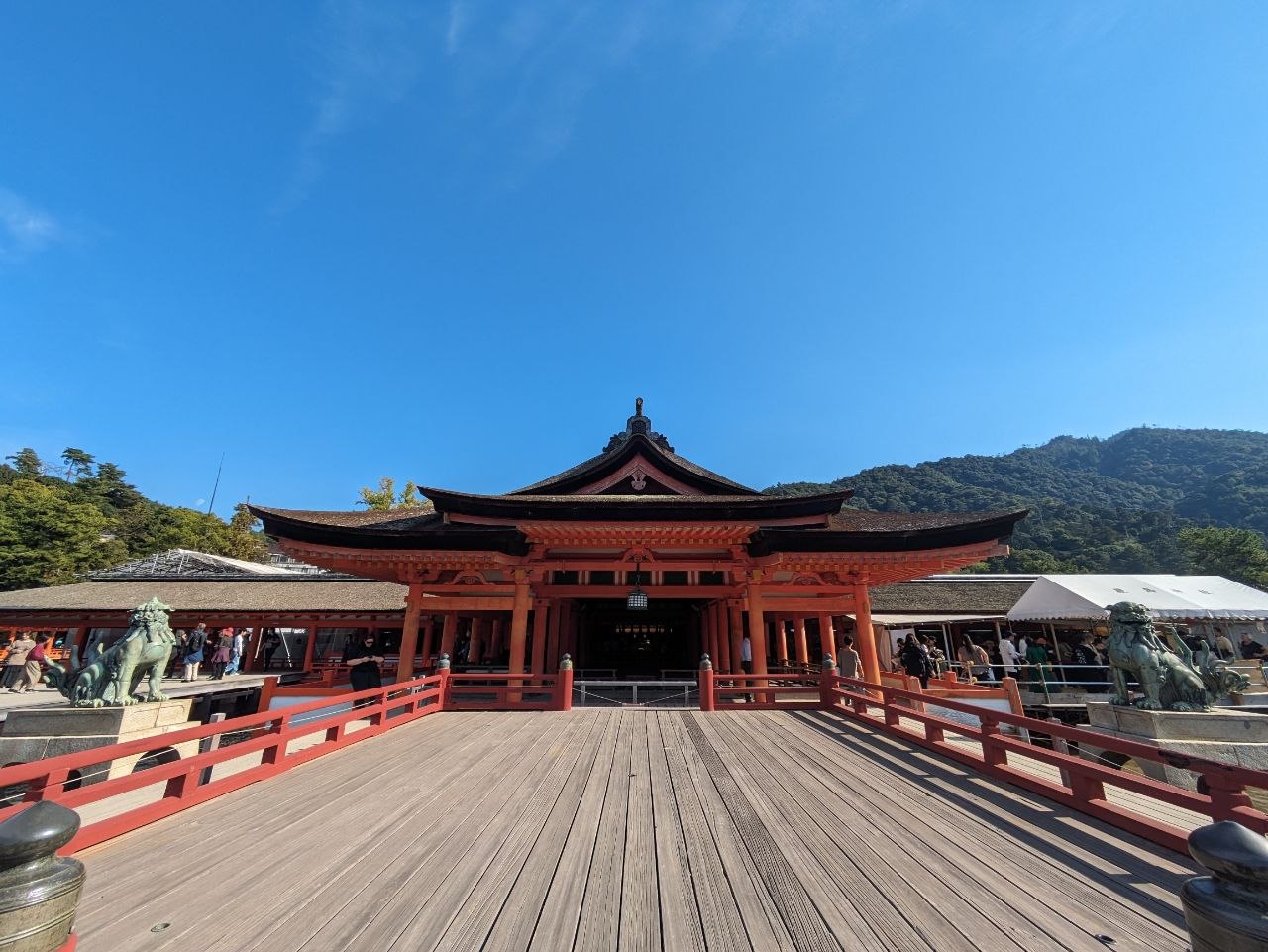
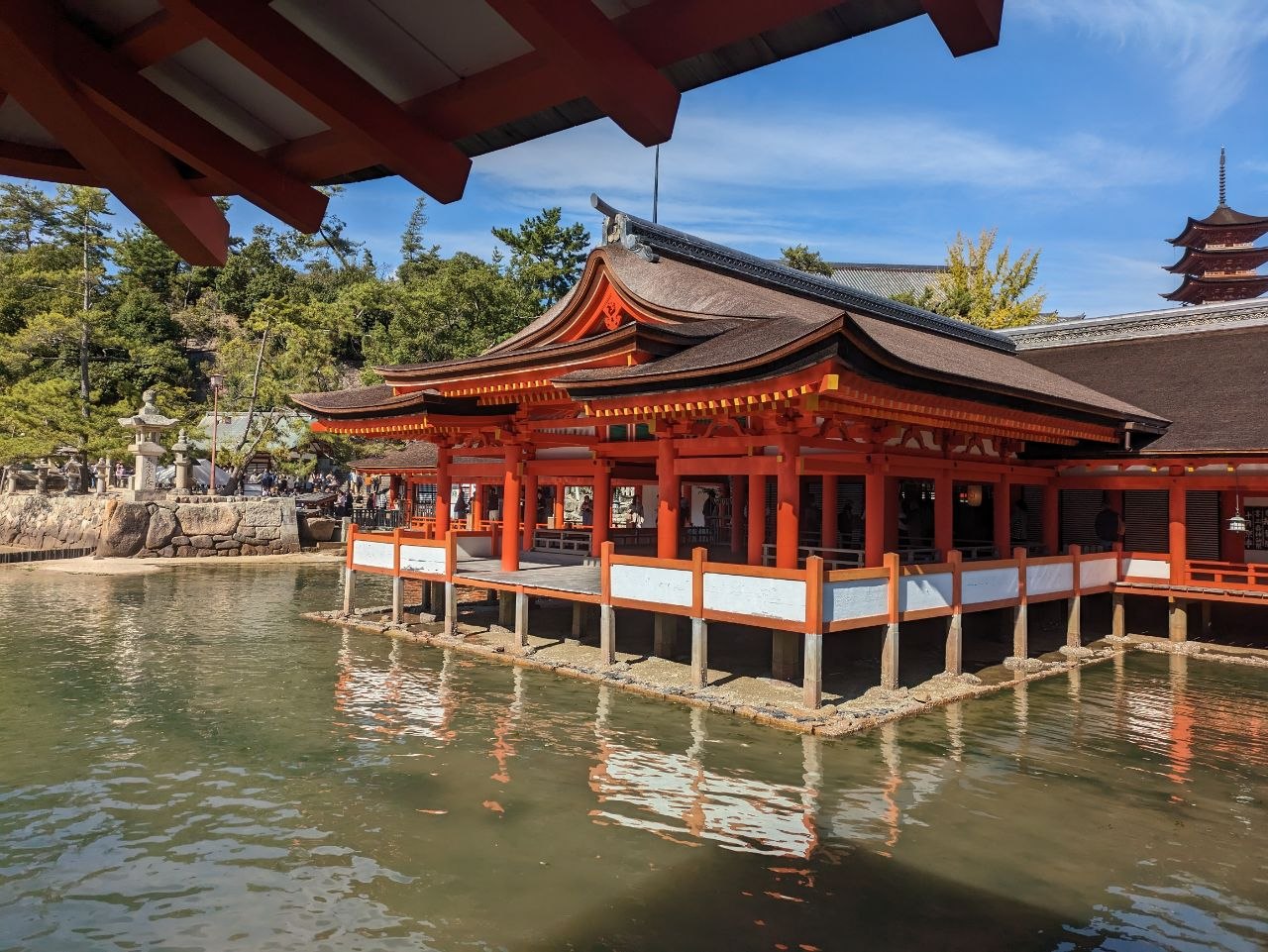
The shrine complex is built primarily over the tidal flats of the bay, supported by wooden pillars that keep it elevated above the waterline. This design reflects both practical and spiritual considerations — the island itself was considered sacred, and construction directly on the ground was traditionally forbidden. The complex spans approximately 30,000 square meters and consists of over a dozen structures connected by covered corridors and raised walkways, all finished in the shrine’s characteristic red lacquer and natural wood.
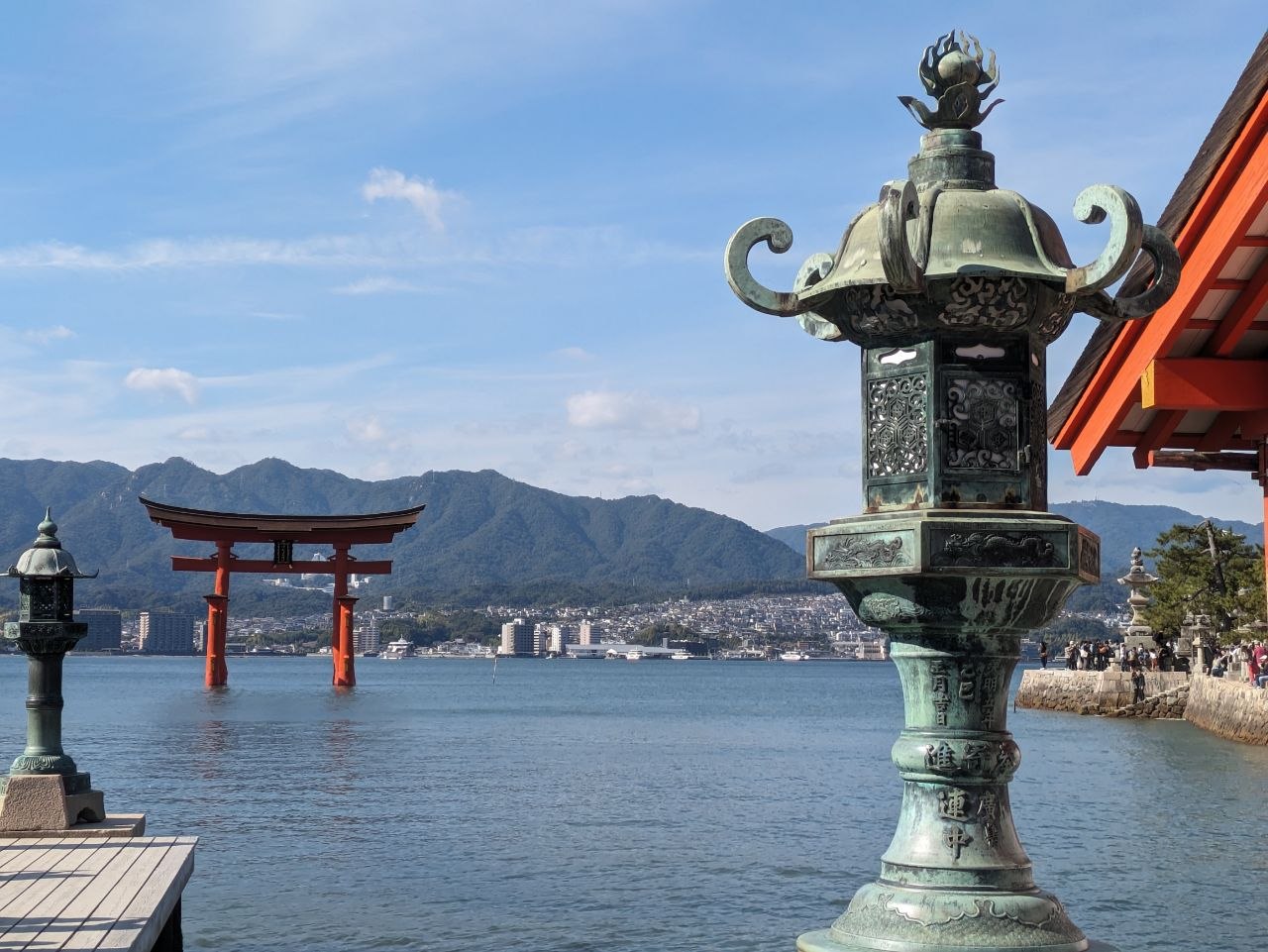
At the center of the compound sits the honden (main sanctuary) and haiden (oratory hall), flanked by subsidiary shrines, a noh theater stage, and a treasure hall. The ensemble follows the shinden-zukuri style of Heian aristocratic architecture, a design rarely preserved at this scale anywhere in Japan. The great torii gate (o-torii) stands approximately 160 meters offshore from the main shrine, rising 16 meters above the water. Its current form dates to 1875 and is constructed of camphor wood. The gate marks the boundary between the sacred and the mundane — boats historically passed through it as the formal entrance to the island.
The Floating Torii
The o-torii is the defining image of Itsukushima and one of Japan’s “Three Views” (Nihon Sankei), a classical designation of the country’s most scenic landscapes. Its appearance changes dramatically with the tides. At high tide, the surrounding sea rises around its base and the gate appears to float freely on the water. At low tide, the seafloor is exposed and visitors can walk directly up to the gate’s massive pillars. The torii is unpainted — its deep red-orange color comes from a coating of bengara, a traditional iron oxide pigment that also acts as a preservative against the sea air.
Noh Theater and Cultural Significance
Within the shrine precinct stands one of Japan’s oldest noh theater stages, constructed over the water and used for performances during the shrine’s major festivals. Taira no Kiyomori is credited with introducing noh and bugaku (court dance) performances to the island in the 12th century as offerings to the deities. Today, the Kangensai Festival — held annually on the 17th day of the sixth lunar month — features sacred music performed on boats that float across the bay at night, illuminated by torchlight. The festival is considered one of the three great festivals of Japan and remains one of the most visually spectacular Shinto rituals in the country.
Sacred Deer of Miyajima
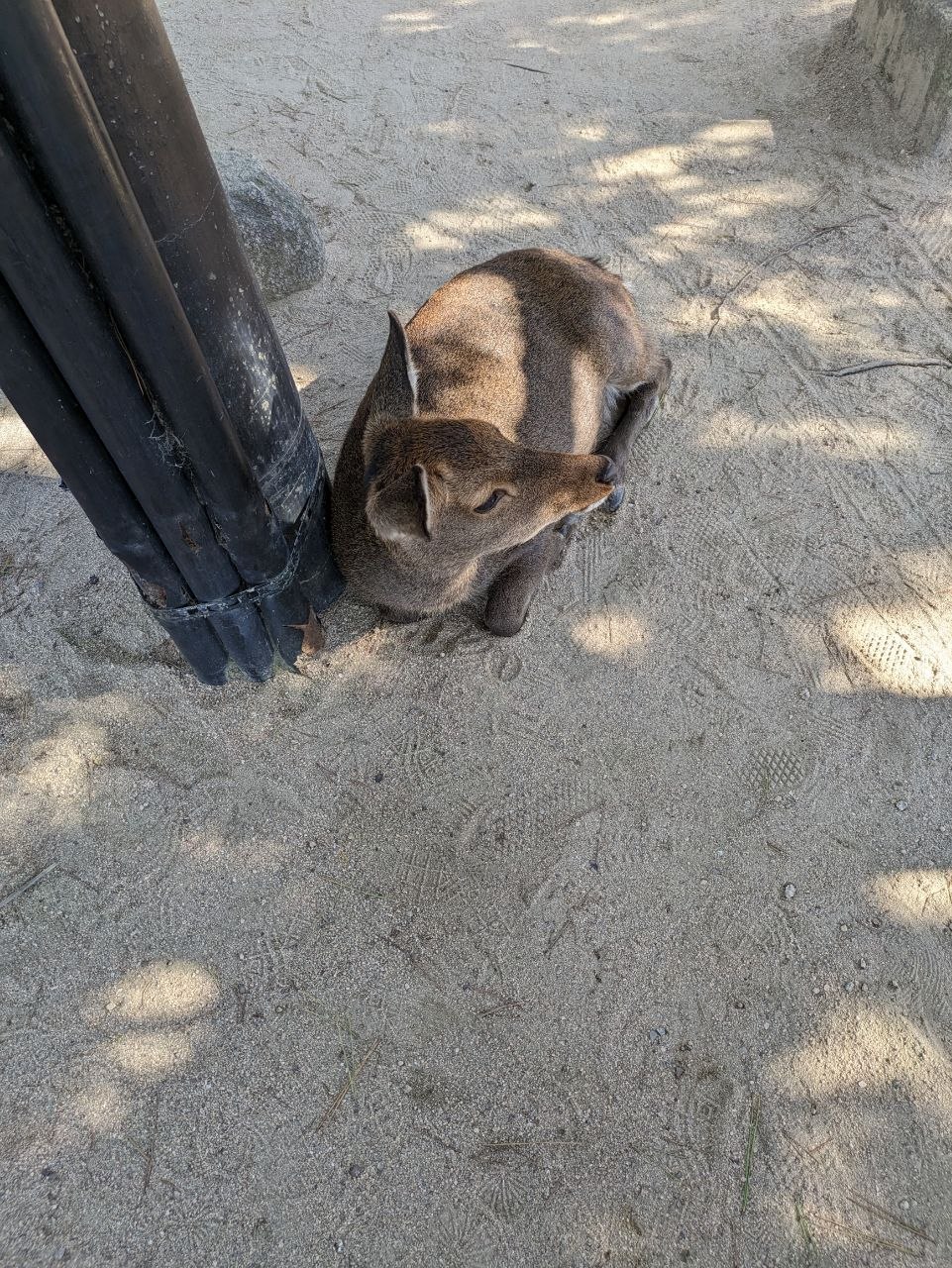
Free-roaming Sika deer inhabit the entire island of Miyajima and are considered divine messengers (shika) within Shinto tradition. They move freely through the shrine precinct, along the shopping streets, and across the beaches without restriction. The deer are not domesticated and should not be fed — signs throughout the island remind visitors of this. Their presence adds to the island’s atmosphere of being outside ordinary time and space, an effect deliberately cultivated through centuries of religious tradition.
Visiting Tips
Miyajima Island is reached by ferry from Miyajimaguchi Pier, approximately 10 minutes from the Hiroshima area. The JR Ferry is covered by the Japan Rail Pass. The island is accessible year-round, and the shrine itself is open daily with an admission fee of ¥300 for adults. High tide schedules are posted at the ferry terminal and at the shrine entrance — arriving during high tide offers the best views of the floating torii. The island also has a ropeway to the summit of Mount Misen for panoramic views of the Seto Inland Sea. Accommodation on the island is limited but available for those wishing to experience the shrine and surroundings after day-trippers have departed.
 Jumping Timezones
Leave a comment