Antigua Guatemala, officially La Muy Noble y Muy Leal Ciudad de Santiago de los Caballeros de Guatemala, served for more than two centuries as the colonial capital of the Captaincy General of Guatemala, the vast Spanish administrative region that once encompassed much of Central America and southern Mexico. Founded in 1543 in the Panchoy Valley, the city was laid out on a formal grid plan typical of Spanish colonial urbanism, with a central plaza surrounded by religious, civic, and military institutions.
Today, Antigua is recognized as a UNESCO World Heritage Site for its remarkably well-preserved ensemble of Spanish Baroque-influenced architecture and its atmospheric cobblestone streets. Layers of history are visible in its churches and convents, many of them partly ruined by earthquakes, while the city itself sits in a dramatic natural amphitheatre framed by three volcanoes: the near-perfect cone of Volcán de Agua to the south, and the twin peaks of the Fuego and Acatenango volcanic complex to the west.
Parque Central
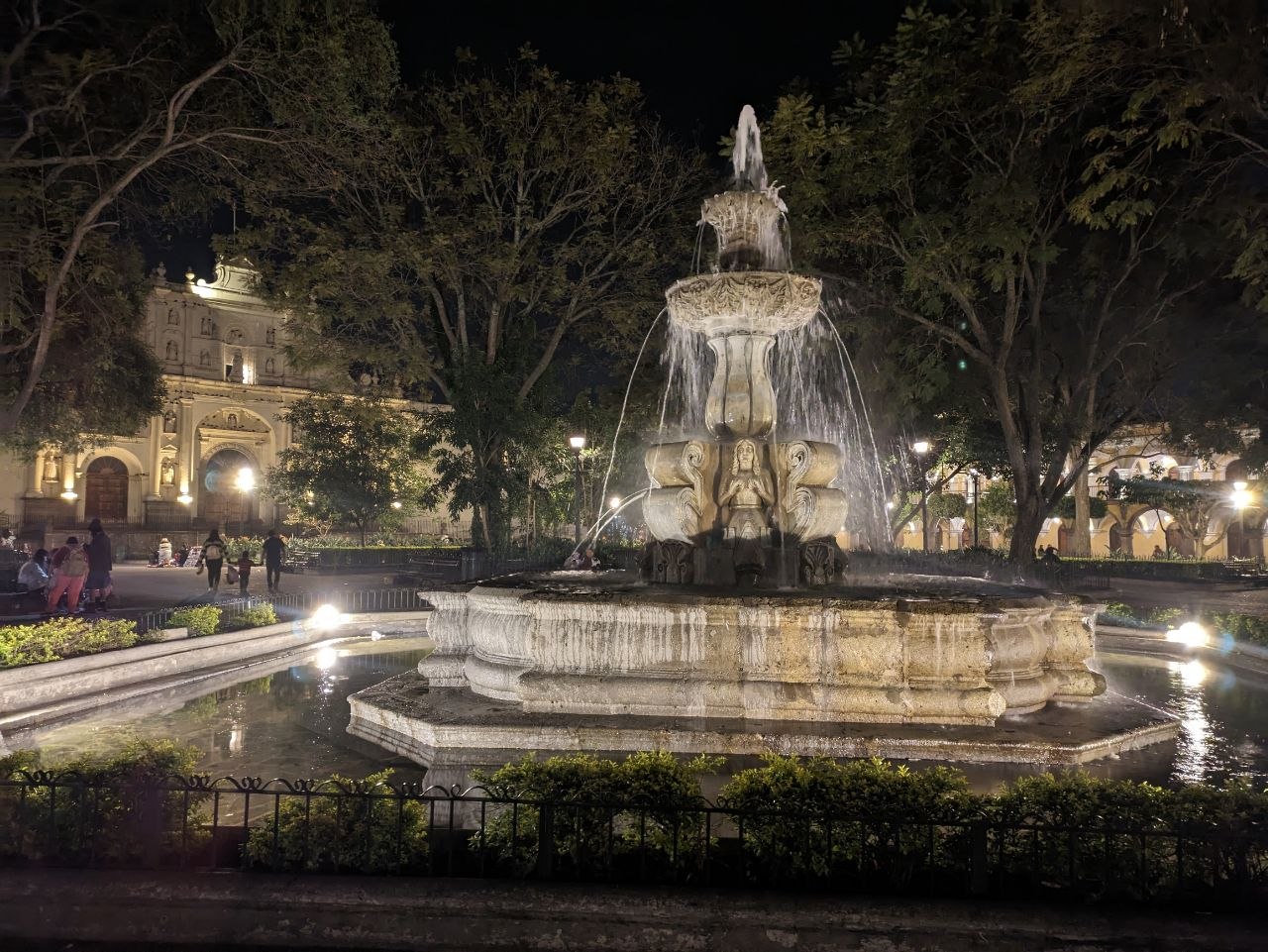
Parque Central functions as the historic and social heart of Antigua. This grand central plaza is anchored by an ornate stone fountain and framed by landmark buildings on all four sides: the arcaded Palacio de los Capitanes Generales, which once housed the colonial administration; the former Cabildo, or town hall; and the Cathedral of Santiago occupying the eastern flank. Trees, benches, and pathways create a shaded civic garden where residents and visitors converge throughout the day.
By day, the square is alive with vendors, families, and street performers, while the surrounding colonnades bustle with cafés, shops, and offices. After sunset, the atmosphere shifts as the central fountain and the cathedral facade are dramatically illuminated, highlighting the baroque architectural details and giving the plaza a theatrical, almost stage-like quality within the wider cityscape.
Cathedral of Santiago
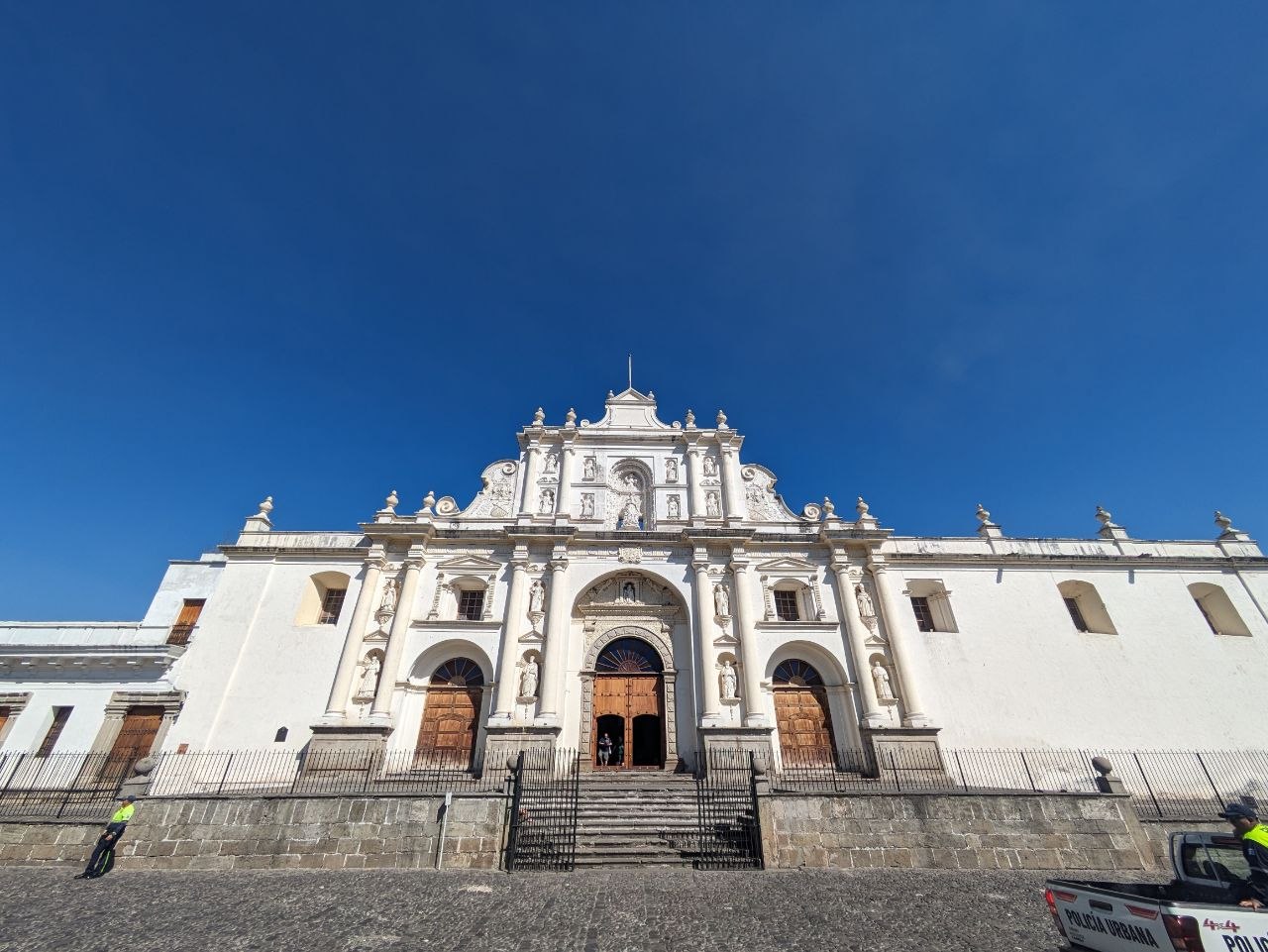
The Cathedral of Santiago, officially dedicated to Saint James the Apostle, was once one of the most important churches in Central America. The cathedral complex, originally completed in 1680, reflected the wealth and influence of the colonial capital with its grand nave, multiple chapels, and extensive cloisters. Its design combined European baroque models with local craftsmanship and seismic adaptations typical of “earthquake baroque” in the region.
The Santa Marta earthquakes of 1773 devastated much of the cathedral, leading to the relocation of the capital to present-day Guatemala City. Only a portion of the structure was later rebuilt, resulting in the striking contrast seen today between the gleaming white facade on the plaza and the ruined nave and collapsed vaults behind it. Walking around the complex reveals massive stone piers, broken domes, and exposed chapels that together form a powerful architectural record of Antigua’s turbulent seismic history.
Arco de Santa Catalina
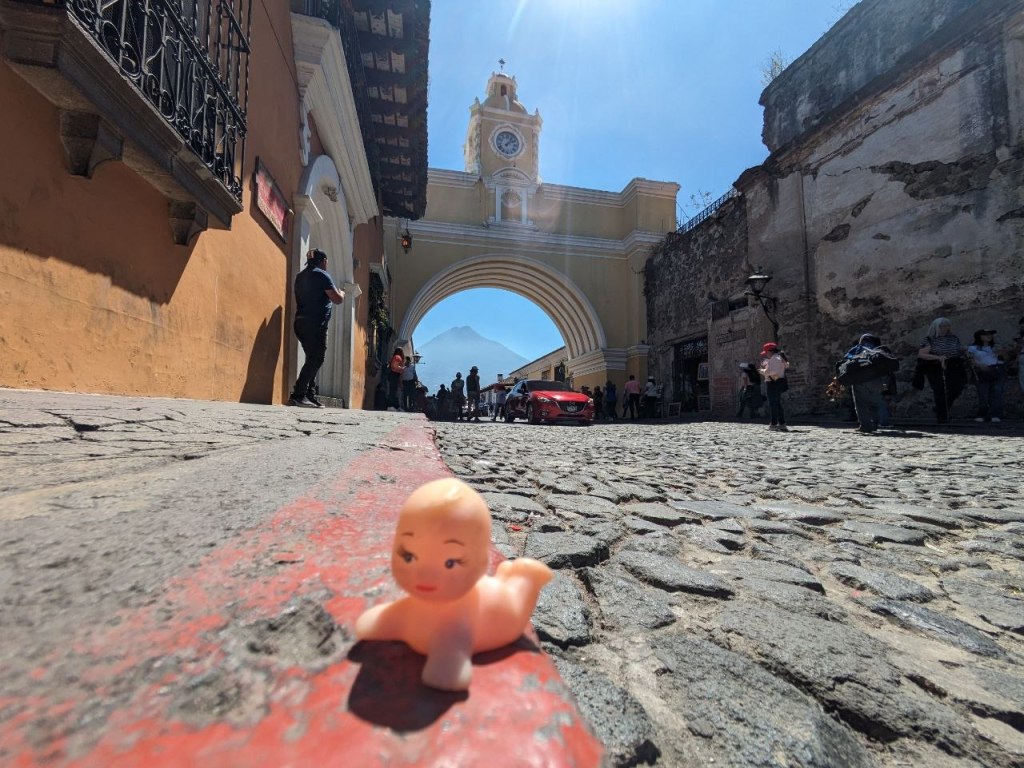
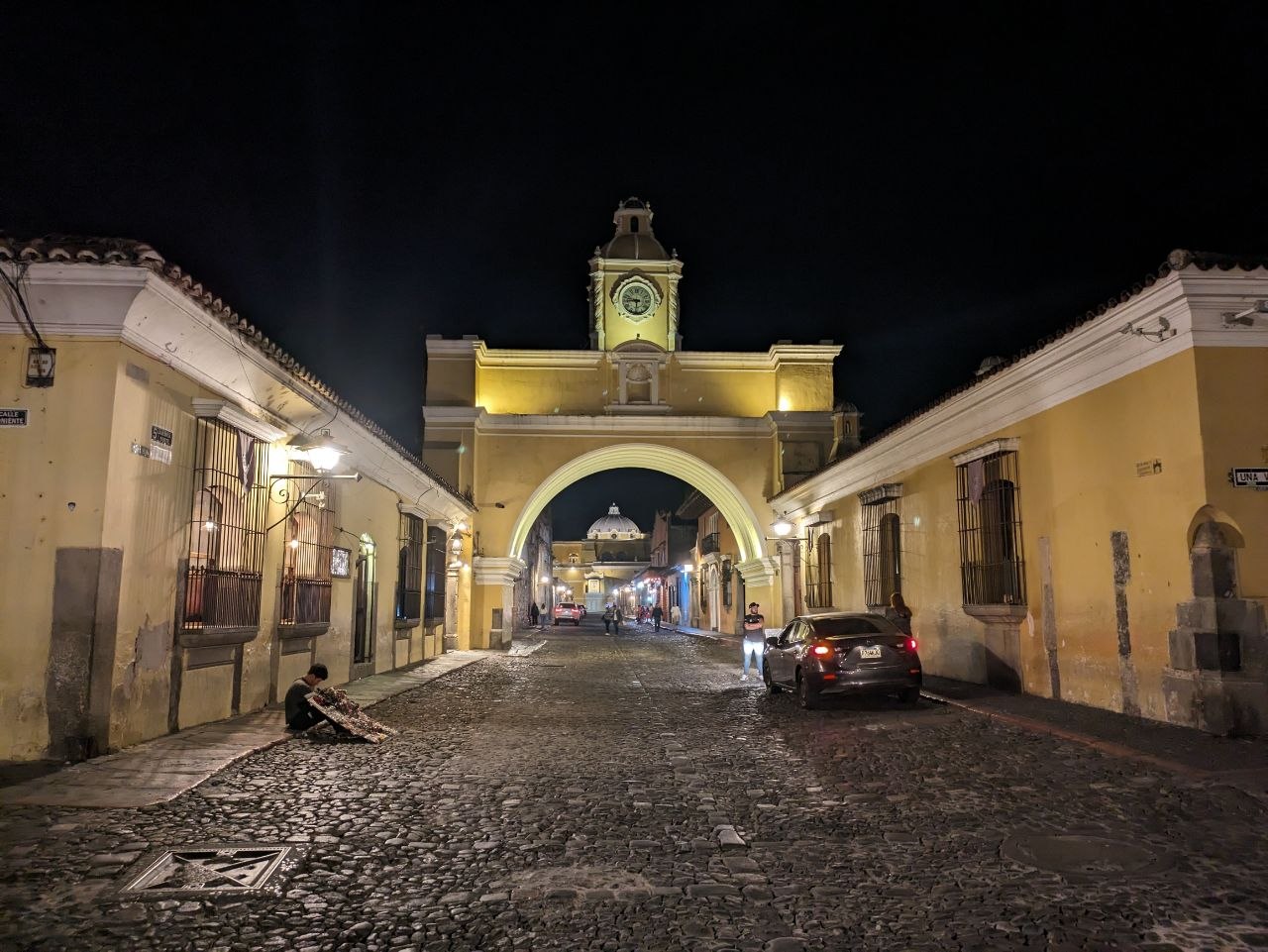
The Arco de Santa Catalina is widely regarded as Antigua’s most iconic single landmark. Spanning one of the main streets near the historic center, the yellow arch was built in the 17th century to connect the two halves of the Santa Catalina convent complex. The enclosed passageway allowed cloistered nuns to cross the street unseen, in keeping with the strict monastic rules of the time.
The arch’s simple baroque lines, clock tower, and distinctive color make it immediately recognizable, but its setting is just as significant as its architecture. From certain vantage points, the arch perfectly frames the cone of Volcán de Agua rising at the end of the cobblestone street, creating one of the most photographed views in Guatemala. Day and night, the thoroughfare beneath the arch remains an active urban corridor, animated by pedestrians, vendors, and passing processions.
La Merced
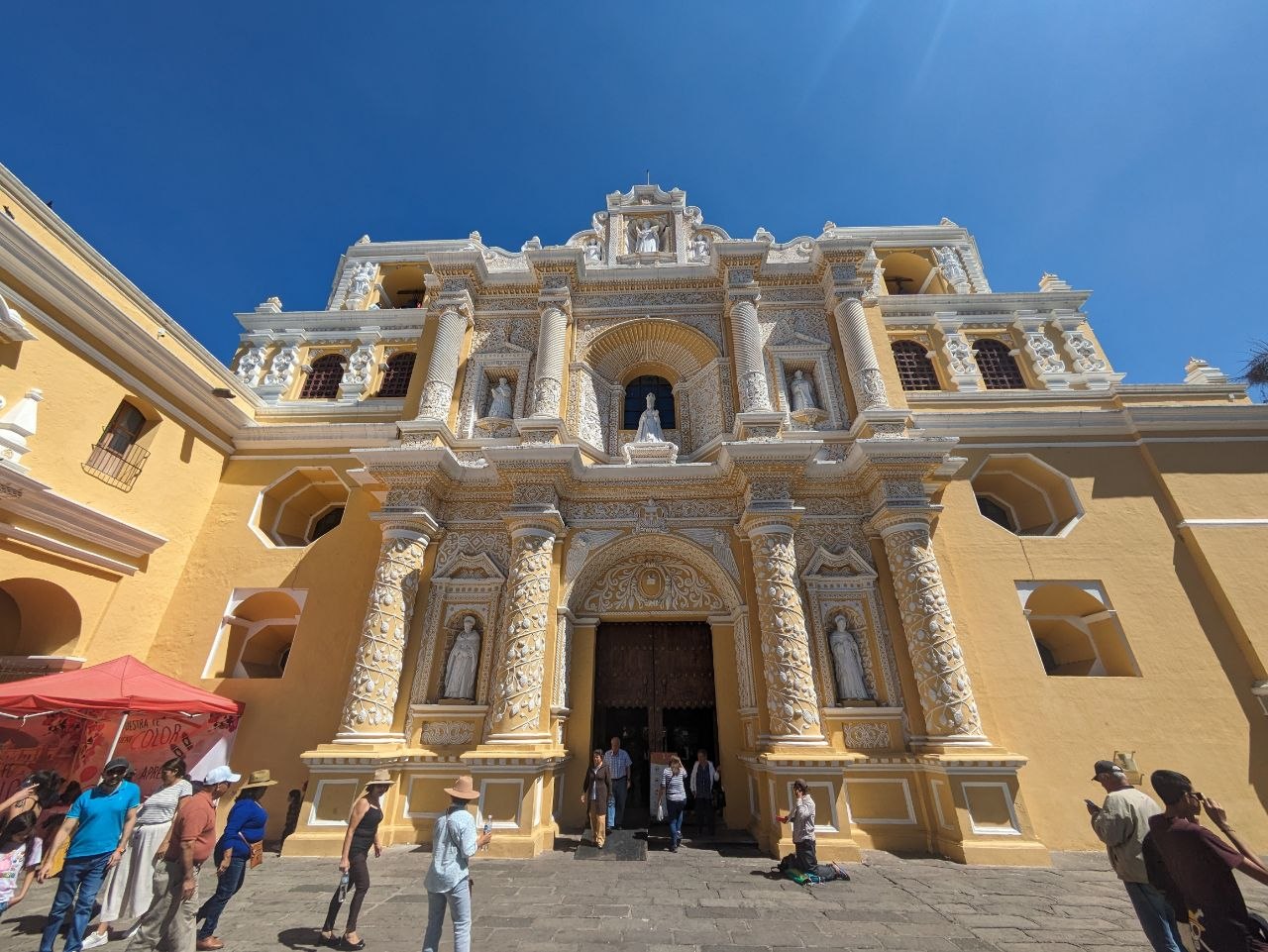
La Merced Church stands out as Antigua’s most ornate religious facade. Completed in 1767, the church presents a vivid golden-yellow exterior richly decorated with stucco reliefs, scrolls, and geometric motifs typical of the plateresque and late baroque styles adapted to the Americas. The design balances solid seismic-resistant walls with an almost lace-like surface treatment that captures light and shadow throughout the day.
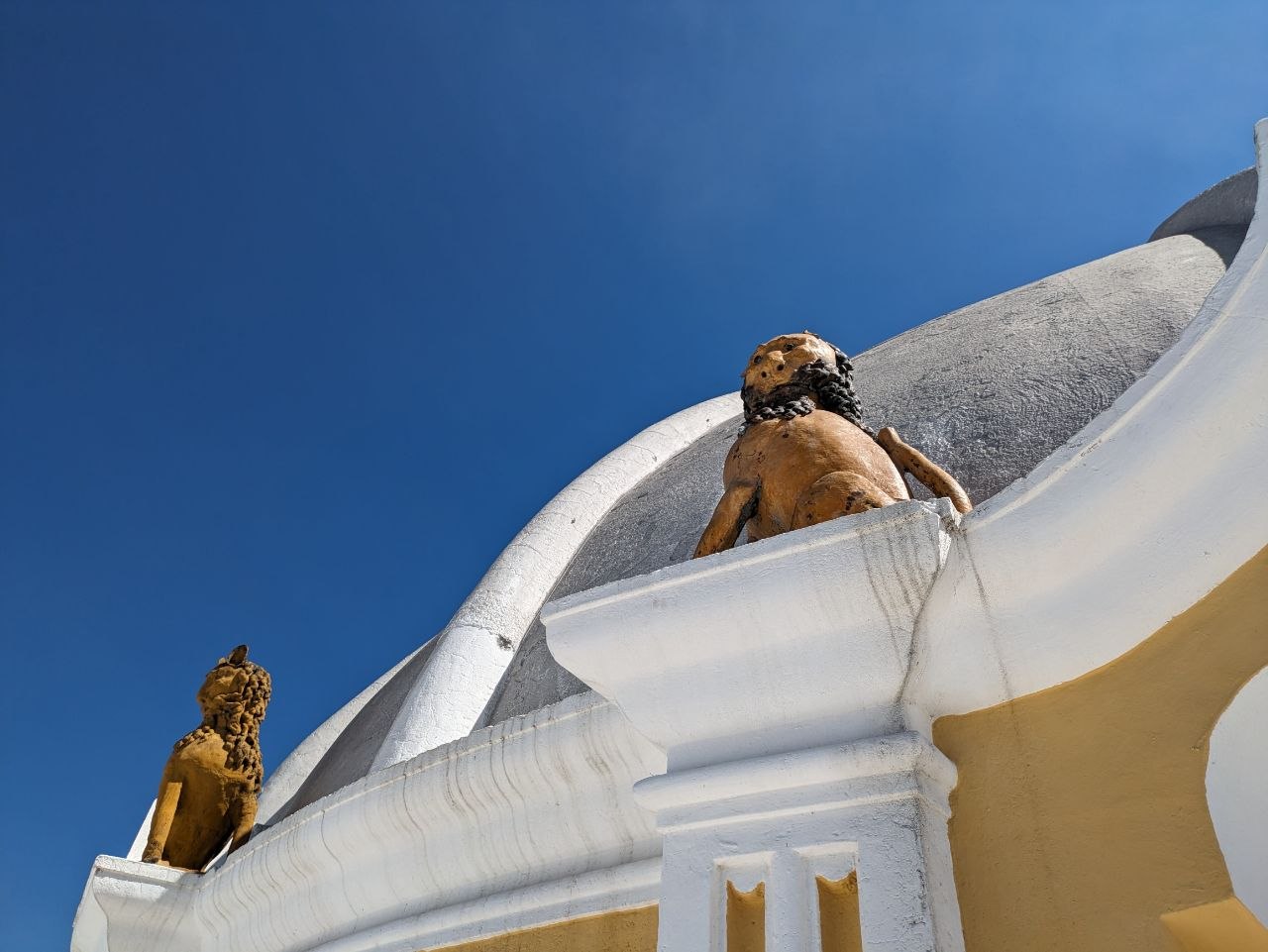
Above the main entrance, niches and pilasters are framed by intricate ornamentation, while stone lion statues crown the roofline and dome, adding a distinctive sculptural element visible from surrounding streets and rooftops. Inside the complex, cloisters, chapels, and courtyards speak to the historic role of the Mercedarian order in the religious and social life of colonial Antigua.
San Francisco El Grande
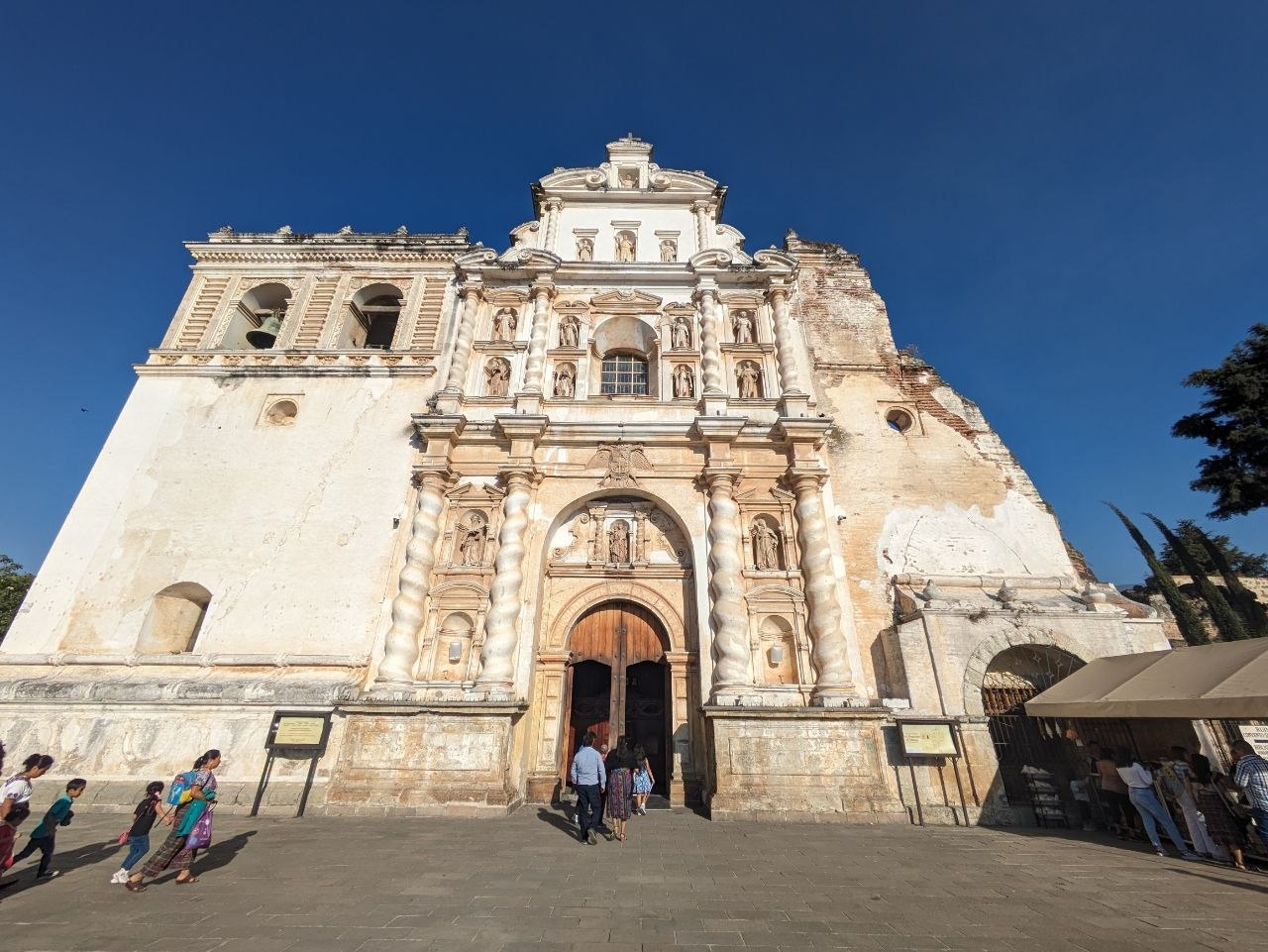
San Francisco El Grande is one of the oldest and largest church complexes in Antigua, predating many of the city’s best-known baroque monuments. Its facade tells a story of endurance and adaptation, bearing visible scars from repeated earthquakes and subsequent reconstructions. Layers of plaster, stonework, and patching create a textured surface that contrasts with the more uniform finishes of other churches.
The complex extends beyond the main church to include cloisters, gardens, and devotional spaces. It is also home to the shrine of Hermano Pedro de San José de Betancur, Guatemala’s first canonized saint, whose legacy of charity and social assistance continues to attract pilgrims. The combination of architectural significance, religious importance, and weathered beauty makes San Francisco El Grande a key site for understanding both Antigua’s spiritual life and its seismic past.
The Rooftops & Volcanoes
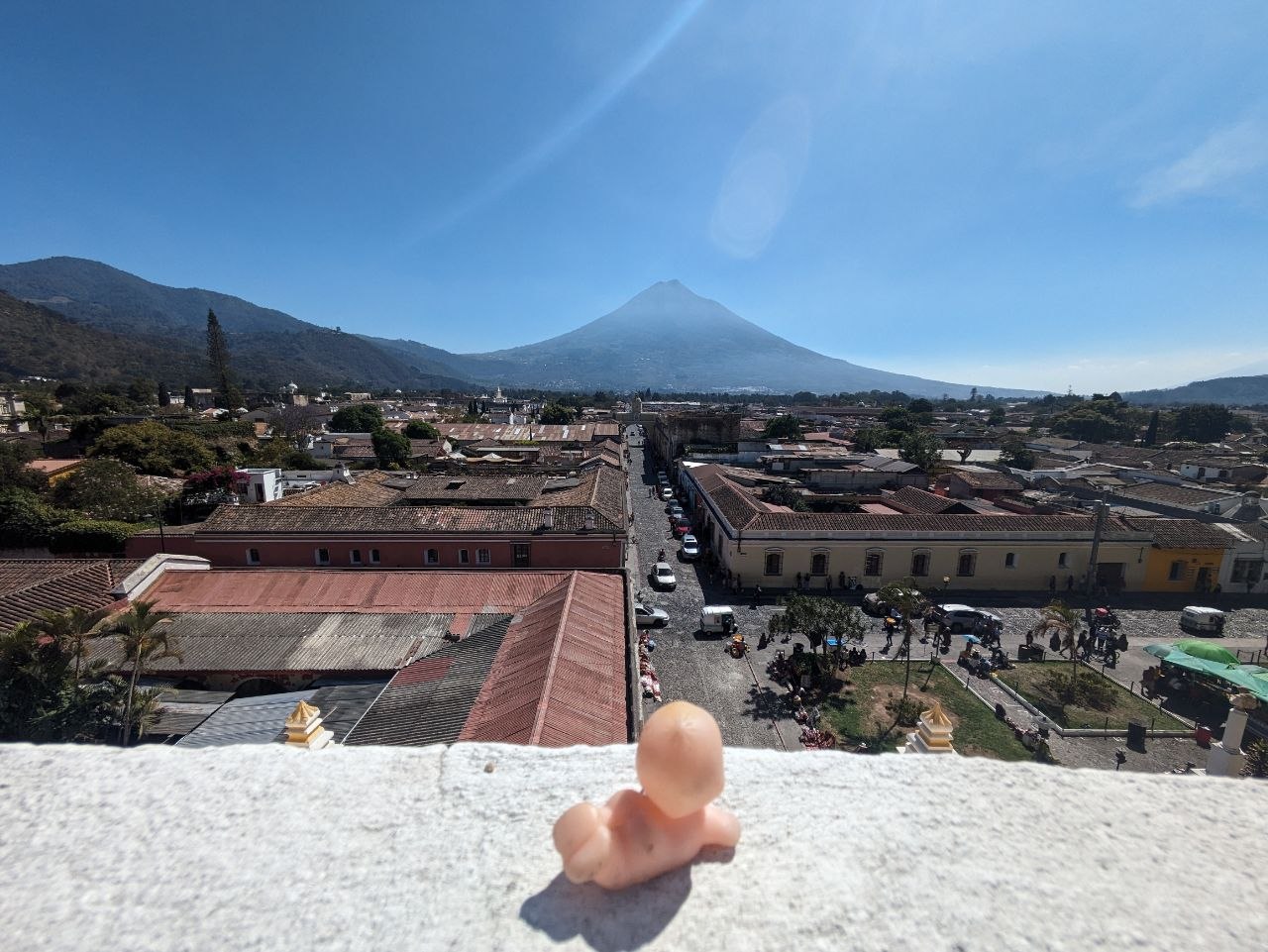
Antigua’s rooftop terraces provide a striking vantage point from which to appreciate the city’s setting and urban fabric. From above, a sea of terracotta tiles stretches across the valley floor, punctuated by domes, bell towers, and ruined vaults. The regular street grid becomes more legible, revealing the relationship between the central plaza, major religious complexes, and the surrounding residential neighborhoods.
The broader landscape is dominated by the volcanic trio of Agua, Fuego, and Acatenango. Volcán de Agua rises directly to the south with a near-symmetrical cone, while to the west the twin peaks of Fuego and Acatenango form a more rugged skyline. On clear days, plumes of smoke and occasional ash from Fuego underscore the region’s ongoing volcanic activity, providing a dramatic natural counterpoint to Antigua’s historic architecture.
Visiting Tips
Antigua sits at an elevation of around 1,530 meters (5,020 feet), which moderates the tropical climate and can make evenings cool, especially during the dry season from November to April. Comfortable walking shoes are recommended, as most exploration takes place on uneven cobblestone streets and within historic complexes that may include steps and irregular surfaces. Sunscreen, a hat, and layers are useful for days that start cool, warm quickly, and cool again after sunset.
The historic center is compact and best experienced on foot, with most major plazas, churches, and convents located within a short walk of one another. Many sites charge modest entrance fees and have specific opening hours, so checking schedules in advance helps in planning visits, particularly to church interiors, museum spaces, and rooftop terraces. Local regulations often prohibit climbing on ruins or restricted areas for safety and conservation reasons, and visitors are encouraged to be mindful of ongoing religious services and the privacy of residents when photographing streets, courtyards, and rooftops.
 Jumping Timezones
Leave a comment