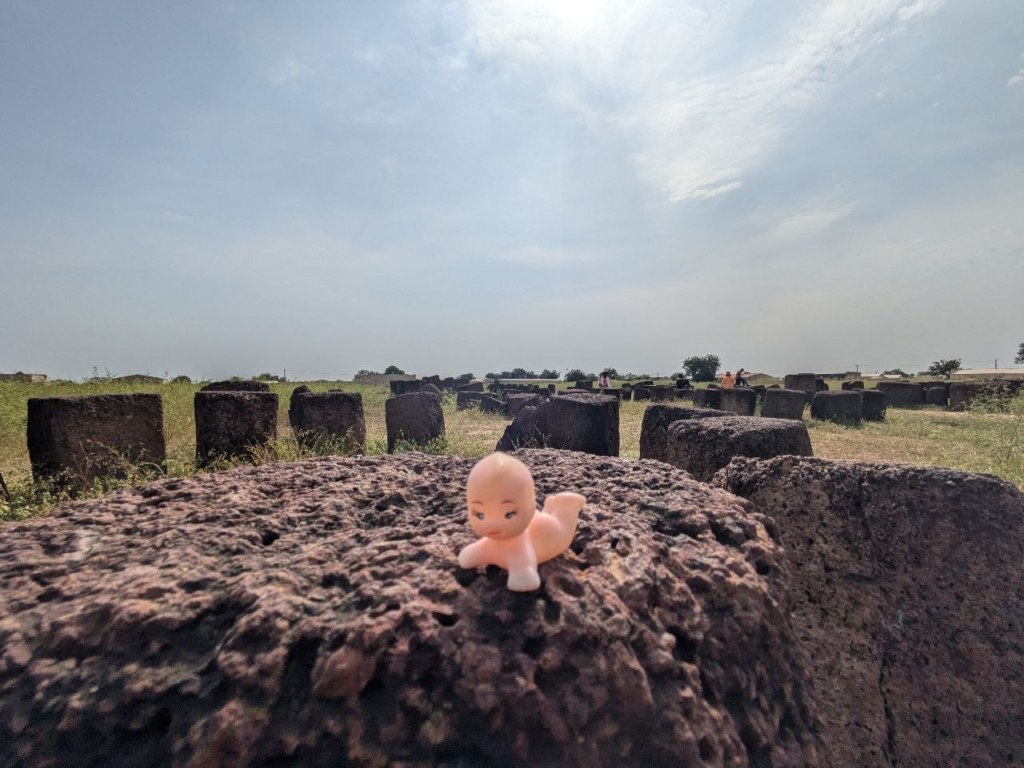
Sine Ngayene is one of the most extensive megalithic complexes in West Africa, a vast landscape of laterite stone circles and monoliths set across open savanna. Hundreds of carved, upright blocks are arranged in carefully planned groupings, forming a monumental cemetery that reflects a highly organized society active here between the 3rd century BCE and the 16th century CE.
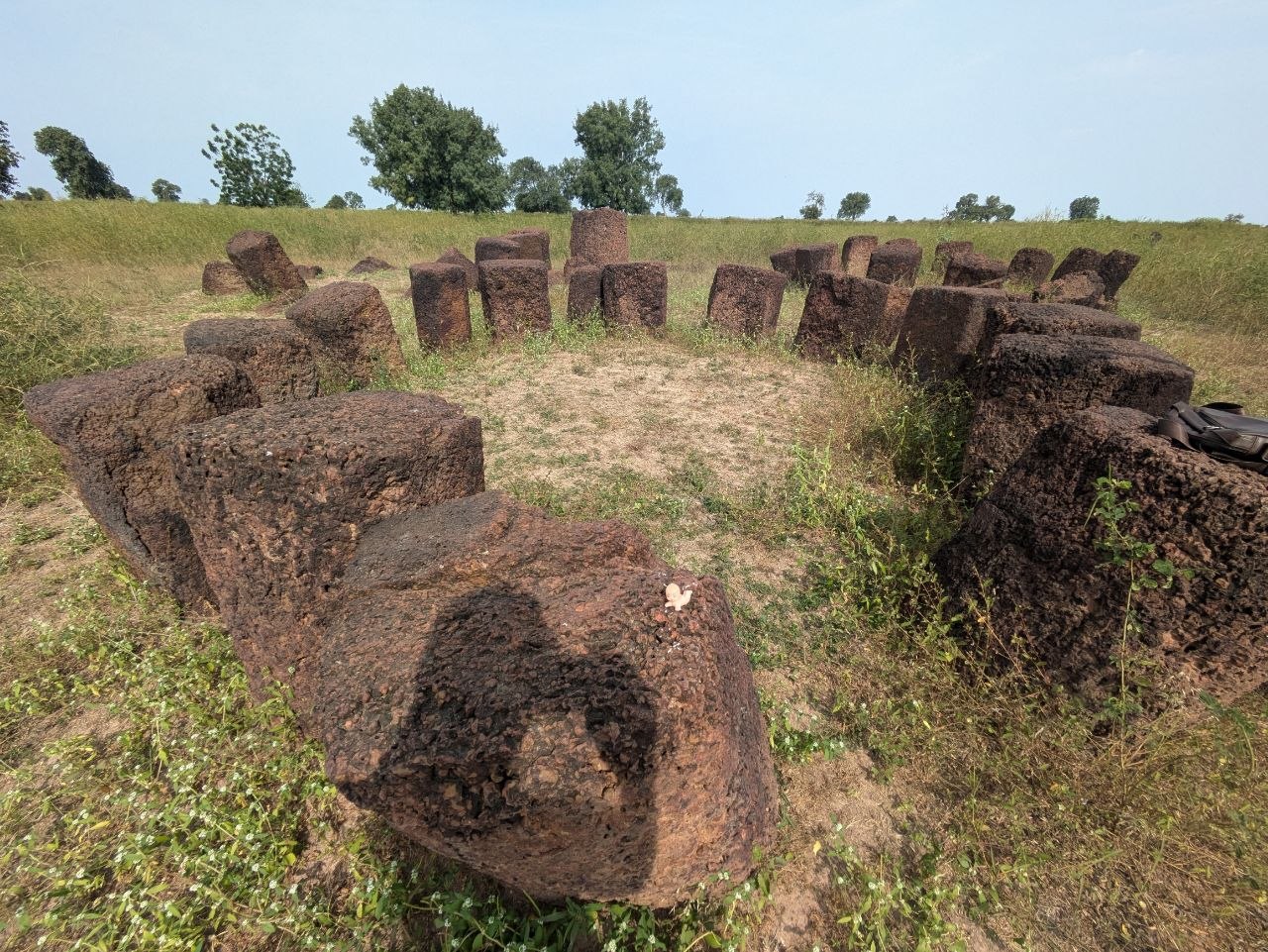
The site forms part of the wider Senegambian stone circle region, but Sine Ngayene stands out for the density and variety of its monuments. From full circular arrangements of towering cylindrical stones to dense clusters of rectangular and barrel-shaped blocks, the landscape offers a rare, tangible record of ancient funerary traditions and social structures.
Origins and Cultural Context
The megaliths of Sine Ngayene were erected over many centuries by Iron Age communities who mastered quarrying and shaping the region’s laterite bedrock. Archaeological research suggests that the stones were closely linked to burial practices and ancestor veneration, with each circle marking a collective grave or family lineage. The labor required to cut, transport, and raise the monoliths points to a society with strong communal organization and shared belief systems.
Although the names and languages of the builders are no longer known, material remains recovered from the site—including pottery, iron objects, and grave goods—indicate wide-ranging connections across the Senegambian region. The megaliths stand as some of the most visible and enduring evidence of these now-vanished cultures.
The Stone Circles and Monoliths
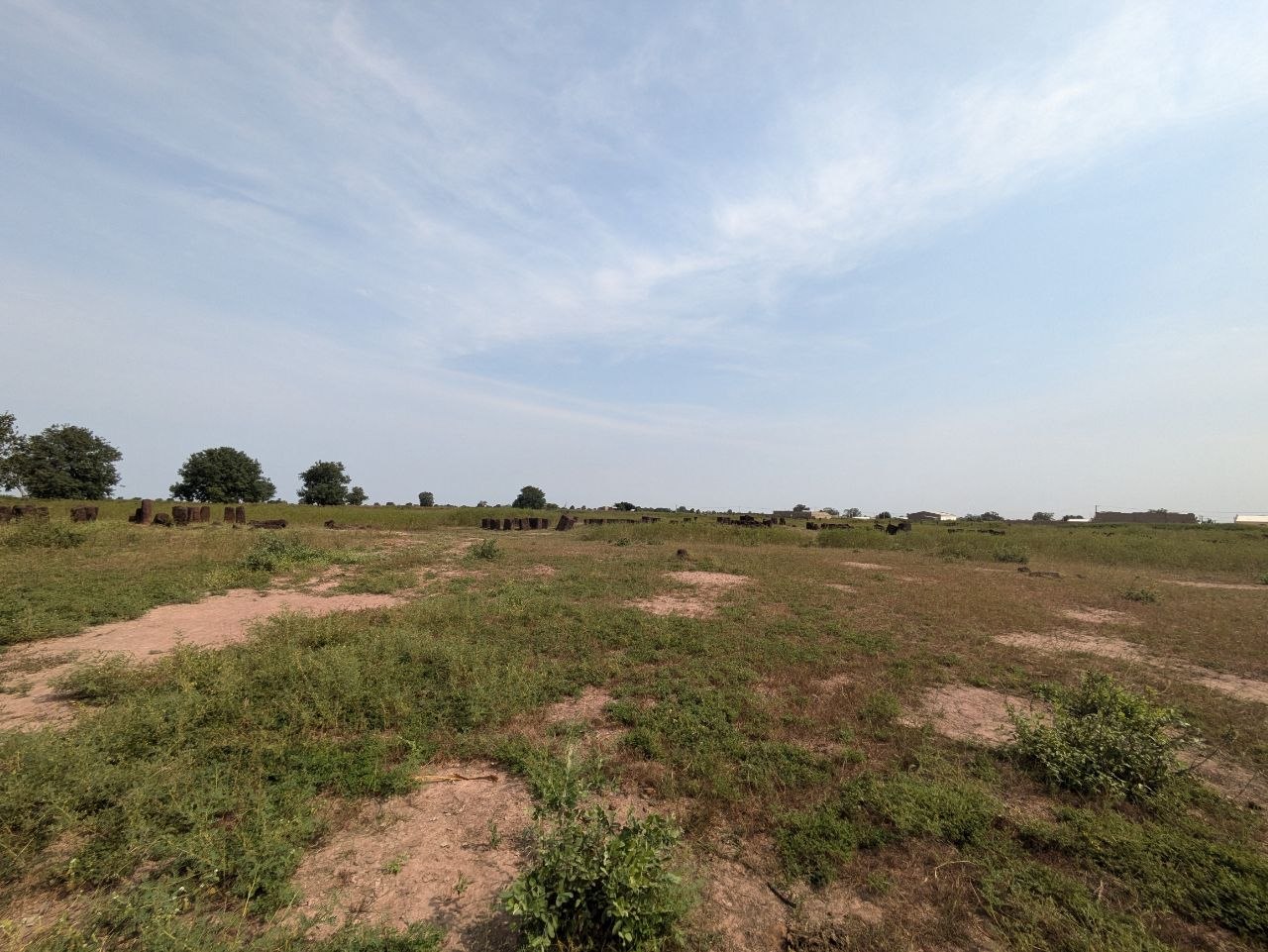
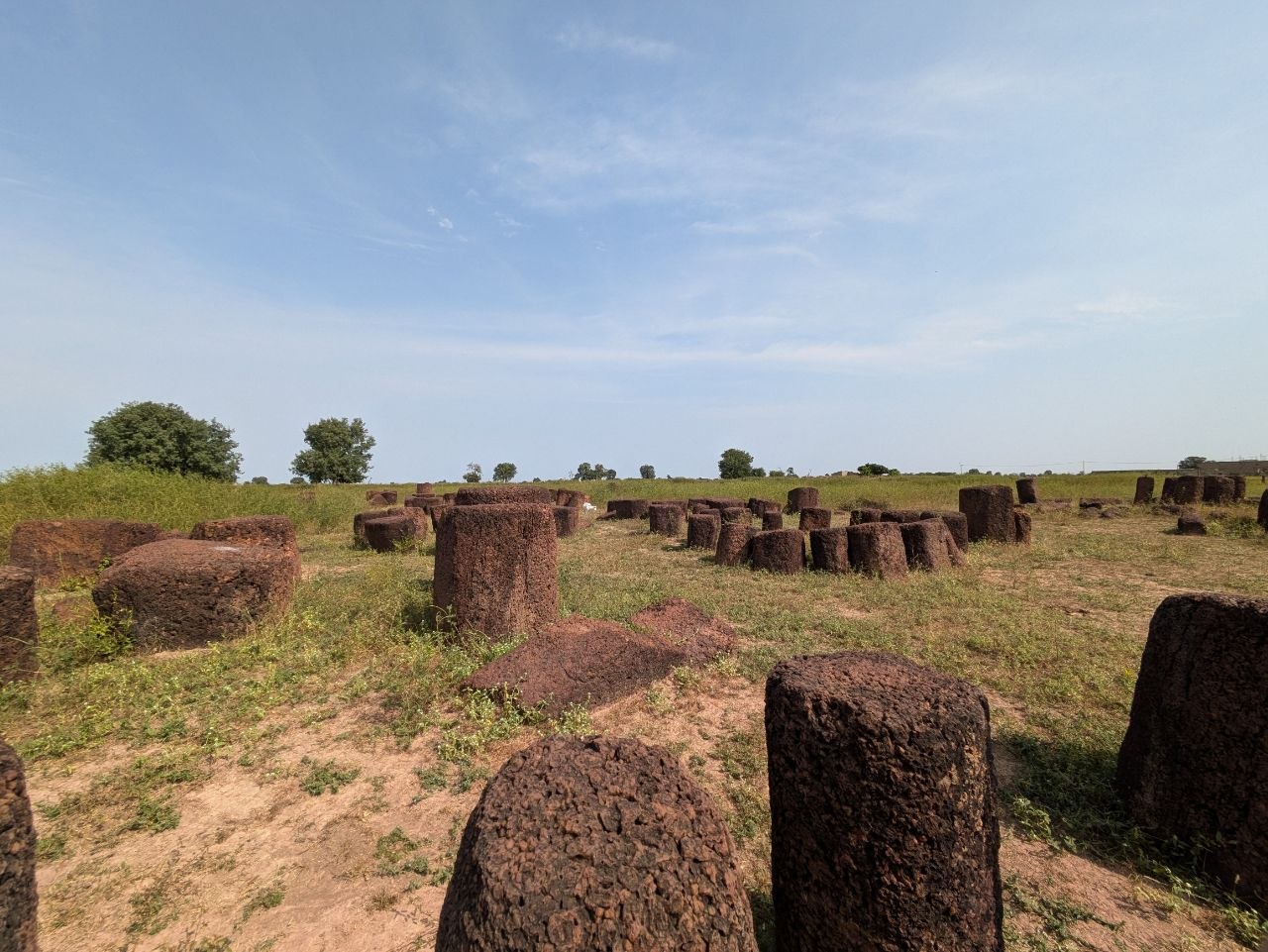
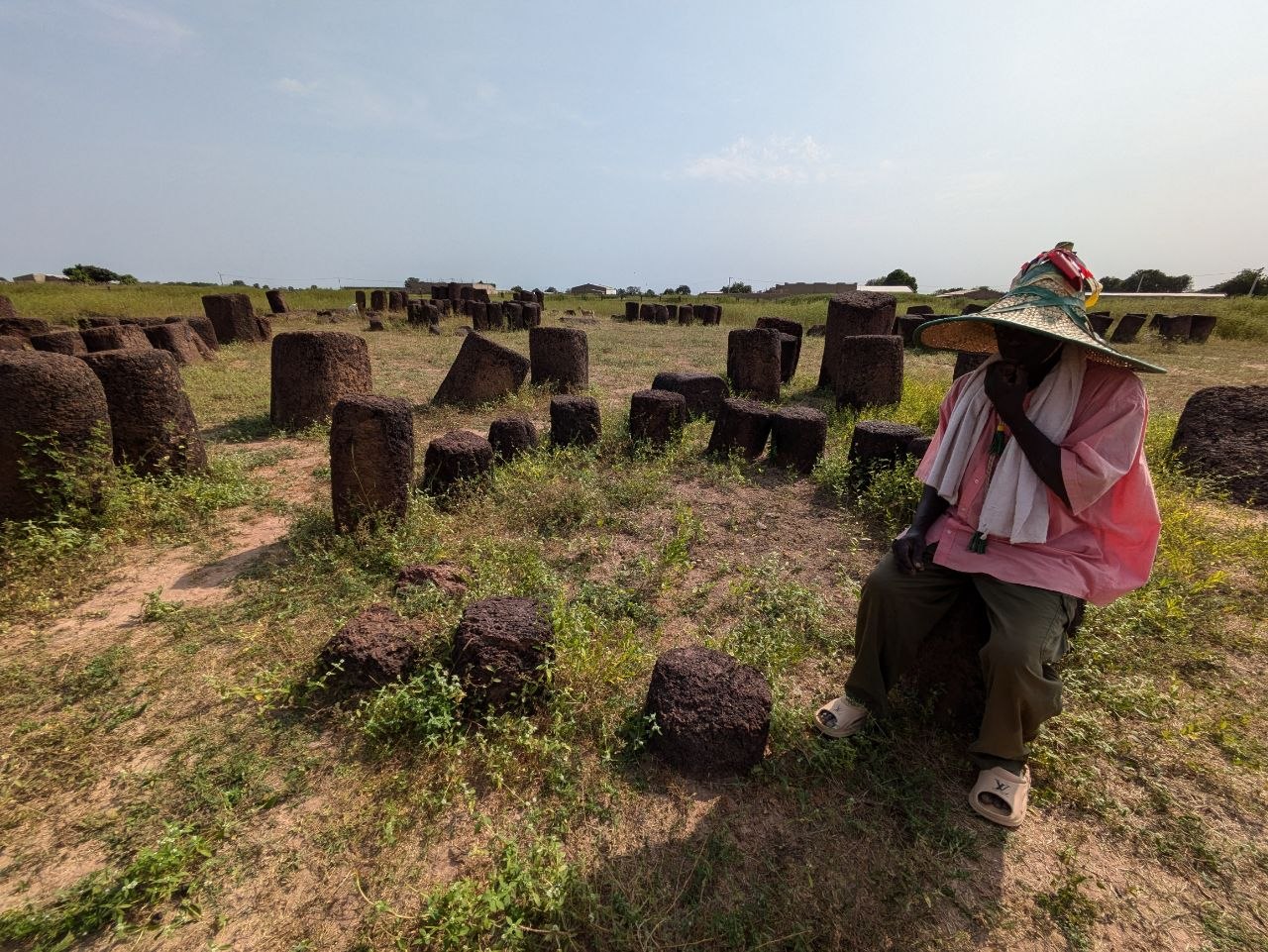
Sine Ngayene encompasses dozens of stone circles and aligned rows, many composed of massive cylindrical or slightly tapering monoliths cut from reddish laterite. Some circles are nearly complete and symmetrical, while others form elongated or clustered arrangements that follow the contours of the terrain. In places, the stones rise directly from the grassland, their weathered surfaces contrasting with the open sky and distant tree line.
Individual stones can reach well over two meters in height and are often paired with smaller satellite blocks, offering subtle clues about hierarchy and ritual function. The presence of both cylindrical and rectangular pillars suggests different phases of construction or varying symbolic meanings. Together, these features create a monumental landscape that was carefully planned rather than randomly assembled.
Archaeological Research and Discoveries
Systematic excavations at Sine Ngayene have uncovered burial pits, grave markers, and layers of occupation that help reconstruct the site’s long history. Archaeologists have identified multiple phases of use, showing that communities returned to the same clusters of stones over generations to inter their dead and renew social ties. Finds such as ceramics, iron tools, and ornamental objects add detail to the picture of daily life, trade, and craftsmanship in the region.
Research has also focused on how the megaliths were produced and transported. Quarries identified near the site reveal extraction techniques, while experimental studies demonstrate that relatively simple tools and coordinated labor teams could have moved the heavy blocks. These insights challenge earlier assumptions about the technological capabilities of the builders and highlight the sophistication of their engineering knowledge.
UNESCO World Heritage Status
Sine Ngayene is included in the UNESCO World Heritage property known as the Stone Circles of Senegambia, recognized for its outstanding testimony to a unique megalithic tradition. The site meets several criteria for inscription, notably its exceptional preservation of a vast ceremonial landscape and its ability to illustrate complex social and spiritual practices over more than a thousand years.
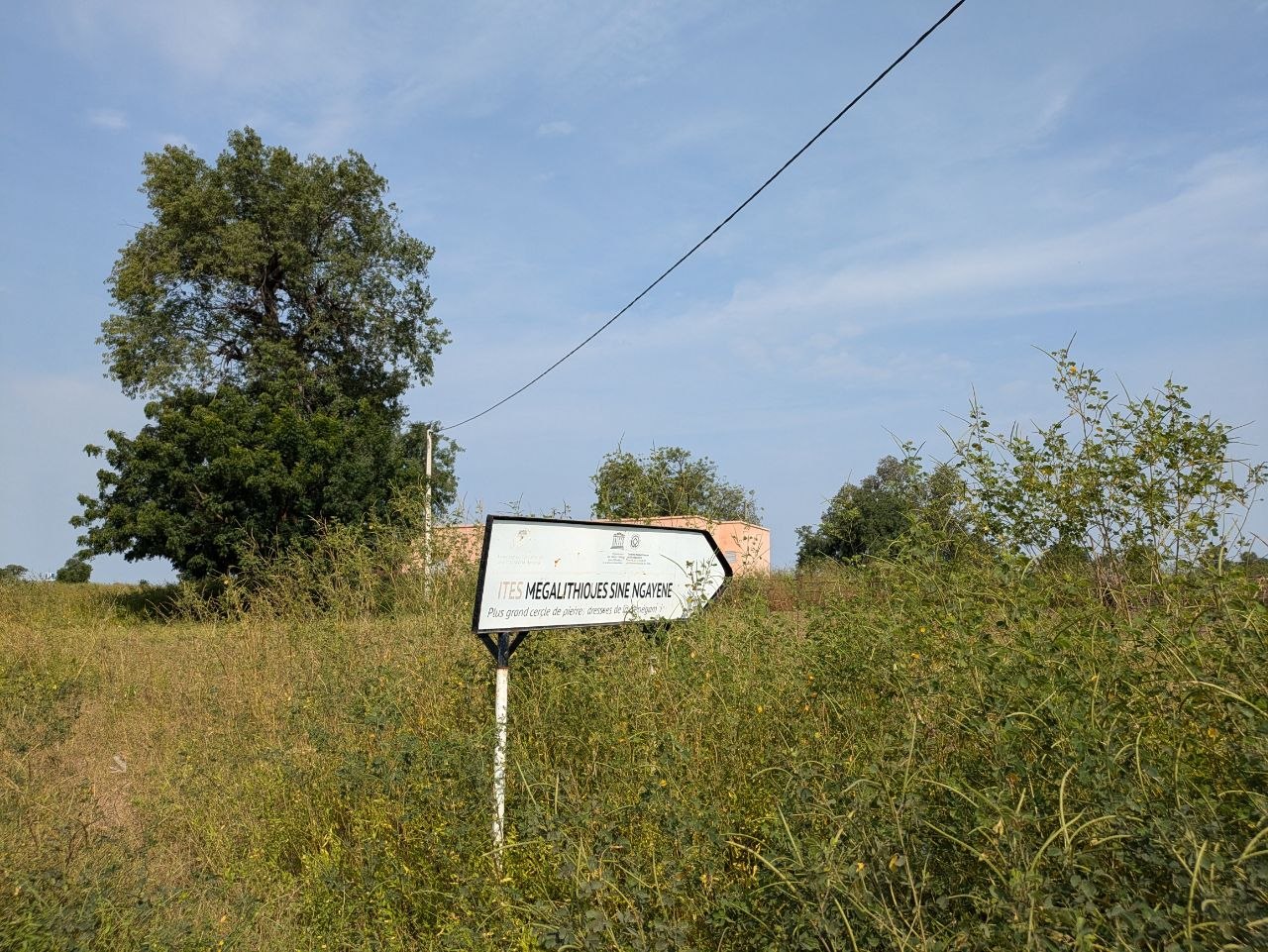
World Heritage status has helped to raise awareness of the site’s significance and encouraged efforts to conserve the stones, manage visitor access, and support local communities. Signage at the approach roads and near the monuments highlights the UNESCO designation, underscoring both the site’s global importance and the need for responsible visitation.
Visiting Tips
Visitors typically explore Sine Ngayene on foot, following informal paths that weave between the circles and alignments. A local guide can greatly enhance the experience by explaining the site’s history, pointing out subtle features such as burial mounds and quarry traces, and helping visitors navigate the most interesting clusters of stones.
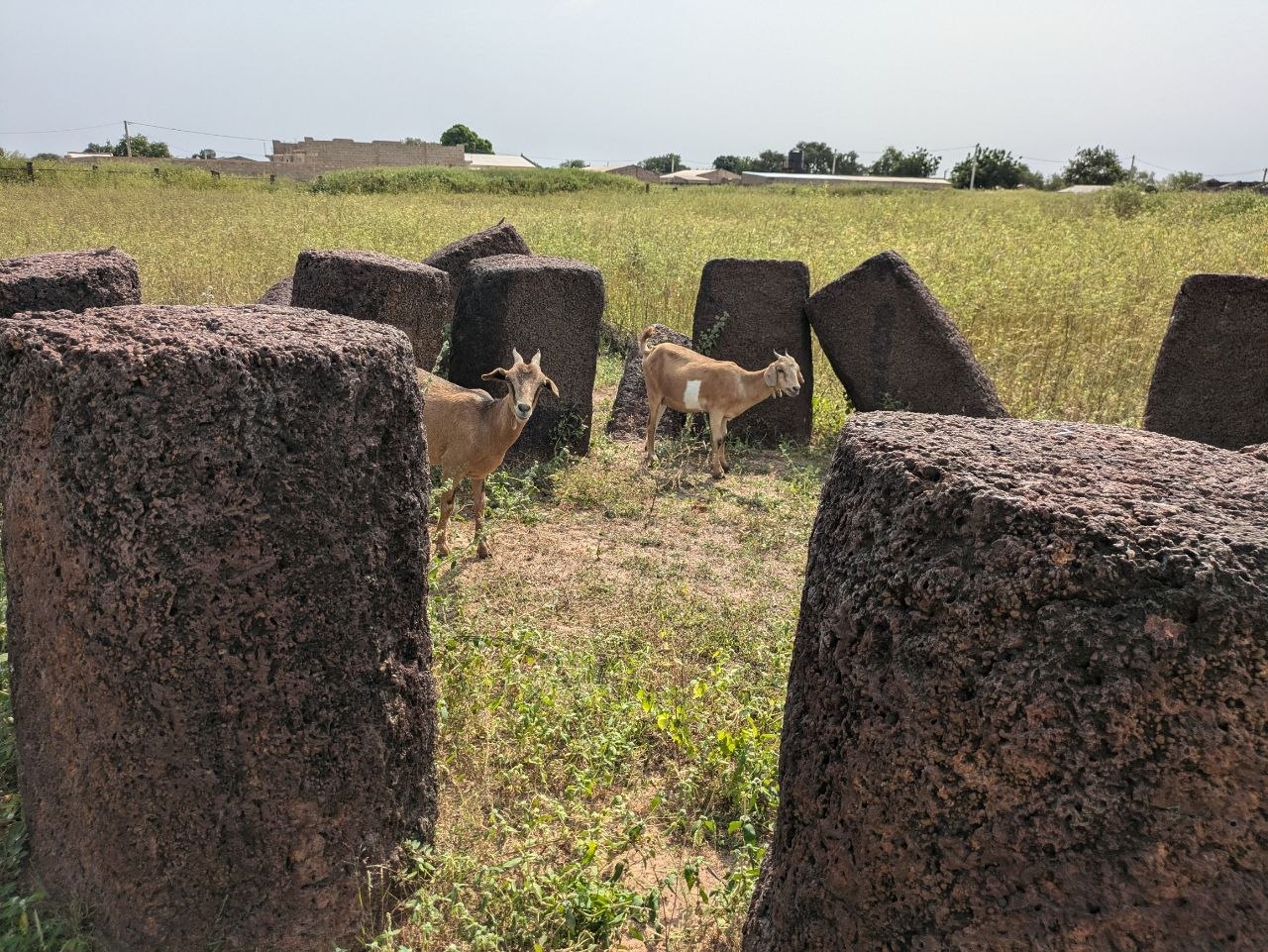
The open savanna setting means there is little shade, so light clothing, sun protection, and sufficient drinking water are essential, especially in the hotter months. Footpaths can be uneven, with tall grass, loose laterite, and occasional livestock such as goats moving among the stones, so closed footwear is recommended. As this is a fragile archaeological landscape and a place of past burial, visitors are encouraged to stay on established paths, avoid climbing on the monoliths, and refrain from disturbing any stones or surface finds.
 Jumping Timezones
Leave a comment