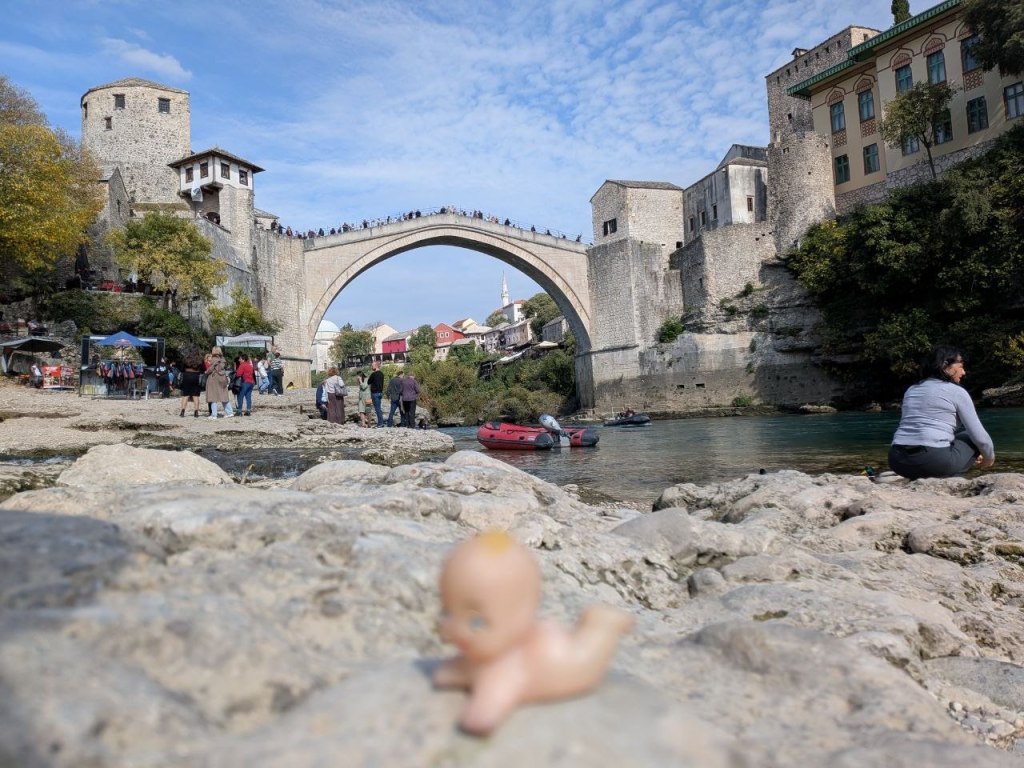
Mostar is a historic city in the Neretva River valley in southern Bosnia and Herzegovina, known for its dramatic setting between steep hills and the emerald-green waters of the Neretva. Serving as an important regional center, it has long connected the Adriatic coast with the interior of the Balkans and today stands as one of the most recognizable urban landscapes in the region.
The city reflects a blend of cultural influences, shaped by centuries of Ottoman rule followed by Austro-Hungarian administration in the late 19th and early 20th centuries. Its mosques, churches, traditional stone houses, and late imperial buildings coexist within a compact historic core that also bears the scars and restoration efforts of the conflicts that marked the late 20th century.
Mostar became internationally known during the Bosnian War in the 1990s, when intense fighting devastated much of the city. One of the most symbolic losses was the destruction of Stari Most (Old Bridge) in 1993, an event that came to represent the wider cultural and human cost of the conflict. The subsequent reconstruction of the bridge and surrounding old town has turned Mostar into a powerful symbol of both loss and post-war recovery.
Stari Most
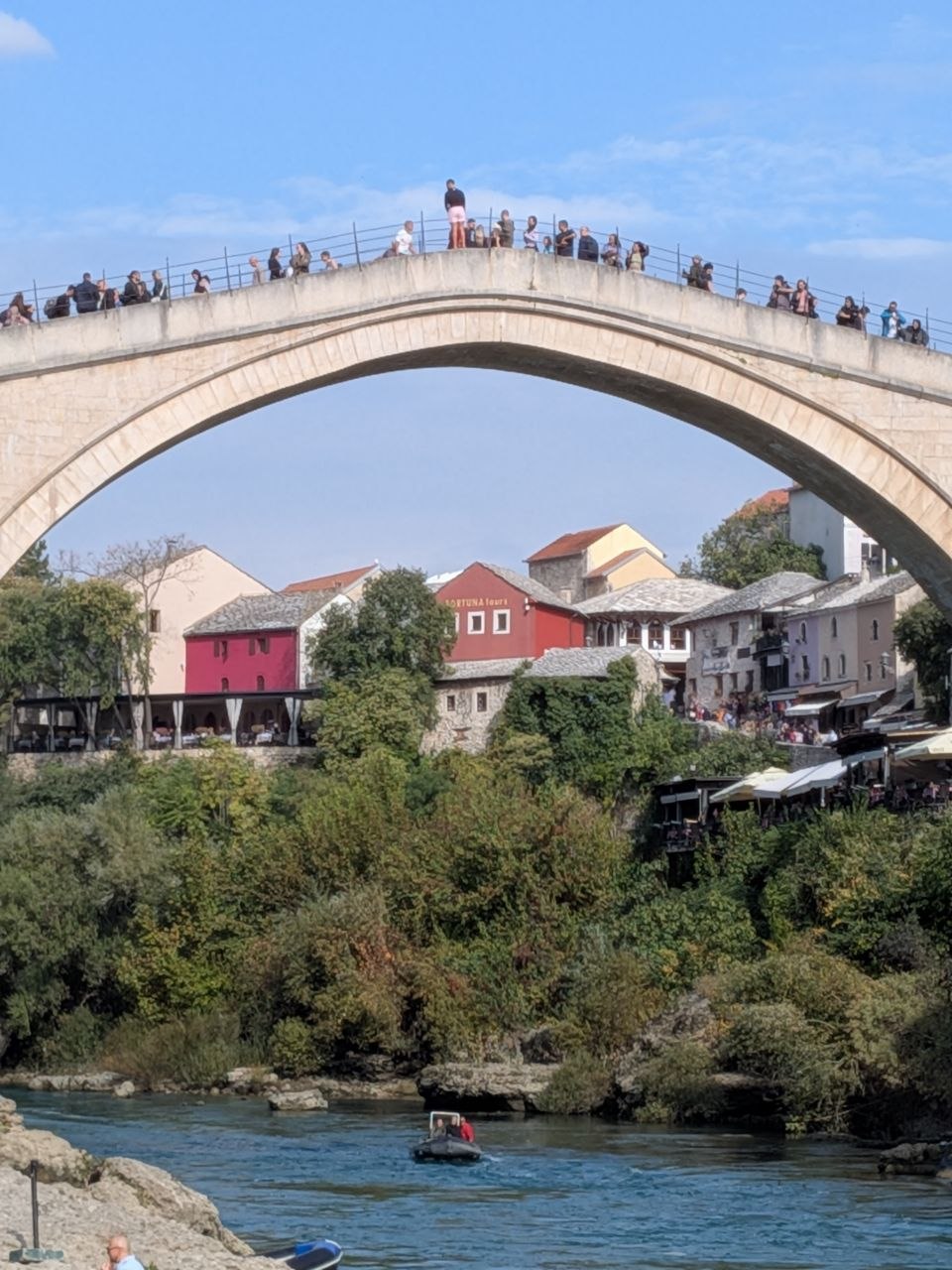
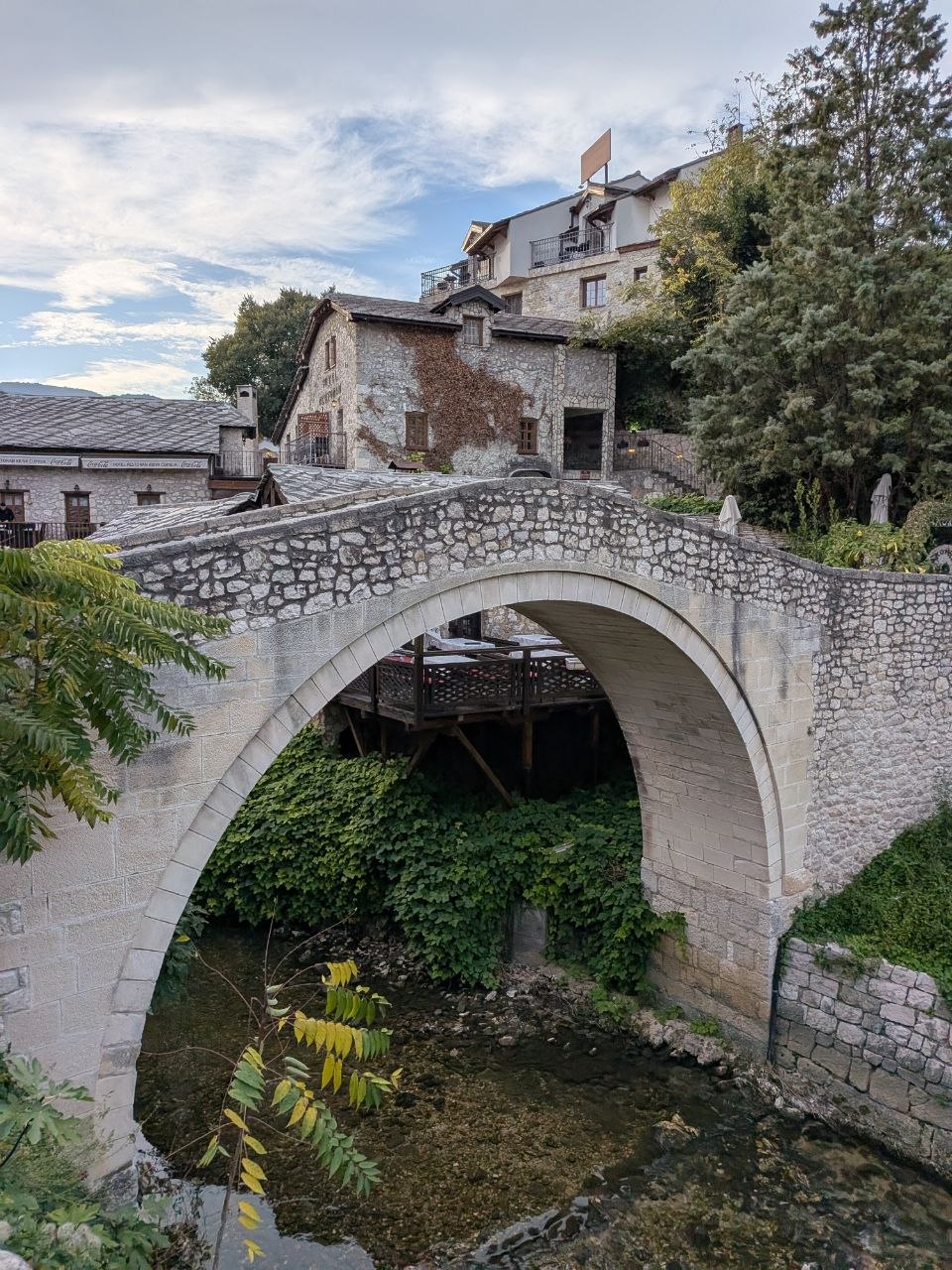
Stari Most, the Old Bridge of Mostar, is a 16th-century Ottoman stone arch bridge that has become the city's defining landmark. It was originally commissioned by Sultan Suleiman the Magnificent and designed by the architect Mimar Hayruddin, a student of the renowned imperial architect Mimar Sinan. Completed in 1566, the bridge connected the two banks of the Neretva and served as a vital link along regional trade and communication routes.
The bridge was destroyed on 9 November 1993 during the Bosnian War, when shelling caused the historic structure to collapse into the Neretva River. Its loss became a powerful symbol of the cultural destruction taking place across Bosnia and Herzegovina. A painstaking international reconstruction project, using original techniques and locally quarried stone, resulted in the bridge's reopening in 2004, restoring both its appearance and its role in the urban fabric.
Today, Stari Most and the surrounding Old Bridge Area of the Old City of Mostar are inscribed on the UNESCO World Heritage List. The bridge is also known for the long-standing tradition of local divers who jump from its 24-metre height into the Neretva below, a practice that has evolved into organized diving events and competitions attracting visitors from around the world.
The Old Bazaar (Kujundžiluk)
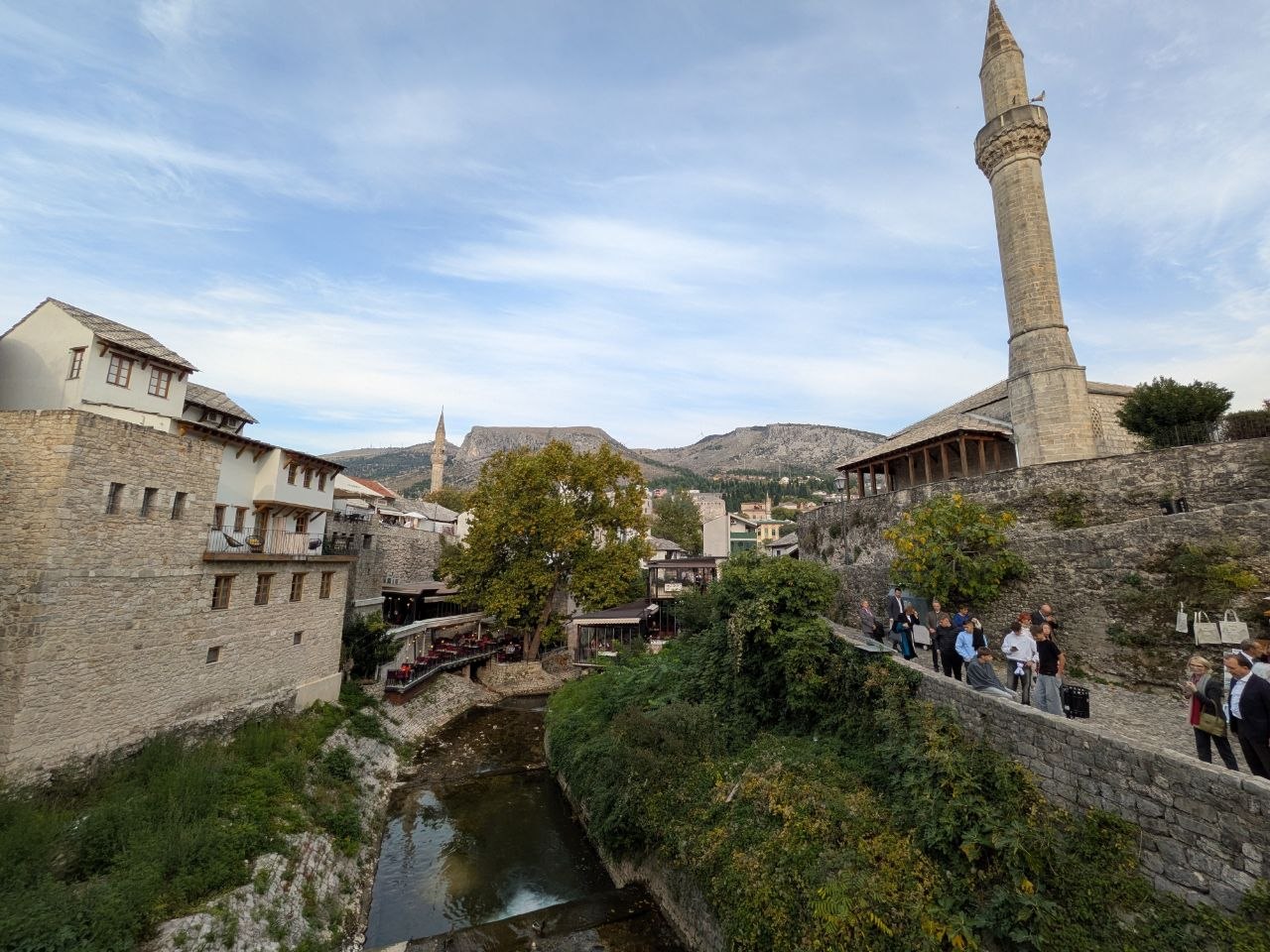
The Old Bazaar, known as Kujundžiluk, is the historic market street that extends from the approaches to Stari Most along the eastern bank of the Neretva. Dating back to the Ottoman period, it is lined with cobblestones and traditional stone and timber buildings that once housed workshops, inns, and caravanserais serving merchants and travelers.
Today, Kujundžiluk is filled with artisan shops selling copperware, hand-embroidered textiles, traditional jewelry, carpets, and other local crafts that recall the city's long-standing metalworking and trade traditions. The street is framed by a mix of mosques, small hans (inns), and former merchant houses, creating a continuous urban ensemble that preserves the atmosphere of an Ottoman-era bazaar.
Koski Mehmed Pasha Mosque
Koski Mehmed Pasha Mosque is one of the most prominent Islamic monuments in Mostar's old town. Built in the early 17th century, it occupies a commanding position on the eastern bank of the Neretva, with its slender minaret and domed prayer hall forming a key element of the city's skyline when viewed from Stari Most and the opposite shore.
The mosque is particularly noted for the views from its minaret, which offers panoramic perspectives over Stari Most, the clustered roofs of the old town, and the Neretva River valley. Its courtyard, often planted with greenery and enclosed by stone walls, provides a quiet open space within the dense historic fabric and reflects traditional Ottoman architectural and landscape design.
The Neretva River
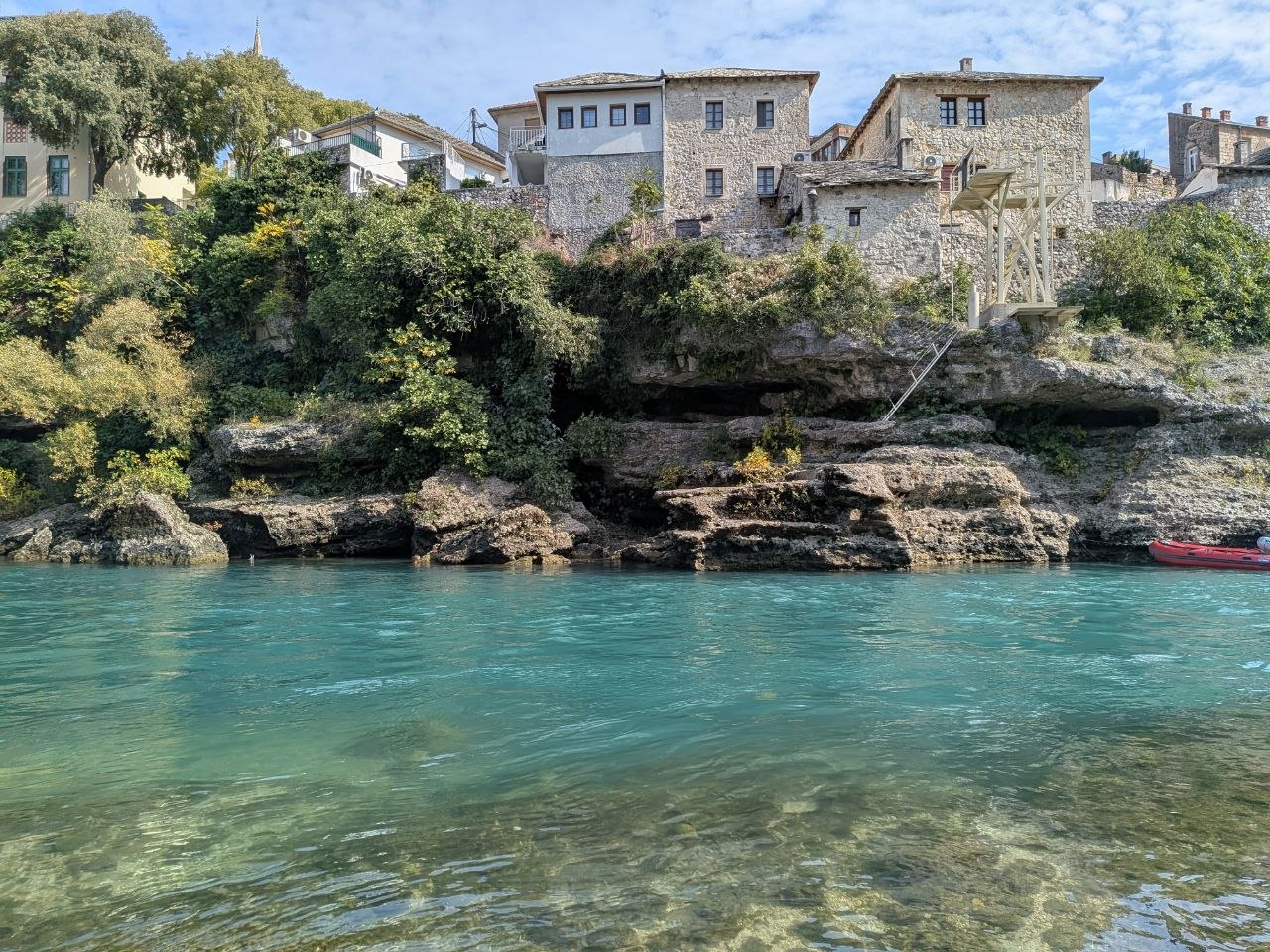
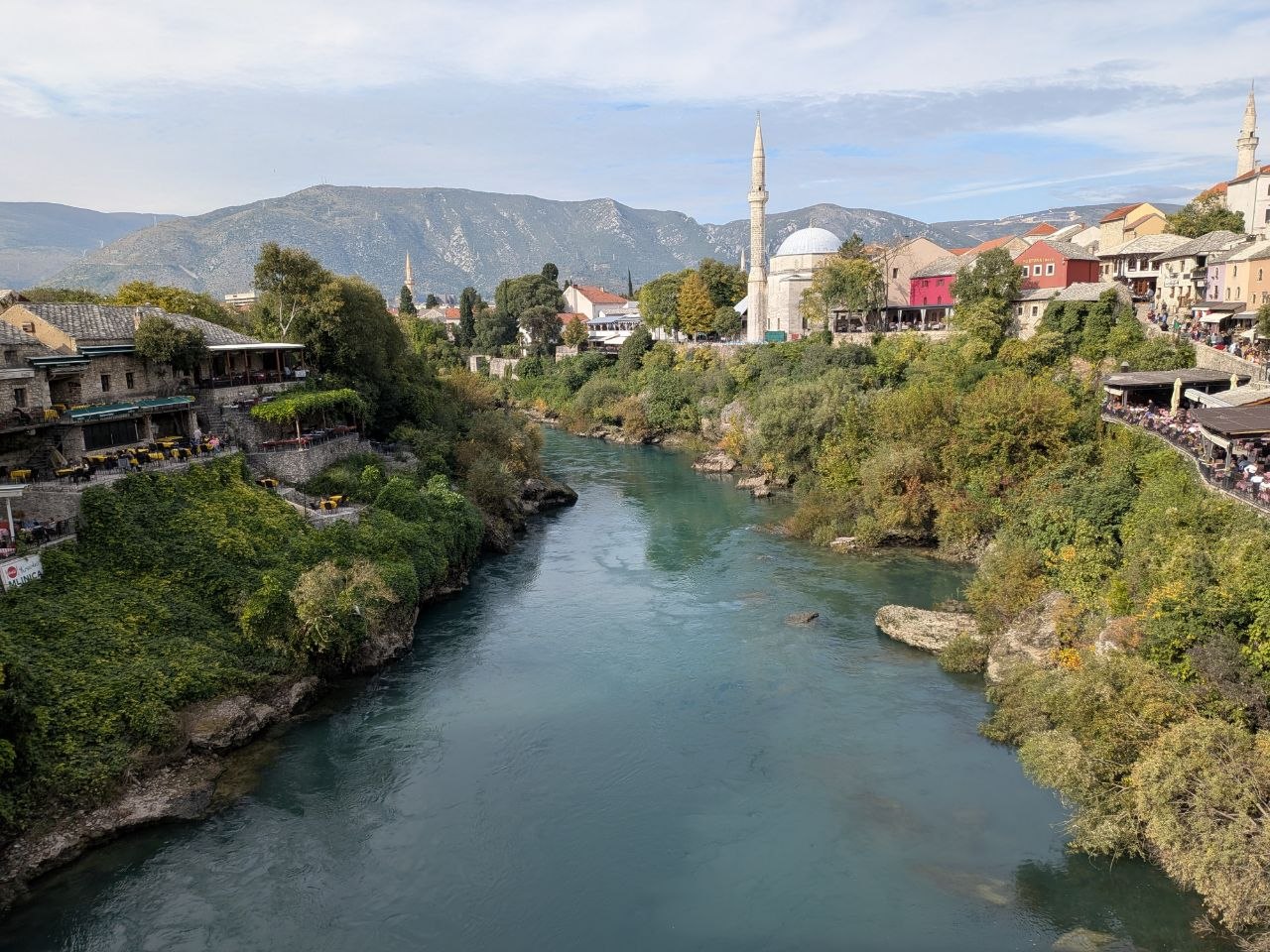
The Neretva River, with its striking emerald-green color, flows directly through the center of Mostar, shaping the city's topography and identity. The steep riverbanks and the dramatic gorge-like channel have historically dictated where bridges and crossings could be built, making structures like Stari Most crucial to the city's development and connectivity.
Views along the Neretva from both banks reveal a layered cityscape of historic buildings, minarets, bell towers, and modern structures rising above the water. The river's color and clarity, especially visible from vantage points near the Old Bridge and surrounding terraces, are central to Mostar's visual character and contribute to its reputation as one of the most picturesque cities in the Balkans.
Food & Local Flavors
Mostar's food culture reflects broader Bosnian culinary traditions, with a focus on grilled meats, filled pastries, and slow-cooked dishes. Ćevapi, small grilled minced-meat sausages typically served in somun flatbread with onions and accompaniments, are a staple in local restaurants and street-side eateries. Burek and other varieties of pita, made from thin layers of dough filled with meat, cheese, spinach, or potatoes, are widely available in bakeries and family-run shops.
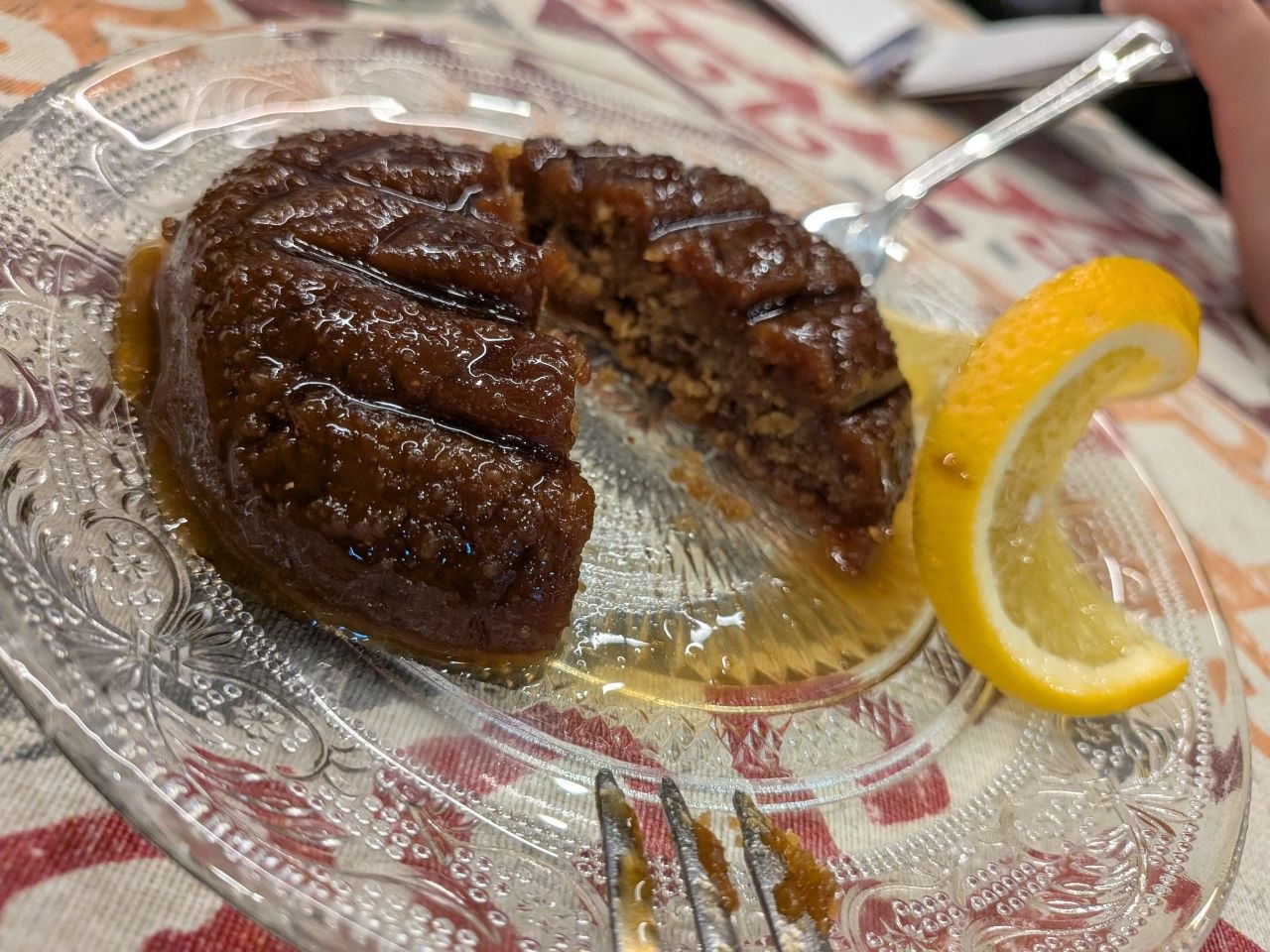
Many traditional restaurants in and around the old bazaar also serve dolma, a collective term for vegetables such as peppers, zucchini, and vine leaves stuffed with spiced meat and rice. Sweets and drinks play a central role as well: Bosnian coffee is commonly served in a džezva (small coffee pot) with a sugar cube and rahat lokum (Turkish delight), while trays of syrup-soaked baklava and similar desserts are a familiar sight in cafés and pastry shops throughout the old town.
Visiting Tips
Mostar can be visited year-round, but spring and autumn are generally considered the most comfortable seasons, offering milder temperatures and fewer crowds than the peak summer months. During the hottest period, midday heat and visitor numbers are at their highest, especially in the narrow streets of the old town.
Exploring both banks of the Neretva is essential for understanding the city's layout and for experiencing different perspectives on Stari Most and the old town. The annual bridge diving competition, usually held in late July, draws professional and local divers who leap from the bridge into the river below, creating a major spectator event.
Mostar is easily reached from Sarajevo by both bus and train, with journeys that cross scenic mountain landscapes and river valleys. While the historic core concentrates most of the city's major landmarks, visitors are also encouraged to walk into surrounding residential neighborhoods to see how Mostar functions beyond the main tourist routes and to gain a broader sense of everyday life in the city.
 Jumping Timezones
Leave a comment