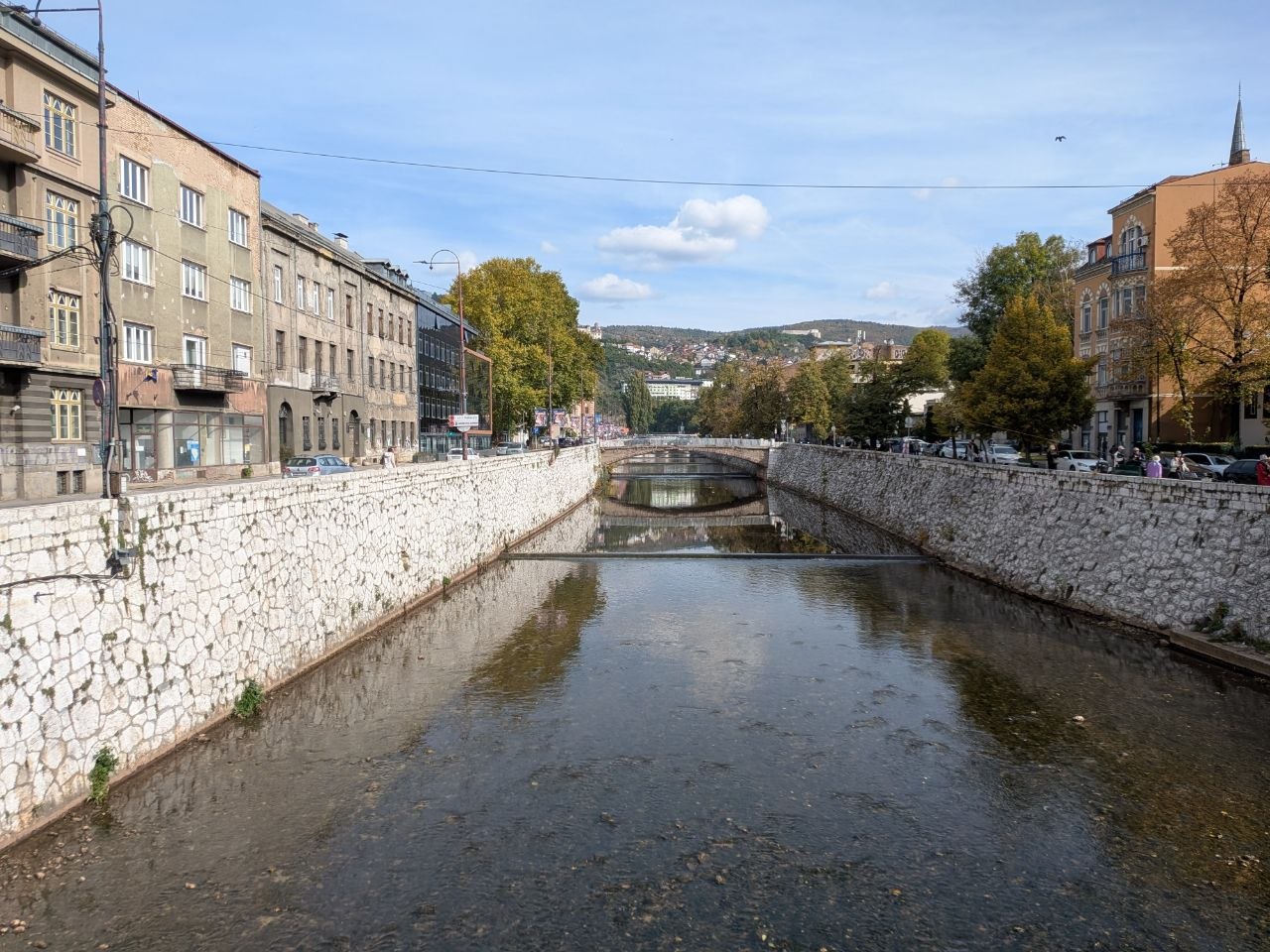
Sarajevo, the capital of Bosnia and Herzegovina, lies in the narrow valley of the Miljacka River, framed by the forested ridges of the Dinaric Alps. Its compact urban core spreads along the riverbanks and up the surrounding hillsides, creating a striking setting where neighbourhoods appear to climb the slopes above the city centre.
Historically, Sarajevo has been a crossroads between East and West, shaped by overlapping Ottoman, Austro-Hungarian, Yugoslav, and contemporary European influences. This layered heritage is visible in its architecture, religious buildings, street layout, and public spaces, giving the city a distinctive cultural and visual character.
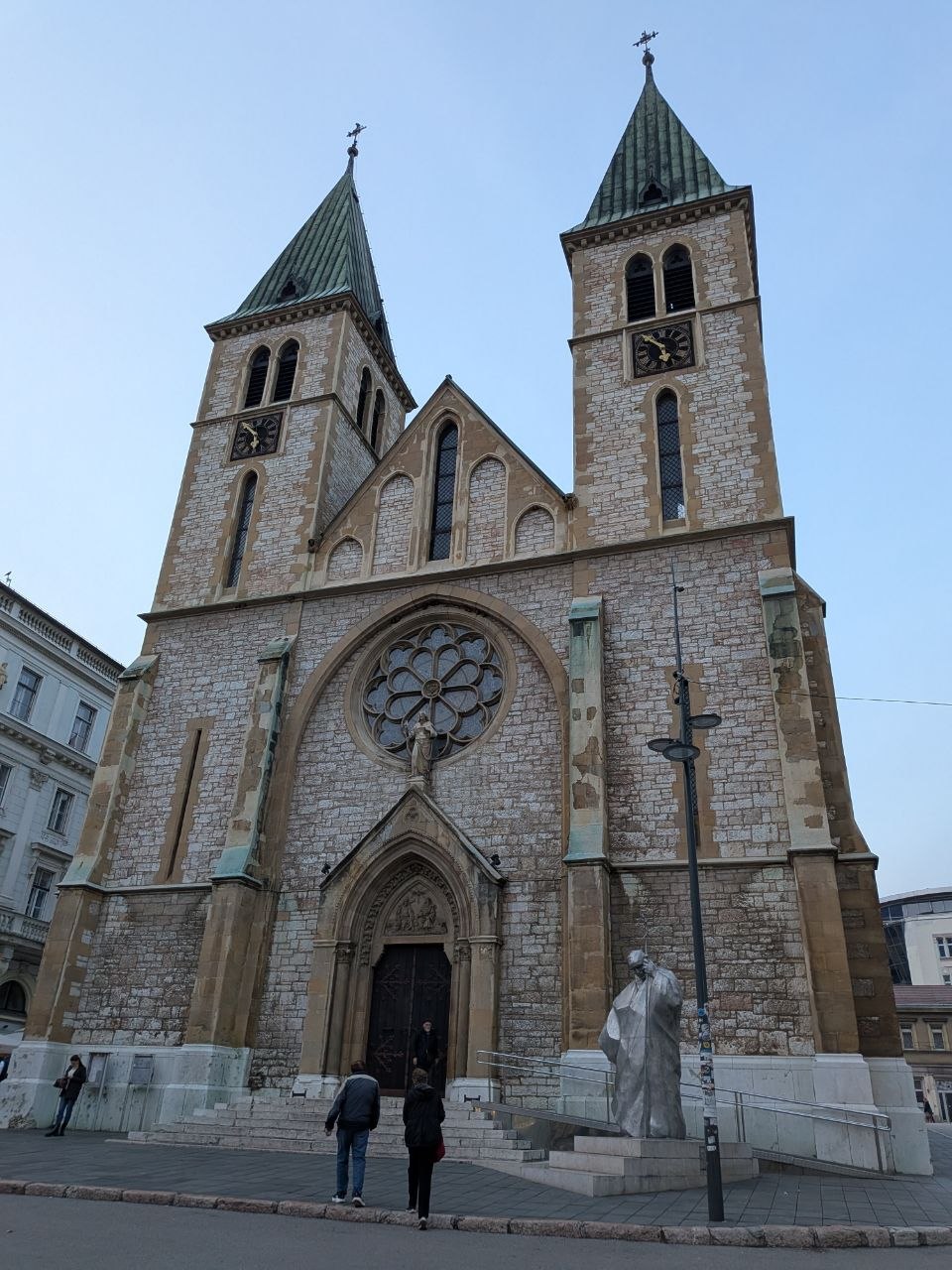
Often referred to as the "Jerusalem of Europe," Sarajevo is known for the close proximity of its mosques, churches, synagogues, and cathedrals. Within a short walk, visitors can encounter major Islamic, Catholic, Orthodox, and Jewish places of worship, reflecting centuries of coexistence among different religious communities.
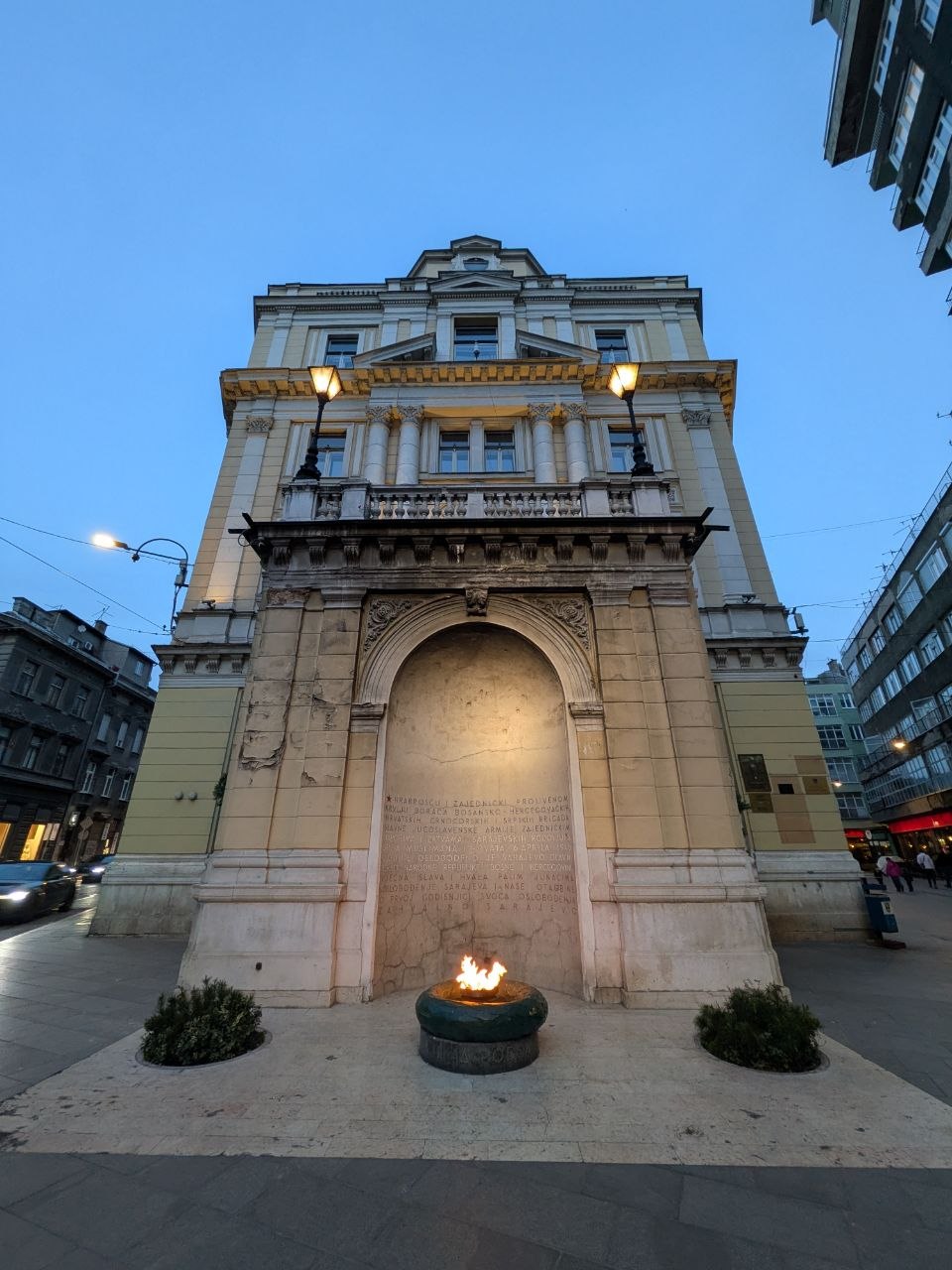
The city also occupies a significant place in 20th-century history. The assassination of Archduke Franz Ferdinand in Sarajevo in 1914 provided the spark that led to the outbreak of World War I. Decades later, during the Bosnian War, Sarajevo endured a prolonged siege from 1992 to 1995, one of the longest in modern European history, which left deep physical and emotional scars that are still visible today.
Baščaršija
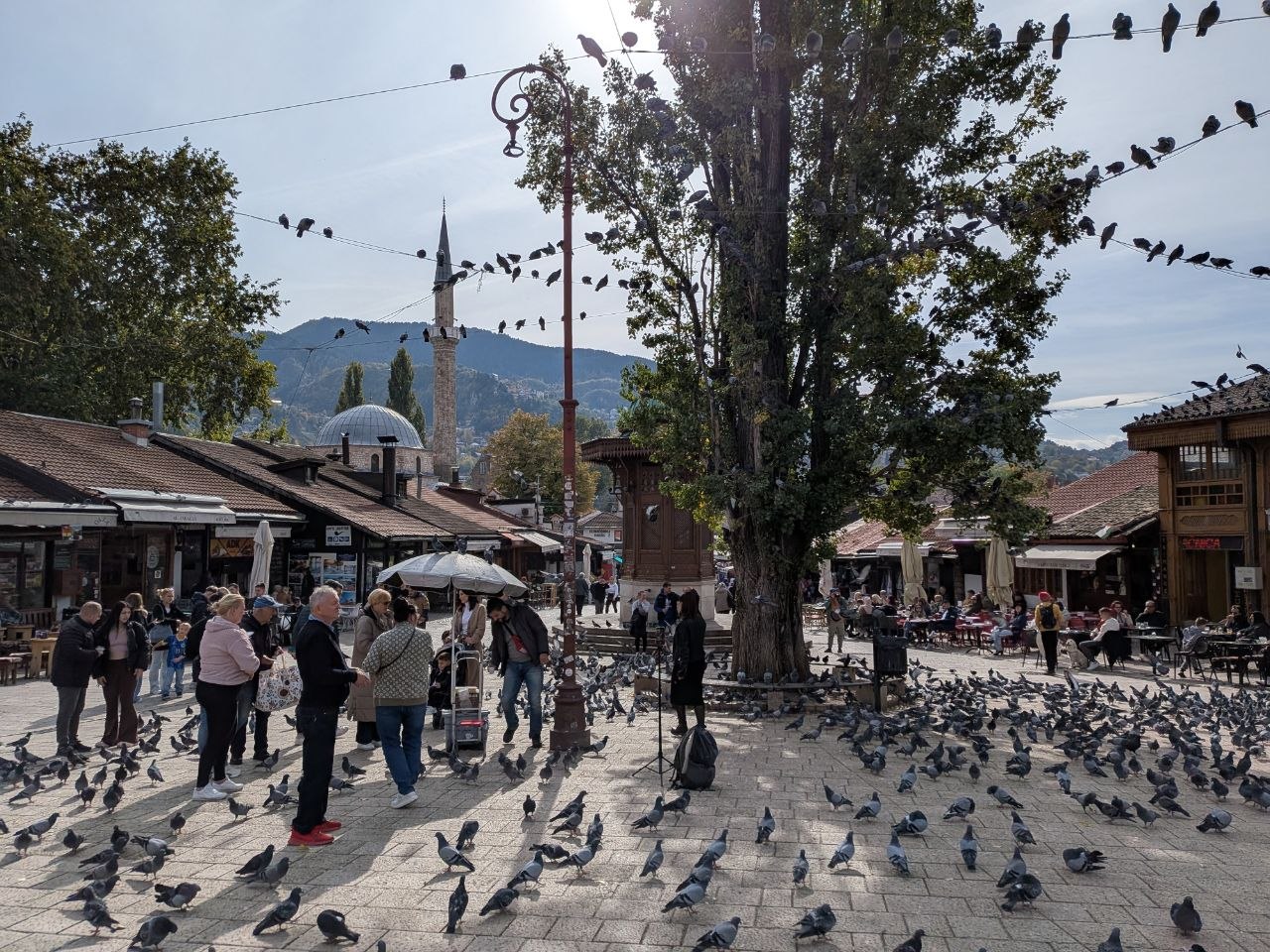
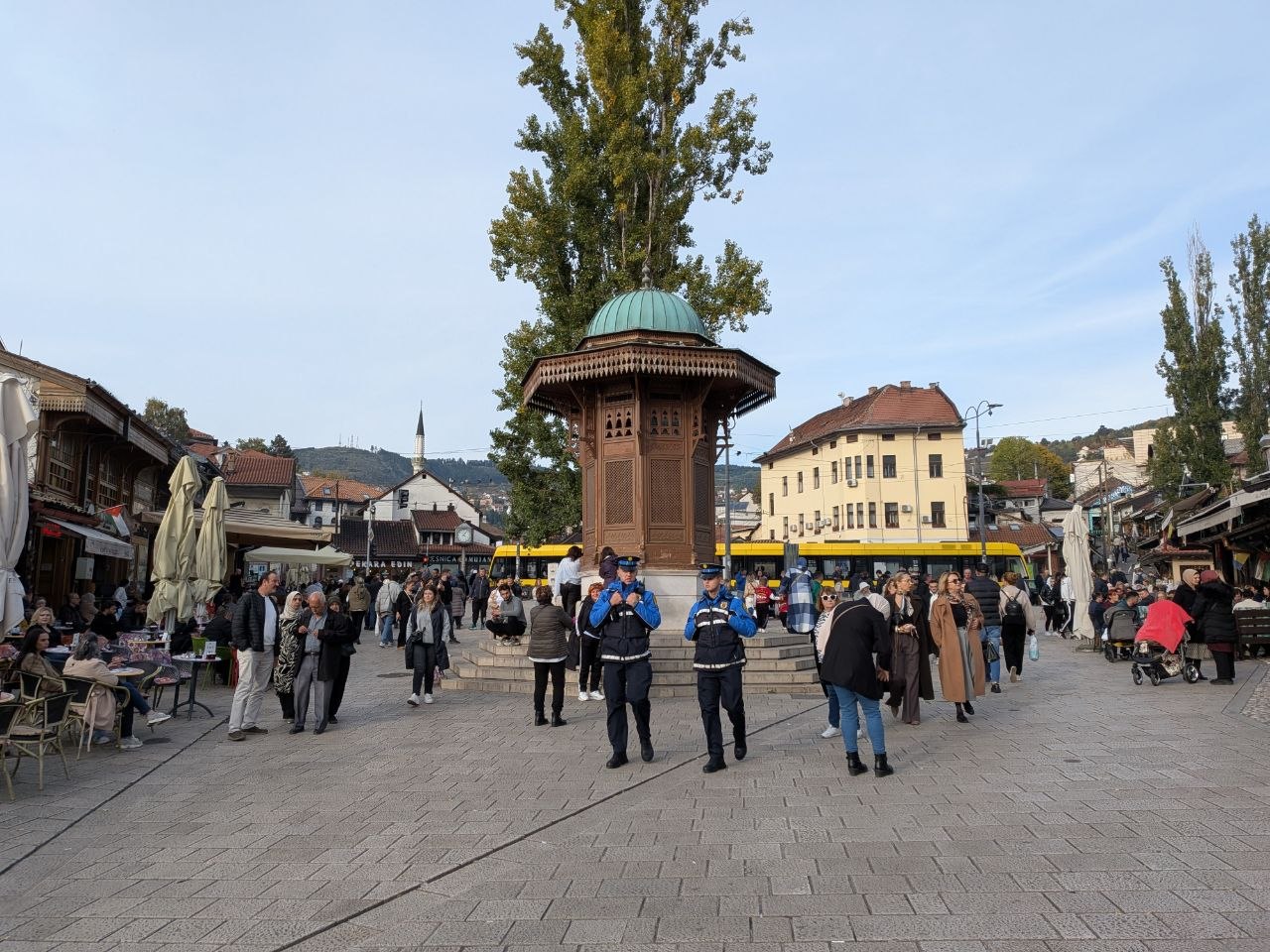
Baščaršija is Sarajevo's historic Ottoman bazaar and the oldest part of the city, founded in the 15th century under the Ottoman governor Isa-Beg Isaković. Developed as a commercial hub along key caravan routes, it quickly became the centre of trade and craft production for the region.
At the heart of Baščaršija stands the Sebilj fountain, a distinctive wooden kiosk-style fountain that serves as a popular landmark and gathering point. Radiating from this central square is a maze of narrow lanes lined with copper workshops, where kazandžije (coppersmiths) still hammer and engrave traditional coffee sets, trays, and decorative items.
Tea houses, cafés, and small shops fill the surrounding streets, creating a lively atmosphere throughout the day. Just a short walk away is the Gazi Husrev-beg Mosque, built in the 16th century and regarded as the largest and one of the most important Ottoman mosques in the Balkans, anchoring the religious and cultural life of the old town.
The Latin Bridge & Assassination Site
The Latin Bridge is a stone arch bridge over the Miljacka River dating from the Ottoman period but closely associated with the Austro-Hungarian era. Located near the centre of Sarajevo, it gained global significance on June 28, 1914, when Archduke Franz Ferdinand of Austria and his wife, Sophie, were assassinated nearby, an event that helped trigger World War I.
On the riverbank beside the bridge, the Sarajevo Museum 1878–1918 documents the city's history under Austro-Hungarian rule and marks the location of the assassination. Exhibits, photographs, and historical objects provide context for the political tensions of the period and explain how a local event in Sarajevo resonated across Europe and the world.
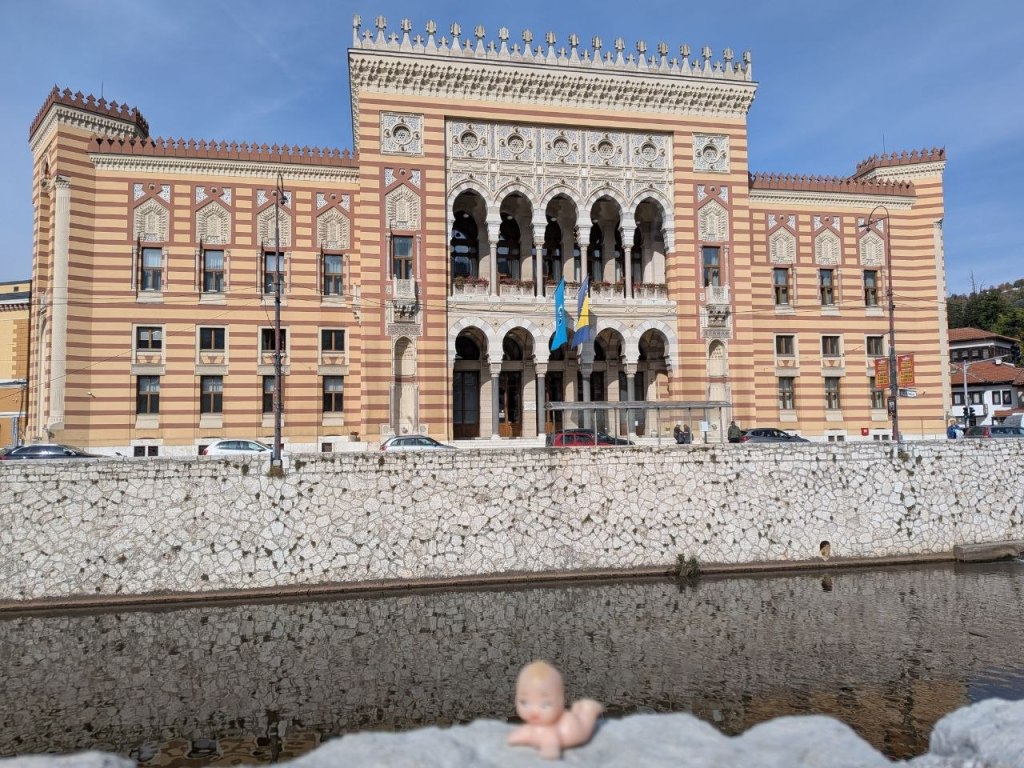
Sarajevo City Hall (Vijećnica)
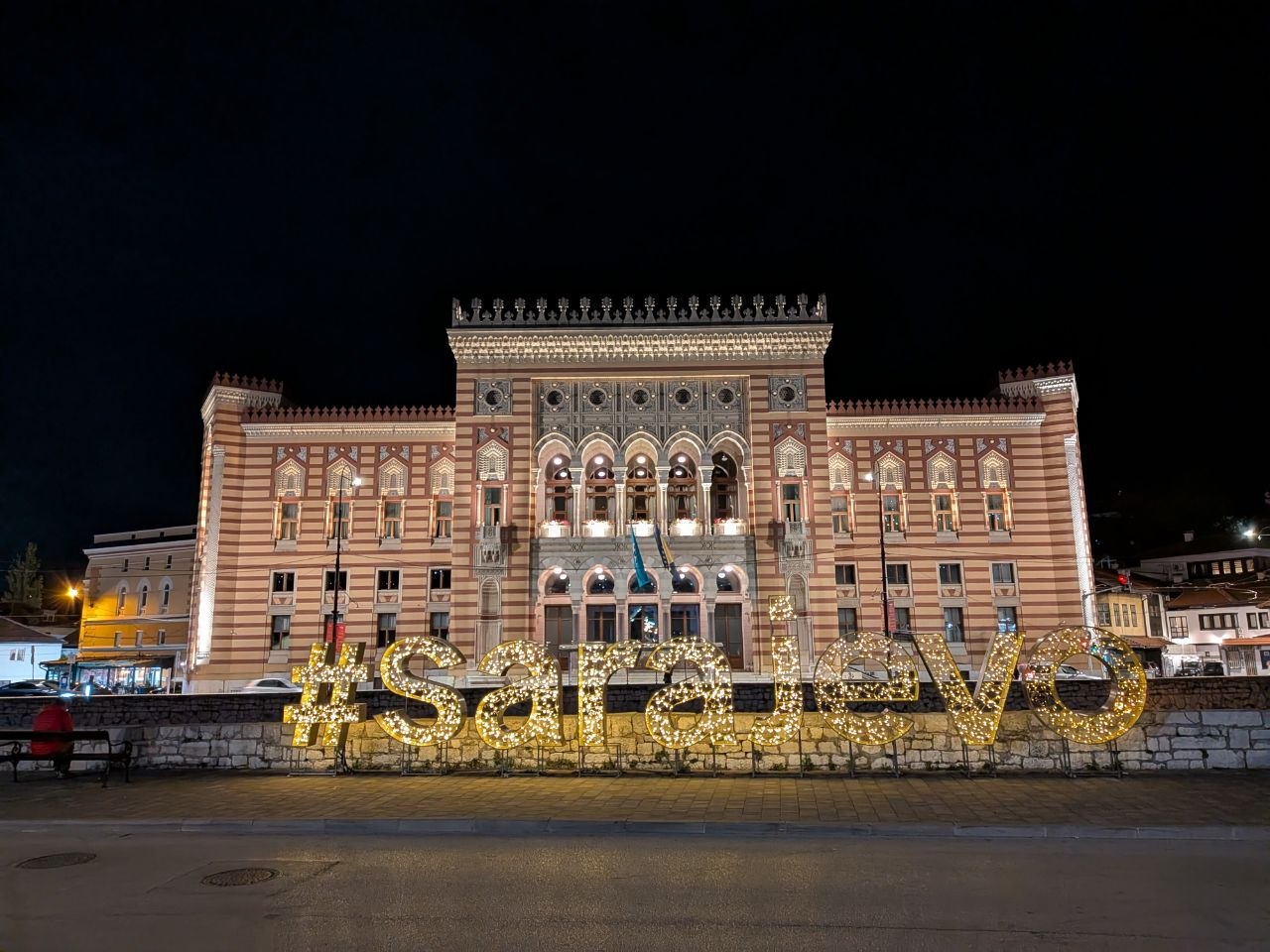
Sarajevo City Hall, known as Vijećnica, is one of the city's most recognisable landmarks, designed in a Moorish Revival style and completed in 1896 during Austro-Hungarian administration. Its colourful facades, ornate arches, and richly decorated interior reflect a fascination with neo-Oriental architecture at the time.
For much of the 20th century, the building served as Sarajevo's main library, housing invaluable manuscripts, books, and archival collections. During the siege of Sarajevo in 1992, Vijećnica was heavily shelled and set on fire, leading to the near-total loss of its holdings and leaving the building a burnt-out shell.
A long and careful restoration process began after the war, culminating in the reopening of Vijećnica in 2014. Today it functions as a cultural and ceremonial venue, while also standing as a powerful symbol of both the city's destruction and its post-war recovery.
The Yellow Fortress (Žuta Tabija)
The Yellow Fortress, or Žuta Tabija, is an 18th-century Ottoman fortification positioned on a hill above the old town. Part of the defensive ring that once encircled Sarajevo, it offers a strategic vantage point over the city and the valley of the Miljacka River.
From the fortress walls, visitors can take in sweeping views of red-tiled roofs, minarets, church towers, and the surrounding mountains. The site is especially popular at sunset, when the city lights begin to appear in the valley below and the changing colours highlight the contrast between the urban landscape and the encircling hills.
War Remembrance
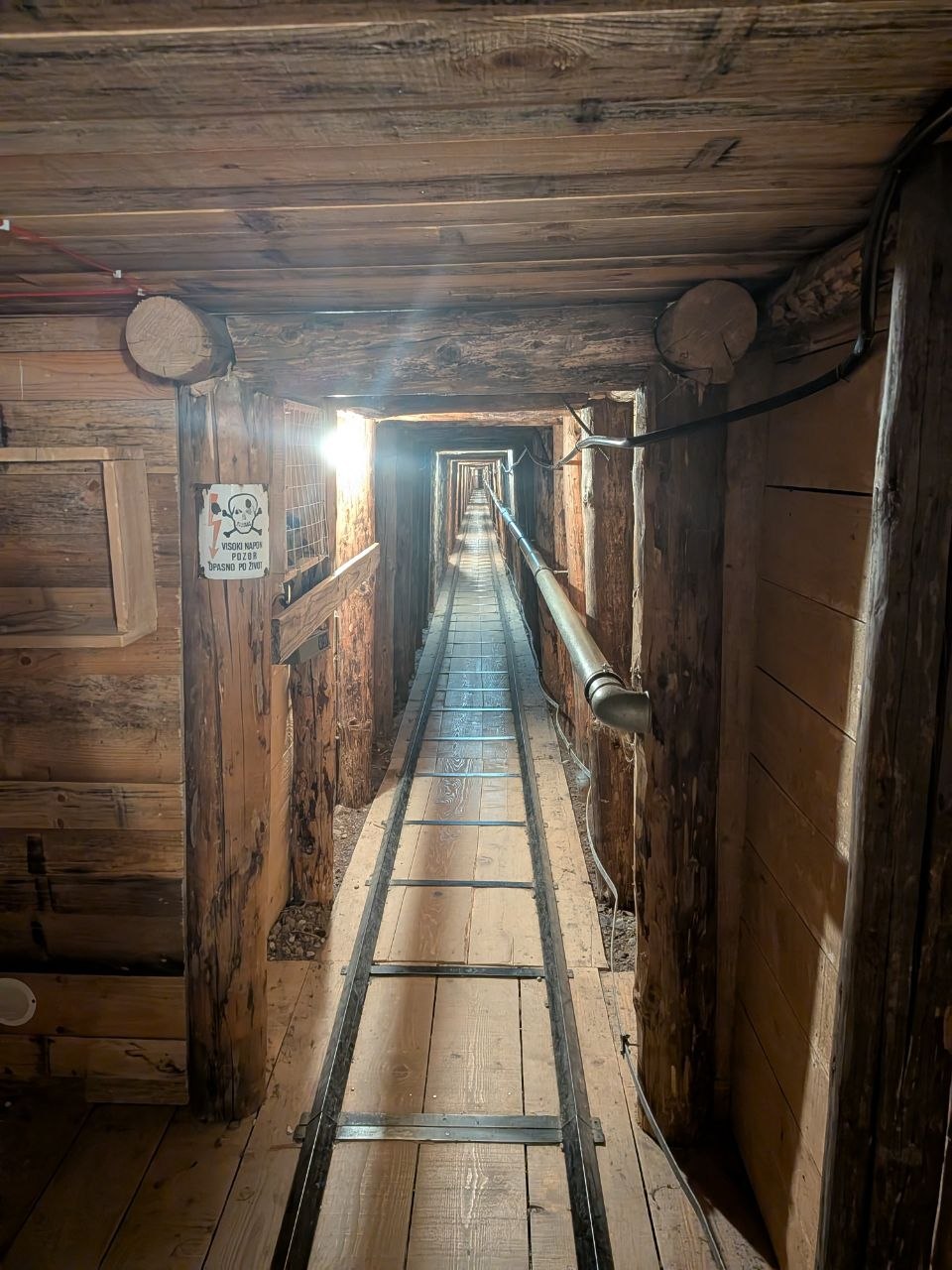
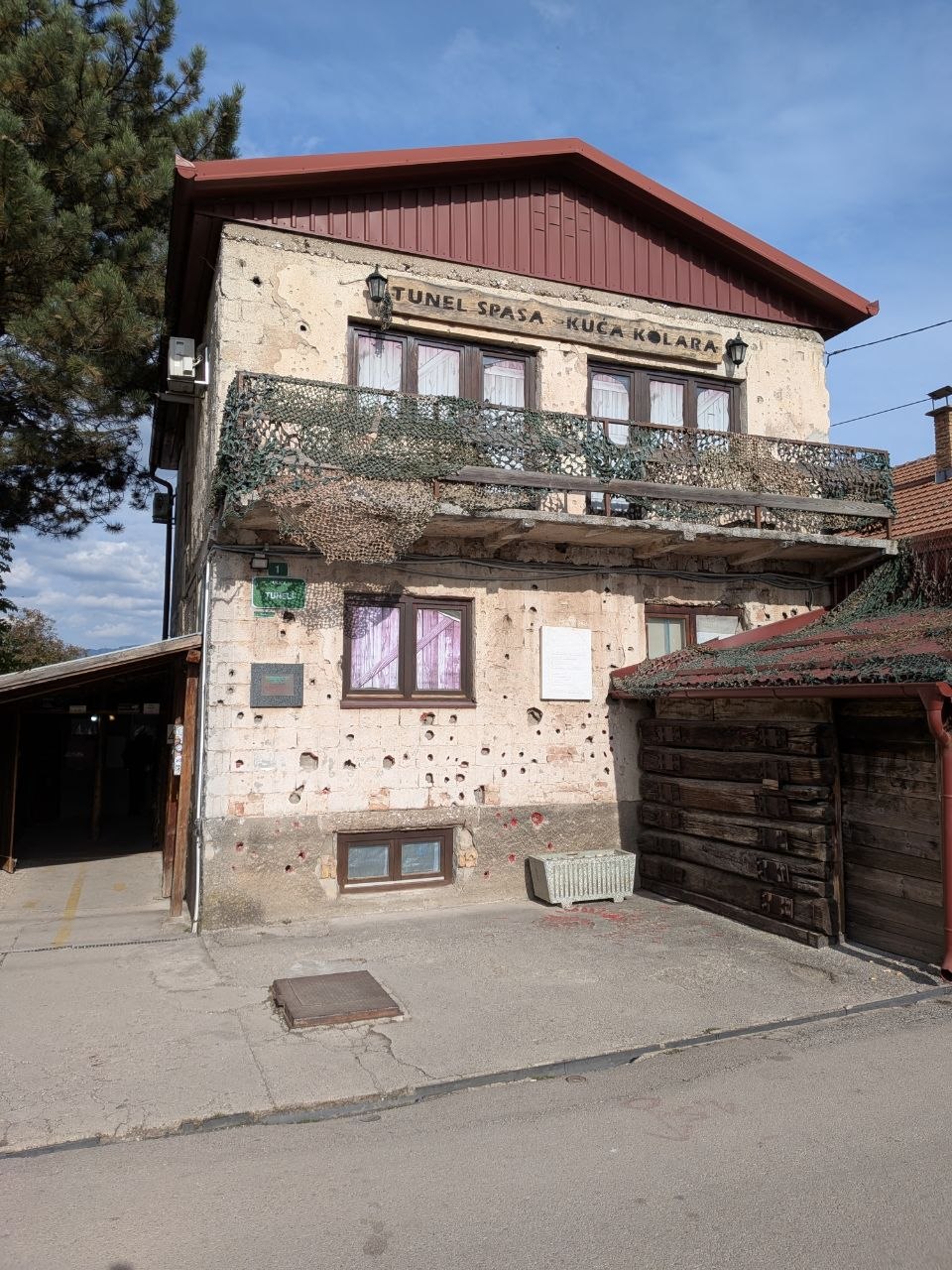
War remembrance is an important aspect of contemporary Sarajevo. On the outskirts of the city, the Tunnel of Hope (Tunel spasa) served as a crucial lifeline during the 1992–1995 siege, allowing people, food, and supplies to move in and out of the blockaded city. Sections of the tunnel have been preserved and form the core of the Sarajevo War Tunnel Museum.
The museum provides detailed accounts of daily life under siege, with photographs, artefacts, and personal testimonies illustrating the city's resilience. Many visitors also combine a visit to Sarajevo with a trip to the Srebrenica-Potočari Memorial Centre, which commemorates the victims of the 1995 genocide and serves as a major site of reflection on the wider Bosnian conflict.
Food & Local Flavors
Sarajevo's food culture is rooted in Ottoman and Balkan traditions, with ćevapi as the signature dish. In the city, ćevapi are typically smaller grilled minced-meat sausages served in portions of five or ten pieces, accompanied by soft somun flatbread and finely chopped raw onion, often with kaymak or yoghurt on the side.
Neighbourhood bakeries sell burek by the slice, with spirals or trays of flaky pastry filled with minced meat, cheese, spinach, or potato. Bosnian coffee, served in small džezva pots with a copper tray, sugar, and lokum (Turkish delight), remains a central part of social life, especially in and around Baščaršija.
Traditional dishes such as sogan-dolma (onions stuffed with minced meat and rice) showcase the city's home-style cuisine. Sweet shops and patisseries around the old bazaar specialise in baklava, tufahija, and various types of Turkish delight, contributing to a rich dessert culture that complements Sarajevo's café-lined streets.
Visiting Tips
The most comfortable times to visit Sarajevo are generally spring (April to June) and autumn (September and October), when temperatures are mild and conditions are suitable for walking and outdoor exploration. Winters can be cold and snowy, particularly in the surrounding mountains, while summers may be hot in the valley.
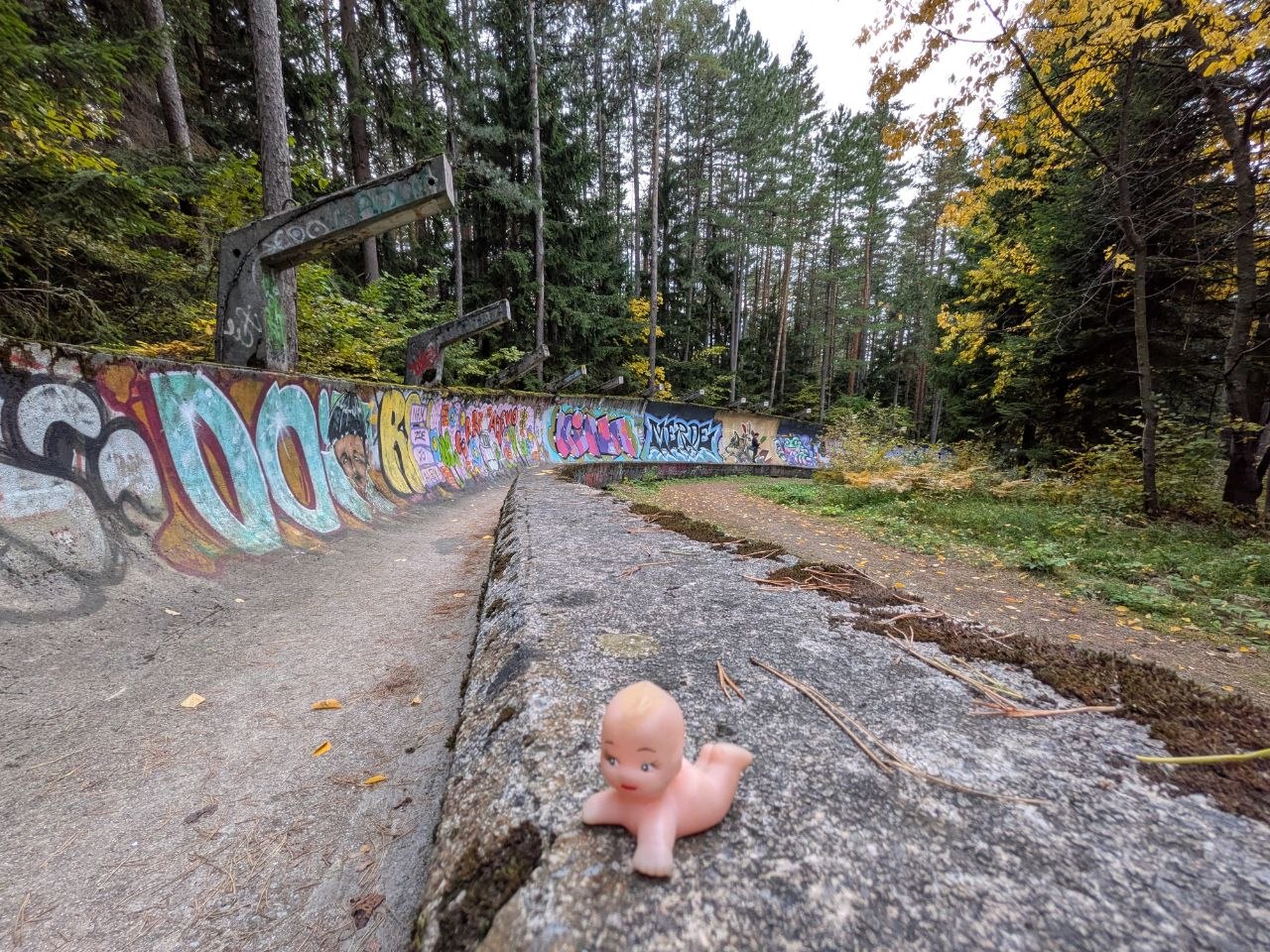
One of the most striking experiences in the city is walking between the Ottoman core of Baščaršija and the Austro-Hungarian quarter around Ferhadija and Marijin Dvor, where a noticeable shift in urban layout and architectural style highlights Sarajevo's historical transitions. For broader views, the cable car to Mount Trebević carries passengers from the edge of the old town up to former Olympic slopes and forested walking paths.
Sarajevo is compact enough to explore largely on foot, supplemented by an extensive tram and trolleybus network along the main valley corridor. The city is also well connected by bus and minibus services to Mostar, other Bosnian towns, and regional centres across the Balkans, making it a practical stop on wider itineraries in Southeast Europe.
 Jumping Timezones
Leave a comment